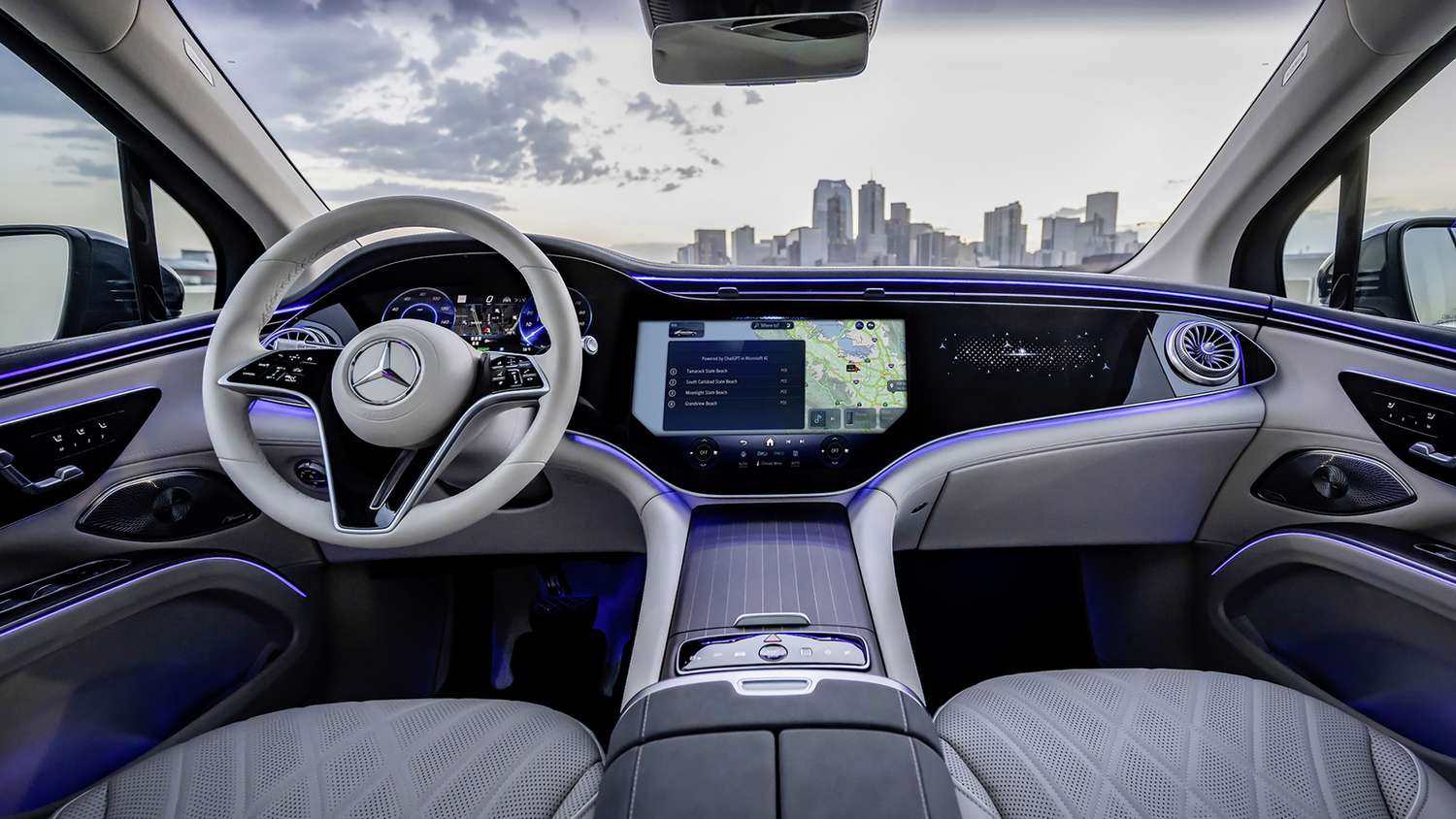
Cars used to ask very little of us: steer, brake, signal, do not spill coffee on your lap. Today, the dashboard wants to talk. Not just beep, flash, or politely remind you that the passenger door is open, but hold a conversation. Thanks to artificial intelligence, the modern car is becoming part navigation guide, part owner’s manual, part personal assistant, and part overly eager road-trip companion.
On paper, AI chatbots in cars sound brilliant. Instead of poking through a confusing touchscreen menu, drivers can say, “Find the nearest charging station with coffee nearby,” or “Explain why this warning light is on.” That is genuinely useful. The problem is that driving is already one of the most attention-hungry activities most people do every day. Add a chatbot that can answer almost anything, and suddenly the cabin becomes a rolling conversation pit.
The big question is not whether AI belongs in cars. It probably does. The real question is whether AI chatbots can be designed so they help drivers without pulling their attention away from the road. Because when a vehicle is moving, “hands-free” does not automatically mean “mind-free.”
Why AI Chatbots Are Moving Into the Dashboard
Automakers are racing to make vehicles feel smarter, more personal, and more connected. Voice assistants are not new, of course. Drivers have been saying things like “Call Mom” or “Navigate home” for years, often followed by the system confidently calling “Tom” and navigating to a hardware store three states away. What is new is the arrival of generative AI and large language models that can handle more natural, multi-step conversations.
Mercedes-Benz tested ChatGPT through its MBUX voice assistant for eligible U.S. vehicles. Volkswagen has integrated ChatGPT into its IDA voice assistant in selected models. BMW has demonstrated generative AI capabilities with Amazon Alexa technology. Google Cloud has introduced an Automotive AI Agent for Mercedes-Benz, while General Motors has expanded its AI work with Google Cloud and OnStar-related services. In other words, the AI chatbot is no longer a futuristic concept. It is pulling into the driveway.
From Commands to Conversations
Traditional voice control works best with short commands: “Set temperature to 70,” “Play jazz,” “Call Alex.” AI assistants go further. They can answer questions, interpret context, summarize information, suggest stops, explain features, and continue a conversation. That shift is powerful, but it also changes the type of attention required from the driver.
A command is quick. A conversation is sticky. A driver who asks, “Where should we eat?” may then compare reviews, parking options, wait times, menus, and whether the place has fries that deserve a standing ovation. That may be convenient, but it is also mental activity. And mental activity matters behind the wheel.
The Safety Problem: Driving Is Not a Side Quest
Distracted driving is not limited to texting. Safety agencies commonly describe distraction in three categories: visual, manual, and cognitive. Visual distraction takes your eyes off the road. Manual distraction takes your hands off the wheel. Cognitive distraction takes your mind off driving. AI chatbots are especially tricky because they may reduce one type of distraction while increasing another.
For example, asking an AI assistant to adjust the cabin temperature may be safer than digging through a touchscreen. Your eyes stay up. Your hands stay mostly where they belong. Great. But asking the assistant to compare hotels, explain a news story, draft a message, or debate the best pizza style in America can load up your brain like it is cramming for finals.
Driving requires constant prediction. Is that pedestrian about to step off the curb? Is the truck drifting? Is the driver ahead braking because of traffic or because a squirrel just made a life choice? When your mind is busy processing a chatbot’s response, your ability to notice and react can suffer.
Why “Hands-Free” Can Still Be Distracting
The phrase “hands-free” has excellent marketing energy. It sounds safe, modern, and responsible. Unfortunately, the human brain did not get the memo. Research on in-vehicle voice systems and infotainment has repeatedly shown that voice-based tasks can still create mental workload. A driver may not be touching a phone, but they are still listening, deciding, correcting, remembering, and responding.
That is where AI chatbots become different from older systems. A simple voice assistant might misunderstand a command and stop. A generative AI assistant may keep going, offering alternatives, asking follow-up questions, and presenting more information. In the right situation, that is helpful. In heavy traffic, construction zones, bad weather, or school pickup chaos, it can become one more passenger demanding attention.
How AI Chatbots in Cars Could Distract Drivers
1. Long Answers at the Wrong Time
A navigation prompt like “Turn right in 500 feet” is short and useful. A chatbot response like “Based on your preferences, here are five restaurants, three of which have outdoor seating, two of which may be affected by road closures, and one that appears to have excellent nachos” is another animal entirely. The longer the answer, the more the driver must listen, evaluate, and remember.
2. Follow-Up Questions That Create Pressure
Good chatbots ask follow-up questions. That is great on a laptop. In a moving car, follow-up questions can create a subtle pressure to answer immediately. “Would you like me to reroute?” is useful. “Would you prefer a casual restaurant, a highly rated option, or something with vegetarian choices?” may be useful too, but it also demands a decision while the driver is already managing traffic.
3. Screen Confirmations and Visual Temptation
Many voice systems still rely on screens. The assistant may speak an answer, then show options on the display. That encourages the driver to glance down. One glance becomes two. Two becomes “Wait, where did that cyclist come from?” If an AI chatbot depends on visual menus, cards, maps, or scrolling lists, it can reintroduce the exact distraction voice control was supposed to reduce.
4. Mistakes That Require Correction
AI can be impressive, but it is not magic. It may misunderstand speech, misread context, or give an answer that is technically confident and practically unhelpful. Correcting a chatbot can be more distracting than the original task. Anyone who has repeated “No, not that one” to a voice assistant knows the emotional journey: optimism, confusion, negotiation, despair.
5. Overconfidence Around Driver-Assistance Systems
Some drivers already overtrust driver-assistance features such as lane centering or adaptive cruise control. Add a friendly AI voice and the car may feel more capable than it really is. That can encourage mental drifting: checking out of the driving task because the vehicle feels like it has everything handled. But most systems on the road still require an alert human driver ready to take control.
The Case for AI: It Is Not All Doom and Dashboard Gloom
To be fair, AI chatbots in vehicles could solve real problems. A well-designed assistant could reduce the need to touch screens, search through menus, or pull out a phone. It could help drivers understand warning lights, find safer routes, locate EV chargers, adjust climate controls, or access accessibility features through natural speech.
AI could also make vehicle manuals less painful. Nobody wants to read a 400-page owner’s manual unless trapped in a waiting room with no Wi-Fi. A driver parked safely could ask, “How do I reset the tire pressure warning?” or “What does this symbol mean?” and get a clear explanation. That is a great use case.
The key is context. AI that helps with driving-related tasks in short, simple ways can improve usability. AI that encourages open-ended conversation while the vehicle is moving can become entertainment disguised as assistance.
What Safer In-Car AI Should Look Like
Keep Moving-Vehicle Answers Short
When the car is in motion, the assistant should behave like a calm co-pilot, not a podcast host. Short answers, clear choices, and minimal follow-up are safer than long explanations. A good driving-mode chatbot should say, “There are two charging stations nearby. The closest is five minutes away. Want to navigate there?” That is enough.
Lock Out Complex Tasks While Driving
Some tasks belong in park: writing long messages, browsing restaurant reviews, reading news summaries, planning multi-stop trips, comparing products, or discussing complex topics. A responsible system should say, “I can help with that when the vehicle is stopped.” Yes, that may annoy some drivers. So do seat belts when you are late, and yet here we are, alive and mildly wrinkled.
Use Driver-Awareness Signals
Future AI systems should respond to driving conditions. If the vehicle detects heavy traffic, rapid braking, bad weather, complicated intersections, or driver inattention, the assistant should reduce chatter. The smartest assistant may be the one that knows when to be quiet.
Preserve Physical Controls for Critical Functions
Voice is useful, but it should not replace everything. Drivers still need simple physical controls for important features such as volume, defrost, hazard lights, wipers, and climate basics. When every function lives behind a screen or a conversation, simple tasks can become unnecessarily complicated.
Make Privacy Clear
AI assistants often rely on cloud processing, data collection, and personalization. Drivers should know what is recorded, what is stored, how long it is kept, and whether location or driving behavior is used. A car is not just another smart speaker. It knows where you go, when you go, and how you drive. That information deserves serious privacy protection.
Practical Tips for Drivers Using AI Chatbots in Cars
Drivers do not need to reject in-car AI completely. The smarter approach is to set boundaries. Use AI for simple driving-related tasks: navigation, temperature, calls, music, vehicle settings, and quick explanations. Save open-ended conversations for when the vehicle is parked.
Before starting a trip, set your destination, playlist, climate, and do-not-disturb preferences. If the chatbot gives a confusing answer, do not argue with it in traffic. Pull over safely or wait until you arrive. Treat the assistant like a helpful passenger who sometimes gets overexcited and needs to be told, “Not now, buddy.”
Parents and teen drivers should be especially cautious. New drivers are still building the mental habits that experienced drivers take for granted. Adding a conversational AI system can make the cabin feel more entertaining, but young drivers need fewer distractions, not a dashboard that wants to chat about dinner plans.
What Automakers Should Remember
The best AI car assistant will not be the one with the most features. It will be the one with the best judgment. Automakers should measure success not only by how many questions the assistant can answer, but by how little attention it demands while driving.
That means testing AI systems in realistic conditions: rain, merging traffic, noisy cabins, accents, children talking in the back seat, construction zones, and drivers who are tired after work. A chatbot that performs beautifully in a demo booth may behave very differently when the driver is trying to cross five lanes near an airport while someone in the back asks whether fries count as a vegetable.
The Future: AI Co-Pilot or Backseat Chatterbox?
AI chatbots in cars are coming because they solve a real interface problem. Cars have become computers on wheels, and computers need better ways to communicate. Voice and AI can make that easier. But easier is not always safer.
The future should not be a car that talks constantly. It should be a car that understands the driving task comes first. The assistant should help, simplify, and then get out of the way. The road is not the place for endless conversation, even if the chatbot has a charming voice and surprisingly strong opinions about taco trucks.
Real-World Driving Experiences: When the Car Starts Talking Back
Imagine a typical Monday morning commute. You are running seven minutes late, which is somehow both a small number and a full-blown emergency. Traffic is thick, your coffee is too hot, and your car’s AI assistant cheerfully asks whether you want a faster route. That is useful. You say yes. It reroutes you around a crash, saves five minutes, and everyone wins. In that moment, AI feels like the best passenger ever: calm, informed, and not eating chips loudly.
Now imagine the same commute with a more talkative assistant. You ask for a faster route, and it offers three options, explains road conditions, suggests a coffee shop, asks whether you prefer highways or surface streets, and mentions that your calendar shows a meeting in 20 minutes. Technically, every piece of information may be relevant. Practically, your brain is now sorting a menu of decisions while traffic compresses around you. That is where helpful becomes heavy.
The most common experience with in-car technology is not dramatic danger. It is small friction. The assistant misunderstands a name. The map chooses the wrong entrance. The system asks for confirmation right as the light changes. The screen displays choices that are just tiny enough to require a second look. These micro-moments matter because driving is made of micro-moments: a brake light, a crossing pedestrian, a merging motorcycle, a delivery truck blocking the lane.
There is also the emotional side. Drivers get annoyed when technology fails, and annoyance is its own distraction. A calm driver who says, “Navigate to Oak Street” can become a frustrated driver after the assistant replies, “Playing Oak Street Radio.” The driver repeats the request louder, as if volume is a software update. The assistant apologizes. The driver looks down. The road keeps moving.
Families may notice another pattern. Passengers love using the car assistant because they are not driving. A child in the back seat might ask the AI for jokes, trivia, weather, animal facts, or the longest possible explanation of why dinosaurs were not technically dragons. Fun? Absolutely. But if the driver is listening, laughing, correcting, or managing the conversation, the experience can become another layer of cabin noise.
Road trips show both sides of the technology. AI can find rest stops, explain dashboard warnings, estimate charging stops, translate signs, and recommend safer routes. It can reduce stress when used intentionally. But it can also turn the car into a rolling search engine. The danger is not that one question ruins a trip. The danger is that endless small interactions normalize divided attention.
The best personal rule is simple: if the request would be distracting with a human passenger, it is probably distracting with an AI chatbot. Asking, “Where is the next exit?” is fine. Asking, “Help me plan a three-day vacation itinerary with budget hotels and seafood restaurants” belongs in park. The car can be smart. The driver still has to be smarter.
Conclusion
AI chatbots in cars could become one of the most useful upgrades in modern driving, but only if safety stays ahead of novelty. The technology can reduce screen tapping, simplify confusing controls, and make vehicles easier to use. At the same time, it can create cognitive distraction, encourage long conversations, and make drivers feel more relaxed than the situation allows.
The safest version of in-car AI is not the chattiest. It is the one that understands timing, context, and limits. When the vehicle is moving, AI should act less like a talk-show guest and more like a disciplined co-pilot: brief, useful, and quiet when the road demands full attention.
Drivers should welcome helpful technology, but they should not outsource awareness. The road still needs human focus. The chatbot can recommend the coffee shop. You still need to see the brake lights.