Note: This article is based on public reporting, labor data, retail industry research, and worker-safety information. It is fully rewritten for original web publication.
Holiday Shopping Looks MagicalUntil You See the Fitting Room Floor
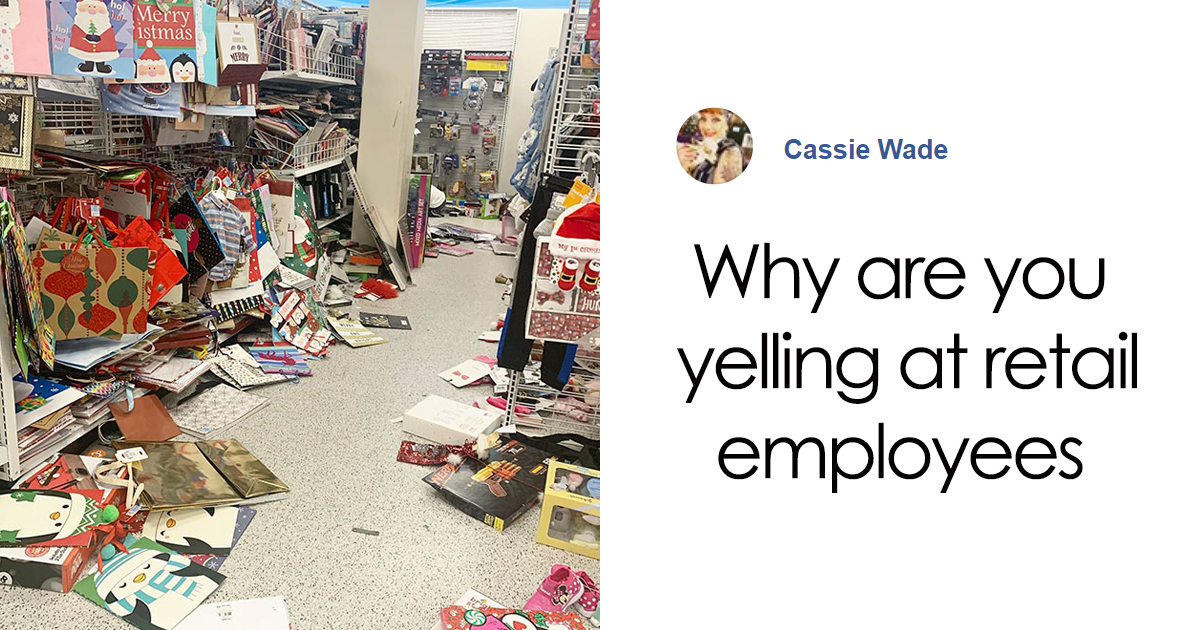
The holiday season has a funny way of turning ordinary people into competitive gift goblins. One minute, someone is peacefully sipping peppermint coffee; the next, they are elbow-deep in a sweater display like they are searching for buried treasure. That tension is exactly why a woman’s post about holiday retail work struck such a nerve online. The story centered on Cassie Wade from Nashville, Tennessee, who shared photos of chaotic store aisles and messy displays after Christmas shoppers had rummaged through merchandise. Her point was simple: retail workers are not background characters in your holiday movie. They are people, and they deserve basic kindness.
The images showed what many retail employees already know too well: holiday shopping can leave stores looking like a tiny tornado joined a rewards program. Clothes fall off hangers. Gift items migrate to the wrong aisles. Packaging gets opened, abandoned, or mysteriously separated from the product it once loved. And when employees finally start fixing the mess, another wave of shoppers arrives with the focused energy of raccoons in a bakery.
This is why the request to “be nicer to employees” matters. It is not a cute seasonal slogan. It is a survival tip for everyone involved. Retail employees are balancing long lines, inventory questions, returns, online pickup orders, price checks, gift receipts, impatient customers, and managers who are trying to keep the store from becoming a December-themed escape room.
Why Holiday Retail Feels So Intense
Holiday retail is not just “regular retail with tinsel.” It is a compressed, high-pressure stretch when demand rises, shoppers are emotional, and every small inconvenience feels personal. The National Retail Federation expected U.S. holiday sales to surpass $1 trillion for the first time in 2025 and projected hundreds of thousands of seasonal hires to support demand. That scale explains why stores can feel overcrowded, understaffed, and overcaffeinated all at once.
Thanksgiving weekend alone shows the size of the rush. NRF reported that a record 202.9 million consumers shopped during the five-day period from Thanksgiving Day through Cyber Monday in 2025. Adobe also reported that Cyber Monday hit $14.25 billion in U.S. online spending, showing that the holiday rush is happening both in carts with wheels and carts with checkout buttons.
That online growth does not remove pressure from store workers. In many cases, it adds new layers. Employees now handle in-store shoppers, curbside pickup, returns from online orders, missing packages, app discounts, loyalty accounts, and the classic customer phrase: “It said you had one left online.” Somewhere in the stockroom, that “one left” is probably hiding behind a box of scented candles, reflecting on its life choices.
The Hidden Work Behind a “Simple” Store Visit
Many shoppers see the visible parts of retail: ringing up purchases, folding shirts, unlocking cabinets, answering questions, and smiling through conversations that begin with “I know this isn’t your fault, but…” Yet the job involves far more than standing near a register. The Bureau of Labor Statistics describes retail sales workers as employees who help customers find products, process sales, answer questions, and support store operations. Cashiers often greet customers, scan purchases, process payments, handle returns, explain policies, and count cash drawers.
During the holidays, each of those tasks expands. A normal return becomes a forensic investigation: Was it bought online? Was it bought by Aunt Linda? Is there a gift receipt? Was the item used, washed, wrapped, rewrapped, and emotionally abandoned? The employee must answer calmly while a line forms behind the customer and three people sigh loudly enough to be heard in the next zip code.
Store recovery is another invisible job. When shoppers leave merchandise in the wrong place, employees do not simply “tidy up.” They must refold, rehang, scan, restock, inspect, and sometimes damage out items that can no longer be sold. A messy store also makes shopping harder for the next customer, which means one person’s “I’ll just leave this here” becomes another person’s “Why can’t anyone find anything?” Retail workers become the cleanup crew for hundreds of tiny decisions.
Stress Is Contagious, But So Is Kindness
Holiday shopping can be stressful for customers, too. Deloitte’s 2025 holiday retail survey found that 58% of surveyed shoppers considered holiday gift shopping stressful. That stress is understandable. People are watching budgets, comparing deals, worrying about shipping deadlines, planning travel, hosting family, and trying to find a meaningful gift for someone who says, “I don’t need anything,” which is somehow the least helpful sentence in December.
But stress does not excuse mistreating employees. A worker cannot personally change corporate return policy, summon a sold-out toy from the North Pole, or make a coupon apply to an excluded brand because someone “drove all the way here.” They can help within the rules they are given. They can look in the back. They can suggest alternatives. They can explain options. What they cannot do is absorb every shopper’s frustration without consequence.
OSHA defines workplace violence broadly, including threats, harassment, intimidation, verbal abuse, and physical assault that occur at a work site. While not every rude customer interaction reaches that level, the pattern matters. When employees are repeatedly yelled at, insulted, threatened, or treated as disposable, the workplace becomes emotionally unsafe. A bad day for one shopper can become an entire shift of tension for the employee who has to keep smiling.
The Safety Side of Holiday Retail
Retail employees do not only deal with clutter and cranky customers. They also face safety concerns, especially during peak shopping periods. A 2024 survey from Theatro reported that many retail workers felt unsafe on the job, while a separate 2024 retail workplace violence survey from Traliant focused on U.S. retail workers at larger organizations and examined prevention training, reporting, and employee concerns.
Those findings match what workers often describe: the holiday season can magnify ordinary problems. Crowded stores make it harder to monitor exits, aisles, and fitting rooms. Expensive merchandise draws attention. Long lines increase irritation. Staffing gaps mean employees may be alone in sections where they need backup. Add the pressure of limited-time deals, and suddenly a store can feel less like a cheerful marketplace and more like a competitive sport with scented pinecones.
New York’s retail worker safety law, signed in 2024, also shows how seriously some states are taking the issue. Reuters reported that the law requires certain retailers to create workplace violence prevention plans and, for larger employers, eventually provide panic-button options. That kind of policy is not about making shopping feel scary. It is about acknowledging that frontline workers deserve protection, training, and support when customer behavior crosses the line.
Why Customers Should Care
Being kind to retail employees is not just morally nice; it is practical. A calmer customer usually receives better help because the employee can focus on solving the problem instead of managing the emotional weather system forming at register three. If you ask politely, describe what you need, and accept the answer without turning into a holiday villain, you make the interaction easier for everyone.
Kindness also improves the shopping environment for other customers. A person yelling about a return policy does not just affect the employee. They affect the family behind them, the teenager working their first seasonal job, the manager trying to de-escalate, and the shopper quietly wondering if they can abandon their basket and flee. Retail spaces are shared spaces. Civility is part of the public infrastructure, right next to escalators and those mysteriously sticky checkout counters.
There is also a dignity issue. Retail supports a huge part of the American workforce. The NRF Foundation states that retail supports more than one in four jobs in the United States, representing 55 million working Americans. These workers are students, parents, retirees, caregivers, artists, managers, immigrants, neighbors, and people building careers. They are not holiday punching bags wearing name tags.
What “Being Nicer” Actually Looks Like
Put Things Back Where They Belong
This one sounds small, but it is powerful. If you unfold a sweater, refold it reasonably. If you decide not to buy an item, return it to the shelf or hand it to an employee instead of hiding it behind a display of mugs. Retail workers would rather receive an unwanted item directly than discover it three hours later in the sock aisle like a sad little retail fossil.
Read the Signs Before Arguing
Sale signs, return policies, pickup instructions, and store hours usually exist because employees have answered the same question 400 times. Reading them saves time. If something is unclear, ask politely. “Can you help me understand this promotion?” works better than “Your sign is lying to me.” The sign is cardboard. It has no legal team. Let’s all stay calm.
Remember That Employees Do Not Control Inventory
When an item is sold out, the employee did not personally remove joy from your holiday. They can check stock, suggest alternatives, or tell you when a shipment might arrive. They cannot manufacture a limited-edition toy with sheer willpower behind the customer service desk.
Use Patience Like a Holiday Discount Code
Lines are frustrating, especially when you are juggling bags, kids, budgets, and a parking meter that has chosen violence. Still, patience helps. Many employees are moving as fast as the system allows. If the register freezes, the receipt printer jams, or the card reader demands a ritual sacrifice, the worker is probably just as annoyed as you are.
What Retailers Can Do Better, Too
Customers should be kinder, but companies also have responsibilities. Employers should schedule realistically, train seasonal staff, give workers clear escalation procedures, and back employees when customers become abusive. The U.S. Department of Labor provides seasonal employment information to help employers and workers understand workplace rules during busy periods. Good management matters because kindness cannot be the only safety plan.
Retailers can also reduce conflict by making policies easy to understand. Clear return windows, accurate inventory systems, visible pickup instructions, and enough staff at peak times all help. When shoppers know what to expect, workers spend less time apologizing for confusion they did not create. A well-run store is a kindness machine: it protects employees, helps customers, and prevents everyone from arguing beside a bin of novelty slippers.
The Bigger Lesson From One Woman’s Post
The viral reaction to Wade’s post shows that many people recognize the problem. The mess in the photos was not just about scattered merchandise. It was a visual reminder of how easily customers can forget the human beings who clean up after them. Holiday cheer is not measured only by gifts bought, lights hung, or cookies consumed. It is also measured by how we treat people who are working while the rest of us are trying to celebrate.
Retail workers often miss family dinners, work late nights, cover extra shifts, and handle emotional customers during a season that is supposed to be joyful. Some are earning extra money for school. Some are supporting families. Some are picking up temporary hours to make rent. Some are full-time retail professionals holding stores together through the busiest weeks of the year. A little respect costs nothing, which is impressive because almost everything else in December costs $49.99 plus tax.
The next time you shop during the holidays, try this: say hello, say thank you, be patient, and clean up after yourself. If something goes wrong, ask for help without making the employee your emotional snow shovel. The person behind the counter may not remember every polite customer, but they will feel the difference. And if enough people choose kindness, holiday retail becomes a little less exhausting for everyone.
Holiday Retail Experiences That Explain Why Kindness Matters
Anyone who has worked retail during the holidays has at least one story that begins with “You are not going to believe this.” Maybe it was the customer who tried to return a clearly used holiday decoration on December 26 while insisting it had “never been opened,” even though glitter was still clinging to their coat. Maybe it was the shopper who asked an employee to check the back room for an item that had been discontinued since the previous presidential administration. Or maybe it was the person who abandoned a half-finished coffee inside a shoe display, creating a mystery no one asked to solve.
One common experience is the closing-time rush. A store can be quiet for thirty minutes, then suddenly ten shoppers appear five minutes before closing with the confidence of people entering a theme park at sunrise. Employees still have to recover displays, count registers, clean fitting rooms, restock returns, and prepare the store for the next day. When customers ignore closing announcements or treat employees like they are being unreasonable for wanting to go home, it turns a long shift into an even longer one. A simple “I’ll be quick” only helps if the person is, in fact, quick.
Another familiar retail moment is the fitting room disaster. During the holidays, fitting rooms can become fabric avalanches. Dresses are inside out, shirts are twisted into decorative knots, hangers vanish, and pants somehow end up in a corner like they attempted escape. Employees may spend hours restoring those rooms while still being called to registers, pickup counters, and sales floors. When shoppers hand back items neatly, it feels like receiving a tiny holiday miracle.
Then there are coupon conflicts. A customer arrives with a screenshot, an expired mailer, a loyalty offer for a different store, or a discount that excludes the exact item they want. The employee explains the policy. The customer says, “But it worked last time.” This phrase has haunted retail workers for generations. Maybe it did work last time. Maybe someone made an exception. Maybe the coupon gods were feeling generous. But the worker standing there now still has to follow the current rules.
Seasonal employees have their own challenges. Many are learning registers, store layouts, return policies, and product categories at the exact moment traffic is highest. They may be new, nervous, and trying their best while shoppers expect expert-level answers about every ornament, sweater, gadget, and kitchen appliance in the building. A patient customer can turn a stressful training moment into a manageable one. An impatient customer can make someone dread coming back for the next shift.
The best retail experiences often come from small acts of humanity. A customer says, “No rush.” Someone thanks an employee for checking inventory. A parent reminds their child to put a toy back properly. A shopper laughs off a register glitch instead of blaming the cashier. Someone brings unwanted items to the counter instead of leaving them in a freezer next to frozen peas. These gestures may not seem grand, but to workers in the middle of holiday chaos, they are oxygen.
Working retail during the holidays teaches a powerful lesson: everyone is carrying more than the bags in their hands. Customers may be stressed about money, family, travel, or grief. Employees may be tired, underpaid, understaffed, or missing their own celebrations. The store becomes a meeting place for all that pressure. Kindness does not fix every problem, but it lowers the temperature. It gives people room to breathe. And during the holiday season, that may be one of the best gifts we can offer.
Conclusion
The woman who shared the messy reality of holiday retail did more than post photos of chaotic aisles. She reminded shoppers that every abandoned item, every rude comment, and every impatient demand lands on a real person. Retail employees are part of the holiday season, too. They help us find gifts, process returns, answer questions, and keep stores functioning when the crowds are at their wildest. Being nicer to them is not complicated. It starts with patience, respect, and the revolutionary act of putting the sweater back on the hanger.