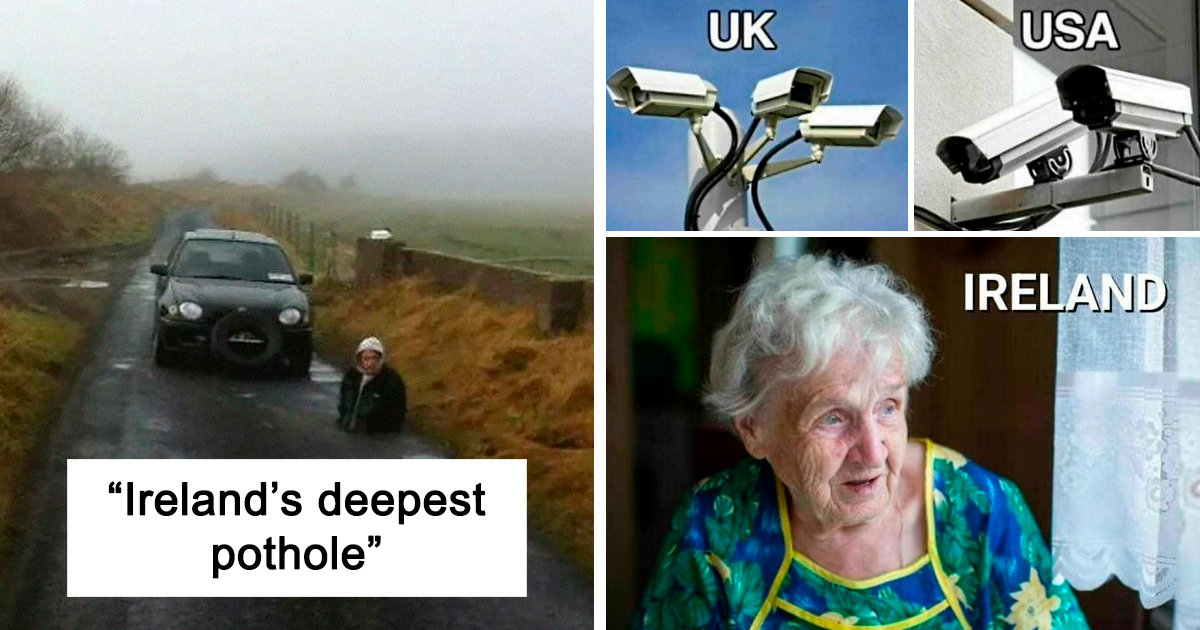
Some countries inspire postcards. Ireland inspires an entire category of photographs captioned, “Meanwhile in Ireland.” The scene might involve a sheep supervising traffic, a medieval tower behind a convenience store, four weather conditions sharing one afternoon, or a musician turning a quiet pub into the best concert you never bought a ticket to see.
Ireland feels different because the unusual is rarely displayed behind glass. History, folklore, nature, humor, food, and community life are mixed into the ordinary day. A road trip can pass a Neolithic monument, a brightly painted village, a lunar-looking limestone plateau, and a tractor traveling at the relaxed speed of local time. These 50 reasons explain why Irish culture and everyday life seem to operate in their own charming universe.
A Landscape That Refuses to Behave Normally
-
1. The Green Really Is That Green
Ireland did not earn the nickname “Emerald Isle” through aggressive marketing. Its mild oceanic climate and regular rainfall keep fields intensely green, even when the sky looks like a wet gray blanket.
-
2. Four Seasons Can Arrive Before Lunch
Sunshine, drizzle, wind, and a surprise rainbow can rotate through the same hour. Dressing for Ireland is less about choosing an outfit and more about assembling a portable emergency wardrobe.
-
3. The Atlantic Coast Looks Cinematically Overqualified
The Wild Atlantic Way runs past cliffs, bays, beaches, lighthouses, islands, and headlands that appear designed for dramatic final scenes. Even an ordinary roadside stop may come with ocean spray and a heroic soundtrack supplied by the wind.
-
4. The Cliffs Make Humans Look Like Punctuation Marks
At places such as the Cliffs of Moher and Slieve League, land drops sharply into the Atlantic. Visitors arrive feeling important and leave correctly reminded that geology has seniority.
-
5. The Burren Resembles Another Planet
County Clare’s Burren replaces expected green fields with broad limestone pavements, deep cracks, caves, wildflowers, and ancient remains. It is stark, beautiful, and slightly suspicious, as though the moon quietly opened a branch office.
-
6. The Bogs Preserve Extremely Strange Souvenirs
Irish peat bogs have preserved archaeological objects, human remains, and ancient masses of butter. Most countries store dairy products in refrigerators; ancient Ireland occasionally trusted the landscape with the job.
-
7. Stone Walls Go On Forever
Dry-stone walls divide fields across western Ireland and the Aran Islands without relying on mortar. Built from rock cleared from difficult land, they turn agricultural necessity into mile after mile of accidental sculpture.
-
8. Sheep Occasionally Control the Transportation System
On rural roads, the right of way may belong to a flock that has no appointment, no visible leader, and no interest in your itinerary. The wisest response is patience and respectful negotiations through the windshield.
-
9. Country Roads Test Both Skill and Faith
Some scenic routes are narrow, winding, and bordered by stone walls or hedges. A road described as “two-way” may technically support two vehicles, provided one is imaginary.
-
10. Villages Treat Color as a Public Service
In towns such as Kinsale, Dingle, Cobh, and Doolin, vivid storefronts and cottages brighten cloudy days. Pink, yellow, blue, and orange buildings look less like decoration than a cheerful national defense against gray weather.
History and Folklore Are Still Part of the Neighborhood
-
11. Newgrange Is Older Than the Egyptian Pyramids
Built around 3200 BCE, Newgrange is a monumental passage tomb aligned with the winter-solstice sunrise. Thousands of years ago, its builders combined engineering, astronomy, ceremony, and stonework without needing a productivity app.
-
12. Ancient Monuments Appear Beside Ordinary Fields
Dolmens, ringforts, standing stones, and ruined churches are scattered through the countryside. In Ireland, a farmer’s neighbor may be a structure built before several major civilizations had introduced themselves.
-
13. Castles Are Practically Background Furniture
Some castles are polished attractions, while others remain romantic ruins beside roads, rivers, farms, and towns. The contrast between medieval stone and modern daily life is so common that locals may pass without reaching for a camera.
-
14. Fairy Forts Still Receive Respect
Ringforts and certain old trees are associated with the fairy world in Irish tradition. Not everyone interprets the stories literally, but disturbing such places can still feel culturally reckless, spiritually impolite, or simply like asking for trouble.
-
15. Holy Wells Connect Several Eras at Once
Sacred wells often combine Christian devotion with customs that may have older roots. Visitors leave prayers, ribbons, or small offerings, creating landscapes where faith, memory, water, and folklore overlap.
-
16. Halloween Has Deep Irish Roots
The ancient festival of Samhain marked a seasonal turning point when boundaries between worlds were believed to grow thin. Modern Halloween traveled a long road, but many of its fires, disguises, spirits, and uneasy autumn atmosphere echo Irish tradition.
-
17. Pagan and Christian Stories Share the Same Map
Saints, warriors, fairies, goddesses, monks, and supernatural animals all inhabit Irish cultural geography. One hill may carry archaeological importance, religious meaning, and a legend involving someone transformed into a swan.
-
18. Irish Is Not Merely Decorative
Gaeilge is Ireland’s first official language and remains a living community language in Gaeltacht regions. It also shapes place names, songs, schools, broadcasting, literature, and the way Ireland understands itself.
-
19. Road Signs Can Become Miniature Language Lessons
Bilingual signs pair English names with Irish forms that may reveal older meanings. Travelers soon discover that pronunciation cannot always be solved through confidence alone, no matter how enthusiastically they attack the consonants.
-
20. Myths Feel Attached to Physical Places
Irish legends are rarely floating abstractions. They belong to caves, rivers, islands, hills, trees, and ruined forts. The landscape becomes a story index, with nearly every bend offering another chapter.
Conversation, Humor, and Community Follow Different Rules
-
21. The Craic Is a Serious Cultural Matter
“Craic” can refer to fun, news, conversation, entertainment, or the general quality of a social occasion. Asking, “What’s the craic?” is therefore both a greeting and a request for the evening’s full performance report.
-
22. Conversation Is Treated Like a Creative Art
A simple exchange can expand into a story, an imitation, a family connection, and a highly specific opinion about someone from a neighboring county. Efficiency loses, but everyone else wins.
-
23. Affection May Arrive Disguised as Mockery
Good-natured “slagging” is a familiar form of Irish banter. Being teased can indicate acceptance, although newcomers should learn the rhythm before attempting an advanced-level insult about somebody’s haircut.
-
24. “Grand” Can Mean Almost Anything
A meal can be grand, the weather can be grand, and a mildly alarming situation can also be grand. Context does the heavy lifting while the word calmly refuses to panic.
-
25. Directions May Become Short Stories
Instead of a sterile sequence of numbers, instructions may involve an old pub, a church, a vanished shop, a dangerous bend, and the house where a particular family used to live. Navigation comes bundled with community history.
-
26. Hospitality Often Feels Unplanned and Genuine
Help may come through a long conversation, an unexpected cup of tea, or a local personally explaining where you went wrong. The interaction is rarely rushed, even when your original question required only one word.
-
27. Pubs Function as Public Living Rooms
The traditional pub can be a social center, music venue, storytelling space, meeting point, and shelter from the rain. Drinking is only one part of a larger institution built around company.
-
28. County Identity Runs Deep
People often identify strongly with their county, especially when sport, accents, food, or rivalries enter the discussion. County borders may be administrative on maps but emotionally reinforced with concrete.
-
29. Someone Usually Knows Someone You Know
Ireland’s social networks can make the famous “six degrees of separation” theory feel unnecessarily pessimistic. Mentioning a surname or hometown may launch an enthusiastic investigation of cousins, schools, workplaces, and former neighbors.
-
30. A Small Island Built an Enormous Global Family
Generations of migration created a vast Irish diaspora, particularly in the United States, Britain, Canada, and Australia. Irish identity therefore feels intensely local and surprisingly international at the same time.
Music, Sports, and Traditions Are Participatory
-
31. Traditional Music Can Begin Without a Stage
A pub session may involve musicians gathering with fiddles, flutes, whistles, pipes, guitars, bodhráns, or concertinas. The music grows organically rather than waiting for spotlights and an introduction from management.
-
32. The Audience Is Part of the Atmosphere
People listen, talk between tunes, sing when invited, and understand when silence matters. The result feels less like consuming entertainment and more like briefly joining a living cultural chain.
-
33. Literature Seems to Leak From the Pavement
Ireland’s extraordinary literary legacy includes figures such as James Joyce, W.B. Yeats, Samuel Beckett, Seamus Heaney, Oscar Wilde, and many contemporary writers. Dublin can make an ordinary walk feel suspiciously close to an English-class assignment.
-
34. Gaelic Games Belong to Communities
The Gaelic Athletic Association supports sports rooted in local clubs, volunteers, schools, families, and counties. Matches are athletic contests, but they are also expressions of place, history, and collective pride.
-
35. Hurling Appears to Ignore Normal Human Speed Limits
One of the world’s oldest field games is played with sticks and a small ball moving at startling speed. To an unfamiliar viewer, hurling resembles a sport designed after someone declared ordinary excitement insufficient.
-
36. Festivals Celebrate Delightfully Specific Things
Ireland hosts literary gatherings, oyster festivals, music events, matchmaking celebrations, and Puck Fair, where a goat is ceremonially crowned. The national planning principle appears to be: if a tradition exists, give it a weekend.
-
37. Even Mourning Can Strengthen Community
Irish wakes and funeral customs traditionally create space for grief, remembrance, stories, food, and shared presence. Sadness is not hidden away; it is carried by a wider circle.
-
38. Tea Is an All-Purpose Response
Good news, bad news, unexpected visitors, emotional distress, and ordinary Tuesday afternoons may all trigger the same practical solution: put the kettle on.
-
39. A Pint of Guinness Is Allowed to Take Its Time
Pouring and settling a stout is treated with patience. In a culture full of rapid modern technology, watching a pint calmly become ready feels like a small national argument against unnecessary haste.
-
40. Road Bowling Exists
In parts of Ireland, competitors throw a metal ball along public roads and try to complete the course in the fewest throws. It combines sport, geography, local pride, and the mild thrill of wondering where the ball went.
Irish Food and Modern Life Keep Producing Surprises
-
41. Potatoes Are More Than a National Punchline
Potatoes remain central to dishes such as boxty, colcannon, champ, and hearty soups. Their importance also carries serious historical weight, making them part comfort food, part cultural memory.
-
42. Brown Bread and Butter Can Steal the Meal
A dense slice of Irish brown bread with excellent butter demonstrates how simple ingredients become memorable when dairy, grain, and craftsmanship are taken seriously.
-
43. The Seafood Scene Deserves More Attention
Oysters, mussels, salmon, mackerel, crab, chowder, and fresh Atlantic fish increasingly define modern Irish dining. The island is surrounded by productive waters, which is a fairly persuasive culinary advantage.
-
44. The Spice Bag Is Modern Irish Chaos in Paper Packaging
This Irish-Chinese takeaway favorite typically combines fried chicken, fries, peppers, onions, spices, and sauce. It is salty, crunchy, multicultural, gloriously messy, and ideal for evenings when sensible decisions have already gone home.
-
45. Crisp Sandwiches Require No Apology
Potato chips placed between buttered slices of bread create a combination of softness, crunch, salt, and childhood nostalgia. Sophistication is welcome to wait outside.
-
46. The Full Irish Breakfast Has Strategic Ambitions
Eggs, sausages, bacon, tomatoes, mushrooms, beans, toast, and black or white pudding can form a meal capable of supporting several hours of sightseeing or one extremely serious nap.
-
47. Ancient Landscapes Share Space With Global Technology
Ireland is home to major international technology and pharmaceutical operations, particularly around Dublin and other urban centers. A country associated with stone circles and folklore also runs on data centers, research, and modern industry.
-
48. Dublin Is Both Historic and Restlessly Contemporary
Georgian streets, literary landmarks, medieval buildings, street art, technology offices, independent restaurants, and crowded music venues coexist within a compact capital that refuses to belong to only one century.
-
49. Wildness Is Never Very Far Away
From many cities and towns, mountains, coastlines, lakes, forests, or open countryside are within easy reach. Urban life never entirely disconnects from the island’s physical character.
-
50. Ireland Balances Sincerity and Absurdity Perfectly
The country can take history, language, sport, family, and community deeply seriously while laughing at almost everything else. That balance is the true spirit of “Meanwhile in Ireland”: heartfelt, strange, resilient, and completely itself.
What Experiencing “Meanwhile in Ireland” Actually Feels Like
Imagine beginning the morning in a small guesthouse where breakfast is large enough to alter the rest of your schedule. Outside, the sky is bright, so you confidently leave without a rain jacket. Seven minutes later, rain arrives horizontally. By the time you retrieve the jacket, the sun has returned and a rainbow is hanging over a field containing several sheep who appear pleased with their forecast.
You drive west along a road that grows progressively narrower. The navigation system insists it is a proper route, although the grass in the center suggests the road has recently been promoted from footpath. A tractor appears. Everyone slows down, folds in mirrors, and performs a polite vehicular dance beside a stone wall. Nobody honks. The tractor driver gives a small wave that feels like an official certificate of survival.
At the next village, you stop for directions. The question should take 20 seconds, but the answer includes a closed gas station, an old schoolhouse, a bridge, a dangerous corner, and a detailed explanation of why the bridge should never have been widened. A second person joins the discussion. The two disagree, not about the destination, but about which local landmark offers the more responsible turning point. You eventually receive accurate directions and enough background material for a municipal history podcast.
Later, you visit a monument built thousands of years before your own country existed. There are no flashing effects required. Stone, light, landscape, and time do the work. A short drive away, someone is buying groceries beneath the shadow of a ruined tower. Ireland’s past does not always announce itself with velvet ropes; sometimes it simply stands behind the parking lot.
That evening, you enter a pub expecting one quiet drink. Musicians begin gathering in a corner without ceremony. A fiddle starts, another instrument follows, and soon the room is filled with reels and conversation. Nobody behaves as though culture has arrived for a scheduled performance. It was already there, waiting for enough chairs.
A local asks where you are from, discovers a distant connection to someone who once lived near someone you may know, and buys you a drink while continuing the investigation. You are teased gently for mispronouncing a place name. This is oddly reassuring. The rain taps the windows, the music accelerates, and a dog sleeps beneath a table as if nothing remarkable is happening.
That is the essential Irish experience: the remarkable is folded into the ordinary. A sheep-related delay, an ancient tomb, a perfect loaf of brown bread, a joke delivered with a straight face, and an unforgettable song can all occupy the same day. Ireland feels like a world apart not because it is frozen in the past, but because it allows history, humor, landscape, and modern life to remain visible at the same time.