Somewhere in your camera roll, between a blurry restaurant receipt and 37 screenshots you promised to read later, a cursed image is waiting.
Maybe it shows a mannequin staring through a laundromat window at midnight. Perhaps it is a birthday cake decorated with what appears to be a taxidermied shrimp. It could simply be your cat sitting upright in the dark, looking less like a pet and more like the regional manager of the underworld.
That is the strange magic of cursed images. They do not require ghosts, blood, elaborate costumes, or Hollywood special effects. They usually need only one ordinary object in the wrong place, one unexplained background detail, and enough visual confusion to make your brain whisper, “I probably should not be seeing this.”
The cursed-image genre grew from online communities that collected disturbing, absurd, low-quality, or context-free photographs. These weird photos remain popular because they combine curiosity, discomfort, and humor in a format that can be understood instantlyeven when the picture itself makes absolutely no sense.
So, Pandas, it is time to open the forbidden folders. Show us the photograph that makes your friends ask questions you cannot answer. Just remember: the best cursed image is funny, baffling, harmless, and preferably not evidence in an active investigation.
What Is a Cursed Image?
A cursed image is generally a photograph that feels mysterious, uncomfortable, absurd, or strangely wrong without providing a clear explanation. Poor lighting, outdated camera quality, awkward framing, unusual objects, and missing context can all strengthen the effect.
The individual elements may be perfectly ordinary. It is their arrangement that causes trouble.
A plastic lawn chair is normal. A plastic lawn chair placed at the head of a formal dining table is cursed. A banana is normal. A banana wearing a wedding ring beside a handwritten apology is cursed. A child’s toy is normal. The same toy sitting alone in an empty parking garage at 2:00 a.m. is now responsible for its own horror franchise.
The modern term became associated with a Tumblr account launched in 2015. The account posted forgotten, low-resolution photographs that seemed to carry an invisible supernatural charge. One foundational image showed a man standing in a room filled with crates of tomatoes. Nothing visibly dangerous was happening, yet the strange setting, harsh flash, and total lack of context made the scene deeply unsettling.
Cursed, Blessed, and Blursed
Internet culture has developed several related categories. A blessed image feels unexpectedly wholesome. A cursed image creates unease or confusion. A blursed image somehow manages to be blessed and cursed simultaneously.
A dog wearing tiny reading glasses while apparently reviewing mortgage documents would be blursed. You love the dog. You fear the dog. You would still trust it to refinance your house.
These categories are subjective. Personal memories, cultural associations, and tolerance for visual weirdness influence whether a picture feels adorable, disturbing, or both.
Why Can’t We Look Away From Cursed Images?
They Create a Puzzle Without Giving Us the Box
Human brains constantly predict what should happen next. A kitchen should contain food, dishes, cookware, and at least one drawer that refuses to open properly. When a kitchen instead contains a fully dressed scarecrow facing an open refrigerator, the prediction system fails.
We stare because we want to rebuild the missing story. Who put the scarecrow there? Why is the refrigerator open? Is the scarecrow hungry? Does it pay utilities?
Every possible explanation creates additional questions. This makes a context-free image more powerful than a photograph accompanied by a complete caption. Once someone explains that the scarecrow was a harmless Halloween decoration, much of the curse disappears. Mystery is the seasoning. Context is the glass of milk that calms everything down.
They Enter the Uncanny Valley
Many unsettling pictures feature dolls, masks, wax figures, costumes, statues, distorted faces, or other humanlike objects. These can trigger what researchers call the uncanny valley: discomfort caused by something that appears nearly human but not convincingly human.
A cartoon robot is easy to categorize. A wax figure with realistic skin, motionless eyes, and slightly incorrect teeth creates a committee meeting inside your nervous system. Your brain recognizes a person while simultaneously detecting that several important person-related settings have been switched off.
Damage and decay can make this reaction stronger. A cracked doll face, missing eyelash, or faded smile blurs the line between familiar and lifeless. Public fascination with museum “creepy doll” contests shows that many people enjoy approaching unsettling objects when the experience remains safe and playful.
They Feel Wrong but Harmless
Humor researchers have proposed that many jokes operate as benign violations. Something appears improper, threatening, or socially wrong, but it remains harmless enough to be enjoyable.
Cursed images often occupy that exact territory. A toilet installed inside a cave violates every recognized principle of plumbing, architecture, and emotional stability. However, the toilet cannot crawl through your screen. Distance turns the bizarre violation into comedy.
The strongest cursed photos balance humor and discomfort. If the scene is too ordinary, it is simply boring. If it is genuinely graphic or cruel, it stops being playful. The ideal image looks illegal according to rules nobody formally wrote.
They Reward Morbid Curiosity
People naturally pay attention to novelty and ambiguous threats. Examining something unusual helps the brain decide whether it is dangerous, harmless, or merely an extremely unfortunate decoration choice.
Cursed images exploit that reflex without requiring anyone to enter an abandoned building. They are miniature digital haunted houses: viewers encounter uncertainty, experience a controlled emotional jolt, and immediately forward the image to a friend as a gesture of affection or revenge.
The Essential Ingredients of a Truly Cursed Photo
1. An Ordinary Object Behaving Suspiciously
A shoe on the floor is normal. A shoe balanced on a ceiling fan suggests that reality has recently experienced a staffing problem.
Cursed images often place recognizable objects in locations where they have no logical purpose. Consider a microwave in a garden, a birthday banner inside a drainage tunnel, or a bowl of cereal served with a full-size shovel. The object has not changed. Context has done all the criminal work.
2. Lighting That Suggests Bad Decisions
Direct flash, green fluorescent bulbs, deep shadows, and underexposure can make a cheerful room look like a place where people trade antique dolls for passwords.
Old digital cameras and early phone sensors produced grain, blur, red eyes, harsh highlights, and strange colors. These imperfections now function like accidental horror filters. Perfect modern photography reveals everything. Low-quality photography hides just enough information to let the viewer imagine something worse.
3. A Delayed Background Discovery
The best cursed image often has a second visual event hiding behind the first.
Initially, you see a person holding an enormous sandwich. Then you realize the sandwich contains a smaller sandwich. Finally, you notice someone reflected in a mirror wearing a horse mask.
This delayed discovery encourages people to stop scrolling and inspect the image again. Cursed-image curators have described that double take as one of the genre’s central pleasures. The viewer believes the picture has been understood, only to discover that the background has filed an appeal.
4. Missing Context
A caption reading, “My uncle built this after losing a bet in 1998,” may be interesting, but it weakens the curse. The purest cursed image offers no useful explanation.
Why are six people wearing identical wigs? Why is the refrigerator outdoors? Why does the snowman have human hands? The photograph refuses to testify.
5. Accidental Sincerity
Deliberately manufactured weirdness can be entertaining, especially when digital artists or meme creators understand visual humor. However, authentic found photographs often feel more powerful because someone apparently created the scene without irony.
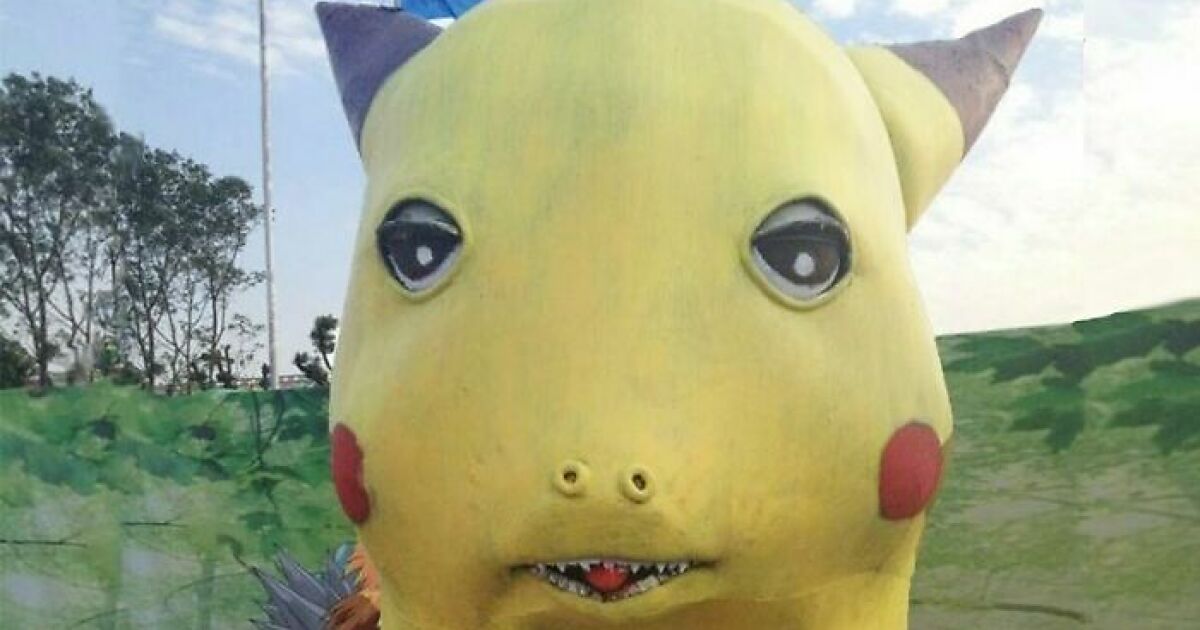
A homemade mascot costume with uneven eyes becomes unforgettable when the person inside appears genuinely proud. The mascot is not trying to frighten anyone. It is simply living its truth, and its truth happens to have six elbows.
Where the Best Cursed Images Hide
You do not need to visit an abandoned hospital or buy a mysterious camera at a yard sale. Your existing files probably contain strange photographs that became invisible through familiarity.
- Old family albums: Search for costume parties, failed crafts, basement gatherings, unusual furniture, and relatives standing proudly beside unexplained machinery.
- Accidental screenshots: Paused videos and mistimed screenshots can turn normal facial expressions into anatomical rebellion.
- Night photography: Flash reflections, glowing animal eyes, fogged windows, and distant figures become naturally uncanny after dark.
- Marketplace listings: Furniture advertisements frequently include one deeply confusing personal object in the background.
- Food experiments: A recipe can fail in flavor, appearance, texture, structural integrity, or all four categories at once.
- Pet photographs: Movement blur, panoramic errors, and poorly timed yawns can transform a beloved animal into a creature rejected from medieval folklore.
- School and office events: Homemade decorations, mascots, motivational costumes, and fluorescent lighting provide an industrial supply of cursed content.
Modern photo libraries can often be searched using descriptive phrases such as “dark room,” “costume,” “blurry,” “old party,” or “strange food.” Proper labels and metadata also help preserve dates, locations, names, and other details that might otherwise disappear. Ironically, good organization makes it easier to find the photographs whose greatest strength is complete disorder.
How to Share Cursed Images Responsibly
Protect Private Information
Before posting a photograph, inspect it carefully for addresses, license plates, identification cards, school names, medical documents, computer screens, financial information, or recognizable children. Crop or blur sensitive details before uploading the image.
Ask permission when an identifiable person is the main subject, particularly when the photograph captures an embarrassing moment. The fact that something is funny does not automatically make it public property.
Digital photographs may also contain technical metadata, including the time, device information, and sometimes the location where an image was captured. Apps may request access to your photo library or location data. The Federal Trade Commission recommends reviewing privacy permissions instead of automatically granting every application broad access.
Keep the Joke Weird, Not Cruel
A cursed-image collection should celebrate visual absurdity rather than humiliate vulnerable people. Avoid sharing private grief, injuries, intimate material, medical emergencies, or photographs that could invite targeted harassment.
The humor should come from strange timing, mysterious objects, confusing composition, or an absurd situation. It should not depend on treating someone’s suffering as entertainment.
Label AI-Generated or Edited Images
Generative AI can create endless impossible pictures, including three-legged office workers, sentient lasagna, and public transportation systems apparently designed by shrimp. These images can be hilarious, but they are different from authentic found photography.
Label AI-generated or heavily edited submissions so viewers understand the game being played. Provenance tools such as Content Credentials are designed to provide information about how media was captured, generated, or modified. Researchers and standards organizations are also studying methods for tracking synthetic content and improving digital-media transparency.
How to Measure an Image’s Cursedness
When several candidates emerge from your storage, apply this unofficial and scientifically questionable scoring system:
- Confusion: Does the image create at least three unanswered questions?
- Atmosphere: Does the lighting imply that the building is technically closed?
- Incongruity: Is something familiar located where it absolutely should not be?
- Delayed discovery: Does the background contain a second curse?
- Harmlessness: Can people laugh without exploiting anyone’s suffering?
- Memorability: Will the image return to your thoughts while you are trying to sleep?
A perfect score is unnecessary. Some images achieve legendary status with one detail: an empty chair facing a wall, a smiling mascot standing too deep in a forest, or a large pumpkin seated politely at a dinner table.
Why Cursed Images Remain Part of Internet Culture
Online humor changes quickly, but cursed images remain recognizable because they do not depend on a single celebrity, television show, political event, or catchphrase. They rely on basic human reactions: surprise, uncertainty, curiosity, and laughter.
The format is also accessible. Anyone can discover a cursed photograph. No professional camera, expensive software, or carefully written punchline is required. Sometimes all you need is an old phone, direct flash, and a relative who has made an unusual decorating decision.
Cursed photos also preserve the imperfect texture of digital life. Grainy uploads, strange family snapshots, outdated websites, and forgotten image archives resist the polished uniformity of modern social feeds. They remind us that the internet once felt less like a luxury showroom and more like a drawer containing 48 unlabeled cables.
Most importantly, sharing cursed images creates a communal game. One person finds the visual mystery, another invents a backstory, and everyone contributes a reaction. The unspoken message is not merely, “What am I looking at?” It is, “Please look at this with me so I am no longer experiencing it alone.”
Conclusion: Open the Folder You Have Been Avoiding
The most cursed image in your files may not be traditionally frightening. It could be a badly lit holiday picture, a pet caught mid-sneeze, a failed cake, an unusually confident mannequin, or a panoramic error that transformed your cousin into a twelve-foot accordion.
What matters is the reaction: confusion followed by laughter, followed by one final uneasy glance.
Search your old downloads, forgotten cloud albums, family group chats, and folders with names like “Miscellaneous 3.” Share the harmless visual disaster that has been waiting years for an audience. The internet already contains enough perfection. What it needs now is your aunt’s homemade Easter rabbit costume standing silently beside a broken lawn mower.
Extended Experience: The Night I Audited My Cursed Camera Roll
I once decided to organize several years of photographs after my phone politely informed me that its storage was nearly full. This sounded like a responsible adult task. I made tea, opened the oldest folder, and immediately discovered a photograph of a plastic baby doll sitting inside a cooking pot.
There was no explanation. The kitchen was not mine. The pot was enormous. The doll wore one sock. The photograph had been taken at 11:48 p.m. on a Tuesday, which somehow made the situation worse.
I stared at it long enough to develop several theories. Perhaps it was part of a party game. Perhaps someone was testing the pot’s capacity. Perhaps the doll had made powerful enemies.
The next file showed a dog standing behind a lace curtain. The camera flash had turned its eyes white, while the curtain resembled an antique wedding veil. The dog looked like the ghost of a Victorian widow who had returned to demand snacks.
I remembered the dog. I did not remember the curtain.
I sent the photograph to a friend, who replied, “Delete this before it learns your name.” That was the precise moment the organizing project ended and the cursed-image expedition began.
I found a bowl containing exactly one wet cracker. I found a store mannequin wearing swim goggles, a winter coat, and no pants. I discovered a blurry photograph of an empty hallway where a mop bucket looked convincingly like a crouching person.
In another picture, three relatives smiled beside a birthday cake while an unknown man inspected a ceiling vent in the background. Nobody in the family recognized him. He was not dressed like a repair technician. He was simply standing on a chair, studying the vent as though it had recently insulted him.
The most effective photograph was also the simplest. It showed a dining table with four chairs, three plates, and a large pumpkin placed upright on the fourth chair. The pumpkin faced the table as if it had arrived on time and expected soup.
Morning sunlight filled the room. Nothing was damaged. Nothing was hidden. Yet the scene possessed the formal stillness of a diplomatic negotiation between humans and seasonal produce.
Reviewing those files taught me that cursedness often develops when context disappears. At the moment a photograph is taken, everyone may understand the joke, accident, or practical reason behind it. Years later, the explanation evaporates while the visual evidence remains.
The image becomes archaeological material from a civilization consisting entirely of your friends making questionable decisions after midnight.
The experience also convinced me to preserve basic information about meaningful family photographs. I now add names, dates, locations, and short descriptions when the context might matter to future generations.
For harmless oddities, however, I occasionally leave the story blank. Future generations deserve accurate archives, but they also deserve to wonder why their ancestors seated a pumpkin at the dinner table like an honored guest.
By the end of the night, I had removed duplicate screenshots, backed up important memories, and created a folder called “Do Not Open While Alone.” It contains no violence, private humiliation, or genuine danger. It is simply a collection of ordinary moments that slipped half an inch out of reality.
That may be the best definition of a cursed image. It is not proof of the supernatural. It is proof that cameras occasionally capture the world before the world has finished explaining itself.