On June 24, 2022, social media stopped behaving like a collection of vacation photos, pet videos, and arguments about whether pineapple belongs on pizza. For several intense hours, it became America’s loudest town hall.
The United States Supreme Court had issued its decision in Dobbs v. Jackson Women’s Health Organization, overturning Roe v. Wade and Planned Parenthood v. Casey. The majority held that the Constitution does not confer a right to abortion and returned authority over abortion regulation to voters and elected representatives.
The legal language was formal. The public response was anything but. Politicians issued carefully prepared statements, celebrities posted emotional messages, activists shared practical resources, corporations announced employee benefits, and ordinary Americans described themselves as heartbroken, relieved, furious, grateful, terrified, or simply numb.
These 50 reactions capture the arguments, emotions, warnings, celebrations, and calls to action that defined the immediate response to the Supreme Court overturning Roe v. Wade. They are paraphrased from public statements and posts rather than reproduced word for word.
What the Dobbs Decision Changed
Roe v. Wade, decided in 1973, had established a federal constitutional framework protecting abortion access. The 1992 decision in Planned Parenthood v. Casey preserved the central protection while allowing additional state regulation.
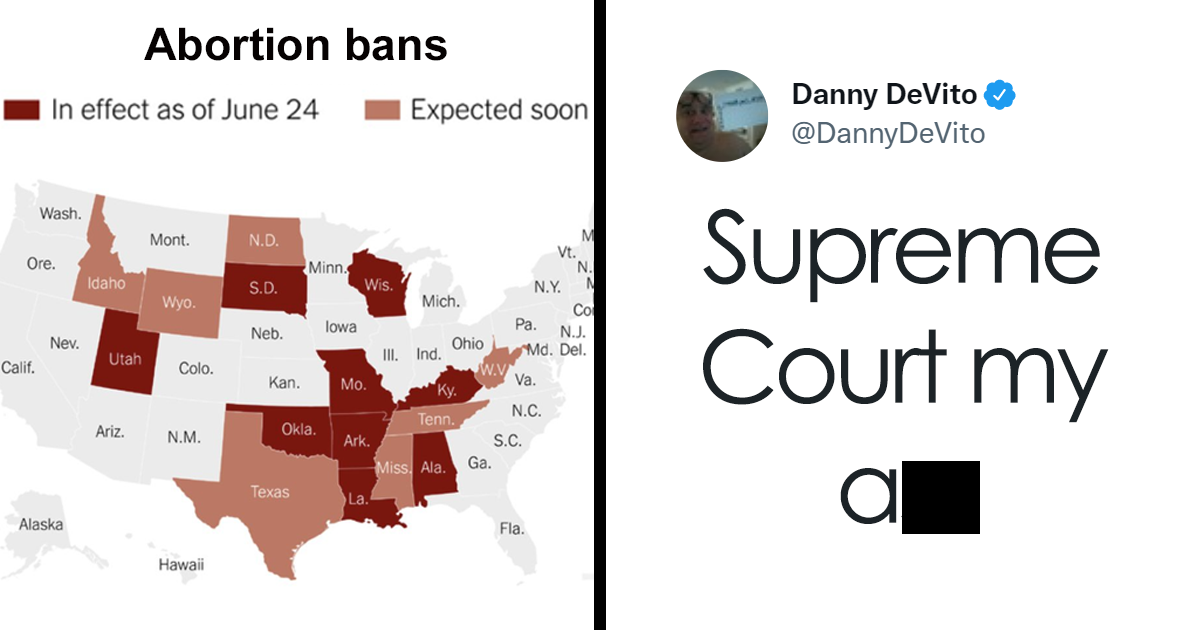
Dobbs removed that federal constitutional protection. It did not automatically create one nationwide abortion policy. Instead, it produced a state-by-state system in which abortion laws could differ dramatically after crossing a border.
That distinction shaped nearly every reaction. Opponents described the ruling as the removal of a previously recognized individual right. Supporters portrayed it as the correction of a poorly reasoned precedent and the restoration of democratic authority to state and federal lawmakers.
50 Important Reactions to Roe v. Wade Being Overturned
Political Leaders Who Condemned the Decision
-
President Joe Biden: Biden called the ruling a sad moment for the country and argued that the Court had expressly taken away a constitutional right previously recognized for Americans. He urged voters to elect lawmakers willing to restore abortion protections through federal legislation.
-
House Speaker Nancy Pelosi: Pelosi described the ruling as cruel and dangerous to Americans’ health and freedom. Her reaction quickly pivoted from grief to electoral strategy, emphasizing that reproductive rights would be decided at the ballot box.
-
Senator Chuck Schumer: Schumer characterized the ruling as one of the country’s darkest days. He placed responsibility on the Court’s conservative majority and warned that millions of Americans had lost a fundamental protection.
-
Attorney General Merrick Garland: Garland said the Justice Department strongly disagreed with the decision. He warned that its effects would be immediate and that people with limited financial resources and people of color would bear particularly heavy burdens.
-
Former President Barack Obama: Obama argued that the ruling transferred an intensely personal decision from patients to politicians. He presented the decision as an attack on individual freedom rather than an isolated dispute over one medical procedure.
-
Hillary Clinton: Clinton said decisions about whether to continue a pregnancy should remain between patients and their doctors. She described the opinion as a historic step backward for women’s rights and broader human rights.
-
Michelle Obama: The former first lady wrote about teenagers and families whose futures could be altered by state restrictions. Her message was emotional but not resigned: she urged younger Americans to recognize that the political story was not finished.
-
Senator Raphael Warnock: Warnock called the decision misguided and devastating for women and families. His response focused on the direct consequences for residents of Georgia and other states positioned to restrict abortion.
-
Kentucky Governor Andy Beshear: Beshear criticized Kentucky’s triggered abortion ban, particularly its lack of broad exceptions for pregnancies resulting from rape or incest. He framed his objection through his experience as a former prosecutor.
-
Florida State Senator Lauren Book: Book wrote that women’s rights had been pushed backward by decades. She emphasized how quickly legal autonomy could disappear once state bans were activated.
Political Leaders Who Celebrated the Ruling
-
Senator Mitch McConnell: McConnell praised the decision as constitutionally correct and historically important. He described it as a victory both for constitutional interpretation and for unborn life.
-
Representative Kevin McCarthy: McCarthy welcomed the ruling as protection for unborn children. His statement reflected the anti-abortion movement’s belief that the decision would save lives rather than remove rights.
-
Former Vice President Mike Pence: Pence declared that life had won and praised the justices who joined the majority. He viewed the ruling as a new beginning for the organized anti-abortion movement.
-
Former President Donald Trump: Trump credited the decision with returning abortion policy to the states. His response also highlighted the lasting influence of the three Supreme Court justices he had appointed.
-
Senator Rick Scott: Scott argued that Roe had improperly created a constitutional right and removed power from elected lawmakers. He praised Dobbs as a defense of federalism and human dignity.
-
Senator Bill Cassidy: Cassidy said the ruling recognized the right to life of unborn children. He also acknowledged the emotional intensity of the issue and noted that states would now develop different policies.
-
Indiana Governor Eric Holcomb: Holcomb responded by promising prompt state action. He called lawmakers back for a special session, showing that the ruling was not merely symbolic; legislation was already waiting in the wings.
-
Senator Cindy Hyde-Smith: Hyde-Smith expressed gratitude for the decision and said Roe had strained the country for too long. Her message blended constitutional, religious, and moral arguments.
-
Mississippi Governor Tate Reeves: Reeves praised the majority for maintaining its position despite intense public pressure surrounding the case. Mississippi’s 15-week law had been the direct vehicle for the challenge.
-
Senator Lindsey Graham: Graham argued that Roe had been constitutionally unsound from the beginning. He portrayed the earlier precedent as an excessive transfer of policymaking power to unelected judges.
Advocacy, Health, and Human-Rights Responses
-
Planned Parenthood: Planned Parenthood told followers that abortion remained health care and that patients still deserved control over their bodies and futures. Its posts combined emotional reassurance with information about where services remained legal.
-
Mini Timmaraju of NARAL Pro-Choice America: Timmaraju warned that the consequences would affect real patients immediately. At the same time, she stressed that losing federal constitutional protection did not end the political or legal fight.
-
Anthony Romero of the ACLU: Romero warned that anti-abortion lawmakers might seek restrictions beyond state trigger laws, including possible federal action. The ACLU treated the ruling as part of a larger conflict involving bodily autonomy and privacy.
-
The Center for Reproductive Rights: The organization described Dobbs as the revocation of a constitutional protection relied upon for nearly half a century. It emphasized legal challenges, patient support, and the growing importance of state constitutions.
-
National Right to Life: The organization celebrated the reversal of Roe, arguing that its reasoning had been weak and politically divisive. It called for abortion policy to be debated through elected legislatures.
-
Penny Young Nance of Concerned Women for America: Nance said the ruling empowered anti-abortion advocates to pursue legislation state by state. Her response made clear that Dobbs was viewed as a starting line, not a finish line.
-
World Health Organization Director-General Tedros Adhanom Ghebreyesus: Tedros expressed disappointment and said women’s rights should be protected. His reaction framed abortion access as an international health and equality concern.
-
The United Nations Secretary-General’s Spokesman: The U.N. response emphasized that restricting legal access does not eliminate abortion but can make it more dangerous. It connected reproductive health with equality and personal agency.
-
French President Emmanuel Macron: Macron expressed solidarity with American women and called abortion a fundamental right. His post showed how quickly a domestic Supreme Court ruling became an international human-rights story.
-
Canadian Prime Minister Justin Trudeau: Trudeau called the development deeply troubling and argued that governments should not control women’s bodily decisions. His reaction was among the strongest statements from a close American ally.
Celebrities and Cultural Figures Who Used Their Platforms
-
Taylor Swift: Swift said she was frightened that decades of organizing for bodily autonomy could be reversed. By sharing Michelle Obama’s message, she amplified the ruling’s possible effects on young women.
-
Bette Midler: Midler responded with unmistakable anger, accusing the Court of ignoring the needs and preferences of much of the public. Subtle it was not, but social media had not scheduled a subtlety convention that day.
-
Patricia Arquette: Arquette contrasted the abortion ruling with the Court’s expansion of gun-carrying protections one day earlier. She argued that the combination revealed distorted national priorities.
-
Viola Davis: Davis described herself as gutted but urged people to use their voices and political power. Her brief reaction captured a common pattern: grief followed almost immediately by mobilization.
-
Aisha Tyler: Tyler warned that the decision would affect families, poverty, household finances, and the wider economy. Her post presented reproductive policy as an issue with consequences far beyond individual patients.
-
Seth MacFarlane: MacFarlane compared the development to a dystopian story that would once have seemed implausible. He connected the ruling to elections, judicial appointments, and political disengagement.
-
Cyndi Lauper: Lauper acknowledged that the day was painful but insisted that civil-rights campaigns do not simply stop after a legal defeat. She called for solidarity with people facing the greatest immediate risks.
-
Andy Cohen: Cohen reacted to the Court’s decisions on abortion and firearms with blunt disbelief. His post summarized the sense of contradiction felt by many abortion-rights supporters.
-
Stephen King: King used dry sarcasm, describing the Court as ideally suited to a much earlier century. It was a compact joke carrying a larger accusation: that the decision moved the country backward.
-
Alyssa Milano: Milano focused on the disproportionate harm likely to fall on communities already experiencing unequal health outcomes, discrimination, and elevated maternal mortality.
-
Elizabeth Banks: Banks wrote about the message the ruling sent regarding the value of a pregnant person’s existing life. Her reaction centered the humanity and circumstances of the patient.
-
Lizzo: Lizzo highlighted long-standing inequalities in access to reproductive health care, especially for Black women and other women of color. She also pledged tour proceeds to Planned Parenthood and abortion funds, with Live Nation offering matching support.
-
Harry Styles: Styles expressed devastation and encouraged followers to check on friends and support one another. His message framed community care as the first response to a frightening political event.
-
Megan Thee Stallion: Megan shared abortion-access information and declared that the Court’s decision would not end the fight. Her posts demonstrated how celebrity accounts could function as resource-distribution networks.
-
Rita Moreno: Moreno recalled surviving a dangerous abortion before Roe. Her personal account moved the discussion away from abstract constitutional theory and toward the medical dangers of inaccessible care.
-
Billie Eilish: Eilish addressed the ruling during a major festival performance, calling it a dark day for American women. The reaction crossed from social media into a live international audience.
-
Meadow Walker: Walker disclosed that she had obtained an abortion in 2020 and described it as a deeply private decision. Her post emphasized why patients may resist government intrusion into reproductive care.
-
Busy Philipps: Philipps said she woke up crying but would continue organizing. Having previously discussed her own abortion, she joined demonstrations and turned personal grief into public advocacy.
-
Olivia Rodrigo and Lily Allen: Rodrigo brought Allen onstage at the Glastonbury Festival and dedicated a protest performance to the justices in the majority. It was not exactly a law-review symposium, but nobody misunderstood the argument.
-
Boris Johnson: The British prime minister called the ruling a major backward step and reaffirmed his support for legal abortion. His response underscored the international surprise generated by the decision.
What These Reactions Revealed About America
The Same Decision Produced Two Completely Different Stories
Supporters and opponents were not merely proposing different policies. They were describing different historical events.
For abortion-rights advocates, the Court had removed a protection involving privacy, equality, health, and personal autonomy. For anti-abortion advocates, it had corrected a constitutional error and allowed voters to protect unborn life through democratic institutions.
This is why the online debate often felt like two radios playing different stations at maximum volume. One side discussed a lost right. The other discussed authority that had finally been returned to the public.
Emotion Quickly Became Organization
The most consequential posts did more than express anger or joy. They supplied clinic information, promoted abortion funds, announced rallies, encouraged voter registration, explained state laws, recruited volunteers, and advertised assistance with travel expenses.
Anti-abortion organizations also shifted rapidly toward state legislatures, candidate recruitment, pregnancy-support programs, and proposals for additional restrictions. Both movements understood that the center of action had moved from one Supreme Court case to dozens of state-level battles.
The Reaction Was Broader Than Party Politics
Public polling shortly after the decision showed that most Americans disapproved of overturning Roe, although views differed significantly by political affiliation, religion, age, education, and other demographic factors.
Online discussion was similarly enormous and divided. Researchers documented a dramatic surge in abortion-related posts on the day of the decision, followed by sustained conversations about health, privacy, state law, elections, inequality, and access to reliable information.
The Experience Behind the Posts: What the Day Felt Like
Reading reactions to the Supreme Court overturning Roe v. Wade was not like following an ordinary political story. It felt more personal, more immediate, and more geographically confusing. A person could read one post saying abortion services remained protected, scroll twice, and encounter another announcing that a clinic had stopped providing care. Both posts could be accurate because they referred to different states.
For many people, the first experience was shock delivered through a phone notification. Even though a draft opinion had leaked weeks earlier, the final ruling still carried a different weight. A leaked document suggested what might happen. A published Supreme Court opinion changed the law.
The next experience was information overload. Social platforms filled with maps, legal summaries, donation requests, protest locations, medical warnings, voting guides, and screenshots of state statutes. Some posts were useful. Others were outdated, oversimplified, or plainly wrong. Users learned quickly that sharing a colorful infographic was easier than confirming whether it accurately described the law in Texas, Michigan, Wisconsin, or Missouri.
At workplaces, the ruling entered conversations that normally avoided politics. Employees asked whether health plans would cover out-of-state treatment. Human-resources departments reviewed travel policies. Companies including Apple, Amazon, Disney, Lyft, Uber, JPMorgan Chase, and Dick’s Sporting Goods discussed or expanded assistance for employees who needed medical services unavailable near home.
These policies were welcomed by many workers, but they also raised uncomfortable questions. Would employees have to reveal private medical information to receive reimbursement? Could travel records become evidence in a legal investigation? Was corporate assistance a meaningful protection, a public-relations strategy, or both? The answer depended heavily on the employer and the details hidden in the benefits paperworkthe natural habitat of important information nobody enjoys reading.
Families experienced the ruling differently as well. Some celebrated together after decades of supporting the anti-abortion movement. Others argued over dinner, exchanged painful personal stories, or discovered that relatives held views they had never discussed openly. People who had experienced abortion, miscarriage, infertility treatment, pregnancy complications, adoption, or sexual violence often found the debate less theoretical than commentators treated it.
Clinicians and clinic employees faced an especially difficult day. They had to interpret changing legal rules while responding to frightened patients. In some locations, appointments were delayed or canceled as providers sought legal advice. In states where abortion remained available, clinics prepared for more patients traveling long distances, often while arranging transportation, lodging, child care, and time away from work.
Protesters and celebrants also occupied the same public spaces. Outside the Supreme Court and in cities across the country, people cried, prayed, chanted, hugged, argued, and held handmade signs. The demonstrations showed why a list of online quotations can never capture the entire response. Posts record language; crowds reveal intensity.
One of the most valuable lessons from that experience was the importance of precision. “Abortion is now illegal” was inaccurate as a national statement. “Nothing has changed” was equally misleading. The legal reality depended on location, pregnancy stage, medical circumstances, court orders, and rapidly changing state policies.
The safest and most useful reactions therefore tended to include practical context. They distinguished personal opinion from legal guidance, directed patients to trustworthy medical providers, avoided publishing sensitive information, and acknowledged uncertainty when courts or lawmakers were still acting.
The day also demonstrated both the strength and weakness of social media. Platforms allowed information, money, and support to move rapidly. They also rewarded outrage, flattened complicated legal questions, and encouraged people to treat the fastest post as the most authoritative one. The internet became a support network, a protest sign, a campaign office, and a rumor millall before lunch.
Conclusion
The most important reactions to the Supreme Court overturning Roe v. Wade mattered because they showed what came next. Some mourned a lost constitutional protection. Others celebrated the return of abortion policy to elected lawmakers. Many immediately began organizing.
The posts also revealed that Dobbs did not settle America’s abortion debate. It relocated that debate to state courts, legislatures, elections, workplaces, medical offices, and individual households. The legal map changed, but the moral and political conflict continued.
Years of litigation and legislation would follow, yet the first day remains significant. It captured a country reacting in real time to a major reversal of precedentwith sorrow, relief, fear, faith, anger, sarcasm, donations, demonstrations, and enough all-capital-letter posts to make every keyboard’s Shift key request paid leave.