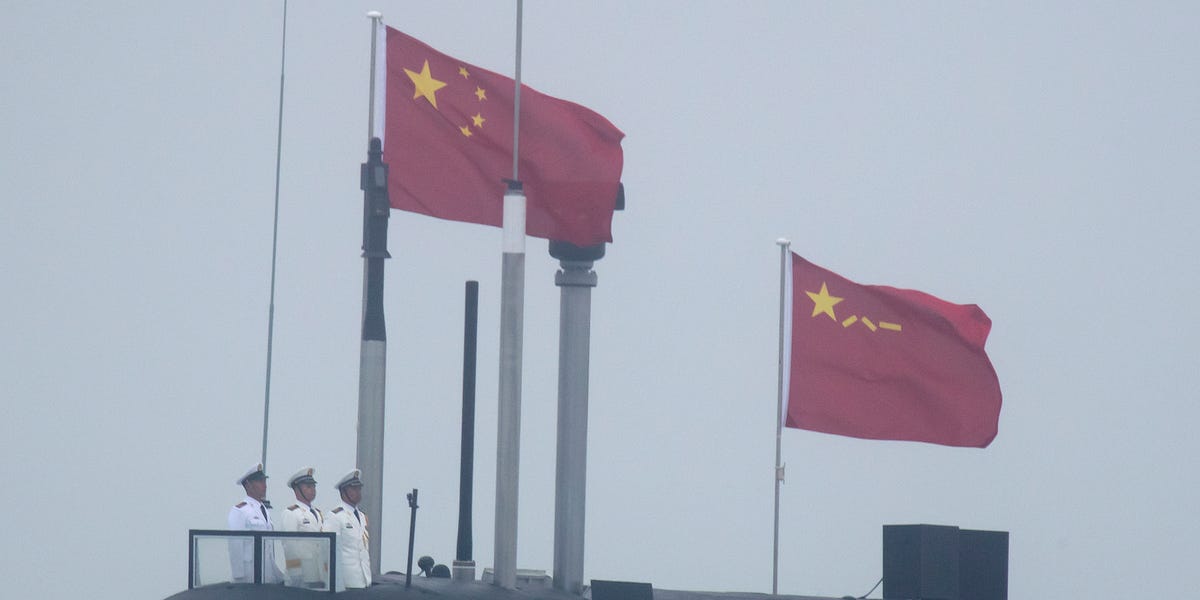
China’s newest nuclear-powered submarine has become one of the most closely watched mysteries in naval defense. Officially, Beijing has not rolled out a glossy brochure, thrown a champagne bottle at the hull, or invited the world to admire its underwater engineering. That is not really China’s style with nuclear submarines. Instead, the world has learned about the new Chinese missile sub through satellite images, shipyard activity, expert analysis, and a lot of careful squinting at pixels from Bohai Shipbuilding in Huludao.
The submarine in question is widely referred to as the Type 095 or Type 09V. It is believed to be a new generation of Chinese nuclear-powered attack submarine, and possibly a guided-missile submarine able to launch cruise missiles from vertical launch cells. In plain English: this is not just another underwater tube with torpedoes. If public estimates are accurate, it could give the People’s Liberation Army Navy, or PLAN, a stealthier, longer-ranged, and more flexible way to threaten surface ships, naval bases, logistics hubs, and land targets across the Indo-Pacific.
That makes the Type 095 important far beyond submarine fan clubs, defense forums, and people who know what “pump-jet propulsor” means before breakfast. It matters because submarines are among the most difficult military platforms to detect, track, and deter. A quiet nuclear-powered submarine armed with long-range cruise missiles can sit below the surface like a very expensive, very patient shark. Nobody wants to find out it is nearby only after the missiles are already flying.
What Is the New Chinese Missile Sub?
The new Chinese missile sub is believed to be the Type 095 nuclear-powered attack submarine, also written as Type 09V. It appears to represent a major step beyond China’s earlier Shang-class nuclear attack submarines, particularly the Type 093 family and the newer Type 093B variant.
Public analysis of satellite imagery suggests the first Type 095 hull appeared at Bohai Shipbuilding in early 2026. Bohai, located in Huludao, Liaoning province, is China’s primary yard for nuclear-powered submarine construction. The facility has expanded significantly over the past decade, and that industrial growth is just as important as the submarine itself. One advanced submarine is news. A shipyard capable of producing more advanced submarines at a steady pace is strategy.
Early estimates describe the new boat as roughly 110 to 115 meters long, with a wider beam than earlier Chinese nuclear attack submarines. Analysts have suggested a submerged displacement in the range of 9,000 to 10,000 tons, placing it in the same broad size conversation as some of the world’s most capable nuclear attack submarines. The wider hull, prominent X-form stern control surfaces, and expected quieting improvements all point toward a clean-sheet design rather than a simple stretch of an older submarine.
Is the Type 095 Nuclear Powered?
Yes, the Type 095 is widely assessed to be nuclear powered. That means it uses a nuclear reactor for propulsion, not that every missile on board is necessarily nuclear-armed. This distinction matters. A nuclear-powered submarine can operate underwater for long periods without needing to surface or snorkel for air, giving it endurance and stealth advantages over conventional diesel-electric submarines.
Nuclear propulsion allows a submarine to travel faster for longer, patrol farther from home waters, and remain submerged for extended missions. For China, this is especially important because Beijing is trying to move from a coastal defense navy toward a force able to operate in the Philippine Sea, the Western Pacific, the Indian Ocean, and possibly farther. A nuclear-powered attack submarine gives the PLAN a mobile, hidden tool for sea denial, surveillance, escort, and long-range strike.
It is helpful to separate three ideas that often get mixed together: nuclear-powered, nuclear-armed, and missile-capable. The Type 095 is expected to be nuclear-powered. It is expected to be missile-capable. Whether it carries nuclear-armed cruise missiles is a separate question, and public information does not confirm that. Most discussion focuses on conventional anti-ship and land-attack cruise missiles.
Can It Launch Cruise Missiles?
The short answer is: very likely, but the exact configuration remains unconfirmed. The Type 095 is expected to include a vertical launch system, commonly called VLS, behind the sail. A VLS allows a submarine to launch missiles upward from dedicated tubes rather than firing everything through torpedo tubes. That increases payload flexibility and can allow a larger salvo of cruise missiles.
China’s Type 093B already appears to have moved the PLAN into the guided-missile nuclear submarine category. U.S. naval assessments have described the Type 093B as a cruise missile attack boat with vertical launch cells, giving China more options for long-range anti-ship and land-attack missions. The Type 095 is expected to build on that foundation with a more advanced hull, better quieting, improved sensors, and a more capable weapons suite.
What cruise missiles might it carry? Public analysts have mentioned possibilities such as land-attack cruise missiles, anti-ship cruise missiles, and newer supersonic or hypersonic weapons. Names often discussed include YJ-series anti-ship missiles and DH-series land-attack missiles. However, China has not publicly confirmed the Type 095’s missile loadout, and serious analysis should avoid pretending that educated estimates are the same thing as verified specifications.
Why Cruise Missiles Change the Game
A torpedo-armed submarine is dangerous. A quiet nuclear-powered submarine with cruise missiles is dangerous in more ways. Torpedoes threaten ships at sea. Cruise missiles can threaten ships, naval bases, command centers, airfields, logistics hubs, and infrastructure from far outside the immediate battle area.
For the PLAN, this means a Type 095 could support multiple missions. In a Taiwan contingency, it could complicate U.S. and allied naval movements. In the South China Sea, it could help enforce sea denial. In the Philippine Sea or beyond the First Island Chain, it could threaten high-value surface groups and support broader anti-access strategies. In peacetime, it could conduct intelligence-gathering patrols while reminding everyone that the ocean has very few fences.
The real value of a cruise missile submarine is uncertainty. Surface ships, air bases, and logistics networks must plan around the possibility that a submarine is nearby. Even if no missile is launched, the threat changes behavior. Ships may operate farther away, aircraft may need more defensive coverage, and commanders may spend more resources on anti-submarine warfare. In military planning, uncertainty is not a bug. It is a feature with a periscope.
How the Type 095 Differs From the Type 093B
The Type 093B appears to be an advanced evolution of the Shang-class line. It is important because it likely introduced a meaningful vertical launch capability to China’s nuclear attack submarine force. But the Type 095 looks more ambitious. Instead of being a modified older design, it appears to be a fresh platform built around higher performance.
The differences seem to include a wider hull, more modern stern control surfaces, improved hydrodynamics, possible pump-jet propulsion, and more attention to acoustic quieting. Quieting is the holy grail of submarine design. A submarine can have impressive weapons, powerful sensors, and a dramatic silhouette, but if it is noisy, it is basically wearing tap shoes in a library.
The Type 095 is likely intended to narrow the gap between Chinese nuclear submarines and the best U.S. and Russian boats. That does not mean it has already caught up. Undersea warfare is brutally difficult. Reactor design, propulsor technology, hull coatings, machinery isolation, sonar processing, crew training, and maintenance discipline all matter. A submarine is not just a platform; it is an ecosystem of engineering, doctrine, and human skill.
Why Bohai Shipbuilding Matters
Bohai Shipbuilding is central to this story. China’s nuclear submarine ambitions depend not only on blueprints but also on production capacity. Over the past decade, open-source imagery has shown expansion at the Huludao yard, including large assembly halls and support facilities. That suggests China wants the ability to build advanced submarines more regularly and possibly in larger numbers.
This is where the Type 095 becomes more than a single submarine. If China can produce one advanced nuclear missile submarine, it gains a new capability. If it can produce several, train crews, integrate weapons, and deploy them reliably, it changes the balance of undersea pressure in the Indo-Pacific.
Submarine fleets are slow to build and hard to master. The United States has spent generations developing undersea dominance, and that advantage does not disappear overnight. Still, China’s shipbuilding scale is a serious factor. The PLAN has already expanded rapidly in surface combatants, amphibious ships, coast guard vessels, and conventional submarines. Nuclear submarines are harder, but the direction of travel is clear.
What the Type 095 Could Mean for the Indo-Pacific
The Indo-Pacific is geography’s way of making military planners lose sleep. The region includes chokepoints, island chains, deep-water patrol areas, major trade routes, and critical U.S. and allied bases. A quieter Chinese nuclear missile submarine could operate beyond China’s near seas and complicate U.S., Japanese, Australian, Philippine, and allied planning.
One major concern is the First Island Chain, which stretches from Japan through Taiwan and the Philippines toward the South China Sea. China sees this region as strategically vital. A Type 095 could help the PLAN contest access through and beyond that chain. Another concern is the Second Island Chain, including Guam, which supports U.S. military logistics and power projection. A submarine able to launch land-attack cruise missiles from concealed positions could force defenders to widen their surveillance and missile-defense planning.
The submarine could also strengthen China’s ability to protect its ballistic missile submarines. Attack submarines often support strategic deterrence by screening patrol areas, hunting enemy submarines, and helping secure bastions. If the Type 095 is quieter and more capable than earlier Chinese boats, it could improve the survivability of China’s broader undersea force.
What We Still Do Not Know
Despite the excitement, many details remain uncertain. Analysts do not know the final missile loadout, reactor performance, acoustic signature, sonar quality, combat system maturity, or operational doctrine. Public estimates about displacement, launch cells, and propulsion are useful, but they are still estimates.
There is also a big difference between launching a new submarine and deploying a fully effective submarine force. After launch comes fitting out, harbor trials, sea trials, weapons testing, crew certification, maintenance cycles, and operational integration. A submarine can look intimidating in satellite imagery and still require years before it becomes a mature fleet asset.
That said, dismissing the Type 095 would be a mistake. China’s naval modernization has repeatedly shown that early skepticism can age poorly. The PLAN has moved from a mostly regional force to the world’s largest navy by hull count, with increasingly sophisticated destroyers, aircraft carriers, amphibious ships, and submarines. The Type 095 fits that larger pattern: more reach, more stealth, more missiles, and more pressure on U.S. and allied forces.
How the U.S. and Allies May Respond
The natural response to better submarines is better anti-submarine warfare. That includes nuclear attack submarines, maritime patrol aircraft, surface ships with advanced sonar, seabed sensors, unmanned underwater vehicles, helicopters, acoustic intelligence, and better data-sharing among allies. The boring phrase is “networked ASW.” The exciting translation is: find the submarine before it finds you.
The United States still has major undersea advantages, especially in submarine design, crew experience, operational history, and alliance networks. Japan and Australia also bring significant anti-submarine capabilities, while the Philippines’ geography is increasingly relevant to regional access and monitoring. But the Type 095 could increase the number of hard problems these countries must solve at the same time.
In a crisis, commanders may need to defend carriers, protect logistics routes, monitor chokepoints, secure undersea infrastructure, and track Chinese submarines operating farther from home. That is a lot of homework, and unfortunately, the ocean does not offer extra credit.
Experience Section: What Following the Type 095 Story Feels Like
Following the story of the new Chinese missile sub is a very particular experience. It is not like tracking a new smartphone, where a leak gives you the camera specs, battery size, and three colors named after fruit. Submarine analysis is more like detective work conducted through fog, with the detective standing in orbit and the suspect hiding under a tarp at a shipyard.
For defense watchers, the first experience is uncertainty. A satellite image appears. A dark shape sits in a launch dock. Analysts compare proportions, shadows, wake marks, older shipyard activity, and previous submarine designs. Then the cautious language begins: “appears to,” “may be,” “likely,” “estimated,” and everyone’s favorite phrase, “if confirmed.” This may sound unsatisfying, but it is how serious open-source intelligence works. Responsible analysis does not turn one fuzzy image into a complete technical manual.
The second experience is perspective. A new submarine rarely matters by itself. What matters is how it fits into a navy’s habits, ambitions, and industrial base. The Type 095 is interesting because it arrives after years of Chinese shipyard expansion, Type 093B development, missile modernization, and a broader push to operate farther from China’s coast. In other words, the submarine is not a surprise meteor. It is another brick in a very large naval wall.
The third experience is humility. Undersea warfare is one of the least transparent areas of military competition. Even governments with enormous intelligence budgets do not know everything. Public readers should be careful with dramatic claims that the Type 095 is either “unstoppable” or “overhyped.” Both are easy headlines. Neither is guaranteed to be true. The better view is that China is improving quickly, but the hardest parts of nuclear submarine warfare remain hard.
The fourth experience is realizing how much geography matters. A submarine launched in northern China can influence thinking around Taiwan, Guam, Japan, the South China Sea, and even the Indian Ocean. That is the strange power of nuclear propulsion and cruise missiles. A vessel most people will never see can shape decisions across thousands of miles.
Finally, there is the human experience of watching an old military balance evolve in real time. For decades, U.S. undersea dominance has been one of Washington’s strongest military advantages. The Type 095 does not erase that advantage, but it suggests China wants to contest it more seriously. For analysts, sailors, policymakers, and curious readers, that makes the new Chinese missile sub more than a technical curiosity. It is a signal from beneath the waves that the next phase of Indo-Pacific competition will be quieter, deeper, and probably much harder to track.
Conclusion
The new Chinese missile sub, widely identified as the Type 095 or Type 09V, appears to be one of the most important developments in China’s undersea modernization. It is believed to be nuclear powered, likely designed with cruise missile launch capability, and built to be quieter, larger, and more capable than previous Chinese nuclear attack submarines.
Its exact specifications remain uncertain, and China has not publicly confirmed the details. Still, the direction is obvious. Beijing wants submarines that can travel farther, hide better, and strike from greater distances. If the Type 095 performs as expected, it could give the PLAN a stronger tool for sea denial, land attack, anti-ship warfare, and strategic pressure across the Indo-Pacific.
For the United States and its allies, the answer will not be panic. It will be persistence: better anti-submarine warfare, stronger alliance coordination, more resilient bases, improved sensors, and continued investment in undersea advantage. The ocean is becoming more crowded, more contested, and more technologically demanding. The Type 095 is not the final word in that story, but it is a loud message from a very quiet boat.