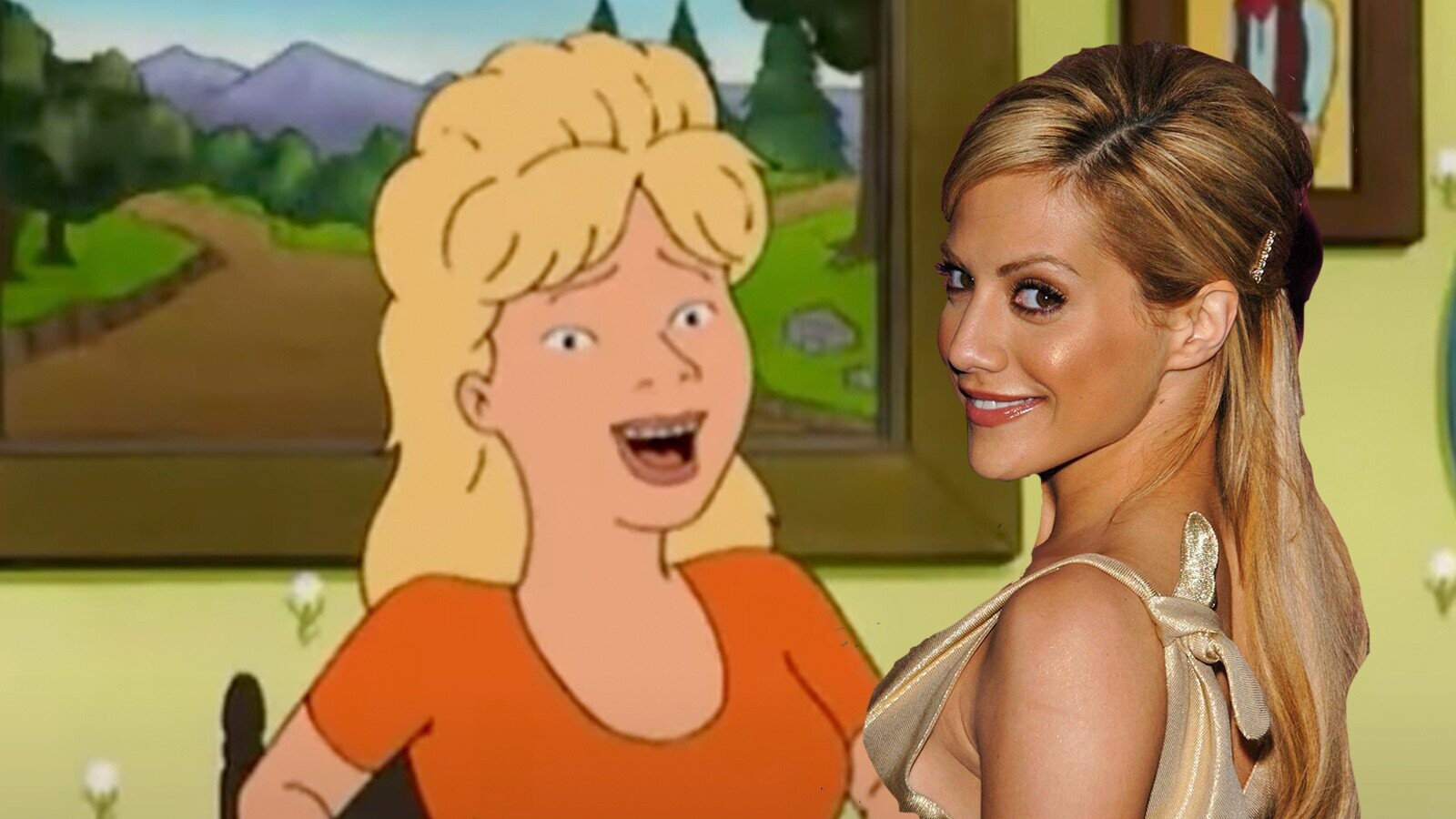
Brittany Murphy had movie-star sparkle, comedic timing, and the kind of voice that could sound sweet, scattered, heartfelt, and hilarious in the same breath. That is exactly why her performance as Luanne Platter on King of the Hill still feels so special. Yes, Murphy had memorable film roles in Clueless, 8 Mile, and Uptown Girls. But on Mike Judge and Greg Daniels’ quietly brilliant animated series, she found something different: a character she could slip into like a favorite pair of boots, preferably while dodging Hollywood chaos and maybe wearing pajamas.
That matters, because King of the Hill was never the loudest animated sitcom on television. It did not arrive with a marching band, a laser cannon, or a chicken fight. It arrived with propane, lawn care, awkward silences, and painfully accurate small-town behavior. And in that grounded world, Luanne Platter could have been a throwaway stereotype: the pretty, naive relative living with the Hills after family disaster. Instead, Brittany Murphy made her one of the show’s warmest, weirdest, funniest hearts.
The result was a character fans still talk about with real affection. Not ironic affection. Not “so bad it’s good” affection. Real affection. And Murphy herself made it clear that voicing Luanne was not just another gig on a call sheet. It was a creative refuge, a home base, and by her own description, a gift.
Why Luanne Platter fit Brittany Murphy so perfectly
Luanne enters King of the Hill as Peggy Hill’s niece, a young woman with big hair, limited practical luck, and a tendency to tumble into life as if gravity were a personal enemy. On paper, that setup sounds like sitcom shorthand. In execution, Murphy turned it into something richer. She gave Luanne a bright, floating optimism that never fully hid her vulnerability. That balance became the secret sauce.
Murphy understood that Luanne was funny, but she also understood why she was funny. The comedy came from innocence, misplaced confidence, emotional sincerity, and the occasional complete misunderstanding of reality. Luanne was not a punchline delivery system with lipstick. She was trying. Often badly, sometimes gloriously, but always sincerely. Murphy played all of that without cruelty, and that is a big reason the character lasted.
There was also something uncannily natural about Murphy’s voice performance. She could make Luanne sound bubbly without making her empty, confused without making her dull, and fragile without making her weak. Plenty of actors can do “ditzy.” Far fewer can make “ditzy” feel human. Murphy did.
More than a cartoon side character
Luanne had her own emotional lane
One of the smartest things King of the Hill ever did was allow Luanne to evolve. She was not frozen in place as a one-joke relative who wandered through the kitchen and said something goofy before exiting frame left. Over the years, viewers saw her struggle, mature, chase jobs, train in beauty school, explore her creativity, and eventually build a family life of her own. In a lesser sitcom, that arc would feel mechanical. In this one, it felt earned.
Murphy’s performance made that growth believable. She could sell Luanne’s comic disasters, but she could also sell her tenderness, hurt, and stubborn hope. That emotional elasticity helped the character become one of the show’s most surprisingly complete people. King of the Hill was always interested in how ordinary people stumble toward adulthood. Luanne may have stumbled harder than most, but she still moved forward.
The show let Murphy play with tone
Murphy once spoke about how freeing the role felt, and you can hear that freedom in the performance. Luanne can be absurd one moment and deeply touching the next. She can shriek, babble, panic, dream, and somehow still land on emotional truth. That tonal flexibility matched Murphy’s broader talent as an actress. She had a knack for making heightened characters feel like they had inner weather.
That is part of what made her such a natural fit for King of the Hill. The show thrived in the gap between the ridiculous and the real. Murphy knew how to live in that gap.
Why Murphy called the role a blessing
When Brittany Murphy described voicing Luanne as “a blessing from God,” the line landed because it did not sound promotional. It sounded personal. She spoke about the part as something restorative. That detail changes how many fans now view her work on the series. Luanne was not merely a side hustle between movies. It was a role Murphy genuinely loved returning to.
And honestly, that tracks. Voice acting gave Murphy room to work without the usual Hollywood circus of cameras, appearances, styling, and tabloid noise. She could focus on performance, rhythm, and character. In other words, she got to do the fun part. No red carpet required. No flashbulbs. Just a microphone, a script, and Luanne’s beautifully chaotic worldview.
Murphy also appreciated the way King of the Hill fit around her film career. As her movie profile rose, the show remained a constant. That stability mattered. She could travel for live-action projects, then return to a character who felt familiar and emotionally open. She even compared the experience to coming home. There is something deeply moving about that image now: a rising star stepping back into the booth and finding family in Arlen, Texas.
The voice behind Luanne was doing more than one job
Longtime fans know a fun bit of King of the Hill trivia: Brittany Murphy also voiced Joseph Gribble before the character aged and the role shifted. It is the kind of detail that makes animation nerds grin and casual viewers say, “Wait, what?” It also says a lot about Murphy’s range.
That versatility tends to get overshadowed because Luanne became so iconic. But it is worth noting that Murphy was not simply “good for one character.” She had the technical control to shape distinct voices and the acting instincts to keep them alive rather than gimmicky. On a show built around subtle comic performance, that skill was a major asset.
It also explains why Luanne never felt like a generic voiceover assignment. Murphy was an actress first, and she treated animation like acting, not like reading lines into a void while checking her watch. You can hear intention in the pauses, excitement in the pitch changes, and vulnerability in the cracks. Luanne sounds lived in.
How Luanne helped define the soul of King of the Hill
King of the Hill built its reputation on restraint. Hank was stiff, Peggy was overconfident, Bobby was eccentric, Dale was unhinged, and Boomhauer sounded like he was speaking fluent lawnmower. But Luanne brought a different texture. She added softness, instability, sweetness, and a kind of dreamy emotional color the show needed.
Without Luanne, the series might still have been sharp and funny, but it would have lost some of its emotional glow. Murphy gave the show one of its purest expressions of hope. Not competent hope. Not polished hope. Messy hope. The kind that starts a puppet ministry, trusts the wrong people, cries in a parking lot, and still wakes up ready to try again tomorrow.
That quality made her scenes stand out. Whether she was clashing with Peggy, leaning on Hank, spiraling into some bizarre scheme, or stumbling toward adulthood, Luanne embodied the show’s compassion. She reminded viewers that people can be ridiculous and lovable at the same time. That is basically the entire thesis of King of the Hill, now that I think about it. Well, that and the importance of proper grilling equipment.
The lasting impact of Murphy’s performance
Brittany Murphy died in 2009 at just 32, and her loss still hangs over conversations about her work. In the case of King of the Hill, that loss feels especially personal because her performance was so intimate. Luanne was not hidden behind blockbuster spectacle. She was in kitchens, alleys, trailers, church halls, and beauty-school daydreams. She lived in the little rhythms of everyday life, which made Murphy’s voice part of the show’s emotional furniture.
That is one reason the King of the Hill revival chose not to recast Luanne. The creative team made clear that some performances are better honored than replaced. It was a respect decision, not a logistics decision. And in Murphy’s case, it makes sense. Luanne was so specifically hers that a replacement might have felt less like continuity and more like imitation.
Even critics who welcomed the revival acknowledged the same thing: Murphy was irreplaceable. That word gets tossed around pretty casually in entertainment, usually five minutes before someone gets replaced. Here, though, it feels accurate. Brittany Murphy did not simply voice Luanne. She authored the emotional frequency of the character.
Why fans still connect with Luanne Platter
Fans remember Luanne because she was funny, sure. But they also remember her because she represented a kind of uncool sincerity television rarely protects. She cared too much, trusted too quickly, and believed life might still turn out okay even after it had repeatedly body-slammed her into the pavement. That sort of optimism can look silly in the wrong hands. In Murphy’s hands, it looked brave.
There is also a generational reason the character lingers. For many viewers, King of the Hill was the anti-chaos cartoon. It did not scream for attention. It earned affection slowly. Luanne fit that perfectly. She was not built to dominate the room. She was built to sneak up on you. One episode you are laughing at her, and five episodes later you realize she is one of the most emotionally recognizable characters on the show.
That kind of connection does not happen by accident. It happens when writing, casting, and performance all line up just right. Murphy was a huge part of that equation.
The experience of revisiting Brittany Murphy’s Luanne now
Watching Brittany Murphy as Luanne Platter now is a different experience than it was during the original run of King of the Hill. Back then, Luanne was often received as one of the show’s funniest wild cards. She would float into a scene with a strange observation, emotional intensity dialed to eleven, and the kind of confidence that only comes from not knowing nearly enough. Viewers laughed because she was unpredictable. Now, viewers laugh and feel something else too: gratitude.
Part of that comes from hindsight. When audiences revisit older episodes, they are no longer just watching a clever animated performance. They are watching an artist who clearly cared about the role and brought real tenderness to it. That changes the emotional math. Small moments land harder. A nervous line reading feels more intimate. A burst of joy sounds less like cartoon energy and more like a performer leaving a bit of herself behind in the booth.
There is also something quietly powerful about how Luanne ages in memory. She starts as the character people assume will be one-note. Then rewatching reveals how much Murphy packed into her. The voice is airy, but the acting is precise. The delivery sounds spontaneous, but the emotional shifts are carefully controlled. Luanne can go from silly to wounded to hopeful in seconds, and Murphy makes that seem effortless. It was not effortless. It was craft dressed up as charm.
For longtime fans, revisiting Luanne can feel a little like opening an old family photo album and finding someone who still looks startlingly alive in every frame. The jokes still work. The sweetness still works. The messiness definitely still works. But there is a bittersweet layer now because viewers know what came later. Murphy’s performance has become one of those rare television turns that feels frozen in its best form: vibrant, warm, and impossible to separate from the person who created it.
That is why so many people responded strongly when the revival chose not to recast her. It was not only about continuity. It was about emotional truth. Fans know when a character belongs to an actor in a deep way, and Luanne belonged to Brittany Murphy. Trying to duplicate that would have missed the point. Better to leave the porch light on than pretend someone else lived in that house all along.
And maybe that is the most fitting way to think about Murphy’s work on King of the Hill. She gave the series brightness without forcing it, comedy without cruelty, and softness without weakness. Luanne Platter could be ridiculous, but she was never disposable. Murphy made sure of that. So when viewers return to Arlen and hear that voice again, the experience is not just nostalgic. It is strangely comforting. Like catching up with a friend who still says the most outrageous things, still means well, and still makes the whole room feel a little lighter.
Conclusion
Brittany Murphy’s relationship with Luanne Platter says a lot about both the actress and the show. Murphy found joy, freedom, and emotional refuge in the role. King of the Hill found one of its most human characters in her performance. The match was unusually perfect.
That is why the phrase “a blessing from God” does not read like Hollywood exaggeration here. It reads like recognition. Murphy knew Luanne gave her something real, and fans can hear that truth every time they revisit the series. In a show famous for dry humor and low-key brilliance, Brittany Murphy brought sparkle, sympathy, and a kind of beautifully off-center heart. Arlen was never the same without her, and television animation is better because she was there at all.