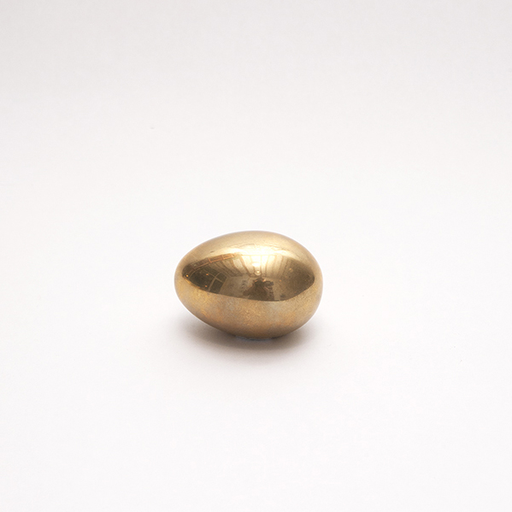
Some design objects shout. Others whisper. The Carl Auböck Studio Brass Egg (Large) does something sneakier: it sits quietly on a desk, glowing like a tiny golden riddle, and somehow makes everything around it look more intentional. A stack of unpaid bills? Suddenly curated. A messy bookshelf? Practically Viennese. A home office that usually says “I answer emails in panic mode”? Now it says “collector with excellent taste.”
This solid brass egg is one of those deceptively simple objects that proves good design does not need to perform gymnastics to be memorable. Made in the tradition of Werkstätte Carl Auböck, the Vienna-based design workshop known for turning everyday items into sculptural treasures, the large brass egg is part paperweight, part collectible, part conversation starter, and part tiny desktop celebrity.
Its appeal comes from a rare mix of warmth, weight, history, and humor. It is not a loud luxury object. It does not sparkle like a chandelier or beg for attention like an oversized logo. Instead, it rewards touch, time, and attention. That is very Auböck: functional, elegant, slightly playful, and just odd enough to make you look twice.
What Is the Carl Auböck Studio Brass Egg (Large)?
The Carl Auböck Studio Brass Egg (Large) is a handmade solid brass decorative object, commonly used as a paperweight, desk accessory, or sculptural accent. Depending on the retailer and production reference, the large version is often described at approximately 2 inches tall or around 5.5 cm, with a satisfying hand-held scale that feels more substantial than its modest dimensions suggest.
It is typically polished brass, stamped with the Auböck mark, and made in Austria using traditional workshop methods. Some listings describe the object as measuring around 2 x 1.5 x 1.5 inches and weighing about 10.6 ounces, which explains why such a small piece can hold down papers, receipts, sketches, or the emotional weight of a very serious to-do list.
The design is minimal, but not boring. Its egg shape is familiar, organic, and almost universal. Yet in polished brass, the form becomes more architectural. It looks like nature went to design school, took a Bauhaus seminar, and came back with better posture.
The Auböck Legacy: A Workshop That Made Everyday Objects Extraordinary
To understand why a brass egg can matter, it helps to understand the family and workshop behind it. The Werkstätte Carl Auböck began as a metal workshop in Vienna, originally producing small bronze objects associated with the Viennese bronze tradition. Over generations, the workshop evolved into one of Austria’s most respected names in modern design.
Carl Auböck II, born in 1900, played a defining role in shaping the studio’s identity. He studied in the orbit of the Bauhaus movement and brought modernist thinking back to the family workshop. Instead of producing decorative objects that merely looked impressive, Auböck developed pieces that combined use, wit, material intelligence, and sculptural charm.
The workshop became known for objects such as ashtrays, corkscrews, bookends, trays, paperweights, bottle stoppers, key holders, and small desk accessories. These were not throwaway household goods. They were everyday objects with personality. A hand-shaped bottle stopper could feel mischievous. A brass paperweight could feel like a tiny monument. A tray could be practical and poetic at the same time.
Today, the Auböck workshop continues under later generations of the family, preserving many historical designs while also collaborating with contemporary designers. That continuity matters. The large brass egg is not just “a cute brass thing.” It belongs to a living craft tradition that still values handwork, material honesty, and small-scale production.
Why the Brass Egg Became a Design Favorite
The reason the Carl Auböck brass egg has such lasting appeal is simple: it does a lot with very little. There are no decorative flourishes, no complicated mechanics, no desperate attempt to be trendy. It is just an egg. But because of its material, weight, polish, and proportion, it becomes something more refined.
It Is Functional Without Looking Utilitarian
As a brass paperweight, the egg performs a practical job. It can hold papers in place, anchor a stack of letters, or sit beside a notebook without looking like office equipment. That is important because most office tools are visually tragic. The average stapler has never made anyone feel sophisticated. The Auböck brass egg, on the other hand, makes paperwork look like a lifestyle choice.
It Has Sculptural Presence
The egg shape is one of the oldest and most recognizable forms in visual culture. It suggests beginnings, balance, fertility, fragility, and potential. In brass, that softness becomes weighty and permanent. The result is a small sculpture that feels ancient and modern at once.
It Ages Beautifully
Brass is not a static material. It reacts to air, touch, humidity, and time. Polished brass can darken, deepen, and develop patina. Some owners polish it regularly to keep the golden shine. Others allow it to age naturally, collecting subtle evidence of use. Either way, the object changes with its environment, which makes it feel personal rather than mass-produced.
Materials and Craftsmanship
The large Auböck brass egg is commonly associated with solid brass, a copper-and-zinc alloy prized for its warmth, durability, and ability to take a beautiful polish. The Auböck workshop is known for traditional metalworking methods, including casting, filing, grinding, polishing, and finishing by hand.
One of the most charming things about handmade brass is that it does not behave like plastic. It may show tiny pores, small marks, subtle surface variations, or differences in finish. These are not defects in the usual sense. They are part of the material’s character. A handmade brass object has a little “life” in it, which is design-speak for “please do not expect this to look like it came from a vending machine.”
Because the object is polished and touched by hand during production, no two pieces are perfectly identical. That individuality is part of the appeal for collectors. The egg is small, but it carries the evidence of process: casting, shaping, polishing, and final inspection. It feels made, not merely manufactured.
Design Style: Bauhaus Discipline Meets Viennese Wit
The Carl Auböck Studio Brass Egg (Large) sits beautifully at the intersection of Bauhaus modernism and Austrian craft. Bauhaus thinking favored clarity, function, and honest materials. Viennese design brought refinement, tactility, and sometimes a sly sense of humor. Auböck objects often live right between those worlds.
The egg is not decorative in a fussy way. There are no engraved flowers, no ornamental borders, no dramatic base. Its beauty depends on proportion, surface, and material. That restraint makes it versatile. It can sit in a mid-century modern interior, a minimalist apartment, a traditional study, or a warm contemporary home without looking out of place.
At the same time, it has a wink built in. A brass egg is inherently a little funny. It is serious and unserious at once. It has the dignity of a sculpture and the humor of an object that seems to ask, “Why am I an egg? Why not?” That playful intelligence is a major reason Auböck pieces remain beloved by designers and collectors.
How to Style the Carl Auböck Brass Egg at Home
Despite its small size, the large brass egg is surprisingly flexible. It does not require a museum pedestal or dramatic lighting, though it would probably accept both without complaint.
On a Desk
This is the most natural home for the brass egg. Place it on top of handwritten notes, beside a fountain pen, near a leather blotter, or on a stack of stationery. It adds polish without making the desk feel staged. It also gives your workspace a tiny reward for existing, which is more than can be said for most spreadsheets.
On a Bookshelf
Use it as a small sculptural accent between books, ceramics, framed photos, or art objects. Brass pairs beautifully with walnut, oak, blackened metal, linen, stone, and glass. On a shelf, the egg works best when it has a little breathing room. Do not bury it behind seven candles and a ceramic mushroom unless the mushroom has a very strong argument.
On a Coffee Table
Placed on a tray or beside a design book, the brass egg adds warmth and shine. It looks especially good with natural textures: woven coasters, stone bowls, handmade ceramics, or a wooden tray. The contrast between polished brass and matte materials makes the piece stand out without shouting.
In an Entryway
On a console table, the egg becomes a refined little punctuation mark. Pair it with a shallow dish for keys, a small lamp, and a vase with branches or seasonal flowers. It signals that someone in the home notices details, even if that same person occasionally loses their keys under the mail.
Who Is It For?
The Carl Auböck Studio Brass Egg (Large) is ideal for people who appreciate design objects with history, craft, and subtle personality. It is especially appealing to collectors of mid-century modern design, fans of Austrian modernism, architects, interior designers, writers, and anyone who believes a desk accessory should do more than merely exist.
It also makes a thoughtful gift. Unlike many decorative objects, it does not require knowing someone’s sofa measurements, wall color, or emotional relationship with throw pillows. It is compact, useful, and elegant. It can work as a graduation gift, housewarming gift, office gift, creative professional gift, or “I saw this and thought of your excellent taste” gift.
How to Care for a Polished Brass Egg
Brass care depends on the look you prefer. If you love a bright golden finish, wipe the egg regularly with a soft cloth to remove fingerprints and moisture. Skin oils can affect polished brass over time, so regular gentle cleaning helps preserve the shine.
If the surface darkens, a suitable brass or metal polishing paste can restore brightness. Always follow the polish manufacturer’s instructions and test carefully. Avoid harsh abrasives, soaking, or aggressive scrubbing. The goal is to clean the object, not interrogate it.
If you prefer natural patina, simply let the brass age. Over time, it may develop a deeper, warmer tone. Many collectors enjoy this because patina gives the object character. A perfectly polished egg feels crisp and glamorous; a patinated one feels soulful and lived-in. Neither is wrong. It is a matter of taste.
Is the Large Brass Egg Worth It?
Value in design is rarely about size alone. If judged by weight and dimensions, the brass egg is small. If judged by craftsmanship, design lineage, material quality, and long-term charm, it becomes much more compelling.
The piece belongs to a category of objects that quietly improve a room. It does not solve a major practical problem. It will not organize your tax documents, answer your emails, or stop your cat from walking across your keyboard. But it adds beauty to ordinary routines. It makes a desk feel more considered. It brings warmth to a shelf. It invites touch. It sparks questions.
That is the real strength of Auböck design: it understands that daily life is made of small interactions. Picking up a paperweight, opening a drawer, holding a key, resting a bookthese tiny moments can be better when the objects involved have been designed with care.
Buying Tips for Collectors
When shopping for a Carl Auböck brass egg, look for clear product details, including size, material, condition, and whether the piece is vintage or current production. Many current-production pieces are still made by the workshop using traditional standards, while vintage examples may show more patina and age-related surface variation.
Check for markings such as the Auböck stamp when available. Review photos carefully, especially the base, surface finish, and any signs of wear. With vintage brass, patina can be desirable, but damage, deep scratches, or questionable attribution should be considered. For higher-value purchases, buy from reputable design dealers, established galleries, or retailers familiar with Auböck work.
Also remember that prices can vary depending on condition, age, source, availability, and whether the object is vintage or newly produced. A current large brass egg may be priced differently from an older collectible example. In the design market, the same egg can wear several hats: desk accessory, collectible, gift object, and small sculpture.
Experience Notes: Living With the Carl Auböck Studio Brass Egg (Large)
Using the Carl Auböck Studio Brass Egg (Large) is a surprisingly sensory experience. The first thing you notice is the weight. It is not heavy in a dramatic way, but it has enough density to feel serious in the hand. That matters. Plenty of decorative objects look nice from across the room but feel hollow or flimsy up close. This egg has presence. Pick it up, and it feels like a small, polished promise that someone cared about the details.
On a desk, it changes the mood immediately. A normal pile of papers says, “I am behind on life.” A pile of papers held down by a brass Auböck egg says, “These documents are part of an elegant intellectual process.” Is that technically true? Maybe not. But design is allowed to help us lie beautifully to ourselves.
The egg also has a calming quality. Its smooth, rounded form makes it easy to hold while thinking. It is the kind of object you may find yourself turning in your palm during a phone call or while staring at a blank page. Unlike a phone, it does not send notifications, tempt you into social media, or remind you that someone from high school is now selling motivational webinars. It simply exists, warm and quiet.
In a home office, the brass egg works especially well with natural materials. Place it beside a walnut pencil cup, a black notebook, a ceramic lamp, or a stack of cream paper, and it immediately looks at home. It can make a modern desk feel less sterile and a traditional desk feel less predictable. The golden tone catches light in the morning and becomes softer by evening, which gives the object a subtle daily rhythm.
Guests tend to notice it, but not always right away. That is part of the pleasure. It does not dominate a room. Instead, someone eventually pauses, picks it up, and asks, “What is this?” That question is the entire charm of the piece. It opens a small door into design history, Austrian craft, Bauhaus influence, brass patina, and the odd magic of making an egg out of metal. Not bad for something that fits in your palm.
It is also a good test of whether a room has enough texture. If the egg looks too shiny or formal, add softer materials around it: books, linen, wood, paper, leather, or stone. If it disappears, give it a cleaner surface or stronger contrast. The object does not need much styling, but it rewards thoughtful placement.
Over time, the brass surface becomes part of the experience. A freshly polished egg has a crisp, golden confidence. A lightly patinated egg feels warmer, quieter, and more personal. Tiny marks from handling can make it feel less like a showroom object and more like something that belongs to your daily life. That is one reason brass has such loyal fans: it ages with you, but far more gracefully after a long week.
The best way to enjoy the Carl Auböck brass egg is not to treat it as too precious. Use it. Move it. Let it hold a receipt, a handwritten note, a postcard, or a sketch. Put it where your hand naturally reaches. The object was born from a tradition that values useful beauty, not untouchable perfection. It is a small reminder that practical things can still have soul, humor, and elegance.
Note: Product details, dimensions, pricing, and availability may vary by retailer, production period, and condition. This article is written for editorial publishing and is based on publicly available design, product, and workshop information.
Conclusion
The Carl Auböck Studio Brass Egg (Large) is proof that great design does not need to be large, loud, or complicated. It takes one of the simplest natural forms and turns it into a polished brass object with function, warmth, and collectible appeal. As a paperweight, it is practical. As a decorative accent, it is elegant. As a piece of design history, it connects a modern desk or shelf to one of Vienna’s most admired craft workshops.
Whether kept bright and polished or allowed to develop a soft patina, the large brass egg offers something increasingly rare: an everyday object with personality. It is small enough to fit anywhere, refined enough to elevate a room, and playful enough to make people smile. In other words, it is exactly the kind of object that proves good taste can come in egg form.