Tight thighs have an impressive sense of timing. They make themselves known when you walk downstairs,tead resemble a folding lawn chair in a windstorm.
The good news is that stretching your thigh muscles does not require elite flexibility, expensive equipment, or the ability to put your ankle behind your head. A few well-chosen stretches can help you move more comfortably, improve flexibility over time, and give your legs a break after long periods of sitting, walking, running, cycling, strength training, or general life-ing.
This guide covers the front, back, inner, and outer areas of the thighs. You will stretch your quadriceps, hamstrings, hip flexors, adductors, and surrounding hip muscles with a simple 11-step routine. The goal is not to force your body into a dramatic pose. The goal is to create gentle tension, breathe, and leave the stretch feeling better than when you started.
Know Your Thigh Muscles Before You Stretch
Your thighs are not one giant muscle wearing a trench coat. Several muscle groups work together to help you walk, climb stairs, squat, kick, run, and keep your knees and hips moving smoothly.
- Quadriceps: The muscles on the front of the thigh that help straighten your knee.
- Hamstrings: The muscles on the back of the thigh that help bend your knee and extend your hip.
- Adductors: The inner-thigh muscles that help bring your legs toward the center of your body.
- Hip flexors: Muscles near the front of the hip that can feel tight after sitting for hours.
- Outer hip and glute muscles: These help control the position of your leg and can affect how your outer thigh feels.
A balanced thigh stretching routine should include more than a quick toe touch. Toe touches are fine for some people, but they do not magically solve every tight-leg situation. Think of your thighs as a team: when one group feels stiff, the others may be joining the complaint department.
Before You Start: Stretch Smarter, Not Harder
Take a short walk, march in place, climb a few flights of stairs slowly, or pedal gently on a stationary bike for several minutes before doing deeper stretches. Warm muscles usually respond better than cold muscles, and your body is less likely to treat the stretch like an unexpected ambush.
For most stretches, hold the position for about 15 to 30 seconds. Breathe slowly instead of holding your breath like you are defusing a bomb. Repeat each stretch one or two times per side. A mild pulling sensation is normal. Sharp pain, tingling, numbness, burning, sudden weakness, or a feeling that something is tearing is not normal.
How to Stretch Thigh Muscles: 11 Steps
Step 1: Warm Up With Easy Movement
Start with three to five minutes of gentle movement. Walk around your home, march in place, do slow leg swings while holding a wall, or take an easy lap around the block. The goal is not to turn your warm-up into a fitness boot camp. You simply want to raise your body temperature and get blood moving before asking your muscles to lengthen.
If you are stretching after a workout, your warm-up is already built in. Just take a minute to slow down and let your breathing settle before beginning.
Step 2: Do a Standing Quadriceps Stretch
Stand beside a wall, chair, or countertop for balance. Bend one knee and bring your heel toward your buttocks. Hold your ankle or the top of your foot with the hand on the same side. Keep your knees close together and gently squeeze the glute on the stretching side.
Avoid arching your lower back or pulling your foot so hard that your knee begins negotiating a labor dispute. You should feel the stretch along the front of your thigh. Hold, switch sides, and repeat.
Step 3: Try a Side-Lying Quad Stretch
Lie on one side with your knees slightly bent and your head supported by your lower arm or a pillow. Bend the top knee and reach back to hold your ankle. Gently draw your heel toward your buttocks while keeping your hips stacked.
This version is useful when balancing on one leg is difficult. Keep your pelvis neutral instead of rolling backward. The stretch should land in the front of the thigh, not your lower back.
Step 4: Stretch Your Hip Flexors in a Half-Kneeling Position
Kneel on one knee with the other foot planted in front of you. Place a folded towel or mat under the kneeling knee for comfort. Tighten your abdominal muscles slightly, tuck your pelvis under, and gently shift your hips forward.
You should feel a stretch near the front of the hip and upper thigh on the kneeling side. Do not lunge forward aggressively. The magic is in the pelvic tuck, not in launching your hips across the room.
Step 5: Use a Prone Quad Stretch
Lie on your stomach with both legs extended. Bend one knee and bring your heel toward your buttocks. Reach back and hold your ankle, or loop a strap around your foot if reaching is uncomfortable.
Keep your hips pressed gently toward the floor and avoid twisting your body. This position can stretch the quadriceps without demanding much balance. Switch sides after holding the stretch comfortably.
Step 6: Perform a Seated Hamstring Stretch
Sit near the edge of a sturdy chair. Extend one leg in front of you with the heel on the floor and toes pointing upward. Keep your back long, hinge forward slightly from your hips, and rest your hands on your thighs if needed.
You should feel the stretch along the back of the extended thigh. Do not collapse your chest toward your knee or round your back dramatically. Your hamstrings are the target; your lower back does not need to audition for the role.
Step 7: Do a Supine Hamstring Stretch With a Strap
Lie on your back with one knee bent and foot on the floor. Raise the other leg toward the ceiling. Hold behind your thigh, or place a yoga strap, towel, or belt around the sole of your foot.
Gently straighten the raised leg until you feel a stretch in the back of the thigh. Keep a soft bend in the knee if necessary. This is one of the most adjustable hamstring stretches because you control the angle and the intensity.
Step 8: Use a Wall Hamstring Stretch
Lie on your back near a wall or doorway. Place one heel against the wall and allow the leg to rest upward. Your other leg can stay flat on the floor or bend comfortably.
Gradually move closer to the wall only if you can do so without pain. This stretch is wonderfully low-drama because gravity does much of the work. Stay relaxed, breathe steadily, and let your hamstrings slowly settle into the position.
Step 9: Stretch the Inner Thigh With a Side Lunge
Stand with your feet wider than hip-width apart. Shift your weight toward one side by bending that knee while keeping the other leg straighter. Keep your chest lifted and your feet pointing mostly forward.
You should feel the stretch in the inner thigh of the straighter leg. Do not force your hips lower than they want to go. A small shift may be enough, especially if your adductors have spent the day sitting quietly and then suddenly received a stretching invitation.
Step 10: Do a Butterfly Stretch
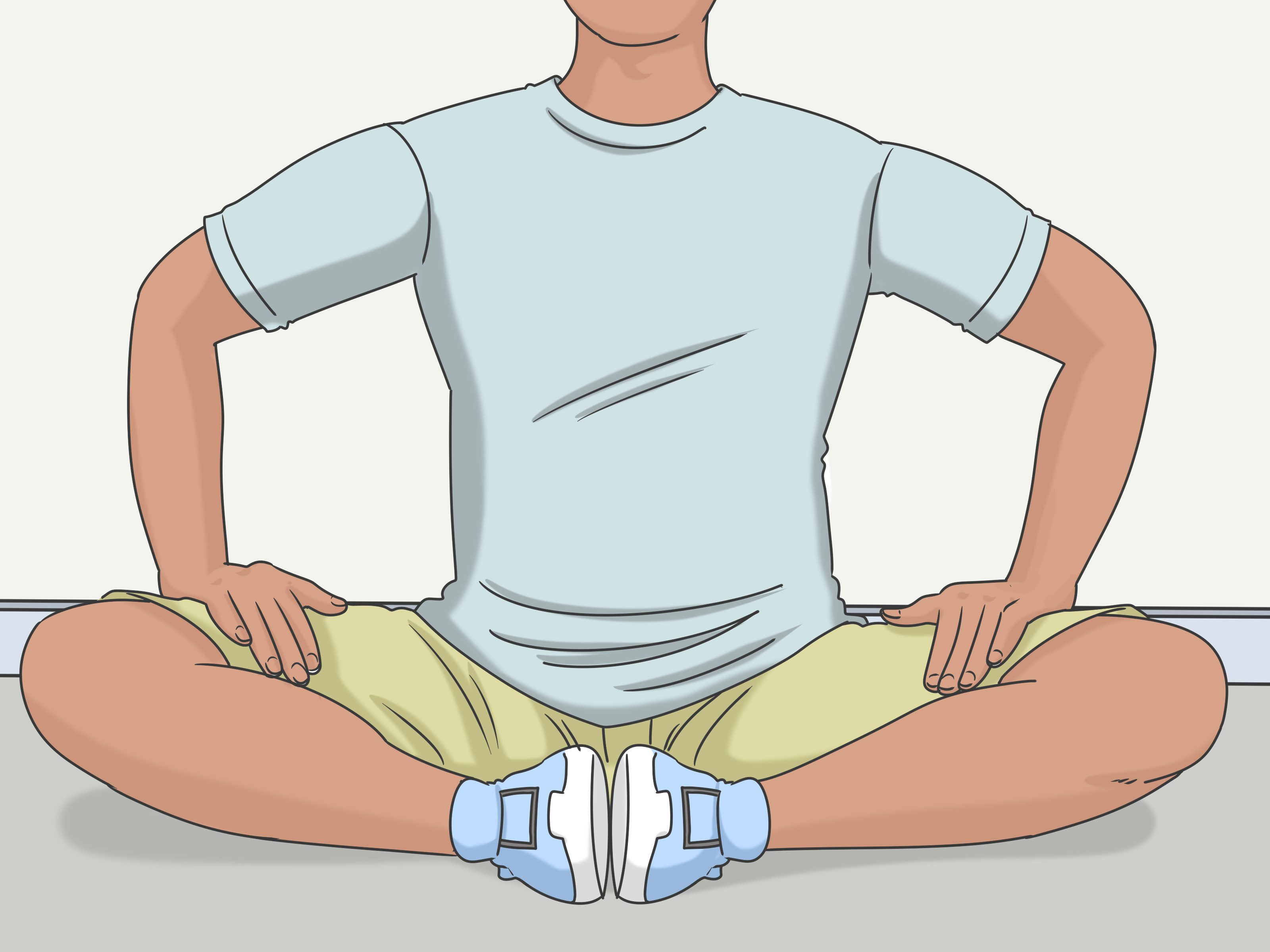
Sit on the floor with the soles of your feet together and your knees opening outward. Sit tall on a folded blanket, cushion, or yoga block if your hips feel tight. Hold your ankles or feet and gently lean forward from the hips.
Let your knees lower naturally. Do not bounce them like butterfly wings trying to escape. You should feel a mild stretch in your inner thighs and hips. Keep your spine long and stop before the stretch becomes painful.
Step 11: Finish With a Figure-Four Outer-Thigh Stretch
Lie on your back with both knees bent. Cross one ankle over the opposite thigh, just above the knee, making a figure-four shape. Gently pull the uncrossed thigh toward your chest.
You may feel this stretch in the outer hip, glute, and upper outer thigh. Keep your shoulders relaxed and avoid yanking your leg toward you. Switch sides when finished. This final stretch is especially welcome after long periods of sitting, walking uphill, cycling, or doing lower-body workouts.
How Often Should You Stretch Your Thigh Muscles?
For general flexibility, stretching your thigh muscles two or three times a week can be helpful, while a short daily routine may feel best for people who sit often or train regularly. Consistency matters more than turning one Sunday afternoon into a flexibility marathon.
Try a simple approach: choose three or four stretches after a workout, then use the full 11-step routine on days when your legs feel especially stiff. Runners may focus more on hamstrings, quadriceps, hip flexors, and outer hips. Cyclists may appreciate extra quadriceps and hip-flexor work. People with desk jobs often benefit from combining hip-flexor stretches with hamstring and glute stretches.
Stretching also works best alongside basic strength training. Strong glutes, hamstrings, and quadriceps help support daily movement. Flexibility without control is a bit like having a very bendy umbrella in a storm: interesting, but not always useful.
Common Thigh Stretching Mistakes to Avoid
Bouncing Through a Stretch
Bouncing can make it harder to control the stretch and may irritate sensitive muscles or joints. Move slowly into position and hold steady instead.
Stretching Through Sharp Pain
A stretch should feel like manageable tension, not like a warning alarm. If you feel sharp pain, numbness, tingling, or sudden weakness, ease out of the position.
Forgetting Your Breathing
Holding your breath often makes your body tense up. Slow, relaxed breathing can help you avoid fighting the stretch with every muscle you own.
Overarching the Lower Back
This often happens during quadriceps and hip-flexor stretches. Lightly tighten your core, squeeze the glute on the stretching side, and keep your ribs from flaring forward.
Trying to “Win” the Stretch
Flexibility is not a competition. Your body does not award bonus points for reaching farther than yesterday. A comfortable routine repeated regularly is usually more useful than a heroic stretch followed by three days of regret.
Real-World Stretching Experience: What a Thigh Routine Often Feels Like
The first few times you stretch your thighs consistently, the biggest surprise may be how uneven your body feels. One hamstring may seem cooperative while the other behaves as though it has filed a formal complaint. One hip flexor may feel loose, while the other makes a half-kneeling stretch feel like a very serious negotiation. That difference is common, especially when you favor one leg for driving, climbing stairs, carrying bags, sports, or standing.
A practical way to begin is to keep the first week almost comically easy. Spend a few minutes walking, choose a quadriceps stretch, one hamstring stretch, an inner-thigh stretch, and a hip-flexor stretch, then hold each one gently. At first, you may notice more awareness than dramatic flexibility. That is normal. Stretching often begins with simply recognizing where your body holds tension.
After several sessions, many people notice that everyday movements feel less stiff. Getting out of a chair may feel smoother. Squatting to reach a lower shelf may require less grunting. Long walks can feel more comfortable because the front and back of the legs are not pulling against each other quite as fiercely. You may also become better at noticing when your thighs need a break before tightness turns into a full-body mood.
The most useful experience is learning the difference between “this is a stretch” and “this does not feel right.” A normal stretch creates a steady pulling sensation that eases when you relax or breathe out. Pain often feels sharp, electric, pinchy, burning, or alarming. Respecting that difference is not being overly cautious; it is good body awareness.
People with sedentary jobs often find that timing matters as much as technique. A five-minute thigh routine after work can feel far more realistic than promising an elaborate hour-long mobility session at 6:00 a.m. before coffee. Runners may prefer longer stretches after easy runs or strength sessions. Lifters may use brief mobility work before training and more relaxed static stretching afterward. The best routine is the one that fits into your actual life instead of starring in a fantasy version of your calendar.
It also helps to keep expectations reasonable. Stretching is not a magic erase button for every ache, injury, or movement problem. It is one tool among many, along with sleep, walking, strength training, recovery days, supportive shoes when needed, and medical care when pain is persistent. Still, a consistent thigh stretching routine can become a small daily reset: a chance to check in with your body, breathe for a minute, and remind your legs that they are allowed to move without feeling like wooden table legs.
Final Thoughts
Learning how to stretch thigh muscles is less about extreme flexibility and more about regular, controlled movement. Warm up first, stretch the front, back, inner, and outer thigh areas, breathe normally, and stop before discomfort becomes pain. With a little consistency, your thighs may become more cooperative during workouts, walks, stairs, and all the random moments when life requires you to bend down without making sound effects.