Note: This article discusses the viral idea behind art-and-sports comparisons without reproducing copyrighted images. It is written for web publication in original language and based on publicly available information.
When the Museum Meets the Stadium
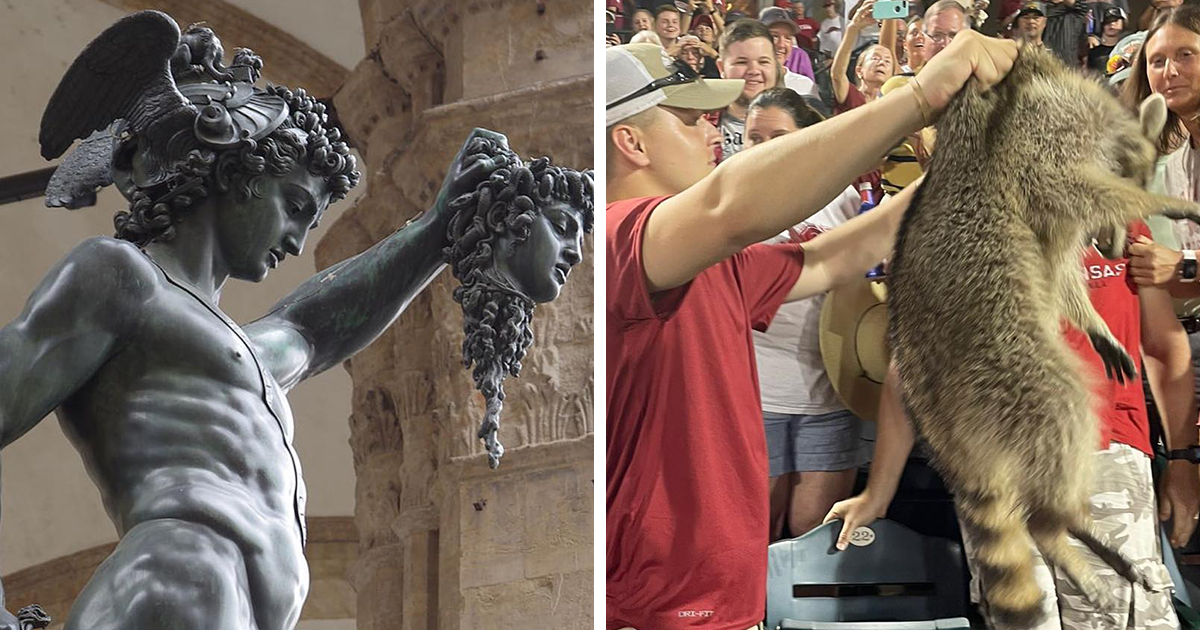
At first glance, fine art and sports look like they live in different neighborhoods. One wears a linen blazer and whispers in a gallery. The other spills nacho cheese on a jersey and screams at a referee through the television. Yet the Instagram account Art But Make It Sports has built an entire viral universe around one hilarious truth: a perfectly timed sports photo can look exactly like a Renaissance painting, a marble sculpture, or a dramatic Baroque scene where everyone appears to be either ascending to heaven or arguing over a loose ball.
The concept is simple, but the effect is weirdly addictive. The account places sports moments beside works of art that mirror their poses, expressions, movement, chaos, or emotional energy. A basketball player flying through the lane suddenly looks like a mythological hero. A football pileup becomes a grand battle painting. A tennis player stretching for a return looks like a tragic figure reaching for destiny, or possibly just a very expensive sports drink.
That is why people find these comparisons so funnily accurate. They do not merely say, “sports are art,” which is a nice sentence that belongs on a coffee mug. They show it. The human body has only so many ways to leap, collapse, twist, celebrate, panic, and dramatically point at something. Artists have been studying those gestures for centuries. Sports photographers capture them in milliseconds. Put the two side by side, and suddenly the distance between a museum wall and a highlight reel shrinks to the size of an Instagram carousel.
What Is Art But Make It Sports?
Art But Make It Sports is a popular social media project created by LJ Rader, an American sports professional and art enthusiast. The account became known for pairing contemporary sports photography with paintings, sculptures, and historical artworks that look uncannily similar. What began as a clever online joke has grown into a recognizable cultural niche: part sports meme, part art history lesson, part “how did he even think of that?” magic trick.
The account’s name is part of the joke. Instead of treating art as something locked safely behind velvet ropes, it drags art onto the court, the field, the rink, the track, and sometimes into the locker-room-level absurdity of modern sports culture. The results are often laugh-out-loud funny because the matches feel both ridiculous and correct. Viewers may not know the title of the painting or the name of the artist, but they instantly understand the pose: the arched back, the raised arm, the exhausted slump, the heroic leap, the teammate frozen mid-celebration like he has just discovered gravity.
In earlier interviews, Rader has explained that the process can work both ways. Sometimes a piece of art comes first, waiting in memory like “meme fuel.” Other times, a viral sports image appears and sends him searching backward through art history for its visual twin. That two-way process is a big reason the account feels fresh. It does not treat art as decoration for sports, or sports as a cheap joke about art. It treats both as visual languages that speak in motion, tension, comedy, and drama.
Why These Sports and Art Comparisons Work So Well
1. Athletes Accidentally Recreate Classical Poses
Great sports photos often happen at the exact point where the human body becomes almost sculptural. A dunker hangs in the air. A goalkeeper stretches with one hand extended. A baseball player dives horizontally, fully committed to either glory or grass stains. These poses echo the same physical questions that painters and sculptors have explored for ages: How does a body move? What does effort look like? How do you freeze power without killing its energy?
Classical sculpture, religious painting, and history painting are full of bodies caught in heightened action. Someone is falling, reaching, leading, collapsing, wrestling, pointing, praying, or triumphing. Sports photography captures the same emotional alphabet, only with sneakers, helmets, wrist tape, and much better camera lenses.
2. The Drama Is Already Built In
Sports are naturally dramatic. Every game has heroes, villains, reversals, heartbreak, questionable judgment, and people shouting advice they are not qualified to give. Fine art, especially older European painting, loves the same ingredients. It gives us battles, betrayals, miracles, feasts, hunts, saints, kings, martyrs, angels, and enough dramatic lighting to make a power outage jealous.
When Art But Make It Sports pairs a chaotic football scrum with a battle painting, the joke lands because both images share the same emotional temperature. Nobody has to explain the comparison. The players are tangled like soldiers. The faces are strained. The composition is crowded. Somewhere in the middle, a person is probably having a very bad afternoon.
3. The Internet Loves a Smart Visual Punchline
The best memes are quick, clever, and shareable. They make people feel like they have understood a joke and discovered a secret at the same time. Art-and-sports comparisons do exactly that. The viewer sees the sports photo, sees the artwork, and experiences a tiny mental fireworks show: “Wait. That actually does look the same.”
That little click of recognition is powerful. It rewards both casual fans and deep nerds. Sports fans get the moment. Art lovers get the reference. Everyone else gets the joke. In a social feed crowded with recycled jokes and blurry reaction images, a well-matched art comparison feels unusually polished, almost like a museum curator got trapped inside NBA Twitter and decided to make the best of it.
Specific Examples That Show the Magic
Some of the most memorable Art But Make It Sports pairings have involved basketball, football, baseball, tennis, hockey, soccer, and Olympic images. The comparisons may connect a modern athlete’s pose with a Renaissance saint, a Baroque battle, a mythological sculpture, or a 19th-century portrait. The humor often comes from the gap between the seriousness of the artwork and the everyday absurdity of sports.
For example, a basketball player getting blocked at the rim can resemble a sculpture of hands reaching and resisting. A player posterizing an opponent can suddenly look like a mythological warrior standing over a defeated foe. A celebration after a championship can echo a feast painting, complete with the same crowded joy, raised arms, and “someone definitely spilled something” energy.
The account has also highlighted women’s sports, which matters because the visual drama of athletic achievement is not limited to men’s leagues. A WNBA pose, a tennis lunge, a soccer collision, or a softball celebration can look just as painterly as any NBA dunk or NFL tackle. In fact, women’s sports often produce some of the most striking images because elite athletes are captured in moments of extreme balance, force, and expression. A good comparison does not ask whether the sport is “big enough.” It asks whether the image sings.
Another charming part of the project is that the artwork is not always a universally famous masterpiece. Sometimes the match comes from a less familiar painting or sculpture, which gives the post a bonus effect: it teaches people without making them feel like they are being assigned homework. Nobody opens Instagram hoping to take a surprise quiz on 17th-century composition. But if the lesson arrives disguised as a hilarious sports meme, suddenly everyone is paying attention.
The Secret Ingredient: Visual Memory
The account works because it depends on more than search skills. It requires a large mental library of images. Rader has described visiting museums, photographing artworks, saving them for later, and remembering compositions that may eventually match a sports moment. That habit turns everyday museum visits into a kind of scouting report. Instead of asking, “Is this painting historically important?” the account also asks, “Could this become a perfect joke during the playoffs?”
That is a delightful way to look at art. It removes the pressure that often scares people away from museums. You do not need to stand in front of a canvas and say something profound about brushwork. You can look at it and think, “That guy looks exactly like a disappointed Knicks fan.” Oddly enough, that may be a valid entry point into deeper appreciation. Humor lowers the drawbridge.
Sports fans, meanwhile, get invited to see highlight photos as compositions. The best sports images are not just records of who won or lost. They are studies in balance, lines, rhythm, framing, contrast, and emotion. A photographer must anticipate the decisive instant, understand the sport, and catch the split second before the magic disappears. That is not so different from the old artistic problem of turning motion into a lasting image.
Why People Find It So Funnily Accurate
Accuracy is the engine of the joke. A weak comparison feels random. A strong comparison makes the viewer suspicious that time travel may be involved. The funniest posts often line up several details at once: the angle of an arm, the tilt of a head, the curve of a back, the direction of a gaze, the arrangement of surrounding bodies, even the emotional mood.
There is also something wonderfully democratic about the format. Fine art has a reputation for being intimidating, expensive, and guarded by people who say “juxtaposition” before breakfast. Sports, by contrast, are public, loud, sweaty, and widely discussed. The account turns both stereotypes upside down. Art becomes funny and approachable. Sports become elegant and historically resonant. The result is not high culture meeting low culture; it is culture meeting culture and realizing they have been wearing the same outfit for centuries.
The comparisons also remind us that human expression has not changed as much as we think. A defeated athlete sprawled on the floor can look like a tragic figure from a painting. A coach pointing furiously can resemble an emperor issuing a command. A fan in the stands can look like a background character from a feast scene who has just heard terrible news about the roast chicken. Different century, same facial expression.
What Creators Can Learn From This Viral Account
Art But Make It Sports is more than a funny page; it is a case study in original content strategy. The account succeeds because it owns a clear concept. People instantly understand what they are getting, but each post still feels surprising. That balance is gold for creators. Too predictable, and the audience gets bored. Too random, and they do not know why to follow. This account stays in the sweet spot: familiar format, fresh execution.
Build a Repeatable Format
A strong content format should be easy to describe in one sentence. “This account compares sports moments with art.” Done. No twelve-slide brand manifesto required. The clearer the format, the easier it is for followers to share it with friends.
Use Specificity as a Superpower
The account does not try to be everything to everyone. It focuses on a specific intersection: sports photography and art history. That narrow lane makes it memorable. Ironically, the more specific the idea, the broader its appeal can become, because people love discovering a niche that feels both smart and entertaining.
Reward the Audience’s Intelligence
The posts do not overexplain the joke. They trust viewers to see the resemblance. That trust makes the audience feel involved. People are not just consuming the joke; they are completing it in their own minds. That is why the comments often feel like a crowd of people happily shouting, “I see it!”
The Bigger Meaning: Sports Are Already Art
The account’s popularity points to a bigger truth: sports have always been aesthetic. Fans talk about speed, grace, touch, rhythm, timing, vision, balance, and form. Those are artistic words. A perfect jump shot has line and release. A great slide tackle has timing and geometry. A sprinter’s stride is repetition with tiny variations. A gymnast’s routine is sculpture that refuses to stay still.
Art has always been physical, too. Painters and sculptors study muscles, weight, motion, and expression. They think about how bodies occupy space and how gestures communicate emotion. The overlap is obvious once someone points it out. That is the gift of Art But Make It Sports: it does not invent the connection; it reveals it, then makes everyone laugh at how obvious it suddenly seems.
This is also why the format has educational value. A person who follows for sports may leave knowing the name of a painter. A person who follows for art may start noticing the beauty of a rebound, a slide, a save, or a tackle. The account sneaks curiosity into the feed. That is a rare achievement in a digital world where most posts are trying to sell something, start an argument, or convince you that a chair from 1973 is “quiet luxury.”
Personal Experiences and Everyday Moments Related to the Topic
Once you start thinking in the Art But Make It Sports style, it becomes almost impossible to stop. Watching a game turns into a strange museum tour. A basketball player falling backward after a contested shot suddenly looks like a figure in a dramatic ceiling fresco. A baseball manager arguing with an umpire becomes a Renaissance debate scene, except one man is wearing cleats and the other has the emotional range of a parking ticket. A soccer player sliding through rain looks like an epic painting about destiny, mud, and hamstring flexibility.
This way of seeing changes the experience of sports. Instead of watching only the score, you begin noticing shapes. You notice the triangle formed by three defenders closing in. You notice the curve of a pitcher’s body just before release. You notice how a wide receiver’s fingertips stretch toward the ball like a figure reaching for divine light. You notice that goalkeepers spend half their lives looking like saints, acrobats, or people who just remembered they left the oven on.
It also changes the experience of visiting museums. Traditional art spaces can feel intimidating, especially for people who did not grow up reading wall labels or pretending to understand why a bowl of fruit is “emotionally revolutionary.” But when you bring sports into the gallery, the room opens up. A warrior sculpture becomes a linebacker. A portrait becomes a disappointed fan. A crowded banquet scene becomes a championship parade after everyone has had too much confidence and not enough water.
The funniest part is how accurate these comparisons can feel in everyday life. Once, while watching a group of friends play pickup basketball, I noticed one player celebrating a lucky bank shot with both arms raised and his head tilted back. He looked less like a weekend athlete and more like a saint receiving a vision, although the vision was probably “I cannot believe that went in.” Another friend missed a layup and slid under the hoop with the sorrow of a tragic oil painting. Nobody painted him, but if they had, the title would have been Man Betrayed by Rim, 2026.
That is the charm of the whole idea. It reminds us that art is not trapped in museums and sports are not limited to scoreboards. Both are built from bodies, stories, timing, failure, triumph, and dramatic faces. A great sports moment can be funny, beautiful, ridiculous, and heroic all at once. So can a painting. So can a sculpture. So can your uncle trying to catch a foul ball while holding nachos. The line between masterpiece and meme is thinner than we think, and sometimes it wears a headband.
For readers, the best way to enjoy this topic is to slow down while scrolling. Do not just ask, “Who is in the photo?” Ask, “What does this image feel like?” Is it victory, defeat, chaos, grace, confusion, devotion, or pure athletic nonsense? That question is where art appreciation begins. It is also where the joke begins. And when both happen at once, you get the rare internet experience that makes you laugh and makes you a little smarter, which is basically a museum membership with better Wi-Fi.
Conclusion
Instagram Account Compares Art With Sports Moments, And People Find It Funnily Accurate (30 Pics) is more than a funny headline. It captures why Art But Make It Sports has become such a beloved internet idea. The account proves that visual culture is full of hidden echoes. A painting from centuries ago and a photo from last night’s game can share the same posture, emotion, and comic timing. That resemblance makes people laugh because it feels impossible, then obvious, then brilliant.
The genius of the concept is that it treats both art and sports with affection. It does not mock museums, and it does not reduce sports to slapstick. Instead, it celebrates the strange beauty of bodies in motion and the timeless comedy of human expression. Whether you are an art lover, a sports fan, a meme collector, or someone who only watches games for the snacks, these comparisons offer a fresh way to see both the canvas and the field.
In the end, the account reminds us that culture is more connected than it looks. The same gestures keep returning: the reach, the leap, the collapse, the celebration, the heroic pose, the tragic flop. Artists painted them. Sculptors carved them. Photographers capture them. Instagram makes us laugh at them. And honestly, that may be one of the most accurate comparisons of all.