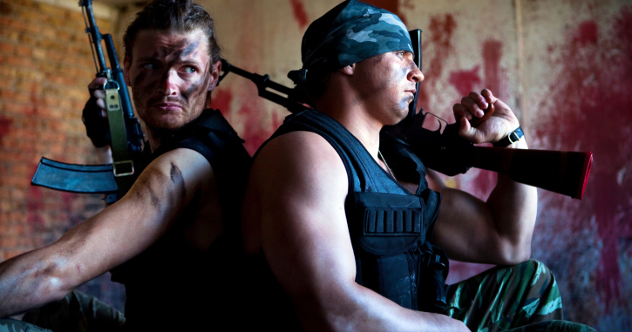
Sapo: Private military companies sound like something invented by a Hollywood screenwriter who drinks too much espresso: armed contractors, secretive deals, conflict zones, and governments pretending the whole thing is “just logistics.” But PMCs are very real. From Iraq and Afghanistan to Ukraine, Syria, Libya, Mali, and the Central African Republic, private military and security contractors have reshaped modern conflict in ways that are hard to track, harder to regulate, and sometimes terrifyingly easy to deny.
Introduction: When War Gets a Business Card
Private military companies, often shortened to PMCs, are private firms that provide military, security, logistics, intelligence, training, or protective services. Some are closer to bodyguard companies with armored SUVs. Others operate in the murkier world of proxy warfare, resource protection, political influence, and combat support. That is where things get spookynot haunted-house spooky, but “who exactly authorized this armed group?” spooky.
To be fair, not every contractor is a mercenary, and not every private security employee is storming around like an action-movie villain. Many contractors cook meals, repair vehicles, run communications, translate documents, build bases, or guard facilities. But the frightening part is the system itself: governments can expand war without officially expanding troop numbers, companies can profit from conflict, and accountability can vanish behind layers of contracts, subcontractors, foreign jurisdictions, and very expensive legal fog machines.
Below are 10 frightening facts about private military companies that explain why PMCs remain one of the most controversial forces in modern warfare.
1. PMCs Can Make Wars Look Smaller Than They Really Are
One of the most unsettling facts about private military companies is that they can help governments reduce the visible footprint of war. A country may announce a troop drawdown while contractors remain behind to guard bases, escort convoys, maintain aircraft, collect intelligence, train local forces, or support special operations. On paper, the war looks smaller. On the ground, the machinery of war keeps humming.
This matters because democracy depends on visibility. Citizens can debate whether troops should be deployed when they know troops are deployed. But when critical war functions are outsourced, the public may not see the full scale of involvement. Contractors can become the hidden scaffolding of military operations: not always glamorous, not always armed, but often essential.
Why This Is Frightening
Contractors can allow a government to sustain overseas operations with less public scrutiny. It is like hiding an elephant under a camouflage tarp and saying, “What elephant?” The elephant, unfortunately, still eats, moves, and occasionally steps on things.
2. Governments May Struggle to Track Who Is Armed
Oversight sounds simple: count the contractors, identify their jobs, track who carries weapons, and monitor what they do. In practice, it can be surprisingly messy. Contractors may work under different agencies, prime contractors, subcontractors, local partners, or temporary arrangements. Job titles do not always clearly describe real duties. A “security specialist” might be guarding a gate, escorting a diplomatic convoy, or advising armed forces.
That creates a frightening administrative gap. If a government cannot comprehensively identify private security contractor personnel, their functions, and whether they are armed, then oversight becomes a guessing game with rifles attached. The problem is not merely paperwork. In conflict zones, bad data can become bad policy, and bad policy can become tragedy.
Why This Is Frightening
War is already chaotic. Adding thousands of private actors whose roles are not always clearly tracked is like trying to manage airport security with a clipboard, a fog machine, and three different spreadsheets named “final_final_REAL.xlsx.”
3. Accountability Can Fall Into Legal Black Holes
When a soldier commits a crime, there is usually a known military chain of command and a legal process. It may not always work perfectly, but the structure exists. With private military contractors, accountability can become far more complicated. Which country has jurisdiction? The contractor’s home country? The country where the incident happened? The government that hired the contractor? The company’s place of registration?
This becomes even more difficult when contractors operate under immunity arrangements or when host countries lack the political power or institutional capacity to prosecute foreign personnel. International law places obligations on states to investigate serious violations, but in the real world, cases can be delayed, disputed, moved across courts, or buried under diplomatic pressure.
Why This Is Frightening
The scariest phrase in this world is not “armed contractor.” It is “unclear jurisdiction.” That phrase can turn justice into a scavenger hunt where every door says, “Not our department.”
4. The Nisour Square Case Showed How Fast Things Can Go Horribly Wrong
The 2007 Nisour Square shooting in Baghdad remains one of the most infamous examples associated with private security contractors. Blackwater personnel, hired to protect U.S. diplomats, opened fire in a busy traffic circle. More than a dozen Iraqi civilians were killed, and many others were wounded. The case caused international outrage and became a symbol of the dangers of privatized force in war zones.
The legal aftermath stretched for years. Contractors were indicted, convicted, resentenced, appealed, and later pardoned, reigniting debate over justice, accountability, and the message sent to civilians harmed by private security forces. Whatever one thinks about the legal arguments, the broader lesson is brutal: a convoy, a perceived threat, a few seconds of gunfire, and an entire nation’s trust can be shattered.
Why This Is Frightening
Private military companies often operate in high-stress environments where split-second decisions can kill innocent people. When those people are not soldiers but civilians trying to get through a traffic circle, the moral stakes are unbearable.
5. War Can Become a Profit Center
Private military companies do not operate on patriotic speeches alone. They operate on contracts. That does not automatically make them sinisterplumbers also operate on contracts, and nobody accuses them of destabilizing Libya. But when the service being sold is armed security, combat support, intelligence, or military training, profit incentives become deeply uncomfortable.
War creates urgent demand. Urgent demand creates rushed procurement. Rushed procurement creates opportunities for overbilling, weak oversight, poor performance, and fraud. Large wartime contracting systems have repeatedly raised concerns about waste, abuse, and opaque spending. In plain English: when money floods into a war zone, not everyone arrives with clean hands and a modest invoice.
Why This Is Frightening
A company may benefit when conflict continues. That does not mean every contractor wants endless war, but the incentive structure is disturbing. If peace is bad for business, something has gone morally sideways.
6. PMCs Give Governments Plausible Deniability
Some governments use PMCs as tools of gray-zone warfare. Instead of sending official troops, they rely on private or semi-private armed groups to train allies, guard infrastructure, support militias, influence politics, or fight alongside local forces. If things go badly, the state can claim the fighters are volunteers, contractors, or independent actors. Convenient, isn’t it? Almost like plausible deniability was the product feature.
The Wagner Group is the most famous modern example. Though publicly framed as a private military company, Wagner has been widely analyzed as a tool of Russian influence, operating in Ukraine, Syria, Libya, Sudan, the Central African Republic, Mali, and other conflict zones. Its activities have included combat support, security training, propaganda, resource extraction, and political influence operations.
Why This Is Frightening
PMCs can blur the line between private business and state violence. When nobody admits control, accountability becomes slippery. A government can project power while keeping its official fingerprints off the weapon.
7. Natural Resources Can Become Part of the Deal
In some conflict zones, private military forces do not simply provide security. They become entangled with gold, diamonds, oil, minerals, ports, checkpoints, and other valuable assets. This is especially alarming in fragile states where armed groups can trade “protection” for access to natural resources.
Reports and sanctions related to Wagner-linked operations in Africa have highlighted a troubling pattern: military support paired with resource extraction. A government receives armed backing. A private military network receives access, influence, mining rights, or commercial privileges. Civilians, meanwhile, may get checkpoints, intimidation, displacement, and a front-row seat to their national wealth being vacuumed out like the world’s worst housecleaning service.
Why This Is Frightening
When guns and minerals share the same business model, conflict can become self-financing. Violence protects extraction, extraction funds violence, and ordinary people are left paying the bill in fear, poverty, and instability.
8. Civilians Often Have No Clear Place to Complain
For civilians living near private military operations, the difference between a soldier, contractor, militia member, foreign adviser, and “security consultant” may be meaningless. What matters is who has the gun, who controls the road, and who can make a family disappear into a bureaucracy of fear.
If civilians are harmed by official troops, they may at least know which government is responsible. With contractors, the complaint chain can become tangled. The company may deny wrongdoing. The hiring government may claim limited knowledge. The host government may lack authority or willingness to act. Subcontractors may vanish. Witnesses may be afraid. Evidence may be classified, lost, or never collected.
Why This Is Frightening
Accountability should not depend on whether a victim can decode a contract structure. Civilians should not need a law degree, a diplomatic map, and a miracle to seek justice.
9. Contractors Pay a Heavy Psychological Price Too
The frightening facts about private military companies are not only about civilians and governments. Contractors themselves can face serious danger, trauma, and neglect. Many work in conflict zones where they experience attacks, isolation, poor living conditions, moral stress, and repeated exposure to violence. Some are former military personnel. Others are foreign workers hired for support roles, sometimes under far worse conditions and with fewer protections.
Research on contractors in conflict environments has found concerns around post-traumatic stress, depression, alcohol misuse, and barriers to care. Unlike uniformed service members, contractors may return home without the same veteran identity, benefits, support network, or public recognition. Their injuries can become invisible, especially if they are third-country nationals or lower-paid workers far from the media spotlight.
Why This Is Frightening
Privatized war does not privatize trauma. It spreads trauma through a workforce that may be less visible, less protected, and easier for governments and companies to forget once the contract ends.
10. The Future of PMCs May Be Even Harder to Control
The next generation of private military activity may not look like men in armored trucks. It may involve drones, cyber operations, surveillance tools, satellite imagery, artificial intelligence, logistics platforms, private intelligence networks, and data-driven targeting support. The modern battlefield is becoming more digital, and private companies already play a major role in supplying the tools.
This raises uncomfortable questions. If a private firm provides data that helps select a target, is it part of the kill chain? If contractors operate drones, who is responsible for mistakes? If a cyber contractor supports a military operation from another country, where does the battlefield begin and end? The old image of the mercenary with a rifle is outdated. The new version may have a laptop, a drone feed, and a nondisclosure agreement.
Why This Is Frightening
Law moves slowly. Technology sprints. Private military power is moving into spaces where accountability is already struggling to keep its shoes tied.
Experiences Around Private Military Companies: What the Stories Usually Sound Like
When people describe experiences related to private military companies, the stories rarely sound like clean strategy papers. They sound confusing, tense, and personal. A civilian in a conflict zone may remember a checkpoint more vividly than a government policy. The uniforms might not match the national army. The language might be foreign. The vehicles might have no clear markings. The men may say they are trainers, guards, advisers, or “instructors.” To the person trying to get home before curfew, the job title matters less than the weapon pointed at the windshield.
For aid workers, private security can feel like both a shield and a warning sign. On one hand, armed escorts may make it possible to deliver food, medicine, or evacuation support in dangerous areas. On the other hand, moving with heavily armed contractors can make humanitarian work look militarized. Local communities may wonder whether the aid group is neutral or attached to a foreign power. Trust, once cracked, is harder to repair than a flat tire on a desert road.
For diplomats and journalists, contractors can be the people who get them through deadly streets alive. That reality should not be ignored. Some private security teams have saved lives under extreme pressure. Many contractors are disciplined professionals who understand that restraint is not weakness; it is survival. But the danger lies in the system around them. Even good people can be placed into bad structures: vague rules, poor oversight, unclear accountability, impossible threat assessments, and incentives that reward speed over caution.
For contractors themselves, the experience can be psychologically strange. They may live like soldiers, face attacks like soldiers, and lose friends like soldiers, yet return home without being treated like soldiers. Some are proud of the work. Some feel used. Some carry guilt, fear, or anger. Some struggle to explain what they did because the job sits in a gray zone: not quite military service, not quite ordinary employment, and definitely not something you casually bring up at a backyard barbecue between the potato salad and the weather report.
For local workers hired by military contractors, the experience can be even harsher. Interpreters, drivers, cleaners, cooks, mechanics, guards, and construction workers may face threats from insurgents because they are seen as helping foreign forces. Yet they may not receive the same evacuation pathways, insurance protections, medical care, or public gratitude as citizens of the hiring country. Their risks are real, but their names often disappear from official memory.
For taxpayers, the experience is distant but important. Most people never see the contract, the subcontract, the emergency modification, or the final invoice. They simply fund a system they barely understand. The result is a democratic blind spot: citizens pay for operations that are partly hidden from public debate. That should make everyone uncomfortable, regardless of political views.
The common thread in these experiences is uncertainty. Who is in charge? Who answers for harm? Who profits? Who protects the vulnerable? Who counts the dead? Private military companies thrive in the space between those questions. And that space is exactly what makes them so frightening.
Conclusion: The Real Fear Is Not the ContractorIt Is the System
Private military companies are not a single villain in a black uniform. They are a symptom of how modern conflict has changed. Governments want flexibility. Militaries need support. Companies see opportunity. Fragile states seek security. Wealthy clients want protection. And somewhere in the middle, armed private actors gain influence over life, death, territory, and political power.
The frightening truth is not that every PMC is evil. The frightening truth is that privatized force can make war easier to start, easier to hide, easier to profit from, and harder to punish. When violence becomes a service package, accountability must be stronger than the sales pitch. Otherwise, the future of war may come with a logo, a contract number, and a customer support line that nobody answers.
Note: This article is for informational and educational purposes only. It does not endorse private military activity, mercenary work, political violence, or participation in armed conflict.