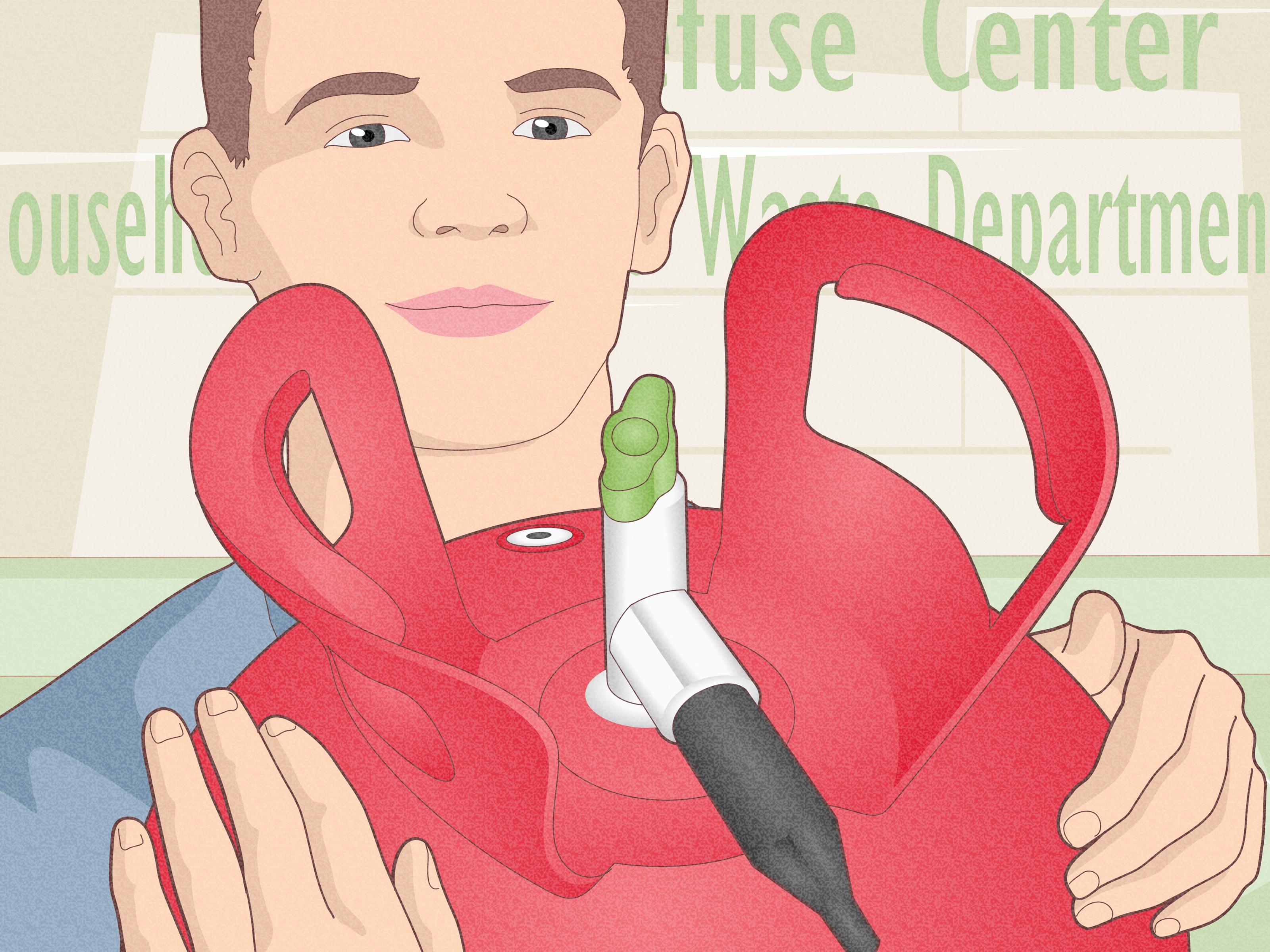
A portable helium tank can turn an ordinary living room into party headquarters in about five minutes. Disposing of the cylinder afterward, however, requires more thought than sweeping up the confetti. Even when a tank appears empty, it may still contain pressure, and waste facilities often handle compressed-gas cylinders differently from ordinary metal cans.
The correct disposal method depends on the tank’s design, condition, manufacturer instructions, and local waste rules. A small nonrefillable party tank may be prepared for scrap-metal recycling, while a refillable or rented cylinder generally belongs back with its supplier. Follow these nine steps to determine what you have, release the remaining gas safely, and choose an approved disposal option without giving sanitation workers an unpleasant surprise.
Why Helium Tanks Require Special Handling
Helium is colorless, odorless, chemically inert, and nonflammable. That sounds reassuring, but it does not make a helium cylinder harmless. The gas is stored under pressure, and a damaged valve can turn a cylinder into a heavy metal projectile. Escaping helium can also displace oxygen in a poorly ventilated space, which is one reason the gas should never be intentionally inhaled.
Compaction equipment at recycling plants and garbage transfer stations creates another concern. A cylinder that still contains pressure may rupture when crushed, even if the contents do not burn. Waste programs therefore need clear evidence that a disposable helium tank is completely depressurized before they can process it as scrap metal.
Helium properties and compressed-cylinder hazards:
Local policies are not uniform. Some communities accept properly emptied party tanks in curbside metal recycling. Others direct all compressed-gas cylinders to a household hazardous waste facility or special collection event. New York City, for example, warns residents not to place pressurized helium tanks in ordinary trash or recycling, while King County, Washington, permits certain small helium tanks at designated facilities only after they are completely empty. Translation: your neighbor’s disposal method may not be legal where you live.
Examples of differing local requirements:
What You May Need
- The tank’s original label or manufacturer instructions
- Safety glasses or protective goggles
- Work gloves
- An adjustable wrench, if specified by the manufacturer
- A flat-head screwdriver and hammer, only when the product instructions specifically require them
- A permanent marker
- A stable outdoor or well-ventilated work area
- Contact information for your local solid waste or recycling authority
Do not begin by reaching for a power drill, saw, nail gun, or other improvised hole-making device. Preparing a manufacturer-approved disposable tank for recycling is not the same as cutting into an unidentified pressure vessel.
How to Dispose of a Helium Tank in 9 Steps
-
Step 1: Identify the Type of Helium Tank
Read every label before touching the valve. Determine whether the cylinder is disposable, refillable, rented, or owned by a gas supplier. Portable party tanks sold with balloon kits are commonly nonrefillable, but large commercial helium cylinders are usually designed for repeated use and may remain the property of the supplier.
Look for wording such as “nonrefillable,” “disposable,” “return to supplier,” or “property of.” Also note the manufacturer, model, tank capacity, and any disposal diagram printed on the packaging. Instructions differ between mini tanks and larger portable party cylinders, even when both come from the same brand.
Return rented and refillable helium cylinders to the distributor. Do not remove their valves, puncture them, place them in curbside recycling, or attempt to convert them into storage containers. If you cannot identify the tank, treat it as a pressurized cylinder and contact a gas supplier or local hazardous waste program.
Disposable and nonrefillable product information:
-
Step 2: Inspect the Cylinder for Damage
Check the tank for deep rust, dents, fire damage, a bent valve, severe corrosion, or signs of leakage. A gentle inspection is enough; this is not the moment to conduct your own laboratory stress test.
If the cylinder is badly damaged, unexpectedly hissing, or too corroded to operate normally, stop. Keep people and pets away, avoid handling the valve, and call the supplier, local fire department’s nonemergency line, or household hazardous waste facility for instructions. Never transport an actively leaking or unstable tank without professional guidance.
Do not strike, drop, roll, or deliberately heat a cylinder. Pressure can remain inside even when the tank feels light.
-
Step 3: Choose a Safe, Well-Ventilated Work Area
Move an undamaged disposable tank outdoors or to an open, well-ventilated area before releasing the remaining helium. Place it upright on a flat, stable surface where it cannot tip over. Keep it away from children, pets, vehicles, open flames, electrical equipment, and crowded walkways.
Helium itself does not burn, but ventilation still matters because any compressed gas can reduce the amount of breathable oxygen in a confined space. Do not empty the tank in a closet, basement corner, car, elevator, or tiny party-supply room that already contains 600 balloons and one exhausted event planner.
-
Step 4: Use or Save Any Remaining Helium
If the tank is in good condition and still contains usable gas, consider finishing the contents rather than releasing helium solely for disposal. Inflate the final balloons, offer the remaining tank to someone planning an event, or store it according to the manufacturer’s instructions.
Many portable party tanks can be stored temporarily when their main valve is tightly closed and the cylinder is kept upright in a cool, dry location. Check the product label for its permitted storage period. Keep the nozzle protected, and never store the tank in direct sunlight, next to a furnace, or inside a hot vehicle.
Do not attempt to refill a cylinder labeled nonrefillable. Its valve and shell were not designed for repeated filling cycles.
-
Step 5: Release All Remaining Gas
Put on gloves and eye protection. Follow the exact release procedure printed on the tank. For many medium and jumbo portable party tanks, this means turning the main valve fully counterclockwise and holding the balloon nozzle in its open position. A mini tank may use a different nozzle mechanism.
Keep your face and body away from the gas outlet. Continue holding the nozzle open until the hissing stops completely. Do not inhale the helium, direct it toward another person, or use it for a high-pitched-voice stunt. The comedy-to-emergency-room ratio is not favorable.
If frost forms around the valve during discharge, pause and allow the components to return to normal temperature. Never force a frozen valve. A tank that will not release its contents normally should be handled by the manufacturer, supplier, or hazardous waste professionals.
Manufacturer depressurization procedure:
-
Step 6: Confirm That the Tank Is Completely Empty
Leave the valve open and press the nozzle again after waiting several minutes. Listen and feel nearbut not directly in front ofthe outlet. There should be no hissing, airflow, or resistance from escaping gas.
A pressure gauge reading zero can be useful when a compatible gauge is already installed, but most disposable party tanks do not have one. Weight alone is not proof that a cylinder is empty. The reliable approach is to follow the manufacturer’s depressurization procedure and verify that no gas escapes from the open nozzle.
If you remain uncertain, do not proceed to valve removal or recycling preparation. Take the intact cylinder to an approved household hazardous waste or compressed-gas collection site.
-
Step 7: Disable the Disposable Tank as Directed by Its Manufacturer
This step applies only to a confirmed-empty, nonrefillable cylinder whose manufacturer provides a specific disabling procedure. Do not apply it to rental tanks, refillable cylinders, commercial gas bottles, damaged containers, or unidentified tanks.
Some portable party-tank manufacturers instruct users to remove the nozzle assembly after depressurizing the cylinder. A medium or jumbo tank may require unscrewing a retaining nut, removing the nozzle, and lifting a designated pressure-relief disk to create a visible opening. Certain mini tanks instead require the nozzle fitting to be loosened with a wrench after all pressure has been released.
Follow the instructions for your exact model rather than copying a random internet video. Use only the tools and access point named by the manufacturer. Never drill through the tank wall, saw the cylinder, throw it into a fire, flatten it with a vehicle, or strike a pressurized tank. If the prescribed part will not move easily, stop and use a hazardous waste facility instead.
Model-specific manufacturer disposal instructions:
-
Step 8: Mark the Cylinder Clearly as Empty
Once the approved opening is visible, circle it with a permanent marker and write “EMPTY” or “DEPRESSURIZED” in large letters on the side of the cylinder. This helps recycling workers distinguish it from an intact pressure vessel.
Remove disposable plastic caps and nozzle parts if the manufacturer says to do so. Sort those pieces according to local rules; they may belong in the trash rather than the recycling bin. Do not reinstall the nozzle or cover the opening, because the visible hole is evidence that the tank can no longer hold pressure.
Keep the prepared cylinder separate from other recyclables until you have confirmed where it is accepted. A responsible handoff beats quietly burying it under a heroic pile of cereal boxes.
-
Step 9: Use an Approved Local Disposal or Recycling Option
Contact your city, county, waste hauler, scrap-metal recycler, or household hazardous waste program before setting out the tank. Describe it accurately: “a completely empty, nonrefillable party helium tank with the valve or designated relief disk removed.” Ask whether it can go in curbside recycling, must be delivered to a transfer station, or requires a special appointment.
Possible disposal routes include:
- A municipal household hazardous waste facility
- A city or county compressed-gas cylinder collection program
- A scrap-metal recycler that accepts visibly depressurized tanks
- A transfer station with a dedicated cylinder area
- A manufacturer, retailer, or gas supplier take-back program
- A scheduled hard-to-recycle or special-waste collection event
Do not assume that a steel tank automatically belongs in the curbside recycling cart. Metal recovery facilities frequently reject pressure vessels because employees cannot easily verify their contents. California, for example, directs residents to special disposal options for compressed-gas cylinders, while Fairfax County, Virginia, lists helium tanks among materials handled through designated facilities and supplier programs.
Local disposal and HHW guidance:
How to Transport a Helium Tank for Disposal
If a facility agrees to accept the tank intact, close the valve unless staff instruct you otherwise, replace the protective cap when available, and secure the cylinder upright so it cannot roll. Use a sturdy box, straps, or another stable support.
Whenever possible, transport cylinders in a pickup bed or vehicle cargo area separated from passengers. Keep the trip direct and avoid leaving the tank in a hot parked car. Tell facility employees what the cylinder held and whether it is empty. Do not conceal it in a bag or mix it with unrelated chemicals.
Household hazardous waste facilities commonly ask residents to keep products in original labeled containers and secure them during transportation. Commercial quantities and business-owned cylinders may be subject to different requirements, so companies should use an authorized gas supplier or industrial waste contractor.
Transport and facility guidance:
Common Helium Tank Disposal Mistakes
Placing a Pressurized Tank in the Garbage
Garbage trucks compress their loads. A cylinder that seems harmless in the driveway can rupture inside the truck or at a transfer station. Never discard a tank while it is pressurized.
Assuming “Nonflammable” Means “No Risk”
Helium will not ignite like propane, but the cylinder still stores mechanical energy. Pressure, damaged valves, heavy metal construction, and oxygen displacement remain legitimate hazards.
Puncturing the Side of the Cylinder
Creating a random hole is not a substitute for following the manufacturer’s disposal design. Only open the specific relief point named in the instructions, and only after confirming that the tank is empty.
Trying to Refill a Disposable Tank
A nonrefillable cylinder is not a bargain reusable pressure vessel. Refilling it can overstress components that were designed for a single service life.
Taking an Unverified Tank to a Scrap Yard
Scrap-metal businesses may refuse closed cylinders because they cannot confirm that the pressure has been released. Call before making the trip and ask what preparation or documentation is required.
Frequently Asked Questions
Can an empty helium tank go in curbside recycling?
Only when your local recycling authority explicitly allows it. The tank generally must be completely depressurized, visibly opened according to manufacturer instructions, and marked empty. Many curbside programs prohibit all compressed-gas cylinders regardless of condition.
Is a helium tank considered household hazardous waste?
Classification and collection policies vary. Helium is inert and nonflammable, but an intact cylinder may be handled through a household hazardous waste or special-waste program because of its pressure. Local agencies make the final acceptance decision.
Can I put a helium tank in a dumpster?
Not unless the dumpster provider has specifically approved a fully depressurized and properly prepared tank. Pressurized cylinders are commonly prohibited from dumpsters, compactors, and construction debris containers.
What should I do with a partly full tank I no longer need?
Contact the retailer, manufacturer, supplier, or local hazardous waste facility. A usable disposable tank may also be transferred to another responsible adult, provided it is undamaged and stored according to the label. Never abandon it outdoors or release the gas inside a building.
What if the valve is stuck?
Do not force it with oversized tools or strike it. Call the manufacturer or take the cylinder to an approved collection program. A stuck valve prevents you from confirming that the tank is empty.
Practical Experiences and Lessons From Real-World Helium Tank Disposal
The most common lesson from disposing of helium tanks is that the physical work is usually easier than finding the correct destination. Emptying an ordinary disposable party tank may take only a few minutes, but local waste websites can use broad categories such as “compressed-gas cylinder,” “special waste,” “scrap metal,” or “household hazardous waste.” Searching only for “helium tank” may produce no result at all.
A productive first move is to photograph the tank’s front label, warning panel, valve, and model number. Those pictures make phone conversations much easier. Instead of telling a recycling employee, “It’s a little green tank from a birthday party,” you can identify the brand, capacity, material, and nonrefillable designation. Specific information tends to produce specific answers.
Another frequent experience is receiving different answers from a city hotline, curbside hauler, and scrap yard. That does not necessarily mean anyone is careless. The organizations perform different jobs and follow different safety policies. A city may legally permit an empty tank in metal recycling, while its contracted sorting facility may refuse cylinders because workers cannot confirm that they are depressurized. In that situation, the most conservative accepting facility is usually the sensible choice.
People also underestimate how long the final portion of gas can take to escape. A tank may stop inflating balloons effectively while still producing a faint hiss when the nozzle is held open. Waiting several minutes and checking again can reveal residual pressure. This extra verification matters because the next stage may involve removing a valve component or exposing a manufacturer-designed relief opening.
Working outdoors improves both safety and comfort. The release sound is less startling, the gas disperses quickly, and there is room to keep children and animals away. Placing the tank in a sturdy crate or between two blocks can prevent it from tipping while the nozzle is held open. The goal is controlled handling, not a wrestling match with a metal cylinder.
Clear labeling makes a noticeable difference at drop-off sites. A large handwritten “EMPTY” beside a visible opening immediately communicates what has been done. Facility workers may still inspect or reject the tank according to policy, but they do not have to guess whether the customer simply turned the valve off and declared victory.
One of the most useful habits is calling before driving. Confirm the facility’s hours, residency requirements, appointment rules, quantity limits, fees, and preparation standards. Some programs accept helium tanks only from residents of their service area. Others require the tank to remain intact, meaning that removing the valve beforehand could actually make the cylinder unacceptable. Local instructions always outrank a generic online checklist.
Storage decisions matter too. After a party, many people assume the tank is empty because the last balloon looked disappointingly earthbound. In reality, the cylinder may still contain enough gas for smaller balloons or future decorations. Closing the valve and storing an undamaged tank according to its label can prevent unnecessary waste. A properly stored tank is more useful than an unnecessarily vented oneand far less awkward than discovering you released all the helium the night before another birthday.
The final lesson is simple: do not improvise around pressure. When a valve is stuck, the tank is heavily rusted, the label is unreadable, or the product design does not match the manufacturer instructions you found, professional disposal is the right answer. Paying a small fee or making a separate trip is less exciting than attacking the cylinder with power tools, but it is considerably better for your garage, your eyebrows, and everyone working at the recycling facility.
Conclusion
Safe helium tank disposal begins with identifying the cylinder. Refillable and rental tanks should go back to their supplier, while a disposable party tank may be eligible for recycling after it has been completely depressurized and prepared exactly as the manufacturer directs.
Never puncture an unknown cylinder, force a damaged valve, or place a pressurized tank in household trash. Confirm local requirements before leaving the tank at the curb or taking it to a recycling facility. Rules vary widely, and one phone call can prevent a wasted tripor a dangerous cylinder from entering compacting equipment.
Once the tank is demonstrably empty, clearly marked, and delivered to an approved program, you can officially close the chapter on the party. The balloons may have come down, but at least your disposal standards remain impressively elevated.