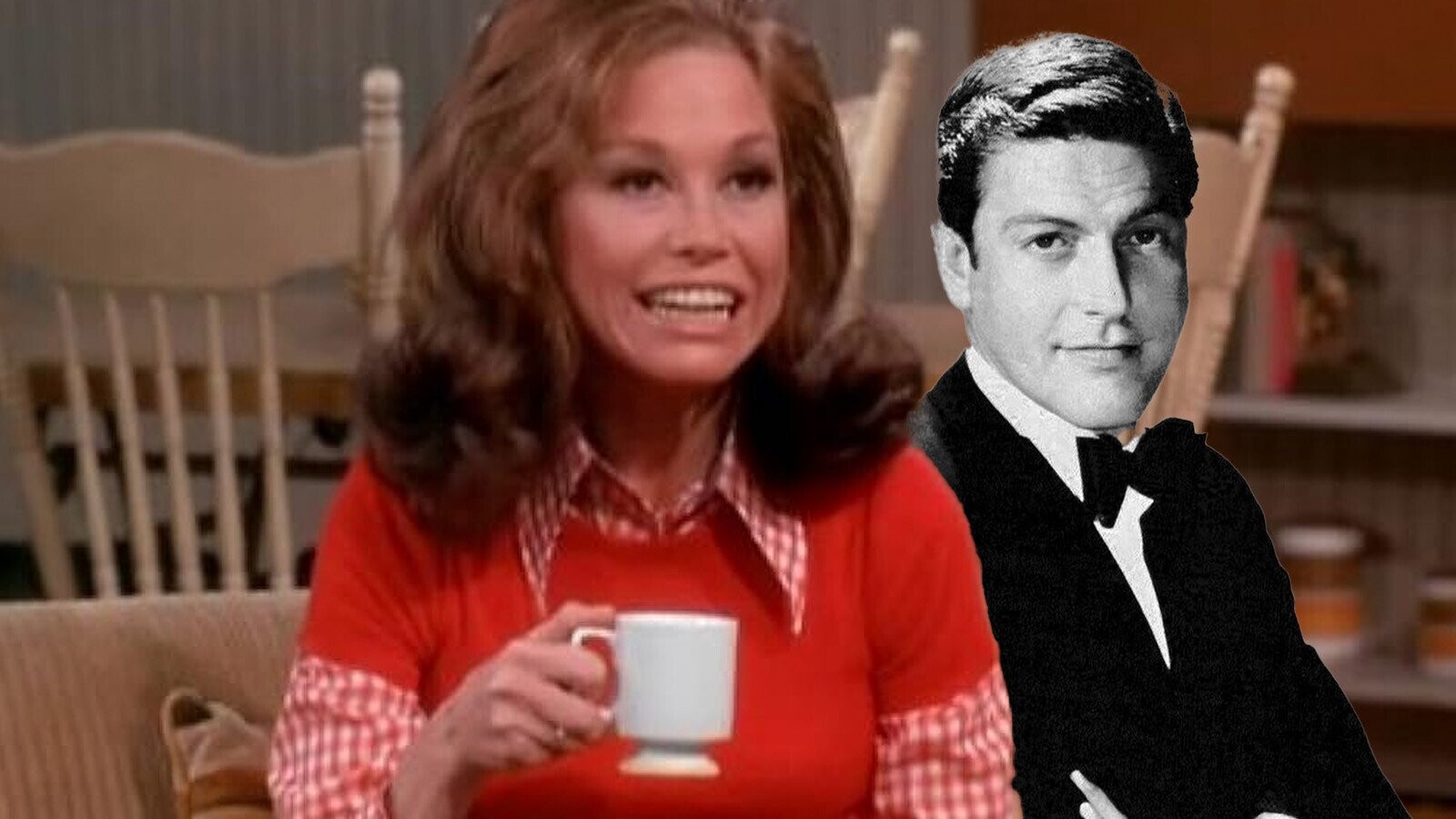
Television history is full of strange decisions that make more sense once you remember one important fact: viewers can get very attached to fictional people. Really attached. In the case of Mary Tyler Moore and Dick Van Dyke, audiences did not merely enjoy watching Rob and Laura Petrie on The Dick Van Dyke Show. Many viewers practically filed them under “America’s Happiest Couple,” right between apple pie and a comfortable living room couch.
So when Mary Tyler Moore was preparing to return to CBS in a new sitcom, later known as The Mary Tyler Moore Show, the network faced a surprisingly delicate problem. How do you turn the woman best known as Laura Petrie into Mary Richards, a modern, independent, unmarried career woman in Minneapolis, without making the audience feel as if Laura had packed a suitcase, left Rob Petrie, and run off to WJM-TV?
The answer, apparently, was simple: keep Dick Van Dyke far, far away.
Why Dick Van Dyke Was Not Invited Into Mary Richards’ World
The main reason Dick Van Dyke never guest-starred on The Mary Tyler Moore Show was not because of bad blood, lack of chemistry, or some secret backstage feud. Quite the opposite. The problem was that he and Mary Tyler Moore had too much chemistry. Their pairing on The Dick Van Dyke Show was so beloved that even a friendly cameo risked pulling viewers out of Mary Richards’ new story and dragging them right back into Rob and Laura Petrie’s living room.
That was dangerous for a show trying to do something fresh. The Mary Tyler Moore Show was not designed as a nostalgic follow-up to The Dick Van Dyke Show. It was a sharp, funny, modern workplace sitcom about a single woman building a career and a life on her own terms. Mary Richards was not Laura Petrie with a new haircut and a colder climate. She was a new character with a new emotional world, new friends, new problems, and a newsroom full of lovable chaos.
Bringing Dick Van Dyke into that world could have been a ratings stunt, sure. But it also could have created the exact confusion the creators and network wanted to avoid. If Van Dyke appeared, viewers might stop thinking about Mary Richards and start wondering, “Wait, is that Rob? Is Laura divorced? What happened to little Ritchie? Did somebody forget to tell us about a sitcom custody battle?”
The Original Plan: Mary Richards Was Going to Be Divorced
The decision becomes even more fascinating when you look at the original concept. Creators James L. Brooks and Allan Burns first imagined Mary Richards as a 30-year-old divorced woman starting over. Today, that premise sounds normal, even tame. In 1970, however, network executives treated it like someone had proposed replacing the CBS eye logo with a flaming toaster.
Divorce was becoming more visible in American life, but television was still cautious about placing a divorced woman at the center of a prime-time comedy. The CBS executives were nervous for several reasons. They worried that audiences would not accept a divorced heroine. They worried that Mary’s age and independence would feel too bold. And most memorably, they worried that viewers would assume Mary Tyler Moore’s new divorced character had divorced Dick Van Dyke.
That fear sounds absurd at first, but in television logic, it was not entirely crazy. Audiences had spent five seasons watching Moore and Van Dyke as Laura and Rob Petrie. Their marriage on screen felt warm, witty, and real. The public often blurs actors with their most famous roles, especially when those roles are emotionally comforting. If CBS introduced Moore as a divorced woman only a few years later, some viewers might have connected dots that were never meant to be connected.
From Divorce to Broken Engagement
The compromise was elegant. Mary Richards would not be divorced. Instead, she would arrive in Minneapolis after ending a long relationship with a man who had not truly committed to marriage. The pilot makes it clear that Mary had invested years in that relationship and had supported her boyfriend through medical school. In other words, she was not a naïve girl looking for a husband. She was a grown woman deciding she deserved better.
This change did not weaken the show. In fact, it helped define it. Mary Richards was single, but she was not desperate. She was independent, but not cold. She wanted love, friendship, meaningful work, and respect. She was not running away from Rob Petrie. She was walking toward her own life.
Mary Tyler Moore Had to Escape Laura Petrie’s Shadow
Mary Tyler Moore’s role as Laura Petrie had made her a star. Laura was stylish, witty, graceful, and hilariously expressive. She could be glamorous one moment and physically comic the next. She wore capri pants at a time when television wives were often dressed like they were attending a suburban tea party with the mayor. Laura Petrie felt fresh, and Moore played her with sparkling precision.
But success can become a very charming cage. After The Dick Van Dyke Show, Moore was strongly associated with being “the wife.” She needed a role that proved she could carry a series as the central figure, not simply shine beside a male lead. The Mary Tyler Moore Show gave her that chance.
That is why a Dick Van Dyke cameo could have been so risky. Even if he appeared as a totally different character, the audience would bring Rob Petrie with them. The laugh might have been huge, but the cost could have been bigger. A cameo can delight viewers for a night; a fully believable lead character sustains a series for seven seasons.
The 1969 Special That Helped Change Everything
Ironically, Dick Van Dyke played an important role in helping Mary Tyler Moore get her own show. In 1969, the two reunited for a CBS variety special called Dick Van Dyke and the Other Woman. The special allowed Moore to sing, dance, clown, and demonstrate that she was more than a sitcom wife waiting for the punchline to arrive through the front door.
The special was successful, and CBS recognized that Moore could stand confidently in the spotlight. That success helped open the door to The Mary Tyler Moore Show. So Van Dyke was not absent from Moore’s career story. In a way, he helped launch the next chapter. Then, once that chapter began, the smartest thing he could do was stay out of the frame.
That is the wonderfully odd twist: Dick Van Dyke helped prove Mary Tyler Moore deserved her own stage, and then his very popularity made it better for him not to step onto it.
Why the New Show Needed a Clean Break
The Mary Tyler Moore Show was not just another sitcom. It became one of the defining comedies of the 1970s because it understood that adulthood is funny, complicated, disappointing, and occasionally interrupted by a terrible office party. The show followed Mary Richards as she worked at WJM-TV in Minneapolis alongside Lou Grant, Murray Slaughter, Ted Baxter, Rhoda Morgenstern, Phyllis Lindstrom, and later Sue Ann Nivens and Georgette Franklin.
That ensemble needed room to grow. Lou Grant had to become Mary’s gruff but deeply human boss. Rhoda had to become her best friend and comic counterweight. Ted Baxter had to be magnificently ridiculous. Sue Ann had to smile sweetly while delivering verbal karate. If Dick Van Dyke had appeared early in the run, he might have tilted the entire series backward toward the 1960s instead of forward into the 1970s.
The Audience Needed to Believe in Mary Richards
For any television character to work, the audience must accept the fictional reality. Mary Richards needed to be real enough that viewers cared about her job interview, her apartment, her friendships, and her romantic disappointments. The show could not afford to have people constantly thinking, “But where is Rob?”
This is why the decision was not merely about avoiding confusion. It was about protecting the emotional architecture of the series. Mary Richards had to stand alone. Her story had to belong to her. Keeping Dick Van Dyke away was a creative boundary, and it was a smart one.
The Rob and Laura Problem: When Chemistry Becomes Too Powerful
Television chemistry is a magical thing, but it can also be a branding problem wearing a nice suit. Rob and Laura Petrie were so convincing as a couple that they became difficult to separate from Van Dyke and Moore themselves. Viewers loved their banter, their affection, their physical comedy, and their domestic rhythm. The Petries felt like a couple you might know, assuming your neighbors were unusually attractive and had professional comedy writers hiding in the kitchen.
That kind of attachment is valuable, but it can follow actors into future projects. Moore’s challenge was not that audiences disliked her. It was that they loved her in a very specific way. She had to invite them to love her differently.
The Mary Tyler Moore Show succeeded because it gave viewers a new reason to connect with Moore. Mary Richards was warm but not perfect, ambitious but not ruthless, polite but not passive. She could be flustered, funny, stubborn, and quietly brave. She was not defined by a husband, ex-husband, or potential husband. She was defined by how she moved through the world.
How the Decision Helped Make TV History
Keeping Dick Van Dyke away may sound like a small casting choice, but it helped protect one of the most influential sitcom identities in American television. The Mary Tyler Moore Show ran for seven seasons, from 1970 to 1977, and won 29 Emmy Awards. More importantly, it helped normalize the idea that a single working woman could be the center of a successful prime-time comedy without being treated as tragic, silly, or incomplete.
The show was funny because its characters were specific. Mary was not a symbol first; she was a person first. That made the social progress feel natural rather than preachy. The series explored workplace sexism, equal pay, friendship, dating, ambition, loneliness, and professional ethics without turning every episode into a lecture. It trusted comedy to carry truth, which is a very Mary Richards thing to do: gracious, smart, and much sharper than people expected.
A Cameo Might Have Been Fun, But Absence Was Better
Would it have been fun to see Dick Van Dyke walk into WJM, trip over an ottoman, and exchange a knowing smile with Mary? Absolutely. Classic TV fans would have lost their collective minds. But the long-term effect might have been distracting. The show did not need Rob Petrie. It needed Mary Richards to throw her hat in the air and own the moment.
By avoiding the easy nostalgia play, the producers gave the audience something better: a new classic. That decision helped Moore move from beloved co-star to television icon. It also showed a level of discipline that modern entertainment could occasionally learn from. Not every shared universe needs to be shared. Sometimes the bravest cameo is the one you do not make.
What This Story Reveals About Television Branding
The reason they kept Dick Van Dyke away from The Mary Tyler Moore Show also reveals a timeless truth about television branding. Viewers do not simply watch stories; they build relationships with them. They remember fictional marriages, fictional apartments, fictional workplaces, and fictional theme songs as if they were part of their own lives.
That emotional memory can help a performer, but it can also limit them. For Moore, Laura Petrie was both a gift and a shadow. The only way to step fully into Mary Richards was to make sure the new show had its own tone, setting, supporting cast, and emotional rules. The newsroom at WJM was not Rob Petrie’s suburban home. Minneapolis was not New Rochelle. Lou Grant was not Rob Petrie. Rhoda was not Millie Helper. And Mary Richards was not Laura Petrie after a bad breakup.
That distinction mattered. It allowed the series to become a workplace comedy, a friendship comedy, and a cultural landmark all at once. It let Mary be independent without being isolated. It let her date without making romance the entire point. It let her career matter. And it let Moore prove that she could carry a series with intelligence, timing, and that famous smile audiences already loved.
Experience: Watching the Absence of Dick Van Dyke Makes the Show Stronger
One of the most interesting experiences for modern viewers is watching The Mary Tyler Moore Show after knowing the backstory. At first, you may expect to feel the absence of Dick Van Dyke. After all, his comic partnership with Moore was legendary. Their timing on The Dick Van Dyke Show had the kind of bounce that makes old sitcoms feel alive instead of dusty. But after a few episodes of Mary Richards at WJM, something surprising happens: you stop waiting for Rob Petrie to appear.
That is when you realize how well the creative reset worked. Mary’s world feels complete without him. Her apartment has its own rhythm. Her newsroom has its own circus. Lou Grant’s gruff interviews, Murray’s dry observations, Ted Baxter’s heroic confidence in his own incompetence, and Rhoda’s perfect eye-roll energy create a new comedy ecosystem. Dick Van Dyke would have been charming, of course, but charm was not the missing ingredient. The show already had plenty of it.
For viewers who have ever tried to reinvent themselves, the story carries an oddly relatable lesson. Sometimes people know you so well in one role that they struggle to imagine you in another. You may be “the dependable one,” “the funny one,” “the assistant,” “the spouse,” “the beginner,” or “the person who always brings the casserole.” Then you change, and everyone looks confused, as if you violated the terms and conditions of your personality.
Mary Tyler Moore’s transition from Laura Petrie to Mary Richards is a polished television version of that very human experience. She had to be familiar enough that audiences followed her, but new enough that they stopped comparing her to her past. That is not easy. It requires confidence, patience, and a little strategic distance from whatever people associate with the old version of you.
In that sense, keeping Dick Van Dyke away was not an insult to him. It was respect for the new story. It honored what Rob and Laura had been by not dragging them into a world where they did not belong. It also honored Mary Richards by allowing her to exist without a famous fictional husband hovering over her shoulder like a very talented ghost in loafers.
The experience of watching the show today proves the wisdom of that choice. Mary Richards does not feel like a replacement for Laura Petrie. She feels like a breakthrough. She is funny in a quieter, more adult way. She is not always sure of herself, but she keeps going. She builds friendships, earns respect, makes mistakes, and survives some truly hazardous social gatherings. In the process, she becomes one of television’s most enduring characters.
That is the real reason the Dick Van Dyke absence matters. It gave Mary Tyler Moore room to become Mary Tyler Moore all over again.
Conclusion
Dick Van Dyke was kept away from The Mary Tyler Moore Show because his presence could have blurred the line between two beloved television worlds. CBS feared audiences might connect Mary Richards to Laura Petrie and assume she had divorced Rob Petrie. Moore herself understood that a Van Dyke appearance might damage the credibility of the new show. So instead of leaning on nostalgia, the series made a clean creative break.
That break helped turn The Mary Tyler Moore Show into a landmark. It allowed Mary Richards to become a fully independent character, not a continuation of Laura Petrie. It gave Moore the space to redefine herself, helped the show build one of TV’s greatest ensembles, and proved that sometimes the smartest way to honor a classic partnership is to leave it untouched.