The Case Study V-Leg Daybed is the kind of furniture that makes a room look as if it has read three design books, drinks black coffee, and somehow never loses the TV remote. Sleek, practical, and confidently mid-century modern, this daybed has become a favorite for people who want one piece to do several jobs without looking like it is trying too hard.
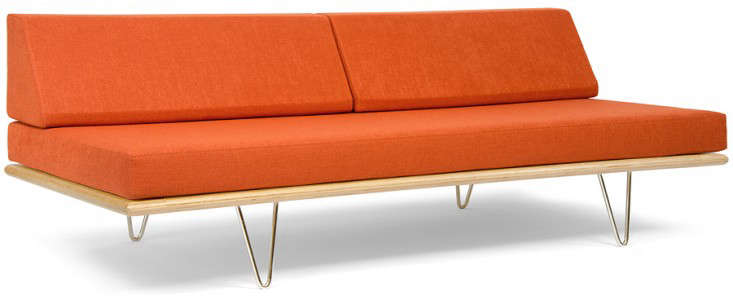
At first glance, it is simple: a clean wooden platform, slim V-shaped metal legs, a mattress-like cushion, and two bolsters that make it feel more like a lounge than a spare bed. But that simplicity is exactly the point. The Case Study V-Leg Daybed is not built around decorative noise. It is built around proportion, materials, flexibility, and the very modern idea that a home should work beautifully even when square footage is acting stingy.
This case study looks closely at why the V-Leg Daybed works, what makes it different from an ordinary sofa bed, how it connects to mid-century modern design history, and how homeowners, renters, stylists, and design lovers can use it in real spaces. Spoiler: it is not just a “pretty couch that naps.” It is a compact design system wearing upholstery.
What Is the Case Study V-Leg Daybed?
The Case Study V-Leg Daybed is a modern daybed produced by Modernica as part of its Case Study Furniture collection. It combines a layered birch frame, a metal spring support system, brushed chrome-plated steel V-legs, high-density foam cushions, and removable bolsters. The result is a piece that works as a sofa, lounge, reading perch, nap station, and guest bed.
Its most recognizable feature is right there in the name: the V-leg base. Instead of chunky block legs or a heavy upholstered pedestal, the daybed sits on angled metal legs that make the frame appear lighter. That small visual trick matters. In a room, furniture with open legs allows the eye to travel underneath the piece, making the floor feel more continuous and the room less crowded. Translation: your apartment does not have to feel like it is wearing a furniture sweater two sizes too small.
Depending on the version or listing, the daybed is generally around 75 inches long and roughly 32 to 33 inches deep, with a low seat height that keeps the silhouette relaxed and architectural. It is large enough to stretch out on, but not so huge that it takes over a room like an overexcited sectional.
The Design Background: Why “Case Study” Matters
The phrase “Case Study” is not just decorative branding. It points back to one of the most influential chapters in American modern design: the Case Study House Program. Launched in the mid-1940s by Arts & Architecture magazine and editor John Entenza, the program challenged architects to imagine practical, modern homes for postwar American life. These houses used industrial materials, open plans, flexible rooms, and a fresh attitude toward indoor-outdoor living.
The famous Eames House, also known as Case Study House No. 8, is one of the best-known examples. It showed that modern design could be warm, personal, creative, and livable rather than cold and museum-like. The broader lesson was simple but powerful: good design should not merely sit there looking impressive. It should support everyday life.
The Case Study V-Leg Daybed fits that spirit. It is not fussy. It does not demand a formal parlor, a velvet rope, or a tiny plaque saying “please admire from six feet away.” It is meant for actual living: sitting, lounging, hosting, reading, scrolling, working, napping, and occasionally giving an overnight guest a place to sleep that is better than an air mattress slowly losing hope in the corner.
Materials and Construction
Layered Birch Frame
The frame is one of the strongest reasons the V-Leg Daybed has design credibility. Modernica describes the piece as being made from twenty-six layers of birch. Layered wood construction provides strength, stability, and a handsome exposed edge that looks intentional rather than hidden. This is not a flimsy frame pretending to be serious. The wood is a major part of the visual identity.
Birch also fits the mid-century modern vocabulary. It is clean, light, and warm without becoming rustic. In many interiors, it pairs beautifully with white walls, concrete floors, wool rugs, vintage lamps, and plants that are thriving only because someone finally remembered to water them.
Steel V-Legs
The brushed chrome-plated steel legs and back supports add contrast to the wood frame. The V shape gives the daybed its architectural character. It also helps create a sense of balance between warmth and precision: wood keeps the piece human; steel keeps it crisp.
This combination is one reason the Case Study V-Leg Daybed can work in many styles. In a pure mid-century modern space, it looks historically appropriate. In a minimalist apartment, it looks clean and disciplined. In an eclectic home, it acts like the calm friend who can sit at any dinner table and somehow make everyone behave.
Foam Cushions and Bolsters
The daybed includes a mattress-style cushion and two bolsters. The bolsters are important because they change the way the piece functions. With the bolsters in place, the daybed reads as a sofa or lounge. Remove them, and it becomes a sleeping surface for a guest.
This is where the design becomes especially useful. Many sleeper sofas require mechanical frames, folding parts, or cushion gymnastics. The V-Leg Daybed keeps the transformation simple. Remove the bolsters, add bedding, and the room has moved from “come over for coffee” to “yes, you can stay the night” without requiring an engineering degree.
Case Study Analysis: Why the V-Leg Daybed Works
1. It Solves the Small-Space Problem Gracefully
Small rooms often suffer from furniture with commitment issues. A sofa is comfortable but cannot sleep a guest. A bed is useful but makes a living room look like someone gave up. A futon is practical but, depending on the model, may radiate “college apartment with a mysterious stain.” The Case Study V-Leg Daybed gives homeowners a more elegant middle path.
It works particularly well in studios, guest rooms, home offices, reading nooks, and open-plan apartments. Because it has a low profile and exposed legs, it does not visually block the room. Because it can convert into a guest bed, it adds function without adding another bulky object.
2. It Looks Good From Multiple Angles
Many sofas are designed to be pushed against a wall. The back is either plain, bulky, or best left unseen by polite society. The V-Leg Daybed is different. Its clean frame and exposed supports allow it to float in a room. That makes it useful in open layouts, where furniture often has to divide space rather than simply line the perimeter.
Place it between a living area and dining area, at the foot of a bed, along a window wall, or in a studio apartment as a soft boundary between “sleep zone” and “pretending this is a separate living room zone.” It can define space without building walls, which is the dream if you like open plans but dislike echo chambers.
3. It Honors Mid-Century Principles Without Feeling Like a Costume
The mid-century modern furniture market is full of pieces that look as if they are trying to cosplay the 1950s. The Case Study V-Leg Daybed avoids that trap because its design language is grounded in real function. The simple platform, metal legs, removable bolsters, and practical size all serve a purpose.
That is why it still feels current. It is not just nostalgia. It is an answer to problems people still have: limited space, flexible rooms, hybrid work, occasional guests, and the desire to own fewer but better things.
Best Rooms for the Case Study V-Leg Daybed
Living Room
In a living room, the V-Leg Daybed can replace a traditional sofa if the household prefers lounging over upright television marathons. It is especially strong in rooms where visual lightness matters. Add a slim coffee table, a textured rug, and one excellent floor lamp, and the room suddenly looks edited rather than merely furnished.
For everyday comfort, use the bolsters as back support and add a few pillows. Keep the pillows intentional. Three or four can look relaxed. Fourteen can make the daybed look like it is being attacked by a craft store.
Home Office
The home office may be the V-Leg Daybed’s secret superpower. During the day, it is a reading spot, thinking bench, or place to take a short break between calls. At night, it can host a guest. This is ideal for people who do not have a dedicated guest room but still want to be hospitable without forcing visitors to bond with the floor.
Guest Room
In a guest room, the daybed lets the space function even when no one is visiting. Instead of a full bed sitting unused most of the year, the room can serve as a library, studio, workout area, or quiet retreat. When guests arrive, the daybed becomes the main sleeping surface.
Bedroom
Placed at the foot of a bed, the V-Leg Daybed creates a boutique-hotel feeling. It gives you a place to sit while putting on shoes, laying out clothes, or dramatically contemplating your schedule like the main character in a design magazine. Just make sure the room has enough depth so the layout does not become a furniture obstacle course.
How to Style the Case Study V-Leg Daybed
Choose Fabric With a Long-Term Plan
The V-Leg Daybed is available in a wide range of fabrics and leathers, which means the upholstery decision can change the entire personality of the piece. A neutral fabric makes it flexible and calm. A warm leather adds richness and patina. A bold color turns it into a focal point.
If you move often or redesign frequently, a neutral fabric is the safest choice. If the room needs energy, a saturated shade can be excellent. The trick is to choose color intentionally. “Mango because it makes the room sing” is a plan. “Mango because I panicked while shopping online at 1:13 a.m.” is less of a plan, though still very human.
Use Pillows, But Do Not Bury the Silhouette
The frame is part of the beauty, so avoid styling that hides it. Use pillows for comfort and texture, but let the wood edge and metal legs remain visible. A lumbar pillow, a folded throw, and one or two square pillows are often enough.
Balance It With a Rug
A rug helps anchor the daybed and makes the low profile feel intentional. In a modern room, try a wool flatweave, a simple geometric pattern, or a warm neutral rug with visible texture. The rug should be large enough to connect the daybed with nearby furniture, not look like a postage stamp having an identity crisis.
Add a Side Table or Wall Shelf
Because the daybed is lower and slimmer than many sofas, pair it with a side table that respects its scale. A small round table, a wood cube, or a simple metal accent table can hold a book, drink, or lamp without crowding the piece.
Buying Considerations
Measure Twice, Admire Once
Before buying a Case Study V-Leg Daybed, measure the room carefully. Consider not only the width and depth of the piece but also circulation space around it. A daybed needs breathing room to look elegant. If every walkway becomes a sideways shuffle, the room will feel less “modernist retreat” and more “furniture Tetris.”
Think About Guest Use
If guests will sleep on it often, consider the cushion feel, bedding storage, and privacy of the room. The daybed can work beautifully as an occasional guest bed, but it is still wise to think through the full overnight experience: lighting, outlets, blankets, and a place for luggage.
Check Condition When Buying Vintage or Secondhand
Secondhand listings can be tempting, especially because high-quality design pieces often hold interest over time. When evaluating a used V-Leg Daybed, inspect the wood frame, metal legs, cushion firmness, fabric fading, stains, and any looseness in the supports. Sun fading is common on upholstered pieces, and replacement covers or reupholstery may affect the final cost.
Care and Maintenance
The V-Leg Daybed is built with durable materials, but durability is not the same as invisibility magic. Fabric should be vacuumed regularly with an upholstery attachment. Spills should be blotted quickly rather than rubbed, because rubbing usually turns a small problem into a dramatic abstract painting.
For leather versions, use care products appropriate to the specific leather type. Keep the daybed away from harsh direct sun if possible, especially if the upholstery is a strong color. Wood and fabric both age better when not treated like they are auditioning for a desert survival documentary.
Check the legs and supports occasionally, particularly after moving the piece. Because the design is visually light, keeping the structure tight and level helps preserve both comfort and appearance.
Experience Notes: Living With a Case Study V-Leg Daybed
The real test of the Case Study V-Leg Daybed is not whether it looks good in a product photo. Almost everything looks good in a product photo. Even a bowl of lemons can look like it has a five-year plan. The real test is how the daybed behaves in daily life, when there are shoes by the door, coffee cups on the table, and someone has decided that “just one episode” means three hours.
In everyday use, the first thing people tend to notice is the visual calm. The V-Leg Daybed does not shout. It gives a room structure without making it feel heavy. In a small apartment, that can be a huge advantage. Traditional sleeper sofas often feel bulky because they have to hide a folding mechanism inside. The V-Leg Daybed avoids that problem by keeping the conversion simple. The bolsters come off, bedding goes on, and the piece becomes a sleeping surface.
The second experience is flexibility. During the morning, it can be a place to sit with coffee. In the afternoon, it can become a reading bench or a laptop perch. In the evening, it becomes casual seating for conversation. When guests stay over, it becomes the bed. This kind of versatility changes the way a room works. A home office no longer has to be only a work zone. A guest room no longer has to sit empty like a polite but underused hotel room.
Comfort depends on expectations. As a lounge, the daybed encourages relaxed sitting, stretching out, and leaning into the bolsters. It is not the same experience as sinking into a deep, overstuffed sofa. People who love plush, cloud-like seating may want extra pillows or a softer throw. People who prefer supportive, structured furniture will likely appreciate the cleaner feel. In other words, it is more “curated afternoon nap” than “marshmallow cave.” Both have their fans.
Styling also becomes part of the ownership experience. Because the frame is so visible, the surrounding pieces matter. A cluttered room can make the daybed look oddly formal, while a well-edited room lets it shine. The best approach is usually restraint: one good rug, a side table, a lamp, a few pillows, and enough negative space to let the shape breathe. The daybed rewards editing. It gently discourages chaos, which is admirable behavior from furniture.
Another practical lesson is that upholstery choice matters more than many buyers expect. A light neutral fabric can make the piece feel airy, but it may require more careful cleaning. Darker fabric can be forgiving and dramatic. Leather can age beautifully, but it changes the mood from casual modern to richer and more tailored. The right choice depends on pets, children, sunlight, snacks, and how honest you are about eating chips on the furniture.
Overall, the Case Study V-Leg Daybed feels best suited to people who value design, flexibility, and long-term usefulness. It is not the cheapest way to add seating or a guest bed, but it offers something many cheaper pieces do not: a strong point of view. It makes a room more functional while also making it more composed. That is the quiet magic of good modern design. It does not merely fill space. It improves the way space behaves.
Conclusion
The Case Study V-Leg Daybed remains compelling because it solves real problems with elegance. It brings together mid-century modern design heritage, durable materials, clean proportions, and practical flexibility. It can be a sofa, lounge, guest bed, room divider, reading spot, and design statement without changing its personality every five minutes.
For small spaces, multipurpose rooms, and design-conscious homes, the V-Leg Daybed is more than a stylish object. It is a lesson in how furniture can be beautiful because it is useful. Its layered birch frame, steel V-legs, removable bolsters, and low modern profile prove that thoughtful design does not need to be loud. Sometimes the smartest piece in the room is the one quietly doing five jobs while looking fabulous.
SEO Tags
Note: This article is written for web publication in standard American English, with product details, design context, practical styling guidance, and experience-based insights synthesized into original content.