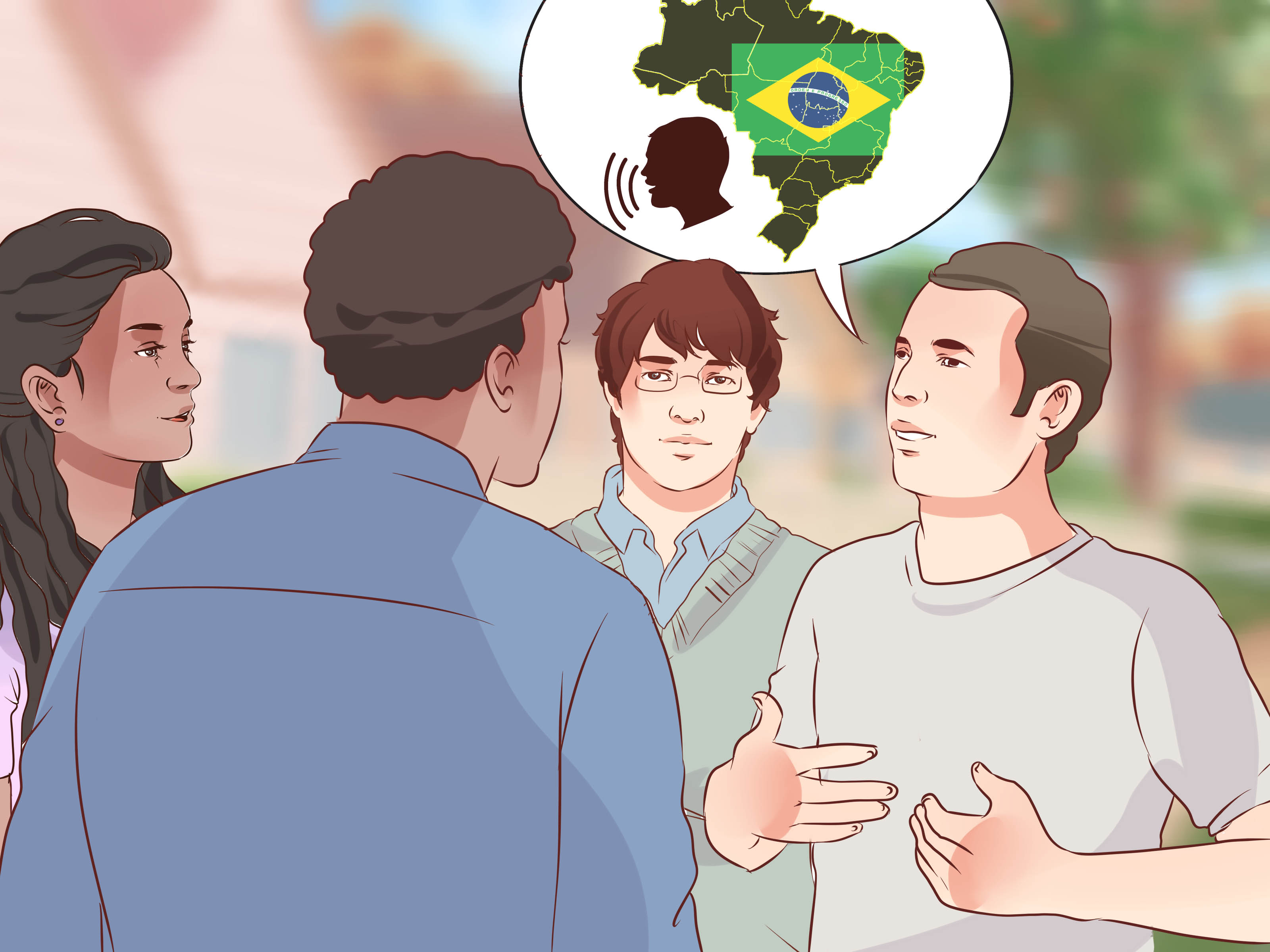
Learning how to speak Brazilian Portuguese can feel like stepping into a lively street market in São Paulo: colorful, fast-moving, musical, and full of people who somehow make even a simple “good morning” sound like a tiny celebration. The good news? Brazilian Portuguese is not a mystery wrapped in a grammar book and guarded by verb conjugations with tiny swords. It is a practical, warm, expressive language that you can begin using from day one.
Whether you want to travel through Brazil, talk with Brazilian friends, understand samba lyrics, watch Brazilian shows without staring at subtitles like they owe you money, or simply add a beautiful language to your life, this guide will help. Below, you will find easy and simple tips to speak Brazilian Portuguese with more confidence, better pronunciation, and a more natural rhythm.
The goal is not to sound perfect. The goal is to communicate. Perfect can wait. Your first mission is to open your mouth, survive the first awkward sentence, and proudly say, “Eu estou aprendendo português” “I am learning Portuguese.” That sentence alone can open many doors, and probably a few smiles too.
Why Brazilian Portuguese Is Worth Learning
Brazilian Portuguese is the variety of Portuguese spoken in Brazil, the largest country in South America and one of the most culturally influential nations in the world. It is the language of bossa nova, samba, futebol, Carnival, Brazilian cinema, everyday coffee chats, and some of the friendliest small talk you will ever experience.
For English speakers, Brazilian Portuguese has a few advantages. It uses the Latin alphabet, shares many recognizable words with English through Latin roots, and has a pronunciation system that becomes much easier once you learn its patterns. Words like importante, animal, natural, cultura, and telefone are not exactly strangers. They may wear a different accent, but they are still part of the same extended vocabulary family.
At the same time, Brazilian Portuguese has its own personality. It is rhythmic, expressive, and full of informal phrases that do not always match textbook Portuguese. That is why the best way to learn Brazilian Portuguese is to combine grammar basics with real listening, real speaking, and real-life expressions.
Start With Useful Everyday Phrases
Before you dive into complicated grammar, start with phrases you can actually use. A beginner does not need to debate philosophy in Portuguese on day one. A beginner needs to say hello, order food, ask simple questions, and avoid accidentally asking for a horse when they meant a coffee. Small victories matter.
Essential Brazilian Portuguese Phrases
- Olá Hello
- Oi Hi
- Bom dia Good morning
- Boa tarde Good afternoon
- Boa noite Good evening / Good night
- Por favor Please
- Obrigado / Obrigada Thank you
- Desculpa Sorry
- Com licença Excuse me
- Quanto custa? How much does it cost?
- Onde fica o banheiro? Where is the bathroom?
- Eu não entendo I do not understand
- Você fala inglês? Do you speak English?
- Estou aprendendo português I am learning Portuguese
Notice the difference between obrigado and obrigada. Men traditionally say obrigado, and women traditionally say obrigada. You will hear both often, and Brazilians will understand you either way, but using the right form is a nice touch.
Learn the Brazilian Sound First
If you want to speak Brazilian Portuguese naturally, pronunciation deserves early attention. Do not wait until you have memorized 2,000 words and then try to fix every sound later. That is like building a house and then remembering you wanted doors.
Brazilian Portuguese often sounds open, smooth, and melodic. Vowels are important, syllables have rhythm, and many words flow together in everyday speech. A useful tip is to listen before you imitate. Spend time hearing how Brazilians stretch, soften, and connect sounds.
Master the Five Basic Vowels
Portuguese vowels can be more precise than English vowels. Start with these simple approximations:
- A sounds like “ah” in father.
- E can sound like “eh” or “ay,” depending on the word.
- I sounds like “ee” in see.
- O can sound like “oh” or “aw.”
- U sounds like “oo” in food.
Practice with simple words: casa means house, vida means life, tudo means everything, and bom means good. Say them slowly, then say them again like you are not trying to impress a language exam committee.
Do Not Fear Nasal Sounds
Brazilian Portuguese has nasal vowels, which can feel strange at first. Words like não meaning “no,” bom meaning “good,” and mãe meaning “mother” require air to resonate through the nose. You do not need to sound like a trumpet. Just practice gently.
Try this: say “ow,” then let some air pass through your nose. That gets you closer to não. Nasal vowels become easier with repetition, especially when you practice short phrases like Não, obrigado or Tudo bom?
Understand the Brazilian “R”
The Portuguese letter R changes depending on position and region. At the beginning of a word, it often sounds like an English “h.” For example, Rio may sound like “Hee-oh,” and rua may sound like “hoo-ah.” In the middle of a word, a single r often has a light tap, similar to the quick sound in the American English pronunciation of “butter.”
Do not panic if you hear different versions of R across Brazil. Brazil is huge, and accents vary widely. Your goal is clear communication, not winning the national championship of perfect regional pronunciation.
Use “Você” for “You”
One of the easiest shortcuts in Brazilian Portuguese is learning how to use você. It means “you” and is extremely common in Brazil. The helpful part is that você uses third-person verb forms, which often makes speaking easier for beginners.
For example:
- Você fala português? Do you speak Portuguese?
- Você gosta de música? Do you like music?
- Você mora aqui? Do you live here?
You may also hear tu in many regions, including parts of the South, North, Northeast, and Rio de Janeiro. However, for beginners, você is a safe and widely understood choice. Learn você first, then notice how people around you actually speak.
Use “A Gente” for “We” in Conversation
Textbooks often teach nós as “we,” and that is correct. But in everyday Brazilian conversation, people frequently use a gente to mean “we.” It literally means “the people,” but functionally it often means “we.”
Compare these examples:
- Nós vamos ao mercado. We are going to the market.
- A gente vai ao mercado. We are going to the market.
The second sentence sounds more casual and very common in speech. Notice that a gente uses a singular verb: a gente vai, not a gente vamos. This is one of those small details that instantly makes your Portuguese sound more natural.
Focus on High-Frequency Verbs
Brazilian Portuguese verbs can look intimidating because they change form depending on person, tense, and mood. The secret is not to memorize every verb table at once. That is how notebooks become emotional support objects. Instead, begin with high-frequency verbs you will use constantly.
Start With These Verbs
- ser to be, for identity or permanent qualities
- estar to be, for temporary states or location
- ter to have
- ir to go
- fazer to do or to make
- querer to want
- gostar to like
- poder can or to be able to
- precisar to need
- falar to speak
With only a few verbs, you can create many useful sentences: Eu quero café means “I want coffee.” Eu preciso de ajuda means “I need help.” Eu gosto de música brasileira means “I like Brazilian music.” Congratulations, you are now dangerously close to having a real conversation.
Build Sentences With Simple Patterns
Simple sentence patterns are your best friends. Once you learn the structure, you can swap words in and out like building blocks.
Pattern 1: I Want…
Eu quero + noun
- Eu quero água. I want water.
- Eu quero café. I want coffee.
- Eu quero uma passagem. I want a ticket.
Pattern 2: I Need…
Eu preciso de + noun
- Eu preciso de ajuda. I need help.
- Eu preciso de um táxi. I need a taxi.
- Eu preciso de tempo. I need time.
Pattern 3: I Like…
Eu gosto de + noun or activity
- Eu gosto de samba. I like samba.
- Eu gosto de viajar. I like to travel.
- Eu gosto de aprender português. I like learning Portuguese.
These patterns are simple, flexible, and immediately useful. Do not underestimate them. Fluency is not built from rare poetic expressions. It is built from useful sentences repeated until your brain stops sweating.
Listen Every Day, Even for Ten Minutes
Listening is one of the fastest ways to improve your Brazilian Portuguese speaking skills. Your mouth cannot produce sounds your ears have never noticed. That is why daily listening matters, even if you only understand a few words at first.
Use Brazilian podcasts, YouTube videos, music, interviews, children’s shows, cooking videos, or short social media clips. Choose content with clear speech at first. If native-speed conversation feels too fast, that is normal. Brazilian Portuguese can move like it had three espressos and somewhere important to be.
Try the Listen-and-Repeat Method
Pick one short sentence. Listen to it three times. Pause. Repeat it out loud. Then compare your pronunciation to the original. This technique is simple but powerful because it trains rhythm, accent, and memory at the same time.
For example, practice:
- Tudo bem? Everything good?
- Eu sou dos Estados Unidos. I am from the United States.
- Eu estou aprendendo português brasileiro. I am learning Brazilian Portuguese.
Speak Before You Feel Ready
Many learners wait until they “feel ready” to speak. Unfortunately, readiness is a sneaky little creature that keeps moving the finish line. You become ready by speaking, not before speaking.
Start with low-pressure speaking practice. Talk to yourself while making coffee. Describe objects in your room. Read short Portuguese sentences out loud. Record your voice. Practice with a tutor, exchange partner, or Brazilian friend. Even five minutes of speaking per day can change your confidence over time.
Try narrating your daily routine:
- Agora eu vou tomar café. Now I am going to drink coffee.
- Eu vou trabalhar. I am going to work.
- Eu estou cansado. I am tired, said by a man.
- Eu estou cansada. I am tired, said by a woman.
This kind of practice may feel silly, but it works. Language learning is full of moments where you sound like a narrator in a very low-budget documentary about your own kitchen. Embrace it.
Learn Brazilian Portuguese Through Culture
Brazilian Portuguese is inseparable from Brazilian culture. Music, humor, food, gestures, social habits, and regional identity all shape the way people speak. Learning through culture makes the language more memorable and much more fun.
Use Music Wisely
Brazilian music is a gold mine for vocabulary and pronunciation. Try listening to bossa nova, samba, MPB, sertanejo, funk carioca, forró, and pagode. Read the lyrics while listening, then choose a few lines to repeat. Songs help you absorb rhythm and connected speech, but remember that lyrics may use poetic or informal language.
Watch Brazilian Shows and Videos
Streaming shows, interviews, travel videos, recipe channels, and comedy clips expose you to real accents and everyday expressions. Start with subtitles in English if needed, then switch to Portuguese subtitles when you can. Eventually, try watching short clips without subtitles and writing down words you recognize.
Learn Slang Carefully
Brazilian Portuguese has wonderful slang, but slang is regional and context-dependent. Words like legal can mean “cool,” beleza can mean “okay” or “all good,” and cara can mean “guy” or “dude.” These words are useful, but use them naturally and avoid stuffing every sentence with slang like you swallowed a Brazilian teen drama.
Avoid Common Beginner Mistakes
Every learner makes mistakes. That is not a problem. The real problem is being so afraid of mistakes that you never speak. Still, a few common errors are easy to avoid.
Mistake 1: Assuming Portuguese Is Spanish
Portuguese and Spanish are related, but they are not the same language. Some words look similar but sound different. Others mean different things. If you already speak Spanish, it can help, but you still need to train your ear for Portuguese pronunciation and rhythm.
Mistake 2: Ignoring Gender
Portuguese nouns are usually masculine or feminine. For example, o livro means “the book,” while a casa means “the house.” Adjectives often change too: um carro bonito means “a beautiful car,” while uma casa bonita means “a beautiful house.” Do not obsess over perfection, but start noticing patterns early.
Mistake 3: Translating Word for Word
Languages do not work like math equations. A phrase that sounds natural in English may sound strange in Portuguese if translated literally. Instead of translating every word, learn complete chunks: tudo bem, com certeza, pois não, até logo, and fica tranquilo.
Create a Simple Weekly Study Plan
A good study plan does not need to be dramatic. You do not need twelve notebooks, three apps, and a candle labeled “fluency.” You need consistency.
Beginner Weekly Plan
- Monday: Learn ten useful words and three example sentences.
- Tuesday: Practice pronunciation for fifteen minutes.
- Wednesday: Listen to a short Brazilian video and repeat five phrases.
- Thursday: Study one grammar point, such as ser versus estar.
- Friday: Speak for five to ten minutes, even alone.
- Saturday: Watch a Brazilian show, music video, or vlog.
- Sunday: Review everything and write a short paragraph about your week.
This plan is simple enough to follow and flexible enough to survive real life. The best language plan is not the most impressive one. It is the one you actually do.
Practice With Real Conversations
Real conversation teaches things that apps and textbooks cannot. You learn how people interrupt politely, how they react, how they shorten words, and how they use filler expressions like né, então, and tipo. These little words give Brazilian Portuguese its conversational flavor.
When speaking with native speakers, use survival phrases:
- Pode repetir, por favor? Can you repeat, please?
- Mais devagar, por favor. More slowly, please.
- Como se diz… em português? How do you say… in Portuguese?
- O que significa isso? What does that mean?
These phrases keep the conversation alive. They also show humility and curiosity, two qualities that language learners should carry everywhere, preferably next to their coffee.
Real-World Experience: What Actually Helps You Speak Brazilian Portuguese
The biggest lesson from learning Brazilian Portuguese is that speaking improves when the language becomes part of normal life, not just “study time.” It is easy to spend weeks organizing flashcards, choosing the perfect app, comparing courses, and watching videos about how to learn. That feels productive, but at some point, you have to actually speak. The mouth must join the committee.
A practical experience that works well is the “tiny conversation” method. Instead of waiting for a full one-hour conversation, create small speaking moments throughout the day. Say bom dia in the morning. Tell yourself eu quero café when you want coffee. Look outside and say hoje está quente if the weather is hot. These little phrases train your brain to retrieve Portuguese quickly. Retrieval is the magic ingredient. Recognition is nice, but speaking requires you to pull words out of memory under pressure, like a magician pulling a rabbit from a hat while the rabbit is also judging your accent.
Another helpful experience is recording yourself. At first, this may be painful. Nobody enjoys hearing their own voice stumble through nasal vowels like a confused accordion. But recording gives you honest feedback. Choose a short phrase from a native speaker, imitate it, record yourself, and compare. You will hear what is missing: maybe your vowels are too English, maybe your rhythm is flat, or maybe you are pronouncing every word separately instead of connecting them. After a few weeks, the improvement becomes noticeable.
Speaking with Brazilians also teaches cultural warmth. Many Brazilian speakers are encouraging when they hear someone trying to learn Portuguese. A simple phrase like estou aprendendo português often changes the mood of a conversation. People may slow down, smile, correct you kindly, or teach you a funny expression. This human feedback is priceless because language is not only information. It is connection.
One more real-world tip: do not study only formal Portuguese if your goal is conversation. Formal grammar matters, especially for writing, exams, and professional settings. But everyday Brazilian Portuguese uses informal structures, relaxed pronunciation, and common expressions. You will hear a gente constantly. You will hear tudo bem?, beleza?, valeu, and com certeza. Add these to your practice early so your speech feels alive, not like it escaped from a dusty grammar chart.
Finally, accept that progress comes in waves. Some days you will understand a full sentence and feel like a genius. Other days, someone will ask a simple question and your brain will respond with elevator music. That is normal. Keep listening, keep repeating, keep speaking, and keep laughing at the awkward moments. Brazilian Portuguese rewards steady practice. The more you use it, the more it starts to feel less like a school subject and more like a new room in your life.
Conclusion: Speak First, Polish Later
Learning how to speak Brazilian Portuguese does not require perfection, expensive tools, or a dramatic personality change. It requires useful phrases, daily listening, simple grammar patterns, pronunciation practice, and the courage to speak before you feel completely ready.
Start with greetings and everyday sentences. Learn the sounds of Brazilian Portuguese early, especially vowels, nasal sounds, and the Brazilian R. Use você and a gente to sound natural in conversation. Build your vocabulary around real life, not random word lists. Most importantly, practice speaking out loud every day, even when your audience is just your coffee mug.
Brazilian Portuguese is friendly, musical, and full of personality. The more you engage with Brazilian culture, people, music, and conversation, the more the language becomes something you live instead of something you memorize. So take a breath, smile, and say it proudly: Eu estou aprendendo português brasileiro. That is the beginning of the journey.