Note: This article is based on synthesized guidance from reputable U.S. vehicle safety, tire manufacturer, auto service, and consumer automotive resources. Source links are intentionally omitted for clean publishing.
Your tires have one job that sounds simple but is actually heroic: keep your car attached to the road while you accelerate, brake, turn, dodge potholes, survive grocery store parking lots, and occasionally pretend your commute is not slowly eating your soul. Because each tire works in a slightly different position on the vehicle, they do not wear at the same rate. That is why tire rotation matters.
So, how often should you rotate your tires? For most drivers, the sweet spot is every 5,000 to 8,000 miles, or about every six months. Many drivers pair tire rotation with an oil change, because nothing says “responsible adult” like remembering two maintenance tasks at once. However, the best answer is always the one in your vehicle owner’s manual and tire warranty documents.
Rotating your tires is not just a boring maintenance ritual invented by people who enjoy clipboards. It can help your tires wear evenly, improve handling, protect fuel efficiency, reduce road noise, support tire warranty coverage, and delay the expensive day when you have to buy a new set. In other words, a simple tire rotation can save money, improve safety, and keep your car from developing the automotive equivalent of walking with one shoe taller than the other.
What Is Tire Rotation?
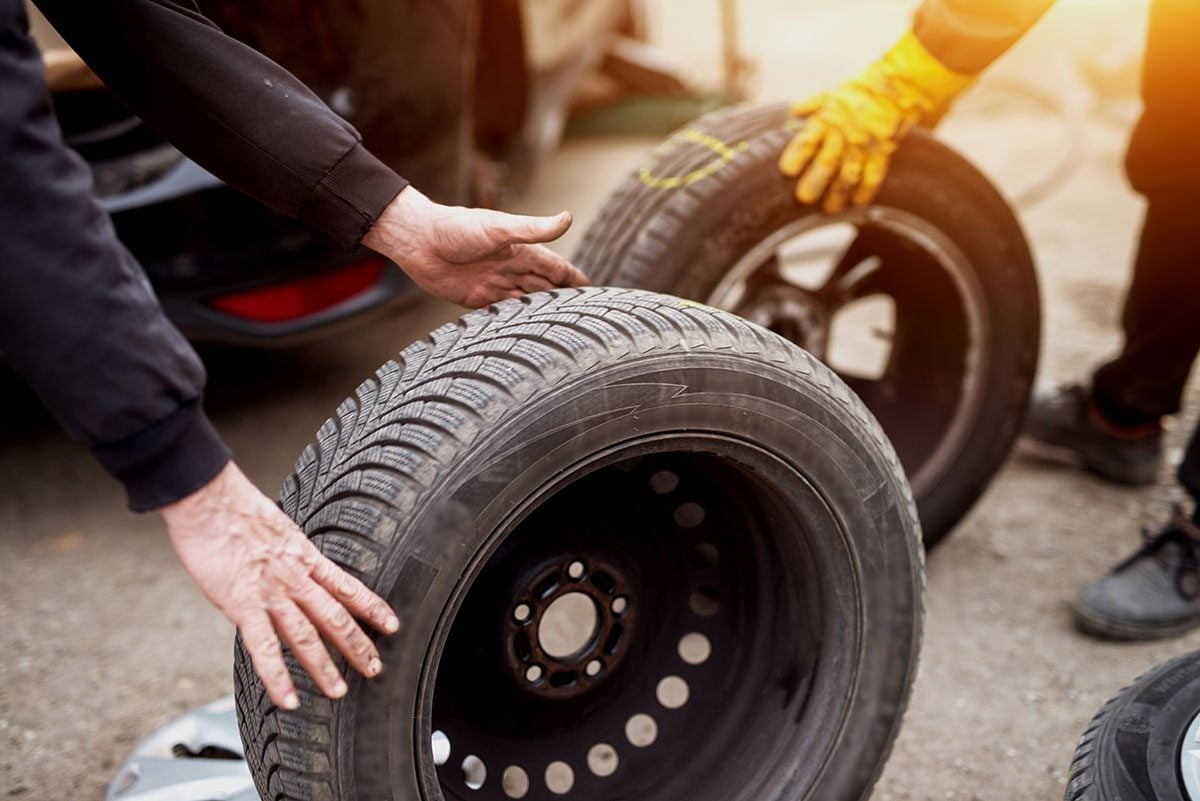
Tire rotation means moving your tires from one position on the vehicle to another in a planned pattern. For example, the front tires may move to the rear, the rear tires may move to the front, or the tires may cross sides depending on the vehicle’s drivetrain, tire type, and manufacturer recommendations.
The goal is simple: help all four tires wear as evenly as possible. Front tires often carry extra work because they handle steering, much of the braking force, and in front-wheel-drive vehicles, the engine’s power. Rear tires have their own job, helping with stability and traction. Over thousands of miles, those different jobs create different wear patterns.
Think of tire rotation like rotating players on a sports team. If one player runs the whole game while another just stands near the snack table, someone is going to be worn out early. Tire rotation spreads the workload.
How Often Should You Rotate Your Tires?
The most common tire rotation interval is every 5,000 to 8,000 miles. Many tire and automotive experts narrow that range to about 5,000 to 7,500 miles for typical driving. Some tire brands and service centers recommend shorter intervals, such as every 3,000 to 6,000 miles, especially when the vehicle sees tough conditions.
A practical rule for many drivers is this: rotate your tires at every oil change or every other oil change, depending on your vehicle’s service schedule. If your car uses synthetic oil and goes longer between oil changes, do not assume the tires can wait forever. Tires do not know your engine oil is fancy.
General Tire Rotation Schedule
- Most cars: Every 5,000 to 8,000 miles
- Heavy city driving: Closer to every 5,000 miles
- SUVs, trucks, and crossovers: Around every 5,000 to 7,500 miles
- Electric vehicles: Often closer to every 5,000 to 6,000 miles because instant torque can increase tire wear
- Low-mileage vehicles: At least every six months to one year, depending on the manual
If you drive only a few miles each week, you may not hit 5,000 miles quickly. In that case, rotate by time rather than mileage. A six-month check is a smart habit because tires can still age, lose pressure, and develop uneven wear even when the odometer moves slowly.
Why Tire Rotation Matters
1. It Helps Tires Wear Evenly
Uneven tire wear is the main reason tire rotation exists. Front tires usually wear differently than rear tires because they deal with turning and braking. In front-wheel-drive cars, the front tires also pull the vehicle forward, which adds even more stress.
Without rotation, one pair of tires may wear out much faster than the other. That means you may replace tires sooner than expected, even though two of them still look decent. Regular rotation helps all four tires reach the finish line together, like a well-organized road trip instead of a chaotic family vacation.
2. It Can Extend Tire Life
Tires are not cheap. A full set can easily cost hundreds of dollars, and performance tires, truck tires, or EV-specific tires can cost even more. Tire rotation is one of the simplest ways to get more usable miles from the tires you already paid for.
Even wear helps preserve tread depth across the set. Since tread is what helps your tires grip the road, channel water, and maintain stability, keeping tread wear balanced is good for both your wallet and your safety.
3. It Supports Better Handling
When tires wear unevenly, your vehicle may not feel as smooth or predictable. You might notice pulling, vibration, humming, roughness, or a steering wheel that feels slightly annoyed with you. In wet weather, uneven tread can reduce grip and make the vehicle less stable.
Rotating tires on schedule keeps the tread more consistent from tire to tire. That can improve steering response, braking confidence, and overall ride quality. Your car may not become a luxury sedan overnight, but it will be happier doing its job.
4. It May Help Maintain Fuel Efficiency
Tires affect rolling resistance, which is the effort required to keep them moving. Poorly maintained, underinflated, or unevenly worn tires can make your engine work harder. That can reduce fuel economy over time.
Tire rotation alone is not magic fuel-saving fairy dust, but it works together with proper inflation, alignment, and balancing to help your tires roll efficiently. When your tires wear evenly and stay properly inflated, your car has an easier time moving down the road.
5. It Helps Protect Tire Warranty Coverage
Many tire mileage warranties require proof of regular maintenance, including tire rotation. If your tires wear out early and you want warranty support, the manufacturer or retailer may ask for service records. Skipping rotations can make that conversation awkward.
Keep receipts, service records, or digital maintenance logs. Even a basic note with the date, mileage, and service location is better than trying to explain, “I rotated them spiritually.”
What Happens If You Do Not Rotate Your Tires?
If you ignore tire rotation, the consequences usually start small. Maybe the front tires look more worn. Maybe road noise gets louder. Maybe the ride feels rougher. Then the problems become more expensive.
Common results of skipped tire rotations include:
- Uneven tread wear
- Shorter tire lifespan
- Reduced traction in rain or snow
- More road noise
- Vibration at highway speeds
- More frequent tire replacement
- Possible tire warranty issues
Uneven tire wear can also reveal deeper problems, such as improper alignment, suspension issues, incorrect tire pressure, or unbalanced wheels. Tire rotation does not fix those problems, but it can help you spot them earlier. If your tires continue wearing oddly after rotation, have a technician inspect the vehicle.
Signs Your Tires Need Rotation Now
You do not have to wait for the exact mileage number if your tires are already showing symptoms. Your tires may need rotation sooner if you notice:
- One pair of tires has visibly less tread than the other
- The vehicle vibrates at certain speeds
- You hear increased road noise or humming
- The car pulls slightly to one side
- The steering feels less smooth than usual
- You see feathering, cupping, or patchy tread wear
Use your eyes, ears, and hands. Look at the tread. Listen for unusual sounds. Pay attention to how the vehicle feels. Tires are not exactly chatty, but they do leave clues.
Common Tire Rotation Patterns
The correct tire rotation pattern depends on your vehicle and tires. Always check your owner’s manual first. Still, most vehicles follow a few common patterns.
Forward Cross Pattern
This pattern is often used for front-wheel-drive vehicles. The front tires move straight back to the rear, while the rear tires move forward and switch sides. This helps balance the heavier wear that front tires usually experience.
Rearward Cross Pattern
This pattern is often used for rear-wheel-drive and some four-wheel-drive vehicles. The rear tires move straight to the front, while the front tires move to the rear and switch sides.
X-Pattern
In an X-pattern, all four tires switch diagonally. This may be used for certain front-wheel-drive vehicles with non-directional tires of the same size.
Front-to-Rear Pattern
Some vehicles use a simple front-to-rear rotation, especially if the tires are directional. Directional tires are designed to roll in one direction, so switching sides may not be recommended unless the tires are remounted.
Staggered Tire Setups
Some performance vehicles have larger tires in the rear than in the front. This is called a staggered setup. If the front and rear tires are different sizes, they usually cannot be rotated front to back. In some cases, they may only be moved side to side if the tire design allows it.
Do All Vehicles Need Tire Rotation?
Most vehicles benefit from tire rotation, but not all vehicles follow the same rules. Some cars have directional tires, staggered sizes, or specific manufacturer instructions. Some high-performance vehicles have limited rotation options. Some all-wheel-drive vehicles are especially sensitive to differences in tread depth between tires.
That is why the owner’s manual matters. It is not just a mysterious book hiding in the glove box next to old napkins and a pen that no longer works. It contains the recommended tire rotation schedule and pattern for your specific vehicle.
Tire Rotation vs. Wheel Alignment vs. Tire Balancing
Tire rotation, alignment, and balancing are related, but they are not the same service.
Tire Rotation
Tire rotation changes the position of the tires on the vehicle. It helps even out tread wear.
Wheel Alignment
Alignment adjusts the angles of the wheels so they meet the road correctly. Poor alignment can cause pulling, uneven wear, and steering problems.
Tire Balancing
Balancing corrects weight differences in the wheel and tire assembly. If your steering wheel shakes at highway speeds, balancing may be needed.
If your tires show strange wear, rotation may help, but alignment or balancing may also be necessary. A good technician can inspect the tread and explain what is happening. A bad technician may just stare at the tire like it owes them money. Choose wisely.
Can You Rotate Tires Yourself?
Some experienced DIY drivers rotate tires at home, but it requires the right tools, a safe level surface, proper lifting points, jack stands, a torque wrench, and knowledge of the correct rotation pattern. Never rely on a jack alone to support a vehicle. A car is heavy, gravity is undefeated, and safety is not optional.
For many drivers, professional tire rotation is easier and safer. It is often inexpensive, and some tire shops include free rotations when you buy tires from them. A technician can also inspect tread depth, tire pressure, sidewall damage, punctures, valve stems, and lug nut torque during the service.
How Tire Pressure Affects Tire Rotation
Tire rotation works best when paired with proper tire inflation. Underinflated tires tend to wear more on the outer edges. Overinflated tires may wear more in the center. Incorrect tire pressure can shorten tire life and reduce ride quality.
Check tire pressure at least once a month and before long trips. Use the pressure listed on the driver’s door jamb or in the owner’s manual, not the maximum pressure printed on the tire sidewall. That sidewall number is not your daily target; it is more like the tire saying, “Please do not exceed this unless you enjoy bad decisions.”
How Tread Depth Fits Into Tire Safety
Tire rotation helps tires wear evenly, but it does not make worn-out tires safe again. In the United States, tires are commonly considered legally worn out when tread depth reaches 2/32 of an inch. However, wet-weather performance can decline before that point, especially in heavy rain.
You can use a tread depth gauge for the most accurate reading. The penny test is a quick backup: place a penny into the tread with Lincoln’s head upside down. If you can see the top of Lincoln’s head, the tread is very low and the tire likely needs replacement.
Special Cases: AWD, EVs, Trucks, and Performance Cars
All-Wheel-Drive Vehicles
All-wheel-drive vehicles often need consistent tire diameter across all four wheels. Uneven tread depth can stress drivetrain components. Regular rotation is especially important because it helps keep all tires wearing at a similar pace.
Electric Vehicles
Electric vehicles can be harder on tires because they deliver instant torque and are often heavier than similar gasoline vehicles due to battery weight. EV owners should pay close attention to rotation intervals, tire pressure, and tread depth.
Pickup Trucks and SUVs
Trucks and SUVs may carry heavy loads, tow trailers, or travel over rougher roads. These conditions can accelerate tire wear. If you tow, haul, or drive on gravel often, rotate closer to the shorter end of the recommended interval.
Performance Cars
Performance tires may have special designs, soft rubber compounds, or staggered sizing. Always follow the tire and vehicle manufacturer’s instructions. The tire rotation pattern that works for a family sedan may not work for a sports car.
Simple Tire Rotation Maintenance Checklist
- Check your owner’s manual for the recommended interval and pattern.
- Rotate tires every 5,000 to 8,000 miles unless your manual says otherwise.
- Inspect tire pressure monthly.
- Measure tread depth regularly.
- Look for cracks, bulges, nails, cuts, or uneven tread wear.
- Keep tire rotation records for warranty protection.
- Ask for alignment or balancing checks if wear looks abnormal.
Real-World Experiences: What Tire Rotation Teaches Drivers
Many drivers learn the value of tire rotation the expensive way. At first, tire rotation sounds like one of those optional services printed on a service invoice to make the total look more dramatic. Then one day, a technician points out that the front tires are almost bald while the rear tires still look perfectly respectable. Suddenly, tire rotation feels less like a suggestion and more like financial self-defense.
One common experience is the “I thought my tires were fine” moment. A driver checks one rear tire, sees plenty of tread, and assumes the whole set is healthy. But the front tires may be wearing much faster, especially on a front-wheel-drive car. By the time the uneven wear is obvious, the tire set may already be too far gone to save. Regular rotation prevents that surprise by forcing a routine inspection of all four tires.
Another lesson comes from road noise. Tires that wear unevenly can create humming or droning sounds that make drivers think something major is wrong. Sometimes the sound is a wheel bearing, alignment issue, or suspension problem. But sometimes it is simply uneven tread wear that could have been reduced with timely rotations. The car starts sounding like a small airplane, and suddenly the driver becomes very interested in tire maintenance.
Long-distance drivers often notice the benefits most clearly. If you commute on highways, take road trips, or drive for work, tires accumulate miles quickly. A 6,000-mile rotation interval can arrive faster than expected. Skipping one rotation may not destroy the tires overnight, but skipping several can shorten their life significantly. Drivers who track mileage and rotate consistently often get smoother performance and more predictable tread wear.
City drivers have their own tire rotation story. Stop-and-go traffic, tight turns, potholes, speed bumps, and parallel parking all work the tires in uneven ways. The front tires may take a beating from constant steering and braking. If the vehicle is used for school runs, errands, delivery work, or daily commuting, a shorter rotation interval can make sense. City miles can be tougher than they look. They are like dog years for tires.
Truck and SUV owners often learn that carrying weight changes everything. Hauling tools, sports gear, camping equipment, or towing a trailer can add stress to specific tires. If the vehicle regularly carries heavy loads, the tires should be inspected and rotated more often. This is especially true when tire pressure is not adjusted correctly for load conditions.
Electric vehicle owners may also discover that tires wear faster than expected. The quick acceleration that makes EVs fun can also put extra stress on tires. Add the weight of the battery pack, and tire rotation becomes even more important. For EV drivers, tire maintenance is not old-fashioned car advice; it is part of keeping the vehicle efficient and safe.
The best experience is the boring one: you rotate your tires on schedule, keep the pressure correct, save your receipts, and nothing dramatic happens. The tires wear evenly. The ride stays smooth. The warranty paperwork is ready if needed. No strange vibration appears on the highway. No surprise tire replacement ruins your weekend budget. In car maintenance, boring is beautiful.
Conclusion
Tire rotation is one of the easiest ways to protect your tires, your vehicle, and your budget. For most drivers, rotating tires every 5,000 to 8,000 miles is a smart rule, but your owner’s manual should always have the final word. If you drive in heavy traffic, tow, haul, own an EV, use an AWD vehicle, or travel on rough roads, rotating closer to the shorter end of the range may be wise.
The reason is simple: tires wear differently depending on where they sit on the vehicle. Rotation spreads that wear more evenly, which can improve tire life, handling, ride comfort, fuel efficiency, and warranty protection. It also gives you regular opportunities to inspect tread depth, pressure, and tire condition before small problems become expensive ones.
Your tires may not be glamorous, but they are the only part of your vehicle touching the road. Treat them well, rotate them regularly, and they will return the favor by helping you drive more safely, smoothly, and economically. That is a pretty good deal for a maintenance task that takes less time than deciding what to order for lunch.