If regular shoelaces are the background actors of the footwear world, natural leather flat lace is the scene-stealer that suddenly gets its own close-up. It is practical, stylish, a little rugged, and just fancy enough to make people ask, “Wait, did you upgrade those shoes?” Whether you are refreshing a pair of heritage boots, giving sneakers a premium twist, tightening up camp mocs, or using flat leather lace in a small craft project, this material has a way of making ordinary things look more intentional.
The appeal is not just visual. Natural leather flat lace brings texture, strength, personality, and that increasingly rare quality known as “aging well.” While synthetic laces tend to look the same until the day they give up dramatically, leather develops character. It softens, darkens, molds to use, and starts telling the story of the item it is attached to. In other words, it gets better with mileage, much like a favorite jacket or a good road trip playlist.
In this guide, we will break down what natural leather flat lace actually is, how it differs from round leather lace and ordinary textile laces, where it works best, how to choose the right width and length, how to care for it, and what kind of experience real users can expect. If you have ever stared at a product page wondering whether “natural,” “veg tan,” “russet,” “full grain,” or “flat lace” meant the same thing, you are in the right place.
What Is Natural Leather Flat Lace?
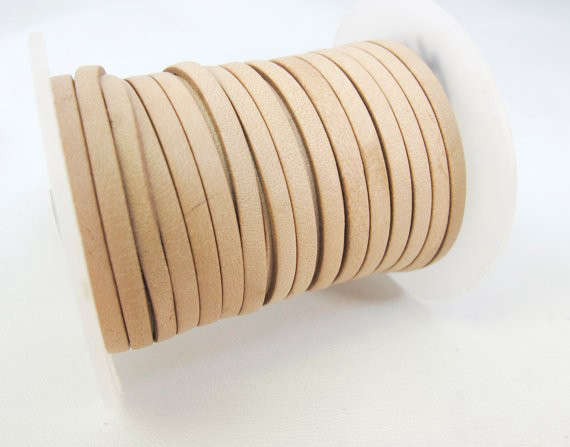
Natural leather flat lace is a flat strip of real leather cut for lacing, tying, or decorative fastening. In footwear, it is commonly used in boots, camp mocs, boat-style shoes, casual shoes, and certain premium sneaker customizations. In leathercraft, it also shows up in bags, belts, repairs, trim details, and small handmade accessories.
The phrase flat lace matters because shape changes how a lace behaves. Flat laces lie wider across the tongue of a shoe, spread pressure more evenly, and create a visible style statement. Round leather laces usually look more traditional or raw, while flat leather lace feels cleaner, broader, and often more contemporary.
What “natural” usually means
The word natural can mean two slightly different things in the market. Sometimes it refers to the color: a light tan, beige, russet, or undyed vegetable-tanned look. Other times it means the material itself looks less coated, less plastic-like, and more authentic to the hide. That is why two products can both be called “natural leather flat lace” while looking a little different in tone and finish.
In most cases, shoppers will see natural leather flat lace made from genuine leather with either a firmer vegetable-tanned feel or a softer, more pliable chrome-tanned feel. Neither is automatically better. The best choice depends on whether you want crisp structure, soft flexibility, richer patina, or easier break-in.
Why People Choose Natural Leather Flat Lace
1. It looks better than standard laces
Let us start with the obvious. Leather flat lace looks more elevated than basic polyester or cotton. It adds depth, grain, and visual texture. On boots, it leans rugged and heritage-inspired. On sneakers, it can turn a plain pair into something that feels premium. On casual leather shoes, it gives off a “Yes, I absolutely noticed the details” kind of energy.
2. It develops patina and character
One of the best things about natural leather is that it does not stay frozen in time. Instead of looking tired when it wears, it often looks more interesting. Lighter natural shades can darken slightly with handling, sunlight, and conditioning. The finish can become smoother, softer, and more personalized with use.
3. It works across footwear and craft categories
Natural leather flat lace is not a one-trick pony. It works on hiking-inspired casual boots, camp mocs, handmade leather accessories, simple repairs, and fashion customizations. If you enjoy materials that can move from practical to decorative without becoming weirdly dramatic about it, this is a smart choice.
4. It feels substantial
Compared with ordinary laces, leather often feels denser and more intentional in the hand. That can improve the perceived quality of the whole item. It is one of those small upgrades that makes a bigger difference than expected, like switching from flimsy hangers to wooden ones and suddenly pretending you are more organized than you really are.
Where Natural Leather Flat Lace Works Best
Boots and heritage footwear
This is where leather flat lace feels the most at home. Work-inspired boots, moc-toe boots, casual lace-up boots, and heritage styles all benefit from the rugged look. A flat leather lace can also complement thick leather uppers better than a thin, shiny textile lace that looks like it wandered in from a different shoe.
Sneaker upgrades
Premium sneaker enthusiasts love swapping stock laces for leather options because the change is immediate and visible. On minimal leather sneakers, a flat leather lace can sharpen the design and make the whole shoe feel more expensive. It works especially well when the lace color either closely matches the upper or intentionally contrasts with it.
Camp mocs and boat-style shoes
Leather lacing has deep roots in moc-inspired construction. In camp mocs, leather lace often helps adjust the fit while preserving that relaxed, easygoing structure. It looks classic without feeling stuffy, which is a neat trick for a shoe category that basically says, “I appreciate comfort, but I still have standards.”
Bags, repairs, and leathercraft
Outside footwear, flat leather lace is useful for bag accents, handle wraps, decorative edging, tie closures, and small repair jobs. It is also popular in craft work because it offers both strength and style. If the project needs a soft but durable fastening element that still looks handmade and intentional, flat leather lace is a strong contender.
How to Choose the Right Natural Leather Flat Lace
Know your leather type
If you want a firmer lace with a more traditional, natural look, vegetable-tanned leather is a great place to start. It is often valued for its natural finish, structure, and ability to age attractively over time. If you want something softer right out of the gate, a chrome-tanned or combination-tanned leather lace may feel easier to work with.
Full-grain or top-grain leather is often the sweet spot when available, especially if you care about visible grain, durability, and a more authentic leather appearance. Transparent or lightly pigmented finishes also tend to preserve more of the natural character. That said, a heavily corrected finish may be more uniform and lower-maintenance for some users. Translation: the best lace is not always the most romantic one. Sometimes you just need the one that behaves.
Choose the correct width
Width changes both function and style. Thin leather flat laces look cleaner and dressier. Medium widths are versatile for everyday shoes and casual sneakers. Wider flat laces look bold and often suit boots, workwear-inspired shoes, and statement styling.
If your shoe has small eyelets, do not force a wide lace through them like you are wrestling with a stubborn extension cord. Check the hardware first. A lace that is too wide can bunch, crease, drag, or simply refuse to cooperate. A lace that is too narrow, on the other hand, can look underpowered and visually off-balance.
Get the length right
The easiest way to choose length is to measure the lace you already have. That is the real-world answer. Charts are helpful, but actual shoes vary by eyelet spacing, tongue height, lacing style, and how much lace you like left over for a bow.
As a general guide, shoes with 4 pairs of eyelets often use around 27 inches, 5 pairs about 36 inches, 6 pairs about 40 inches, 7 pairs about 45 inches, 8 pairs about 54 inches, 9 pairs about 63 inches, and 10 pairs about 72 inches. Low-top sneakers commonly work with shorter lengths, while mid- and high-top footwear usually needs more.
Think about the finish and color
Natural leather flat lace can come in pale tan, natural russet, brown, black, and dyed fashion shades. Lighter natural tones often show aging more clearly, which many people love. Darker shades can look more formal or more understated. If you want the lace to blend in, match the upper. If you want it to stand out, choose contrast on purpose, not by accident.
Check the lace ends
Some leather laces come with plated tips or finished aglets, while others are more traditional or craft-oriented. Finished ends can make threading easier and give a cleaner look. Rawer ends may suit rustic footwear or handmade projects. Neither is wrong. It depends on whether your goal is refined, rugged, or somewhere in the wonderfully indecisive middle.
Pros and Cons of Natural Leather Flat Lace
Pros
- Premium appearance with visible grain and texture
- Can develop a beautiful patina over time
- Works for boots, sneakers, camp mocs, and craft projects
- Feels more substantial than many standard laces
- Available in a wide range of widths, lengths, and finishes
Cons
- May require a short break-in period before feeling ideal
- Can loosen if tied poorly or with an unbalanced knot
- Over-conditioning can make leather too soft or messy
- Not every shoe has eyelets that suit wider leather laces
- Usually costs more than ordinary replacement laces
How to Care for Natural Leather Flat Lace
Leather laces do not need a spa day every weekend, but they do benefit from basic care. Start simple: wipe away dirt with a soft cloth, and if needed use a slightly damp cloth to remove grime. Let the lace dry naturally away from direct heat. No hair dryer. No radiator. No “it will probably be fine” experiment.
If the lace starts feeling dry or stiff, use a small amount of leather conditioner that is appropriate for the leather type. Less is more. Overdoing conditioner can leave the lace greasy, floppy, or more prone to stretching. That is especially important with lighter natural leather, where over-treatment can darken the appearance faster than expected.
When cleaning shoes or boots, it is also smart to remove the laces first. This helps you clean the upper more thoroughly and avoids saturating the lace with products it may not need. For smooth leathers, gentle brushing and light conditioning are usually enough. For oil-tanned or heavily conditioned footwear, use compatible products rather than random household fixes from the internet’s darker corners.
How to keep leather flat laces tied
If leather laces keep coming undone, the problem is often the knot rather than the lace itself. A balanced knot sits straighter and holds better than a sloppy “granny knot.” Some wearers also prefer a double knot, especially during the break-in phase when the lace is still learning its job.
Common Mistakes to Avoid
- Buying by guesswork: Measure your current lace before ordering.
- Ignoring width: Length matters, but width changes the whole look.
- Choosing style over compatibility: Make sure the lace fits the eyelets and the shoe’s design.
- Over-conditioning: Too much product can weaken the feel and change the finish.
- Assuming all “natural” leather looks the same: Color, tannage, softness, and finish vary a lot.
Are Natural Leather Flat Laces Worth It?
Yes, if you care about materials, detail, and long-term character. Natural leather flat lace is not the cheapest option, and it is not always the most maintenance-free option either. But it offers something standard laces rarely do: personality. It can make footwear look richer, feel more intentional, and age in a way that feels rewarding rather than disappointing.
If you want a no-thought, no-care, no-commitment lace, basic synthetics may be fine. But if you like the way good leather improves with time, enjoy small upgrades that change the whole vibe of a shoe, or want a versatile flat lace for both fashion and function, natural leather flat lace earns its place.
Experiences With Natural Leather Flat Lace
One of the most common experiences people report with natural leather flat lace is surprise. Not because the lace does something magical, but because such a small component changes the feel of the entire item. A pair of ordinary casual boots can suddenly look more expensive. A basic white sneaker can stop looking mass-produced and start feeling curated. A camp moc that seemed a little too relaxed can snap into focus once the right leather lace is threaded through it.
A boot owner’s experience often starts with aesthetics and ends with appreciation for function. At first, the goal is usually simple: replace old laces with something that looks better. The new natural leather flat lace goes in, and immediately the boots feel more substantial. The tongue lies flatter. The upper and the lace look like they belong together. Over the next few weeks, the leather softens slightly, the knot becomes easier to manage, and the color deepens just enough to look lived-in instead of brand new. That break-in period is important. On day one, the lace can feel a little stiff. By week two, it usually feels like it has decided to cooperate.
Sneaker wearers tend to describe the change differently. For them, the upgrade is often about refinement. Flat leather laces can make a minimalist sneaker feel cleaner and more premium without shouting for attention. The experience is less “rugged outdoors person who chops wood recreationally” and more “I appreciate materials and own a lint roller.” On leather sneakers especially, the visual continuity between upper and lace can be striking. Suddenly the shoe looks intentional from top to bottom.
People using natural leather flat lace in camp mocs or boat-style shoes usually notice comfort and fit first. Leather lacing in moc-style footwear often helps fine-tune how the shoe hugs the foot without ruining its relaxed structure. The experience is subtle but useful. The lace does not dominate the shoe; it supports it. Over time, the leather moves more naturally, and the fit can feel more personalized. It is the kind of improvement you stop thinking about because it quietly works.
In craft and repair projects, the experience is usually about versatility. A bag tie, wrap detail, or decorative closure made with flat leather lace tends to feel more finished than one made with generic cord. The material bends enough to be practical but still keeps a visual richness that reads as handmade and deliberate. Crafters often appreciate that natural tones work with many palettes, especially when the goal is a warm, understated look rather than something loud.
Of course, not every experience is instantly perfect. Some people buy a lace that is too wide, too long, or too soft for the project. Others learn that leather laces need a better knot than they were using before. A few discover that heavily conditioning the lace turns it from “nicely supple” to “why is this thing behaving like cooked spaghetti?” But those issues are usually fixable. Measure carefully, choose the correct width, condition lightly, and tie a balanced knot. Problem solved, dignity restored.
The most satisfying long-term experience with natural leather flat lace is watching it age alongside the item it serves. That is really the magic of it. The lace does not stay frozen in showroom mode. It adapts, softens, darkens, and becomes part of the object’s story. It starts out as an accessory and ends up feeling like it always belonged there. For people who enjoy materials with character, that experience is hard to beat.
Conclusion
Natural leather flat lace is a small detail with outsized impact. It can upgrade boots, sneakers, camp mocs, and craft projects by adding texture, durability, flexibility, and style. The key is choosing the right combination of leather type, width, length, and finish for the specific job. Get those basics right, care for the leather sensibly, and the lace will not just hold things together. It will make them look better doing it.
If you want footwear or leather goods that feel more thoughtful, more tactile, and more personal, natural leather flat lace is a smart upgrade. It is functional, attractive, and refreshingly honest as a material. In a world full of flimsy shortcuts, that counts for a lot.