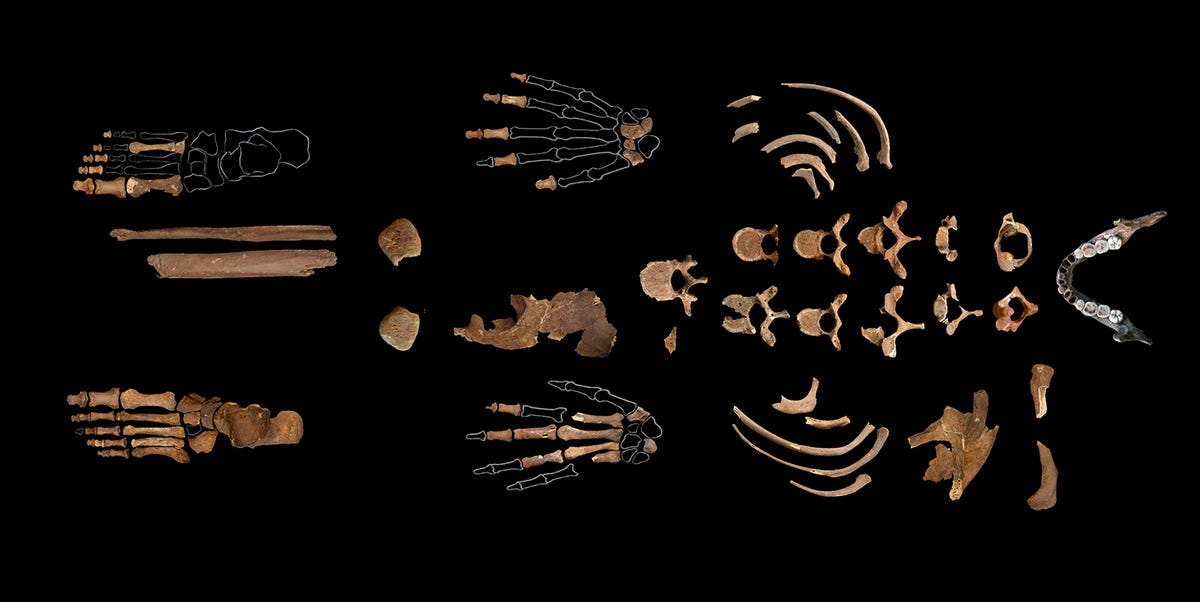
Sometimes archaeology arrives with a golden mask, a royal tomb, or a sword dramatically stuck in the ground like history hired a movie director. Other times, the big discovery is dirt. Yes, dirtthe stuff we sweep off boots, complain about on carpets, and rarely invite to dinner. Yet in the case of the 19,000-year-old “Red Lady” of El Mirón, cave sediment has become one of the most exciting storytellers in Ice Age science.
Researchers studying El Mirón Cave in Cantabria, northern Spain, have used sedimentary ancient DNA, often shortened to sedaDNA, to learn more about the humans and animals that occupied the cave across tens of thousands of years. The star of the story is the famous “Red Lady,” a woman from the Upper Paleolithic whose ochre-covered remains were discovered in 2010. Her burial was already extraordinary. Now, DNA recovered not only from bones but from the surrounding soil is helping scientists reconstruct the broader world she lived inand the people who came before her.
This is not just a neat laboratory trick. It is a shift in how we read the past. Instead of depending only on bones, teeth, tools, or cave art, researchers can examine genetic traces left behind in layers of sediment. In other words, the cave floor has been keeping receipts for roughly 46,000 years. And unlike many modern receipts, these are actually useful.
The Red Lady of El Mirón: Who Was She?
The “Red Lady of El Mirón” was not red-haired, at least not as far as researchers can confidently say. Her nickname comes from the red ochre that coated her bones and burial area. Ochre, an iron-rich mineral pigment, was widely used by prehistoric people for symbolic, artistic, and possibly ritual purposes. In her case, the red coloring made the burial visually striking and scientifically memorable.
Her remains were found inside El Mirón Cave, a large archaeological site in Cantabria, Spain. The cave had already been known for its long record of prehistoric human activity, but the discovery of an intact Paleolithic burial made it especially important. The woman is believed to have been around 35 to 40 years old at death. In a hunter-gatherer world shaped by harsh climates, seasonal movement, injuries, food uncertainty, and zero urgent-care clinics, reaching that age was no small achievement.
Radiocarbon dating places her burial at roughly 19,000 years ago, during the Magdalenian period, after the coldest phase of the Last Glacial Maximum. That timing matters. Europe was recovering from extreme Ice Age conditions, human groups were shifting across the continent, and ecosystems were being reshuffled like someone had hit “randomize” on the Pleistocene playlist.
Why El Mirón Cave Matters
El Mirón Cave is valuable because it preserves a long archaeological sequence. A sequence is basically a layered timeline: older deposits below, younger deposits above, each layer holding clues about climate, food, tools, animals, and human presence. At El Mirón, those layers span from Neanderthal-associated Mousterian levels to later periods linked with modern humans, including the Gravettian, Solutrean, and Magdalenian cultures.
That makes the cave a rare archive of survival, migration, and adaptation. People did not simply occupy the cave once and leave behind a tidy little time capsule. Instead, different groups used the space at different moments over many millennia. Sometimes humans were present. Sometimes carnivores visited. Sometimes the cave was probably quieter than a museum on a Monday morning. The sediment records pieces of all of it.
Traditional archaeology has already revealed stone tools, animal bones, hearth evidence, and burial features at the site. But ancient DNA from sediment adds another layer of evidence. It can detect species that left few or no visible remains. It can help identify population relationships. It can show how humans and animals returned to the same shelter across changing climates.
What Is Sedimentary Ancient DNA?
Sedimentary ancient DNA is genetic material preserved in soil or sediment. It may come from skin cells, hair, waste, blood, decomposing tissue, plant material, or microscopic biological traces. In caves, DNA can become trapped in mineral-rich deposits and survive for thousands of years under the right conditions.
That does not mean scientists scoop up a handful of cave dirt, blow on it like a video game cartridge, and instantly reveal a family tree. The process is delicate. Ancient DNA is usually fragmented, chemically damaged, and mixed with DNA from bacteria, animals, plants, modern visitors, and the occasional curious bat. Researchers must use clean laboratories, strict contamination controls, sequencing technology, and bioinformatics to separate authentic ancient signals from modern noise.
The result, when it works, is astonishing. Sediment can reveal who or what passed through a place even when no bone survives. For archaeology, this is like getting a second pair of eyesexcept the eyes are molecular, extremely picky, and good at reading invisible footprints.
DNA From Dirt and the Story Before the Red Lady
The new research connected to El Mirón Cave focuses on sediment from lower archaeological layers. These layers predate the Red Lady and include periods associated with Neanderthals and later modern humans. By studying mitochondrial DNA from the sediment, scientists identified human and animal traces that help reconstruct the cave’s long history.
One of the most important findings involves the genetic ancestry of people who occupied the cave before the Red Lady’s time. During the Solutrean period, around 25,000 to 21,000 years ago, humans in parts of southwestern Europe endured the severe conditions of the Last Glacial Maximum. Genetic traces from El Mirón sediment suggest that these people were connected with what researchers call the “Fournol” ancestry cluster, known from ancient remains in France and Spain.
That matters because the Red Lady herself appears to carry a mixed legacy. Earlier hunter-gatherer groups who survived in southwestern refuges contributed to later populations. Another ancestry signal, often associated with “Villabruna,” appears in Europe after the Last Glacial Maximum and is linked to later post-Ice Age population movements. The Red Lady sits near a major turning point, when older and newer genetic lineages were part of the same unfolding human story.
The Last Glacial Maximum: A Very Cold Backdrop
To understand why the Red Lady’s world matters, it helps to picture Europe around the Last Glacial Maximum. This was not a mildly chilly weekend. Huge ice sheets covered parts of northern Europe, climates were colder and drier, and human populations were pushed into more habitable refuge zones. Southwestern Europe, including Iberia, became especially important for survival.
Groups moved, adapted, shrank, expanded, and sometimes merged. Tool traditions changed as people responded to landscapes filled with reindeer, horses, ibex, bison, carnivores, and seasonal challenges. The archaeological cultures we name todayGravettian, Solutrean, Magdalenianwere not brand labels. They were living systems of technology, art, food strategy, movement, and social identity.
The Red Lady lived after the harshest glacial peak, but she inherited a world shaped by it. Her genome, her burial, and now the DNA from the surrounding cave sediments all point to continuity and change. She was not an isolated mystery in a red-stained grave. She was part of a long chain of people who repeatedly used the same landscape through crisis and recovery.
Animals in the Cave: Not Just a Human Story
The sediment DNA study did not only detect humans. It also revealed animal DNA, including carnivores and herbivores. This is important because caves were not prehistoric apartment buildings reserved exclusively for humans. They were shared spaces, contested shelters, hunting zones, scavenger dens, and occasional death traps.
Researchers identified DNA from a range of animals, including species that may not always appear clearly in the excavated bone record. Carnivores such as wolves, hyenas, leopards, cave lions, and wild dogs are part of the broader Late Pleistocene ecosystem. Large herbivores such as reindeer, horses, and other Ice Age animals shaped human hunting and mobility patterns.
This helps scientists ask better questions. Did humans and carnivores use the cave in alternating periods? Were predators dragging prey into the cave? Did human activity push animals away at certain times? Did climate shifts change which species visited the region? Sediment DNA cannot answer every question by itself, but it adds crucial evidence to the archaeological puzzle.
Why Dirt DNA Is a Big Deal for Archaeology
For decades, ancient DNA studies depended heavily on bones and teeth. That made sense because skeletal material can preserve DNA well, especially in dense bones like the petrous portion of the temporal bone. But there is a problem: bones are not always available. Many archaeological sites preserve tools but not human remains. Others have animal bones but no obvious human fossils. Some sites were excavated before modern DNA methods existed, and delicate remains may be damaged or absent.
Sedimentary DNA changes the game. It gives researchers a way to study human presence without needing to destroy rare bones. It also expands the number of sites that can contribute to genetic history. A cave layer with no human skeleton might still hold human DNA. A deposit with no visible hyena bones might still reveal hyena DNA. Suddenly, the dirt is not background material. It is evidence.
Of course, caution is essential. DNA can move through sediment under some conditions. Contamination is a constant concern. Interpretation requires careful comparison with archaeology, dating, stratigraphy, climate data, and known ancient genomes. The best studies do not treat DNA as a magic answer machine. They treat it as one powerful line of evidence among many.
The Red Lady’s Burial: Symbolism in Red Ochre
The Red Lady’s burial remains one of the most evocative parts of the El Mirón story. Red ochre was not randomly sprinkled like decorative paprika. It took effort to obtain, process, and apply. In many Paleolithic contexts, ochre appears in burials, art, body decoration, and symbolic practices. Its color may have been associated with blood, life, identity, transformation, or social memory.
The El Mirón burial was also unusual because it was relatively intact. Many Ice Age burials are incomplete, disturbed, or poorly preserved. Here, researchers had a rare opportunity to study the body, burial context, pigment, associated deposits, and surrounding archaeological layers together.
That combination makes the Red Lady more than a skeleton. She is a window into ritual behavior, group identity, and the emotional lives of Ice Age people. It is easy to reduce Paleolithic humans to toolmakers and hunters, but burials remind us that they also mourned, remembered, honored, and made meaning. In that sense, the Red Lady is not just scientifically important. She is deeply human.
What Scientists Learned From the Soil
The sediment DNA research at El Mirón supports several major insights. First, it confirms that the cave preserves genetic traces across a very long span of time. Second, it shows that human populations associated with different archaeological periods can be detected without relying solely on skeletal remains. Third, it reveals animal diversity that helps reconstruct changing ecosystems.
Most importantly, the findings help place the Red Lady within a broader population history. She was connected to people who survived glacial conditions in southwestern Europe and to later population movements that reshaped the continent. Her story is not a single dot on a timeline. It is part of a network.
This is especially useful because the period around and after the Last Glacial Maximum is one of the most important chapters in European prehistory. As climates warmed and habitats changed, humans expanded into new territories, reoccupied regions, and interacted with shifting animal communities. El Mirón provides one of the clearest places to study that process.
Specific Example: A Cave Layer as a Genetic Guestbook
Imagine a layer of sediment in El Mirón Cave dating to the Solutrean period. Archaeologists may find stone tools, charcoal, and animal bones. Those remains already tell a story: people made tools, used fire, and processed animals. But sediment DNA can add hidden names to the guestbook.
It might show that humans from a particular genetic ancestry group were present. It might reveal carnivores that used the cave before or after human visits. It might identify animals not represented by bones in that exact layer. Instead of seeing the cave as a still photograph, researchers begin to see it as a busy stopover across thousands of years.
That is why this discovery is so exciting. It transforms sediment from “the stuff around artifacts” into an archive of movement, ecology, and survival. Archaeology has always been about reading traces. Sediment DNA simply gives scientists a new alphabet.
Why This Matters Beyond One Cave
The El Mirón research is part of a broader revolution in ancient DNA science. Researchers are now recovering genetic information from cave floors, permafrost, lake sediments, and other environmental archives. These methods are helping scientists study extinct animals, ancient ecosystems, human migration, and even interactions between modern humans and Neanderthals.
For the public, this can feel almost unbelievable. Dirt contains DNA? A cave floor can remember who walked across it 20,000 years ago? Apparently, yesunder the right conditions and with enough scientific patience. The past is not always locked in dramatic objects. Sometimes it is hiding in a teaspoon of sediment, waiting for a lab team with gloves, sequencing machines, and the emotional resilience to work with extremely tiny fragments.
For researchers, the implications are enormous. Sites once considered genetically silent may become readable. Museum collections can be reexamined. Excavation strategies may change so that sediment samples are collected as carefully as bones and tools. Future archaeologists may treat soil blocks like priceless documents rather than cleanup material.
What We Still Do Not Know
Despite the excitement, scientists are not claiming that sediment DNA answers everything. It cannot always identify individuals. It may not reveal personal appearance, language, beliefs, or exact social roles. DNA also does not replace archaeology. A genetic signal without cultural context is like a name without a story.
There are also technical limits. Sediment DNA is often mitochondrial rather than nuclear, meaning it may provide information about maternal lineages and species presence but less detail than a full genome. Researchers are working to recover more nuclear DNA from sediments, which could eventually offer richer information about ancestry, population size, and relationships.
The Red Lady herself remains partly mysterious. We know she was an adult woman buried with red ochre in a significant cave context. We know her remains and the surrounding site have helped reshape ideas about Ice Age Europeans. But we do not know her name, her voice, her favorite foods, her status in the group, or whether she would be amused that thousands of years later people are discussing her because scientists analyzed dirt. My guess: she would at least raise an eyebrow.
Conclusion: The Past Is Underfoot
The story of the Red Lady of El Mirón shows how modern science can deepen ancient mysteries rather than flatten them. Her ochre-covered burial already offered a rare glimpse into Ice Age life and death. Now, sedimentary ancient DNA from El Mirón Cave expands that story across tens of thousands of years, linking humans, carnivores, climate stress, migration, and survival.
The biggest lesson is simple: archaeology is no longer limited to what the eye can see. Bones, tools, and art still matter enormously, but the ground itself can preserve biological memory. Dirt, humble and usually underappreciated, has become a scientific archive. The next major chapter in human history may not come from a glittering tomb. It may come from a carefully labeled bag of cave sediment.
Experience Notes: Standing in the Story of the Red Lady
Thinking about the Red Lady of El Mirón changes the way a person experiences caves, museums, and even ordinary ground. A cave is no longer just a dramatic hollow in the rock. It becomes a layered memory system. Every floor surface, every dark corner, every mineral-stained wall might have witnessed animals passing through, families sheltering from cold winds, hunters preparing tools, or mourners carrying a body into a protected space.
For students, travelers, and science lovers, this topic offers a powerful reminder that discovery is not always glamorous in the obvious way. The most important object in a research lab may look like a small tube of sediment. It may not sparkle. It may not impress anyone on a first date. But inside that sample could be evidence of people who survived one of the coldest periods of the last Ice Age. That is the kind of plot twist history does best.
A visit to a prehistoric cave siteor even a museum exhibition about Ice Age Europefeels different once you understand sediment DNA. Stone tools become more than sharp objects. They become signs of decision-making: where to hunt, what to cut, how to repair, when to move. Animal bones become more than leftovers. They reveal ecosystems, risks, diets, and seasonal patterns. Pigment becomes more than color. In the Red Lady’s burial, red ochre suggests care, symbolism, and perhaps a community’s need to mark death with meaning.
This discovery also creates a useful classroom experience. Teachers can ask students to imagine future archaeologists studying a modern campsite. What would survive? Food wrappers, footprints, ashes, maybe a lost button. But what invisible traces would remain? Skin cells, hair, pollen, bacteria, and DNA from animals that passed nearby. Suddenly, archaeology becomes less like treasure hunting and more like forensic storytelling. The past is reconstructed from clues, and every clue has limits.
For writers and editors, the Red Lady story is a gift because it combines emotion and science. There is a human burial, a mysterious red pigment, Ice Age survival, advanced DNA sequencing, and a cave that acted like a natural archive. It has drama without needing exaggeration. The facts are already fascinating. The challenge is simply to explain them clearly without turning the science into wizardry.
Perhaps the most meaningful experience is personal: this research makes deep time feel closer. Nineteen thousand years sounds impossibly distant, but the Red Lady was a real person. She had a body that aged, a group that knew her, and a landscape she understood better than we ever will. The sediment around her does not bring her fully back, but it lets us stand a little nearer to her world. That is the quiet magic of archaeology: it does not erase the distance between us and the dead, but it builds a bridge strong enough for curiosity, respect, and wonder to cross.
Note: This article is written for public web publication and synthesized from reputable archaeology, paleogenetics, university, and science-reporting sources. It is fully rewritten in original language for SEO-friendly use.