Some fashion ideas arrive on runways. Others arrive when someone opens a junk drawer, finds a tiny plastic dinosaur, and says, “You know what this needs? A neck strap.” That is more or less how toy bow ties happen: a cheerful collision between menswear, nostalgia, craft glue, and the kind of creative confidence usually reserved for toddlers wearing superhero capes to the grocery store.
“We Made These Bow Ties Out Of Toys” sounds like a punchline, but it is also a surprisingly smart design idea. Bow ties are already compact statement pieces. Toys are colorful, recognizable, emotionally loaded objects. Put them together, and you get wearable art that starts conversations faster than a magician at a wedding reception.
This article explores how toy bow ties work, why they are so charming, what materials make sense, how to style them, and what we learned from turning miniature cars, building bricks, animals, game pieces, and alphabet blocks into tiny pieces of neckwear with maximum personality.
Why Toy Bow Ties Make So Much Sense
The classic bow tie has always been a little theatrical. It is formal, yes, but also playful. Presidents, professors, musicians, comedians, grooms, bartenders, and fictional detectives have all used bow ties to say something before saying a word. A regular tie points downward. A bow tie points sideways, as if it is already gesturing toward the joke.
That is why toys fit the format so naturally. A toy car, a miniature robot, a plastic shark, or a tiny spaceship already carries a story. When attached to a bow tie, that story becomes part of an outfit. Suddenly the accessory is not just “blue,” “striped,” or “silk.” It is “made from old game pieces,” “inspired by Saturday morning cartoons,” or “built from the same toy animals that once lived under the couch.”
In a fashion world that increasingly values individuality, upcycled accessories feel fresh because they are almost impossible to duplicate perfectly. Even if two makers use the same toy theme, the placement, color, scale, and arrangement will vary. That uniqueness is the secret sauce. Also, it is very hard to look boring while wearing a bow tie with a tiny yellow dump truck on it.
The Big Idea: Nostalgia You Can Wear
Toys are emotional shortcuts. A small plastic dinosaur can remind someone of museum trips, school book fairs, cereal-box prizes, or the specific childhood phase when every adult had to answer serious questions about velociraptors. Toy bow ties turn those memories into visible design.
That nostalgia is not childish. It is expressive. Adults collect sneakers, vinyl records, vintage lunch boxes, trading cards, model trains, and limited-edition figurines for the same reason: objects become containers for memory. A toy bow tie simply moves that memory from a shelf to a shirt collar.
The best pieces do not look like random clutter glued to fabric. They look curated. A row of tiny farm animals creates rustic humor. Miniature chess pieces feel clever and slightly dramatic. Toy soldiers create a bold military-inspired look, though they should be used thoughtfully. Alphabet blocks can spell initials, wedding dates, or inside jokes. Dice and board-game pieces bring a playful casino-night mood without requiring anyone to understand probability.
How We Chose the Toys
The toy selection process is where the project either becomes charming or becomes “why is there a helicopter stabbing my chin?” Not every toy belongs on a bow tie. The ideal toy is lightweight, small, durable, visually clear, and not too sharp. It should have enough surface area to attach securely and enough personality to justify its place on the bow.
1. Size Matters More Than Drama
A bow tie is small. Toys that look adorable in the hand may look enormous on the collar. The sweet spot is usually miniature: small animals, tiny vehicles, puzzle pieces, buttons, beads, blocks, game tokens, and toy food. Oversized pieces can work for costume events or photo shoots, but for real wear, comfort wins.
2. Weight Is the Silent Dealbreaker
A heavy toy makes a bow tie sag. Sagging is cute on sleepy puppies, not on accessories. Hollow plastic toys, foam pieces, lightweight wooden blocks, and small rubber figures tend to work better than dense metal toys. Before attaching anything permanently, hold the toy against the bow tie and check whether the fabric collapses like it just heard bad news.
3. Color Should Do the Talking
Toys often come in bright primary colors, which can be fantastic. A bow tie made with red race cars, blue blocks, and yellow stars has instant energy. But too many colors at once can turn the design into a confetti accident. Choose a color story: rainbow, monochrome, school colors, wedding palette, comic-book brights, muted vintage tones, or metallic spray-painted toys for a more polished finish.
How to Make Bow Ties Out of Toys
There are two main approaches. The first is to make a fabric bow tie and decorate it with toys. The second is to build the bow tie structure itself from toys. The first method is more wearable. The second is more sculptural. Both are fun, but one is more likely to survive dinner.
Method One: Decorated Fabric Bow Tie
Start with a basic bow tie base made from cotton, felt, denim, velvet, or sturdy craft fabric. Cotton is beginner-friendly because it folds cleanly and holds shape with interfacing. Felt is forgiving and does not fray. Denim adds a cool upcycled look. Velvet looks fancy but attracts lint like it has a personal vendetta.
Once the bow tie is formed, arrange the toys before gluing or stitching. Take a photo of the layout, because the moment you move one piece, your perfect arrangement may disappear into chaos. Use strong craft adhesive suitable for plastic and fabric, or sew through toy pieces that have holes. For heavier decorations, reinforce the back with felt, leather, or an extra fabric layer.
Method Two: Toy-Covered Bow Tie Frame
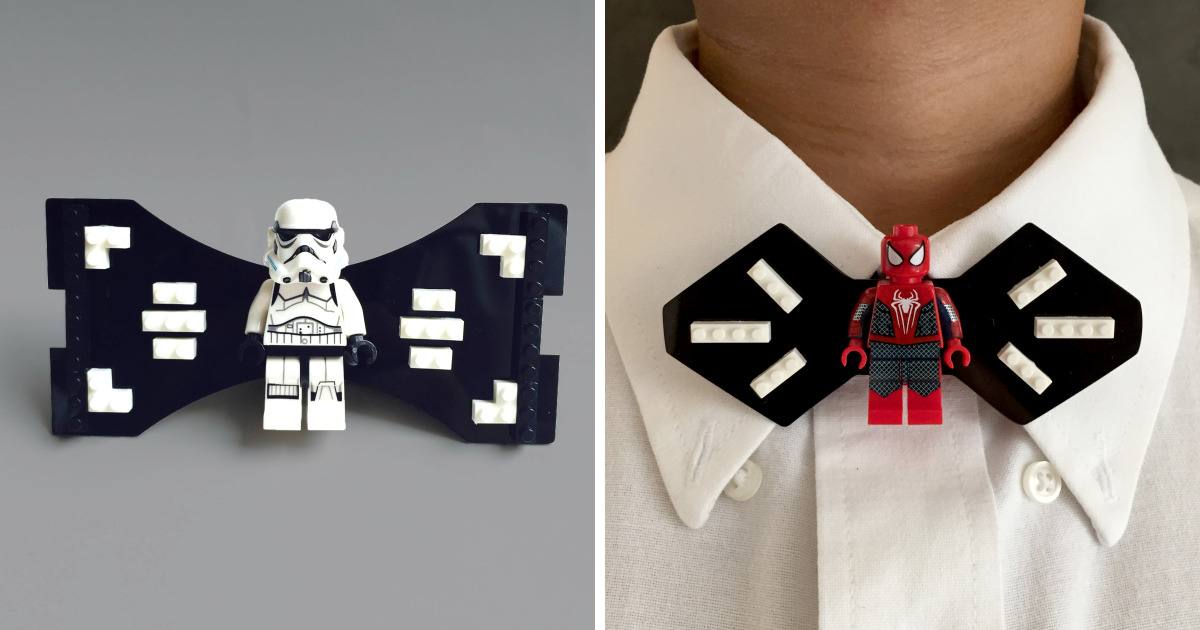
For a bolder piece, cut a bow tie silhouette from lightweight plastic sheet, craft wood, or thick felt. Then attach toys directly to the surface. This creates a mosaic effect. It works beautifully with small bricks, beads, flat game tiles, tiny buttons, and plastic charms. The key is balance: keep the middle knot area tidy so the bow still reads as a bow tie, not a tiny garage sale.
Method Three: The Minimal Accent
Not every toy bow tie needs to scream. Sometimes one small toy in the center is enough. A single gold-painted dinosaur on a black bow tie looks surprisingly elegant. A tiny rocket on a navy bow tie feels clever. A miniature teddy bear on a cream bow tie becomes sweet without becoming a full nursery theme.
Best Toy Themes for Bow Ties
Mini Dinosaurs
Dinosaur bow ties are nearly impossible to dislike. They work for birthday parties, science teachers, museum events, kids’ weddings outfits, and adults who still know the difference between a stegosaurus and a triceratops. Paint them matte black for a sleek look or keep them bright for maximum Jurassic joy.
Toy Cars and Trucks
Mini vehicles create a clean horizontal shape, which suits the bow tie form. Race cars feel energetic. Construction trucks feel funny and bold. Vintage toy cars can look surprisingly sophisticated when paired with tweed, denim, or chambray.
Alphabet Blocks
Alphabet blocks are perfect for personalized bow ties. They can spell names, initials, “DAD,” “GROOM,” “PROM,” or a private joke only three people understand. That makes them ideal for gifts, photo shoots, baby showers, and family events.
Board Game Pieces
Dice, tokens, tiny cards, dominoes, and chess pieces add wit. These are great for game-night hosts, puzzle lovers, math teachers, and anyone whose personality includes the phrase “just one more round.” Use restraint, though. A bow tie should say “strategic thinker,” not “the board game exploded.”
Plastic Animals
Plastic animals are wonderfully expressive. A bow tie covered in tiny farm animals is charming. Jungle animals feel adventurous. Sea creatures create a fun summer look. Spray-painting animal figures in one color can make the design feel more artistic and less like it escaped from a preschool bin.
Styling Toy Bow Ties Without Looking Like a Craft Table
The easiest way to style a toy bow tie is to let it be the loudest thing in the outfit. Pair it with a simple shirt, clean jacket, and neutral pants. A white button-down gives colorful toys space to shine. Chambray softens the look. A black shirt makes bright plastic pieces pop. A navy blazer can turn the whole thing into “eccentric professor, but invited to the good party.”
For weddings, toy bow ties can be brilliant when they match the couple’s story. Maybe the groom loves vintage arcade games. Maybe the ring bearer loves dinosaurs. Maybe the wedding theme includes board games, travel, comics, or childhood nostalgia. In those cases, a custom toy bow tie becomes more than a novelty. It becomes a tiny wearable memory.
For kids, the bow tie should be lightweight, soft-backed, and easy to remove. Clip-on styles are convenient, but they should not pinch. Adjustable straps are better for longer wear. For pets, use only collar slide-ons designed for animals and avoid anything chewable, sharp, or detachable. Dogs do not understand “limited-edition accessory.” They understand “snack?”
Safety and Durability: The Serious Part Wearing Funny Shoes
Toy bow ties are fun, but small parts require common sense. Do not give toy-covered accessories to children under three. Avoid tiny detachable pieces around babies, toddlers, and pets. If the toy includes magnets, batteries, sharp edges, loose wheels, peeling paint, or unknown materials, skip it. A cute accessory is never worth a safety risk.
Use clean toys only. Wash plastic pieces with mild soap and water, dry them completely, and sand glossy attachment points lightly so adhesive can grip. Check the bond after curing. Tug gently. If a piece pops off easily, rework the design. A bow tie should survive normal movement, hugs, dancing, and at least one person leaning in to say, “Wait, is that a tiny shark?”
For handmade products intended for sale, makers should be extra careful. Avoid trademarked characters unless you have permission. Be transparent about materials. Include age warnings when small parts are involved. Describe whether the piece is decorative, costume-only, or suitable for regular wear. Good design is not just creative; it is responsible.
Why Upcycled Toy Accessories Feel So Modern
Upcycling is not just a buzzword. It is a practical response to waste and overproduction. Instead of sending old materials straight to the trash, makers transform them into something with new value. Toy bow ties fit that mindset beautifully. They rescue objects that may no longer be played with and give them a second life as fashion.
There is also an important emotional difference between recycling and upcycling. Recycling often breaks materials down. Upcycling keeps the original object recognizable. A toy car remains a toy car. A plastic dinosaur remains a dinosaur. That visible history gives the final piece charm. You are not hiding the past; you are putting it proudly under the chin.
In a marketplace full of mass-produced accessories, handmade toy bow ties stand out because they show evidence of human decision-making. Someone selected the toys, tested the layout, balanced the colors, solved the attachment problem, and probably burned at least one fingertip on hot glue. That effort gives the piece character.
Gift Ideas: Who Actually Wants a Toy Bow Tie?
More people than you might think. Teachers love subject-themed pieces. A science teacher could wear insects, planets, or dinosaurs. A music teacher could wear tiny instruments. A kindergarten teacher could wear alphabet blocks. A librarian could wear miniature books or storybook-inspired objects, as long as the design avoids copyrighted imagery when sold commercially.
Groomsmen can wear toy bow ties for a casual, themed wedding. Parents can wear them for birthday parties. Artists can wear them to gallery openings. Cosplayers can use them as subtle character nods. Pet owners can order matching human-and-dog versions, although the dog version should be simpler and safer. Collectors can turn broken or duplicate toys into accessories instead of leaving them in a box labeled “miscellaneous emotional debris.”
A toy bow tie is also a strong conversation starter for fundraisers, school events, maker fairs, children’s museums, toy drives, and creative business launches. It says, “I am approachable,” which is useful unless you were hoping to stand alone by the snacks.
Common Mistakes to Avoid
The first mistake is using too many toys. A bow tie has limited real estate. If every inch is covered, the eye has nowhere to rest. Choose a hero piece and supporting pieces. Think composition, not toy avalanche.
The second mistake is ignoring the center knot. The knot is what makes the shape read as a bow tie. If it is hidden beneath bulky objects, the accessory becomes confusing. Keep the center clean, narrow, or intentionally framed.
The third mistake is forgetting wearability. Check the back. Is it scratchy? Does glue create hard bumps? Does the strap twist? Does the bow sit flat? The front may be hilarious, but the back determines whether anyone wears it for more than seven minutes.
The fourth mistake is using sentimental toys without permission. If you are making a bow tie from a childhood toy, make sure the owner is emotionally ready. Turning someone’s beloved miniature fire truck into neckwear without asking is not upcycling. It is how family legends begin.
Conclusion: Tiny Toys, Big Personality
Making bow ties out of toys is the kind of idea that sounds silly until you see the results. Then it becomes obvious: toys are colorful, nostalgic, and full of character, while bow ties are compact, expressive, and already a little whimsical. Together, they create accessories that feel handmade, humorous, and deeply personal.
The best toy bow ties are not random. They are designed with theme, scale, comfort, and safety in mind. They can be elegant, ridiculous, sentimental, or all three at once. They can rescue old toys, celebrate hobbies, personalize events, and make formalwear feel less like a uniform and more like a wink.
In a world where many accessories look the same, a toy bow tie has the courage to be specific. It does not whisper. It introduces itself. Sometimes it introduces itself as a tiny dinosaur.
Extra Experience Notes: What It Felt Like to Make Toy Bow Ties
The first thing we learned while making toy bow ties is that the toy box lies. Everything looks usable when it is sitting in a pile. Tiny robots? Perfect. Miniature animals? Obviously. A plastic airplane? Maybe. A chunky action figure with one heroic arm pointing directly outward? Absolutely not, unless the goal is to poke everyone during greetings.
Our best designs started with sorting. We grouped toys by color, theme, weight, and shape. The lightweight pieces immediately moved to the front of the line. Flat-backed pieces became favorites because they attached easily. Rounded toys needed more patience. Wheels, tails, horns, and wings all created design problems, but sometimes those problems made the piece more interesting. A little red car looked plain until we angled it slightly across one wing of the bow. Suddenly it had motion. A row of tiny animals looked messy until we painted them one solid color. Suddenly it looked like something from a boutique instead of the bottom of a daycare storage bin.
The second lesson was that restraint is not boring. At first, the temptation was to cover every surface. More toys meant more fun, right? Wrong. More toys often meant more weight, more glue, and more visual confusion. The strongest bow ties usually had one clear concept: dinosaurs marching across denim, alphabet blocks spelling initials, dice arranged symmetrically, or one tiny rocket centered on a dark bow. The simpler designs looked more intentional and photographed better.
The third lesson was that people react instantly. A toy bow tie does not need explanation. Someone sees it, smiles, and steps closer. That reaction is the whole point. These pieces work because they invite people into a memory. One person remembers a toy truck from childhood. Another notices the game pieces. Someone else asks if the dinosaur is a triceratops, and now the bow tie has done more social work than half the room.
The fourth lesson was practical: test everything. We wore sample pieces around the house, turned our heads, sat down, hugged people, and checked whether anything fell off. A few pieces failed. One toy wheel escaped. One bow sagged dramatically. One design looked great on the table but strange on an actual neck. That testing stage saved the final versions.
Most of all, making these bow ties reminded us that creativity does not always require expensive materials. Sometimes it requires looking at forgotten objects differently. A toy that has lost its original purpose can become a joke, a keepsake, a fashion statement, or a gift. And when someone asks, “Where did you get that bow tie?” the answer is better than any brand name: “We made it out of toys.”