Some Christmas characters arrive wrapped in ancient folklore, covered in snow, and smelling faintly of gingerbread. Rudolph the Red-Nosed Reindeer is not one of them. America’s most famous glowing-nosed reindeer began life as a store promotion, became a hit song, conquered television, landed on postage stamps, and somehow made being different feel like a superpower.
That is a pretty impressive résumé for a fictional reindeer whose main job is outdoor lighting.
Today, Rudolph is more than a holiday mascot. He is a pop culture icon, a Christmas music superstar, a stop-motion television legend, and a surprisingly good case study in storytelling, branding, empathy, and the power of one weird little detail. His red nose is instantly recognizable, but the history behind it is even brighter. Here are 12 shiny facts about Rudolph the Red-Nosed Reindeer that make the holiday classic even more fascinating.
1. Rudolph Was Created as a Department Store Promotion
Rudolph did not come from the North Pole, old European legend, or a secret reindeer academy with suspiciously strict entrance exams. He was created in 1939 by Robert L. May, a copywriter for Montgomery Ward, the Chicago-based department store and mail-order company.
At the time, Montgomery Ward had a holiday tradition of giving free Christmas booklets to children. Instead of buying those booklets from outside publishers, the company decided to create its own. That practical business decision produced one of the most beloved Christmas characters in American culture.
The idea was simple: give families something charming, memorable, and free. Children would receive the booklet, parents would visit the store, and Montgomery Ward would earn warm holiday goodwill. In modern marketing language, Rudolph was branded content before branded content had a conference panel and a coffee sponsor.
2. Robert L. May Saw Himself in Rudolph
One reason Rudolph’s story still works is that it came from a very human place. Robert L. May reportedly understood what it felt like to be overlooked. As a child, he had felt small, shy, and different from others. That emotional memory became the heart of Rudolph’s character.
Rudolph is not powerful at first. He is not popular. He does not enter the story as Santa’s top employee with excellent sleigh-pulling references. He is teased because of the very feature that later saves Christmas. That emotional reversal is the engine of the story: what makes someone unusual may also be what makes them essential.
That message is the reason Rudolph the Red-Nosed Reindeer still feels personal. It is not just about Christmas delivery logistics. It is about the kid who feels awkward in class, the coworker with an unconventional idea, or anyone who has ever wished they could hide the thing that makes them stand out.
3. Rudolph Almost Had a Different Name
Before Rudolph became Rudolph, Robert L. May considered other names, including Rollo and Reginald. Imagine singing, “Rollo the Red-Nosed Reindeer.” It has a certain bounce, but it also sounds like a medieval pastry or a cartoon raccoon who sells snow tires.
Reginald is even funnier in hindsight. “Reginald the Red-Nosed Reindeer” sounds less like Santa’s helper and more like a reindeer who insists on formal dinner jackets at the North Pole cafeteria.
Rudolph was the right choice. It feels friendly, musical, and slightly old-fashioned in a way that matches the story’s cozy holiday mood. The name also fits nicely into the song’s rhythm, which became extremely important once Rudolph moved from booklet pages to radio speakers.
4. The First Rudolph Booklet Was a Massive Hit
Montgomery Ward distributed millions of copies of the original Rudolph booklet in 1939. For a free store giveaway, that was not just a success; that was a sleigh-sized marketing miracle.
The booklet was written in rhymed verse, giving it the musical feel of a classic Christmas poem. That structure helped make the story easy to read aloud, easy to remember, and easy for children to enjoy. The original illustrations were created by Denver Gillen, a Montgomery Ward artist whose reindeer drawings helped make Rudolph cute rather than strange.
That point matters. A glowing red nose could have looked alarming. In the wrong hands, Rudolph might have resembled a woodland traffic signal having a medical emergency. Gillen’s artwork made him sweet, expressive, and sympathetic.
5. Rudolph’s Red Nose Was Inspired by Fog
The practical magic of Rudolph’s nose comes from one of winter’s most familiar travel problems: fog. In the story, Santa needs help navigating through terrible weather, and Rudolph’s glowing nose becomes the perfect guide.
That is part of the genius of the idea. Rudolph’s unusual trait is not random decoration. It solves the main problem. His red nose is both a symbol and a tool. It makes him different, but it also gives him purpose.
Good storytelling often works this way. A detail introduced as a weakness later becomes the key to victory. Rudolph’s nose is not a gimmick pasted onto a reindeer. It is the central plot device, the emotional hook, and the visual logo all in one. Not bad for a nose that would probably make every dermatologist at the North Pole ask follow-up questions.
6. Rudolph Became a Song Thanks to Johnny Marks
Rudolph’s next big transformation came through music. Johnny Marks, a songwriter and Robert L. May’s brother-in-law, adapted the story into the famous song “Rudolph the Red-Nosed Reindeer.”
The song was released in 1949 and recorded by Gene Autry, already known as “The Singing Cowboy.” Autry’s version became a huge hit and turned Rudolph from a successful holiday booklet character into a national Christmas phenomenon.
The song’s success came from its perfect balance of story and singability. In just a few lines, listeners learn Rudolph’s problem, the other reindeers’ behavior, Santa’s crisis, and Rudolph’s triumphant moment. It is basically a miniature hero’s journey with sleigh bells.
7. Gene Autry Helped Rudolph Fly Into Music History
Gene Autry’s 1949 recording made Rudolph a holiday music giant. The song reached the top of the U.S. charts and became one of the defining Christmas recordings of the 20th century.
Autry’s warm, easygoing voice helped make Rudolph feel familiar. He did not sing the song like a dramatic opera about antler-based injustice. He made it sound like a friendly campfire story, which was exactly what the character needed.
That recording also helped establish a pattern that continues today: Christmas songs can become annual traditions. Unlike ordinary pop hits, holiday songs return every year. Rudolph does not have to fight for relevance in July. He waits patiently until December, then trots back into playlists like he owns the place.
8. The 1964 TV Special Made Rudolph a Visual Icon
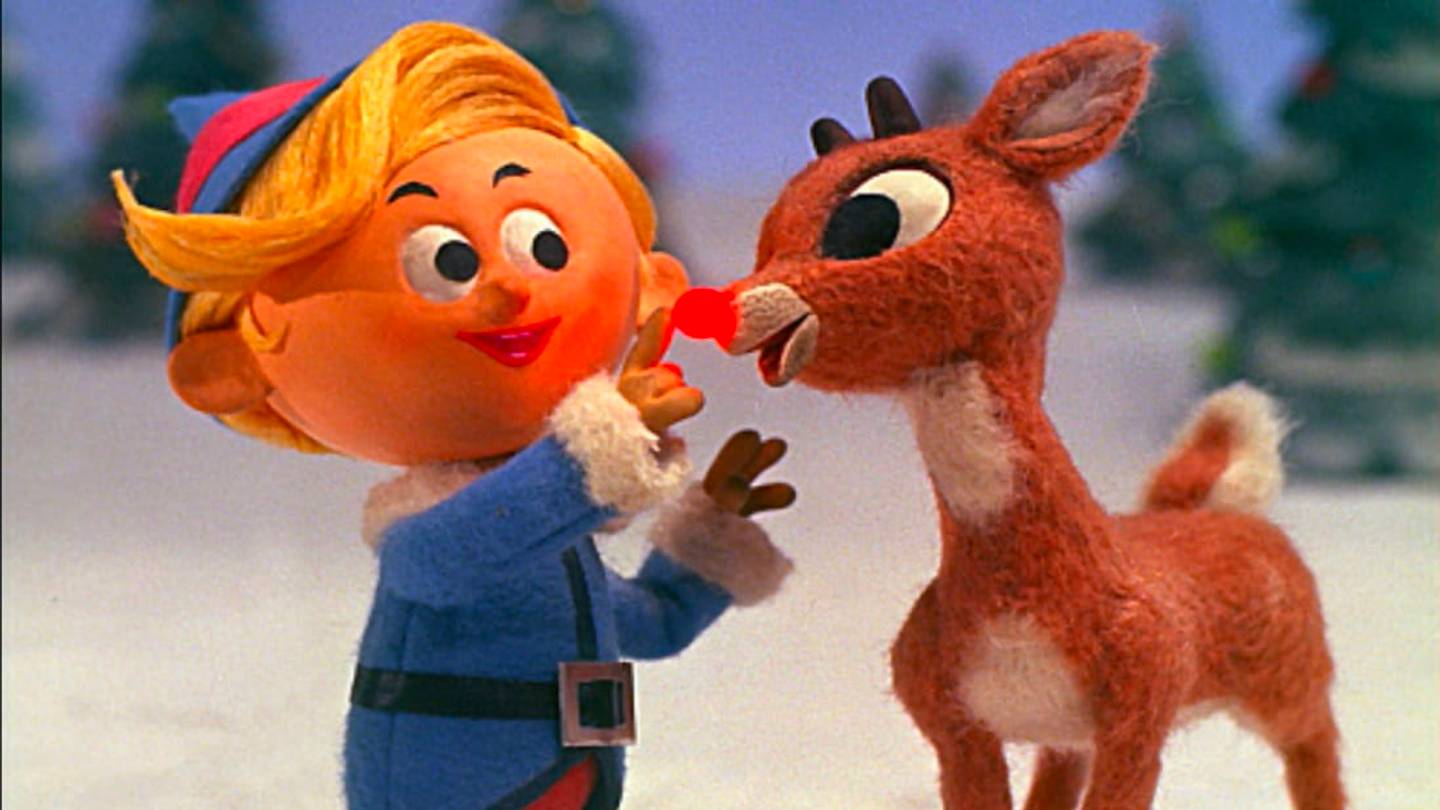
For many families, Rudolph means the 1964 stop-motion television special produced by Rankin/Bass. This version gave the world unforgettable characters such as Hermey the elf, Yukon Cornelius, Sam the Snowman, Clarice, the Bumble, and the residents of the Island of Misfit Toys.
The special first aired on NBC on December 6, 1964. Its stop-motion animation style, often associated with Rankin/Bass “Animagic,” gave the story a handmade charm. The characters move with a slightly quirky rhythm, which is part of the appeal. They do not feel slick or computer-perfect. They feel like toys that came alive when nobody was watching.
The TV special also expanded Rudolph’s emotional world. The original story focused mainly on Rudolph’s rejection and triumph. The special added a whole community of misfits, making the theme of acceptance bigger and more memorable.
9. Hermey the Elf Became a Misfit Hero Too
One of the smartest additions in the television special is Hermey, the elf who wants to be a dentist instead of making toys. Hermey is funny because his dream is oddly specific. He is not trying to become a poet, explorer, or rock star. He wants to inspect molars. Respect the ambition.
Hermey gives Rudolph a friend who understands what it feels like to be out of place. Rudolph is rejected for how he looks; Hermey is rejected for what he wants to become. Together, they turn the story into something broader than one reindeer’s glowing nose.
This is why the special continues to connect with audiences. It says that people can be different in many ways: appearance, talent, personality, dreams, or timing. The solution is not to erase those differences. The solution is to find the place where they matter.
10. The Island of Misfit Toys Gave the Story Extra Emotional Power
The Island of Misfit Toys is one of the most memorable creations in the 1964 special. It is full of toys that feel unwanted because they are unusual: a train with square wheels, a cowboy riding an ostrich, a spotted elephant, and other delightfully strange characters.
On the surface, it is cute and whimsical. Underneath, it is surprisingly emotional. The toys do not want luxury. They want to be loved by a child. That simple wish gives the story a deeper sense of tenderness.
The Island of Misfit Toys also reinforces the central Rudolph theme: usefulness and worth are not always obvious at first glance. Sometimes the world labels something “misfit” because it lacks imagination. Rudolph’s red nose, Hermey’s dental dream, and the toys’ unusual designs all point to the same lesson. Different does not mean defective.
11. Rudolph Became a Postage Stamp Star
Rudolph’s cultural status became official in another shiny way when the United States Postal Service issued Rudolph the Red-Nosed Reindeer Forever stamps in 2014. The stamps celebrated the 50th anniversary of the beloved television special.
The designs featured familiar characters from the Rankin/Bass world, including Rudolph, Santa, Hermey, and others. That honor put Rudolph into a special category of American pop culture figures: characters so recognizable they can travel across the country on envelopes.
It is a fitting tribute. Rudolph began as a free booklet handed to children in a store. Decades later, he appeared on stamps used to send holiday cards. In other words, Rudolph has been helping people deliver Christmas cheer since 1939. Santa may have the sleigh, but Rudolph clearly understands distribution.
12. Rudolph’s Message Has Aged Better Than Anyone Expected
The reason Rudolph the Red-Nosed Reindeer still matters is not just nostalgia. Yes, the song is catchy. Yes, the TV special is charming. Yes, the glowing nose is excellent branding. But Rudolph lasts because his story speaks to something timeless.
Everyone knows what it feels like to be judged too quickly. Everyone has watched a group decide who belongs and who does not. Rudolph’s story flips that experience. The excluded character becomes the guide. The odd feature becomes the rescue tool. The thing that made others laugh becomes the thing they celebrate.
Modern audiences may notice the bullying in the story more directly than earlier generations did, and that is not a bad thing. It gives families a chance to talk about kindness, confidence, and the danger of measuring people only by what seems normal. Rudolph is not perfect because every character behaves perfectly. Rudolph is useful because it shows how wrong a group can be when it confuses difference with weakness.
Why Rudolph Remains a Christmas SEO Superstar
From a content perspective, Rudolph the Red-Nosed Reindeer is a masterclass in lasting visibility. The character has a clear visual identity, a memorable name, a simple emotional message, and a story that works across formats: book, song, television, merchandise, stamps, stage shows, and family traditions.
That is why people still search for Rudolph facts, Rudolph history, Rudolph TV special trivia, Rudolph song facts, and the meaning of Rudolph’s red nose. The character sits at the intersection of Christmas nostalgia, American pop culture, children’s literature, music history, and animation history.
In plain English, Rudolph has range. He is a reindeer, a brand, a song lyric, a childhood memory, and a December search trend with antlers.
Personal Experiences and Holiday Reflections Inspired by Rudolph
One of the best things about Rudolph the Red-Nosed Reindeer is how easily the story slips into real family life. Many people first meet Rudolph before they can even read. A parent hums the song while decorating a tree. A grandparent points out Rudolph on a Christmas card. A teacher plays the TV special before winter break, possibly while silently counting the minutes until coffee and peace return to the classroom.
For children, Rudolph is often a simple hero: the little reindeer with the bright nose saves Christmas. That is enough. Kids do not need a graduate seminar in narrative symbolism to enjoy a flying animal with built-in headlights. But as people grow older, the story gains extra layers. The teasing feels sharper. Rudolph’s embarrassment feels more familiar. The final celebration feels less like luck and more like recognition that was overdue.
That is why Rudolph works so well as a shared holiday experience. A child may laugh at the funny reindeer games. A teenager may connect with the awkwardness of standing out. An adult may see the story as a reminder to be kinder to the “misfits” in everyday life, including the quiet person at work, the unusual student in class, or the relative whose holiday sweater appears to have been designed by a confused snowstorm.
Watching the 1964 special can also become a ritual. The slightly jerky stop-motion movement, the snowy sets, the cozy narration, and the old-fashioned songs create a feeling that polished modern animation sometimes misses. It feels handmade. It feels imperfect. That imperfection fits the theme beautifully. A story about misfits should not look like it was manufactured by a flawless machine.
Rudolph is also a great reminder that traditions do not have to be complicated. You do not need an expensive holiday production to make a memory. A song in the car, a paper reindeer craft, a mug of cocoa, or a family joke about who has “the shiny nose” during cold season can become part of the season. The magic is not only in the official story. It is in the way families reuse it, remix it, and pass it along.
In that sense, Rudolph’s greatest achievement is not simply saving Santa’s delivery route. It is giving generations a cheerful way to talk about courage, kindness, embarrassment, belonging, and self-acceptance. That is a lot of emotional cargo for one tiny reindeer nose to carry, but Rudolph has had decades of practice.
Conclusion: Rudolph Still Shines Bright
Rudolph the Red-Nosed Reindeer began as a clever department store giveaway, but he became something much larger: a symbol of misunderstood talent, holiday resilience, and the joy of discovering that a so-called flaw can become a gift. His journey from Montgomery Ward booklet to hit song, television classic, postage stamp, and annual Christmas tradition proves that simple stories can have extraordinary staying power.
The next time Rudolph appears on a playlist, TV screen, ornament, sweater, or cookie with a suspiciously large red candy nose, remember the real shine behind the character. Rudolph is not just cute. He is a reminder that being different can light the way for everyone else.