Note: This article is an original, publication-ready synthesis based on real research about rechargeable cement-based batteries, carbon-cement supercapacitors, grid energy storage, renewable energy integration, and multifunctional concrete.
Imagine walking into your basement, pointing at the wall, and saying, “That’s not just holding up the house. That’s also storing last night’s solar power.” It sounds like the kind of thing a science-fiction contractor would pitch right before charging extra for “intergalactic drywall.” But rechargeable cement battery technology is not fantasy anymore. Researchers have already shown that cement-based materials can be designed to store and release electricity, turning ordinary infrastructure into something much smarter than a silent gray slab.
The idea is simple enough to make your garage floor feel underemployed: concrete is everywhere, energy storage is desperately needed, and the world would benefit from batteries that do not depend entirely on scarce metals, bulky containers, or separate installations. If buildings, bridges, sidewalks, foundations, tunnels, and highway barriers could store electricity, the built environment could become part of the clean energy system instead of merely sitting there looking serious.
That is why the phrase “rechargeable cement battery” has captured so much attention. It combines two things we rarely put in the same sentence: cement, the ancient workhorse of civilization, and rechargeable energy storage, the modern backbone of solar panels, wind farms, microgrids, and electric homes. The result could be a new category of functional concrete: material that supports weight, survives weather, monitors itself, and stores power. Not bad for something most people only notice when they trip over it.
What Is a Rechargeable Cement Battery?
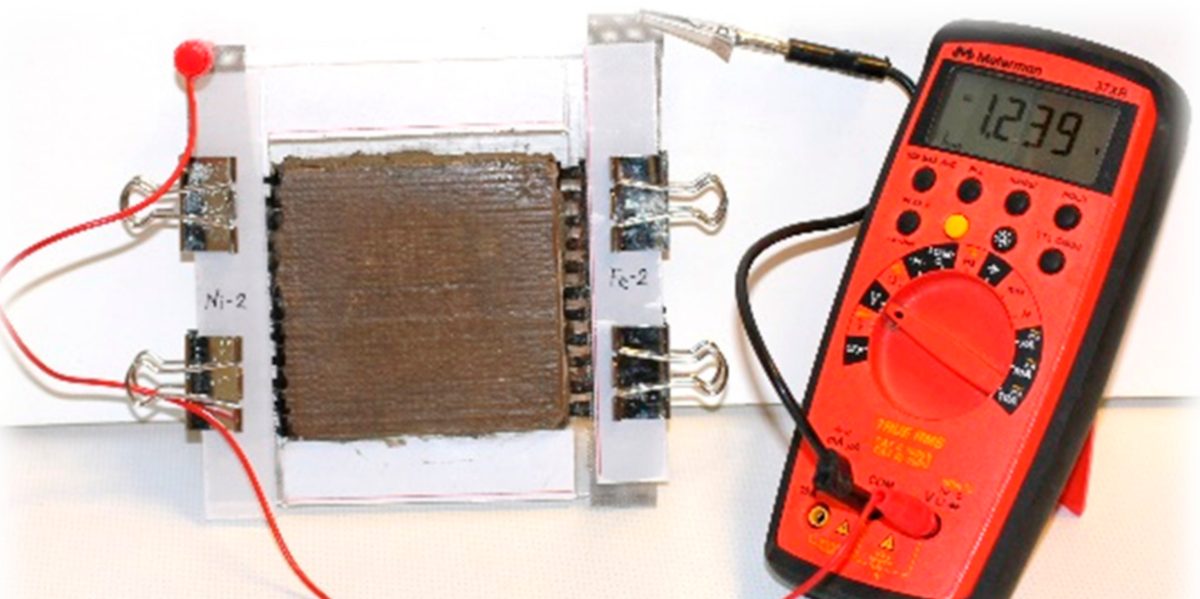
A rechargeable cement battery is an energy storage system built into cement-based material. Instead of treating concrete as passive structure, researchers modify it so it can behave like an electrochemical device. In early cement battery research, cement mixtures were enhanced with conductive additives and embedded with metal-coated carbon fiber meshes that worked like electrodes. The material could then be charged, discharged, and recharged.
The most widely discussed early concept came from researchers at Chalmers University of Technology. Their prototype used a cement-based mixture containing short carbon fibers to improve conductivity and toughness. Inside the material, they placed carbon fiber mesh coated with different metals. Tests found that an iron anode and a nickel-based oxide cathode produced the best performance. The battery achieved an average energy density of about 7 watt-hours per square meter, or roughly 0.8 watt-hours per liter, across six charge and discharge cycles.
That number is modest compared with a lithium-ion battery, and nobody should expect a patio slab to replace the battery pack in an electric car next Tuesday. However, the magic trick is scale. Concrete is used in enormous volumes. A single wall may not be impressive as a battery; a whole building, bridge deck, parking structure, or highway network might be a different story.
How Cement Can Store Electricity
To understand the concept, think of a battery as a controlled chemical traffic system. Ions move through an electrolyte, electrons move through an external circuit, and useful electrical energy appears. In a cement battery, the cement-based material can act as part of that system when it is modified with conductive ingredients. Carbon fibers help create pathways for charge movement, while embedded metal-coated meshes act as the positive and negative electrodes.
MIT’s more recent work takes a related but different path with carbon-cement supercapacitors. These are not traditional batteries in the strictest sense. A supercapacitor stores energy electrostatically rather than through the same chemical reactions used by common rechargeable batteries. That means it can often charge and discharge quickly and survive many cycles, though it usually stores less energy per unit of mass than lithium-ion batteries.
MIT researchers used cement, water, carbon black, and electrolytes to create electron-conducting carbon concrete, often called ec3. Carbon black is a fine, highly conductive carbon powder. When mixed correctly into cement, it forms a branching conductive network inside the hardened material. This network gives the concrete a huge internal surface area where electrical charge can be stored. In plain English: the concrete grows tiny electrical highways inside itself, except without traffic cones, toll booths, or one guy yelling, “You can’t park there.”
Why This Technology Matters for Renewable Energy
Solar and wind power are clean, increasingly affordable, and wonderfully dramatic when seen in drone footage. They also have one very human flaw: they do not always show up exactly when needed. Solar panels produce the most during sunny hours, but many households use more power in the evening. Wind can be strong at night and weak during peak demand. Energy storage helps smooth that mismatch.
Today, most grid-scale battery storage depends heavily on electrochemical systems such as lithium-ion batteries. These systems are powerful and improving quickly, but they require dedicated space, complex manufacturing, safety systems, and supply chains for minerals and components. Cement-based energy storage would not necessarily replace lithium-ion batteries. Instead, it could complement them by placing storage where infrastructure already exists.
Picture a neighborhood with rooftop solar panels, electric vehicles, smart heat pumps, and a foundation that quietly stores extra daytime energy. During the evening, that stored energy could help power lights, appliances, sensors, or backup systems. In larger settings, energy-storing concrete could support microgrids, emergency shelters, data centers, remote communications equipment, transportation infrastructure, and renewable-powered public facilities.
Buildings That Act Like Batteries
The most exciting idea behind rechargeable cement battery technology is not that one concrete block can outperform a commercial battery. It cannot. The exciting idea is that the world already contains a stunning amount of concrete. Buildings, sidewalks, bridges, dams, parking decks, tunnels, and roads represent a gigantic physical platform. If even part of that platform gained energy storage capability, cities could become less dependent on separate battery farms and more capable of storing local renewable power.
A twenty-story building made with functional concrete could theoretically contain huge areas of energy-storing material. Foundations and walls could become storage zones. Bridges could power monitoring sensors that detect corrosion or cracking. Highways could support lighting, communications, or future charging systems. Remote infrastructure could store enough power for wireless signals or safety equipment without requiring frequent battery replacement.
This is where the technology becomes especially interesting for civil engineering. Concrete infrastructure is expensive to inspect and maintain. If the same material that supports a bridge could also power embedded sensors, engineers might receive earlier warnings about structural stress, moisture intrusion, corrosion, or cracking. That could mean safer bridges, fewer surprise repairs, and fewer “Well, that does not look good” moments during inspection reports.
The 2025 Breakthrough: More Power in Less Concrete
The early challenge with cement batteries was low energy density. The material could store power, but not enough to make people cancel their battery orders. Then newer carbon-cement supercapacitor research made the story more compelling. MIT’s improved electron-conducting carbon concrete reportedly increased storage capacity by about ten times compared with earlier versions by optimizing electrolytes and manufacturing processes.
That improvement matters because volume is everything. Earlier versions required a large amount of material to store meaningful household energy. With the improved design, the same general concept moved closer to practical architectural use. Researchers described the possibility of storing a household-scale amount of energy in a volume comparable to a basement wall rather than an entire basement’s worth of concrete. That is still not pocket-sized, but concrete was never trying to fit in skinny jeans.
The key advance was not only the ingredients but also how they were combined. By integrating electrolyte chemistry and conductive carbon networks more effectively, the material could store more energy while remaining structurally relevant. This is the central promise of multifunctional concrete: it does not have to stop being concrete to become useful for energy storage.
Where Rechargeable Cement Batteries Could Be Used
1. Solar Homes and Smart Buildings
Homes with solar panels often need batteries to store electricity for nighttime use. A rechargeable cement battery built into foundations or walls could store some of that energy directly in the structure. This would not necessarily eliminate conventional home batteries, but it could reduce the size or cost of separate storage systems over time.
2. Bridges and Highways
Transportation infrastructure is full of places where small but steady power is valuable. Sensors can monitor cracks, corrosion, vibration, temperature, traffic loads, and moisture. A cement-based battery could power these sensors locally, especially in remote areas where replacing ordinary batteries is inconvenient or expensive.
3. Emergency Backup Systems
Hospitals, schools, shelters, and public buildings need resilient power during outages. Energy-storing concrete could become part of layered backup systems. It would not replace generators or large battery banks at first, but it could help power critical lighting, communication devices, alarms, or monitoring systems.
4. Off-Grid and Remote Infrastructure
Remote telecom stations, rural bridges, research stations, water systems, and security installations often need dependable low-maintenance power. Cement battery technology could pair with solar panels to create rugged, built-in storage for essential electronics.
5. Electric Vehicle Infrastructure
In the long run, conductive concrete and cement-based storage could support parking lots, roads, or charging stations. The dream version is infrastructure that stores renewable energy during low-demand periods and releases it for charging when vehicles arrive. The practical version will take years of testing, but the direction is worth watching.
The Big Advantages of Cement-Based Energy Storage
The first advantage is abundance. Cement, water, and carbon-based additives are more widely available than many specialized battery materials. That matters for cost, supply chains, and global scalability. A battery technology that uses common building materials could be easier to deploy in many regions than systems dependent on hard-to-source minerals.
The second advantage is space efficiency in a different sense. Cement batteries may not be energy-dense per pound, but they can hide in plain sight. A wall is already there. A foundation is already there. A bridge deck is already there. If those structures can store energy while doing their normal jobs, cities gain storage without needing vast new battery yards everywhere.
The third advantage is durability potential. Supercapacitor-style systems can often charge and discharge many times. If researchers can match the service life of the electrical components with the service life of concrete infrastructure, the technology could become a long-term asset rather than a gadget with a short warranty and commitment issues.
The fourth advantage is multifunctionality. Energy storage can combine with structural health monitoring, corrosion protection, self-healing materials, and carbon-conscious construction. Future concrete may not simply “be strong.” It may store electricity, report damage, resist degradation, and help buildings operate more efficiently.
The Limitations Nobody Should Ignore
Let’s keep our hard hats on. Rechargeable cement battery technology is promising, but it is not ready to power the world tomorrow morning. The energy density remains lower than commercial batteries. Laboratory prototypes are not the same as city-scale infrastructure. Long-term service life, moisture exposure, freeze-thaw cycles, fire safety, electrical safety, repairability, recycling, building codes, cost, and manufacturing consistency all need serious attention.
Concrete infrastructure is usually expected to last 50 to 100 years. That creates a tough question: should the energy storage layer last as long as the structure, or should it be replaceable? A rechargeable battery inside a bridge is useful only if engineers can inspect it, maintain it, and safely manage it over decades. Nobody wants to jackhammer a freeway because a hidden battery component aged like unrefrigerated milk.
Another issue is environmental impact. Cement production is carbon-intensive, so any new cement-based technology must be judged carefully. A greener concrete battery would need to pair energy storage benefits with lower-carbon cement, efficient material use, durability, and responsible end-of-life planning. Otherwise, we might solve one problem while politely creating another.
Could Cement Batteries Really Power the World?
The title sounds bold, and the honest answer is: not alone. Cement batteries are unlikely to replace every lithium-ion battery, pumped hydro facility, thermal storage system, hydrogen project, or grid-scale storage technology. The energy transition will need a toolbox, not one magic hammer. Still, rechargeable cement batteries could become one of the most unusual and useful tools in that box.
The phrase “power the world” makes more sense when viewed through infrastructure scale. If homes, offices, bridges, sidewalks, roads, and public buildings all gained some storage ability, the cumulative effect could be enormous. Instead of building storage only as standalone equipment, society could embed storage into the skeleton of civilization itself.
That is the real breakthrough. Cement battery research changes how we think about materials. A building does not have to be only a building. A bridge does not have to be only a bridge. A wall does not have to be only a wall. In the future, the objects around us may become active parts of the energy system.
Experience-Based Perspective: What This Technology Feels Like in the Real World
Anyone who has spent time around construction sites knows that concrete has a reputation for being practical, stubborn, and not especially glamorous. It arrives in a truck, gets poured, gets leveled, and then everyone prays nobody writes their initials in it before it cures. The idea that this same material could become part of a rechargeable energy system feels almost comically futuristic. Yet that is exactly why it is exciting. It does not ask people to imagine a completely new world; it asks them to look differently at the world already under their feet.
In a typical home energy setup, solar panels are visible and batteries are treated like expensive appliances. They need space, ventilation, installation planning, monitoring, and maintenance. Now imagine explaining to a homeowner that part of the storage is built into the foundation. The first reaction might be confusion. The second reaction might be delight. The third reaction would definitely be, “So does that mean my basement has a charging percentage?” Human beings are predictable like that.
For engineers and builders, the experience would be more serious. A rechargeable cement battery would need to fit into real construction workflows. Crews would need predictable mixes, safe handling rules, electrical connection points, inspection procedures, and code-approved designs. Architects would need to understand where energy-storing elements belong. Electricians and structural engineers would need to coordinate earlier in the design process. In other words, the wall would no longer be just the wall; it would be structure, storage, and system.
For city planners, the experience could be transformative. Public infrastructure is often treated as a cost center: build it, maintain it, repair it, repeat until everyone retires. But if a bridge could help power its own sensors, or a sidewalk could store solar energy for lighting, infrastructure would become more productive. It would still cost money, of course. Concrete has never been shy about invoices. But it could deliver more value over its lifetime.
For ordinary people, the best version of this technology would feel invisible. The lights stay on longer during outages. Solar power is used more efficiently. Buildings become smarter. Bridges report problems earlier. Neighborhoods become more resilient. Nobody needs to think about the chemistry inside the concrete unless they enjoy dinner conversations that start with, “Let me tell you about nickel-based cathodes.”
The biggest emotional shift may be trust. People trust concrete because it is familiar. They walk on it, drive over it, live inside it, and complain about it in parking lots. Turning that familiar material into an energy storage device could make clean energy feel less abstract. Instead of giant batteries hidden behind fences, storage could become part of schools, homes, hospitals, roads, and community centers. The technology would not just sit beside daily life. It would literally be built into it.
That experience-based view is important because great technology does not succeed only in laboratories. It succeeds when people can build it, permit it, insure it, repair it, understand it, and trust it. Rechargeable cement batteries still have a long road ahead, but the direction is compelling. If researchers can improve capacity, durability, safety, and sustainability, the humble concrete slab may someday become one of the quiet heroes of the clean energy transition.
Conclusion
This rechargeable cement battery could power the world not by replacing every battery we know, but by changing where energy storage can live. Instead of relying only on separate battery packs and grid-scale installations, future cities may store power inside the very structures that make them stand. The technology is still developing, and major challenges remain, especially energy density, service life, recycling, safety, and cost. But the direction is clear: concrete is evolving from a passive building material into a platform for renewable energy storage, smart infrastructure, and resilient communities.
If cement-based batteries and carbon-cement supercapacitors continue improving, tomorrow’s buildings may do much more than shelter us from weather and hold up the roof. They may store solar energy, power sensors, support electric mobility, and help stabilize the grid. Not bad for a material that has spent centuries pretending it was only good at being gray.