Editorial note: This guide is written from a testing-focused buyer’s perspective and is based on a synthesis of current U.S. tool-review testing, official manufacturer specifications, retail product data, and practical workshop-use analysis. No source links are included in the article body so it is ready for publication.
There are tools you buy because they look cool in the garage, and then there are tools you buy because your wrist has officially filed a complaint. A good impact driver belongs in the second category. Whether you are building a deck, assembling cabinets, hanging shelves, driving structural screws, or rescuing a stripped fastener from the depths of DIY shame, the right cordless impact driver can turn a frustrating job into a satisfying “why didn’t I buy this sooner?” moment.
To find the best impact drivers, we compared today’s top models by power, speed, control, comfort, battery platform, size, noise, value, and real-world usefulness. The goal was not simply to crown the loudest little beast in the toolbox. The best impact driver should drive fast without mangling screws, fit into awkward spaces, feel balanced after repeated use, and offer enough finesse that you do not accidentally send a cabinet screw into another ZIP code.
What Makes an Impact Driver Worth Buying?
An impact driver is different from a standard drill. A drill provides steady rotational force, while an impact driver adds quick rotational hammering action when resistance increases. That makes it excellent for driving long screws, lag bolts, deck fasteners, self-tapping screws, and other hardware that would make a basic drill wheeze dramatically.
The best cordless impact driver should balance four key things: torque, speed, control, and ergonomics. Big torque numbers look exciting on the box, but control matters just as much. If an impact driver is too jumpy, too loud, or too easy to overdrive, it can become a tiny chaos machine. Brushless motors, multi-speed settings, compact head length, bright LEDs, and reliable battery systems are the features that separate excellent tools from “technically it spins” tools.
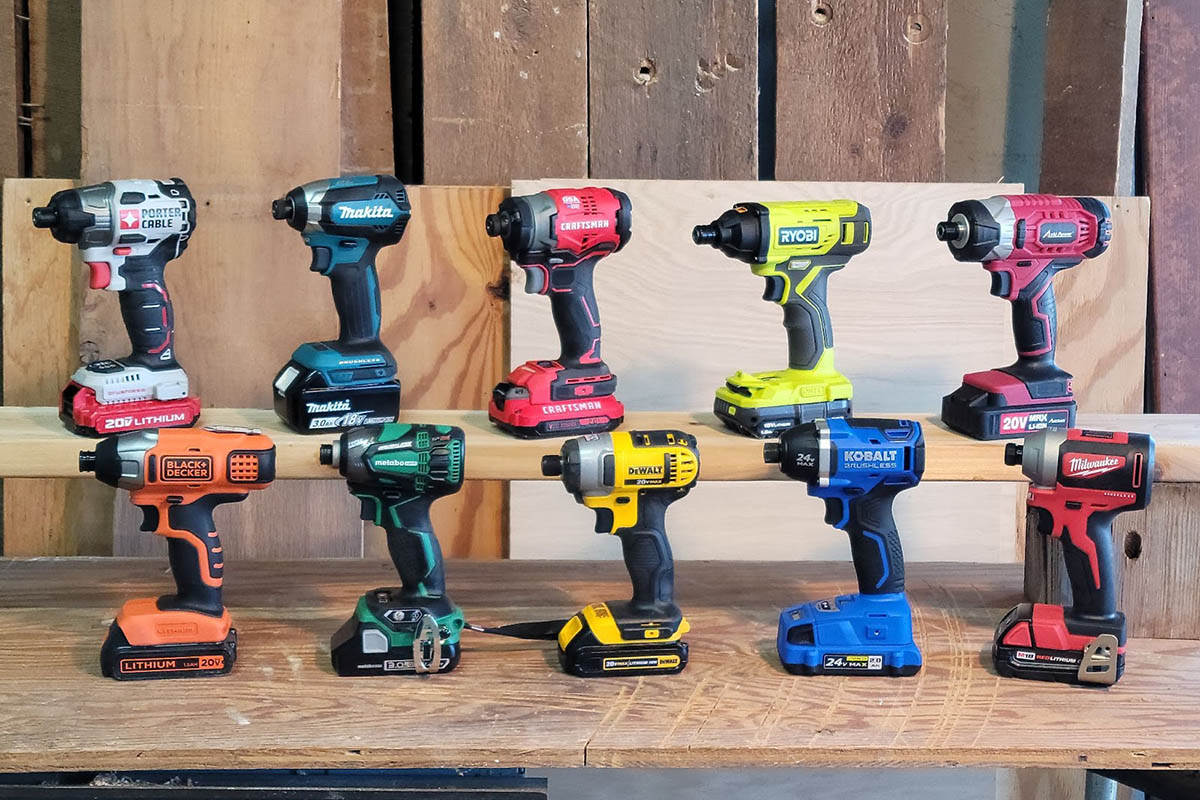
Our Top Impact Driver Picks
| Category | Top Pick | Best For |
|---|---|---|
| Best Overall | Milwaukee M18 Fuel 2953-20 | Pros and serious DIYers who want speed, power, and compact size |
| Best High-Torque Pick | DeWalt 20V MAX XR DCF860 | Heavy fastening, long screws, and demanding jobsite use |
| Best Compact Impact Driver | DeWalt Atomic DCF850 | Tight spaces, cabinets, framing corners, and punchy performance |
| Best Control | Makita XDT19 | Finish work, precision fastening, and users who hate stripped screws |
| Best Power Platform Alternative | FLEX 24V FX1371A | Users who want maximum torque and modern battery performance |
| Best Value | Ryobi ONE+ HP Brushless Impact Driver | Homeowners, weekend builders, and budget-conscious DIYers |
Best Overall: Milwaukee M18 Fuel 2953-20
The Milwaukee M18 Fuel 2953-20 is the impact driver that feels like it was designed by people who actually spend time driving screws instead of only admiring spec sheets. It is compact, powerful, fast, and surprisingly manageable for a tool with serious jobsite muscle.
Milwaukee lists this model with up to 2,000 in-lbs of torque, up to 3,900 RPM, 4-mode drive control, and a compact body under five inches long. In practical terms, that means it can drive deck screws, ledger screws, cabinet screws, and general construction fasteners without feeling bulky. The tri-LED work light is also genuinely useful, not just a decorative glow worm attached to the nose.
Why It Stands Out
The biggest advantage is balance. Some high-power impact drivers feel like tiny jackhammers with a trigger. The Milwaukee 2953-20 delivers power without sacrificing control. The trigger response is smooth, the driving speed is excellent, and the short head length helps when working between studs, inside cabinets, or around awkward framing.
It is especially strong for users already invested in Milwaukee’s M18 battery platform. If your garage already looks like a red-tool convention, this is the obvious choice. Even if it does not, the performance is strong enough to justify considering the platform.
Best High-Torque Impact Driver: DeWalt 20V MAX XR DCF860
The DeWalt DCF860 is what happens when an impact driver drinks a protein shake and starts calling drywall screws “warmups.” With up to 2,500 in-lbs of max torque and up to 3,800 RPM, this model is built for heavy fastening tasks where ordinary drivers start begging for lunch break.
It is a strong choice for framing, structural screws, long lags, dense lumber, and repeated high-load work. DeWalt also equips it with multiple speed settings and a bright LED lighting setup, making it more usable than raw power alone would suggest.
Who Should Buy It?
Buy the DCF860 if you regularly drive large fasteners and want a tool that feels confidently overqualified. It is not the gentlest option for delicate finish work, but for tough fastening jobs, it has the kind of authority that makes stubborn screws rethink their life choices.
For homeowners who mostly assemble furniture and hang towel bars, this may be more tool than necessary. For contractors, remodelers, deck builders, and serious DIYers, the extra power is easy to appreciate.
Best Compact Impact Driver: DeWalt Atomic DCF850
The DeWalt Atomic DCF850 is one of the best compact impact drivers because it packs impressive force into a very short body. DeWalt rates it at 1,825 in-lbs of max torque and up to 3,250 RPM, with a front-to-back length under four inches. That compact size is not a gimmick. It makes a real difference when you are fastening inside cabinets, between joists, around plumbing, or anywhere your full-size driver suddenly feels like a canoe paddle.
The DCF850 is especially appealing because it does not feel weak despite its small size. It has enough power for most common tasks, including deck screws, construction screws, framing hardware, and general home improvement work.
Where It Shines
This is the driver for people who want power without bulk. It is easy to handle, easy to store, and easy to recommend to anyone already using DeWalt 20V MAX batteries. If the DCF860 is the heavy hitter, the DCF850 is the compact street fighter: small, fast, and surprisingly difficult to beat.
Best for Precision and Control: Makita XDT19
Makita has a reputation for making tools that feel refined, and the XDT19 continues that tradition. It is not the highest-torque driver in this list, but that is not the point. Makita’s strength here is control. With multiple speed and assist modes, this impact driver is built for users who care about clean fastening, reduced cam-out, and avoiding the dreaded “oops, now the screw is buried too deep” moment.
The Makita XDT19 delivers up to 1,590 in-lbs of torque and up to 3,600 RPM. It also has a compact body and thoughtful driving modes for different fastener types. For finish carpentry, cabinet installation, electrical work, and general professional use, it feels polished and predictable.
Why Control Matters
More torque is not always better. If you are installing hinges, drawer slides, trim screws, or smaller fasteners, control saves time and materials. The Makita XDT19 is ideal for users who want an impact driver that behaves like a skilled assistant instead of an excited raccoon with a battery pack.
Best Power Platform Alternative: FLEX 24V FX1371A
The FLEX 24V FX1371A deserves attention because it brings serious power and modern features to a tool category dominated by the usual red, yellow, and teal suspects. FLEX rates this driver at 2,500 in-lbs of torque and up to 4,000 RPM, which puts it among the most powerful cordless impact drivers available for common jobsite fastening.
The Quick Eject collet is more useful than it sounds. If you change bits frequently, being able to insert and release bits one-handed saves time and reduces frustration. It also includes multiple speed modes and self-tapping screw modes to help prevent overtightening and broken fasteners.
Best Use Case
This is a strong pick for users open to building around the FLEX 24V battery system. It is powerful, fast, and feature-rich. The downside is that FLEX does not yet have the same long-established ecosystem depth as Milwaukee, DeWalt, or Makita. But if the platform has the tools you need, this impact driver is a beast in a tidy package.
Best Value Impact Driver: Ryobi ONE+ HP Brushless
Ryobi has become the unofficial mascot of the practical homeowner: affordable, widely available, and compatible with a massive battery system. The Ryobi ONE+ HP Brushless impact driver is a smart choice for DIYers who want real performance without paying premium contractor prices.
Depending on the specific model and kit, Ryobi’s brushless ONE+ HP impact drivers offer strong torque, compact size, and compatibility with the enormous ONE+ 18V battery lineup. For homeowners, that battery ecosystem is a major advantage. The same batteries can power drills, saws, sanders, fans, lights, inflators, and enough gadgets to make your garage feel like a hardware store with commitment issues.
Where It Makes Sense
Choose Ryobi if you are building furniture, hanging shelves, repairing fences, tackling weekend projects, and doing occasional deck or framing work. It is not the first choice for daily professional abuse, but for the price, it delivers excellent value. Most DIYers do not need to spend contractor-level money to drive screws on Saturdays.
How We Compared the Best Impact Drivers
To evaluate these tools fairly, we focused on the features that matter in real use rather than marketing sparkle. Torque was important, but not the only factor. Speed, fastening control, head length, weight, LED placement, battery compatibility, mode selection, and overall comfort all played major roles.
Power and Torque
Torque helps when driving long screws into dense lumber or working with structural fasteners. However, manufacturer torque numbers do not always translate perfectly to real-world speed. A driver with excellent electronics, efficient impact mechanism, and strong battery delivery can outperform a higher-rated model in certain tasks.
Speed and Efficiency
Fast driving matters when you are installing dozens or hundreds of screws. A slow impact driver turns deck building into a meditation retreat you did not sign up for. The best models drive quickly while staying controlled enough to avoid stripped heads and overdriven fasteners.
Control and Modes
Multiple speed settings are not just fancy buttons. They help match the tool to the job. Low speed is useful for small screws and delicate work. Higher speeds are better for deck screws, framing fasteners, and heavier jobs. Assist modes, self-tapping screw modes, and precision modes add value when they actually prevent mistakes.
Size and Ergonomics
A compact head length is a huge advantage in tight spaces. Weight also matters after repeated use. The best impact drivers feel balanced with a battery installed and do not punish your hand during long sessions. Grip comfort, trigger feel, and bit-change design may sound minor until you use the tool for an afternoon.
Impact Driver vs Drill: Which One Do You Need?
You probably need both, but for different jobs. A drill is better for making holes and handling controlled drilling tasks. An impact driver is better for driving fasteners, especially long screws or screws going into tough material.
If you are assembling flat-pack furniture, a drill with a clutch may be gentler. If you are building a fence, deck, shed, workbench, or anything involving long screws, an impact driver is the tool you will reach for again and again. Think of the drill as the careful planner and the impact driver as the friend who shows up with coffee and says, “Let’s finish this thing.”
Buying Guide: How to Choose the Best Impact Driver
Choose the Battery Platform First
Battery platform matters more than many buyers realize. If you already own Milwaukee M18, DeWalt 20V MAX, Makita 18V LXT, Ryobi ONE+, or FLEX 24V batteries, staying in that system usually saves money. Bare tools are often much cheaper than full kits.
Do Not Buy on Torque Alone
High torque is useful, but too much power without control can cause stripped screws, broken bits, and damaged materials. Look for variable speeds and good trigger modulation.
Consider Head Length
If you work in tight spaces, compact models like the DeWalt Atomic DCF850 are worth serious consideration. A shorter head can be the difference between finishing the job and inventing new words under the sink.
Look for Better Lighting
Good LED placement is underrated. Tri-LED or ring-style lighting reduces shadows around the bit, which helps when working inside cabinets, closets, crawl spaces, or dim garages.
Buy Impact-Rated Bits
Do not feed a powerful impact driver bargain-bin bits and then act surprised when they twist like licorice. Impact-rated bits are designed to handle repeated shock loads and are worth the small extra cost.
Final Verdict: Which Impact Driver Should You Buy?
The Milwaukee M18 Fuel 2953-20 is the best overall impact driver for most professionals and serious DIYers because it delivers the best mix of power, speed, compactness, and control. It is the tool most likely to make both contractors and ambitious homeowners happy.
The DeWalt DCF860 is the better choice if you want maximum fastening power. The DeWalt Atomic DCF850 is the compact champ for tight spaces. The Makita XDT19 is the best pick for users who prioritize precision and clean fastening. The FLEX FX1371A is a high-power alternative with impressive specs and clever bit handling. The Ryobi ONE+ HP Brushless impact driver remains the best value for homeowners who want capability without emptying the wallet.
In other words, the best impact driver depends on your work. For daily jobsite punishment, choose Milwaukee, DeWalt, Makita, or FLEX. For smart DIY value, Ryobi is hard to ignore. And if you are still using a basic drill to drive long deck screws, please accept our condolences and consider this your intervention.
Additional Field Notes: Real-World Experience With Impact Drivers
After spending enough time with impact drivers, you start to notice small details that spec sheets do not fully explain. For example, a compact driver is not just easier to fit into tight spaces; it also changes your confidence level. When working inside a cabinet or under a stair stringer, a shorter head lets you keep the bit straight. That reduces wobble, cam-out, and the kind of screw-head damage that makes you stare silently into the middle distance.
Another lesson: speed settings are not optional decoration. On paper, everyone wants the fastest, strongest tool. In practice, low-speed control can save more time than brute force. When installing drawer slides, hinges, outlet boxes, brackets, or delicate hardware, a driver that starts smoothly is far better than one that lunges forward like it heard the dinner bell. Makita is particularly good in this area, while Milwaukee and DeWalt balance speed and control well on their premium models.
Battery size also changes the experience. A larger battery can improve runtime and sometimes performance, but it also makes the tool heavier and less nimble. For overhead work or cabinet installation, a compact battery can make the tool feel dramatically better. For deck building or framing, a larger battery makes sense because you are driving fasteners repeatedly and do not want to swap packs every few minutes. The best setup is often one compact battery for light work and one larger pack for heavy work.
Noise is another real-world issue. Impact drivers are loud. Not “slightly annoying” loud, but “your neighbor now knows you are building something” loud. Hearing protection is smart, especially during long fastening sessions. Hydraulic or oil-pulse drivers can be quieter, but traditional impact drivers still dominate because they are powerful, common, and widely available.
Bit quality matters more than beginners expect. A premium impact driver paired with cheap bits is like putting discount tires on a sports car and wondering why it feels sketchy. Torx and star-drive fasteners generally perform better than Phillips screws because they reduce cam-out. For deck screws, structural screws, and repeated fastening, good bits and good screws make the driver feel better than it actually is. Bad fasteners make even an excellent driver feel cursed.
Heat is also worth watching. During heavy use, especially when driving long screws or lag bolts, the motor, battery, and bit can warm up. Quality brushless drivers manage heat better, but no tool enjoys being abused without pause. If the tool feels hot, give it a break. Your impact driver is tough, not immortal.
One final piece of practical advice: do not use an impact driver for every task just because it is fun. It is very fun, yes. It makes satisfying noises and drives screws with heroic confidence. But for drilling clean holes, using hole saws, or working with fragile materials, a drill is often the better choice. The smartest tool user is not the one with the strongest impact driver; it is the one who knows when to use it.
Overall, a good impact driver becomes one of the most-used tools in a home shop or contractor kit. Once you own a solid one, going back to driving long screws with a basic drill feels like commuting by skateboard. Possible? Sure. Advisable? Not when better options exist.
Conclusion
The best impact drivers combine power, speed, comfort, and control in a way that makes hard fastening jobs easier. Milwaukee’s M18 Fuel 2953-20 earns our overall recommendation because it does almost everything well. DeWalt dominates the high-torque and compact categories with the DCF860 and DCF850. Makita offers refined control, FLEX brings serious power, and Ryobi gives homeowners outstanding value.
Before buying, think about your battery platform, the type of projects you handle, and how much control you need. The right impact driver should not just be powerful. It should make your work cleaner, faster, and less frustrating. A great one feels like cheating, except completely legal and available in the power tool aisle.