Editor’s note: This article analyzes Biden-era U.S. retaliation options after attacks by Iran-backed groups, especially the deadly January 2024 drone strike on Tower 22 in Jordan. It is written as high-level public policy analysis, not tactical military guidance.
When three U.S. service members were killed in a drone attack at Tower 22, a small American outpost in northeastern Jordan near the Syrian border, Washington faced one of those grim foreign-policy moments where every option came with a warning label. Do nothing, and deterrence looks like a cardboard umbrella in a thunderstorm. Strike too hard, and the United States risks sliding into a wider war with Iransomething nearly everyone says they do not want, usually while moving more military hardware into the region just in case.
The Biden administration’s challenge was not simply whether to respond. It had to decide how to respond, where to respond, and how loudly to make the message echo in Tehran, Baghdad, Damascus, Sanaa, and Washington. The attack was blamed by U.S. officials on Iran-backed militant groups, while Iran denied directing it. That distinction matters. In the Middle East, Iran often works through a network of armed partners and proxies, allowing Tehran to project influence while maintaining enough distance to complicate direct retaliation.
So what could Biden do? The answer was never one magic button marked “solve Iran problem.” If such a button existed, it would probably be locked in a Pentagon basement next to the coffee machine that never works. Instead, U.S. retaliation against Iran-backed forces usually comes as a layered campaign: military strikes, cyber pressure, sanctions, diplomacy, defensive deployments, and carefully calibrated warnings. The goal is to punish, deter, and protect U.S. forces without igniting a regional firestorm.
Here are four major ways Biden could strike backand what each option would actually mean.
1. Target Iran-Backed Militias in Iraq and Syria
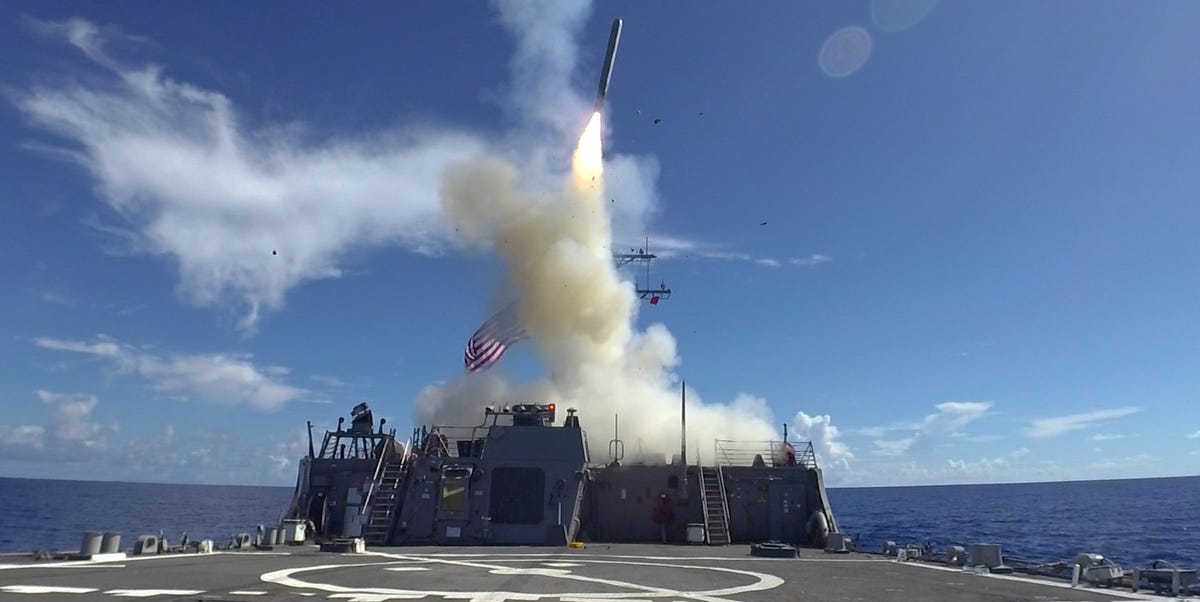
The most direct and politically immediate option is to hit the groups that U.S. officials believe carried out or enabled attacks on American forces. That is exactly the direction the Biden administration took after the Tower 22 attack, launching strikes against facilities in Iraq and Syria linked to Iran’s Islamic Revolutionary Guard Corps-Quds Force and affiliated militias.
This kind of response has a clear logic. Instead of bombing Iranian territory and risking a direct U.S.-Iran war, Washington targets the infrastructure used by Iran-backed militias: command facilities, weapons storage sites, drone-related assets, logistics hubs, and ammunition supply chains. The message is blunt but limited: keep attacking Americans, and the tools you use to do it will disappear in a very expensive flash.
Why this option appeals to Washington
Targeted strikes against proxy infrastructure offer Biden a middle lane. They show that the United States will not absorb casualties quietly, but they stop short of attacking inside Iran. That matters because the White House has repeatedly tried to balance retaliation with escalation control. In plain English: hit back hard enough to be taken seriously, but not so hard that everyone starts Googling “World War III oil prices.”
These strikes also allow the United States to focus on groups already involved in attacks on U.S. personnel in Iraq, Syria, and Jordan. Iran-backed militias have operated across porous borders, especially around the Iraq-Syria corridor, where armed groups can move personnel, weapons, and influence. U.S. forces remain in the region largely as part of the mission against ISIS, which makes attacks on those bases both a military and political problem for Washington.
The risk: Iraq and Syria are not empty chessboards
The drawback is that Iraq and Syria are sovereign countries with their own politics, pressures, and resentments. U.S. strikes in Iraq often trigger anger from Baghdad, especially when Iraqi officials argue that American military action violates sovereignty. In Syria, the situation is even messier, with overlapping forces, civil war legacies, Russian interests, Iranian-backed fighters, and the ongoing U.S. presence in the east.
There is also the classic deterrence problem: if the United States hits militia assets, the militias may pause, disperse, or retaliate through another channel. They do not need to defeat the U.S. military; they only need to keep pressure high enough to make the American presence costly. That is why a single strike package rarely ends the story. It is more like turning down a boiling pot than removing it from the stove.
2. Expand Strikes Against Regional Proxy Networks, Including the Houthis
A second option is broader: strike not only the militia networks in Iraq and Syria, but also other Iran-backed groups threatening U.S. interests and global commerce. The most obvious example is the Houthi movement in Yemen, which launched repeated attacks on Red Sea shipping during the Israel-Hamas war period.
For the Biden administration, the Red Sea problem was not only about Iran. It was also about maritime security, commercial shipping, U.S. naval forces, and the credibility of international trade routes. When missiles and drones threaten vessels in one of the world’s most important shipping corridors, the issue quickly moves from “regional conflict” to “everyone’s supply chain just got nervous.”
Why proxy-wide pressure matters
Iran’s regional strategy has long relied on partnerships with armed groups that can pressure U.S. forces, Israel, Gulf states, and commercial shipping without always forcing Iran into a direct state-to-state clash. Hezbollah in Lebanon, Shiite militias in Iraq and Syria, Hamas and Palestinian Islamic Jihad in the Palestinian territories, and the Houthis in Yemen all differ in ideology, geography, and autonomy. But together, they form a pressure network that expands Iran’s reach.
By striking Houthi weapons systems, militia storage sites, and other high-level military assets connected to attacks, Washington can send a wider message: the United States will respond across theaters, not only at the place where Americans were killed. That kind of response can complicate planning for Iran-backed groups because it raises the cost of operating under the assumption that each front is separate.
The risk: too many fronts, too little control
The danger is overextension. Iraq, Syria, Yemen, Lebanon, the Persian Gulf, and the Red Sea are not simply different tabs in the same browser. Each has its own local conflict, political actors, and escalation ladder. Hitting multiple proxy networks may strengthen deterrence, but it can also create the impression of an expanding U.S. campaign across the Middle East.
That is why the Biden administration repeatedly emphasized that it did not seek a wider war. The problem is that intentions are not always what adversaries respond to. Militias may interpret limited strikes as weakness. Iran may interpret broader strikes as preparation for direct confrontation. Regional governments may publicly condemn U.S. action even while privately worrying about Iranian influence. Welcome to Middle East policy, where every sentence has three audiences and at least one of them is furious.
3. Use Cyber Operations, Intelligence Disruption, and Covert Pressure
Not every U.S. response has to be visible from a satellite photo. A third pathway is cyber and intelligence pressure aimed at disrupting the networks that help Iran-backed groups plan, finance, arm, and coordinate attacks. This can include high-level cyber disruption, intelligence exposure, covert action, and quiet efforts to interfere with logistics and communications.
This option is attractive because it gives Washington flexibility. A visible airstrike sends a public message, but a less visible disruption can create confusion inside hostile networks without forcing every player to respond publicly. Sometimes the most effective retaliation is the one that leaves the other side wondering why its systems suddenly behave like a printer on a Monday morning.
What cyber and intelligence pressure can accomplish
At a strategic level, cyber and intelligence tools can support several goals. They can disrupt planning cycles, expose procurement networks, identify financiers, track weapons shipments, and create uncertainty among militia leaders. They can also be paired with public sanctions or criminal charges, turning intelligence into legal and financial pressure.
Cyber options are especially relevant because modern proxy warfare depends on communication, money movement, surveillance, drone technology, and supply chains. Iran’s drone and missile programs have relied on procurement networks that stretch beyond Iran’s borders. Disrupting those systems can be less dramatic than a missile strike, but over time it can reduce the ability of armed groups to operate at tempo.
The risk: hidden actions may not satisfy public pressure
The downside is political. After Americans are killed, a quiet cyber operation may be useful, but it may not look like justice to the public, Congress, or allies. Presidents must manage both strategic outcomes and visible resolve. That is why cyber tools usually work best as part of a broader response rather than as the entire response.
There is also the risk of counter-cyber escalation. Iran has developed cyber capabilities and has used digital tools against governments, companies, and infrastructure. A cyber-heavy U.S. response could invite retaliation in a domain where attribution is murky and escalation can be difficult to manage. In other words, the battlefield may be invisible, but the consequences can still be very real.
4. Tighten Sanctions, Financial Pressure, and Diplomatic Isolation
A fourth way Biden could strike back is through economic and diplomatic pressure. Sanctions may not deliver the instant drama of airstrikes, but they are a central part of U.S. Iran policy. The Biden administration used sanctions against Iranian drone and missile programs, terrorism financing, oil networks, shipping facilitators, and entities linked to Iran’s regional partners.
This approach targets the money and materials behind the violence. Militias do not run on slogans alone. They need funding, spare parts, weapons components, banking channels, front companies, shipping routes, and political protection. Sanctions aim to make all of that harder, slower, riskier, and more expensive.
Why financial retaliation matters
Sanctions allow the United States to pressure Iran without immediately escalating into military conflict. They can be coordinated with European and regional partners, making it harder for targeted entities to move money or obtain technology. They can also be updated repeatedly, which gives Washington a way to respond after each new attack or intelligence discovery.
Financial pressure is especially important in the drone era. Cheap drones can create expensive strategic problems. A relatively low-cost attack can kill soldiers, damage ships, disrupt trade, and force the United States to spend far more on defense and retaliation. Targeting procurement networks, electronics suppliers, shipping firms, and financial facilitators is one way to attack the pipeline before the next drone is assembled or launched.
The risk: sanctions are slow, leaky, and politically unsatisfying
Sanctions are powerful, but they are not magic. Iran has spent decades learning how to evade restrictions through front companies, illicit shipping, barter arrangements, and friendly or opportunistic foreign intermediaries. A sanctioned network may rebrand, reroute, or rebuild. The U.S. Treasury can play whack-a-mole, but the mole has accountants.
Sanctions also rarely satisfy calls for immediate retaliation after U.S. casualties. They work over months and years, not news cycles. That makes them better as a supporting tool than a stand-alone answer to a deadly attack.
Could Biden Strike Iran Directly?
The big question hanging over any U.S. retaliation debate is whether the president should authorize direct strikes inside Iran. This is the most dramatic optionand the riskiest. Direct strikes on Iranian territory or senior Iranian military assets would send the strongest possible message, but they could also trigger retaliation against U.S. bases, ships, embassies, allies, or commercial targets.
That is why Biden’s response after Tower 22 focused on Iran-linked targets outside Iran rather than direct attacks inside the country. This approach allowed Washington to punish the network connected to the attack while preserving some distance from open war with Tehran. Critics argued that avoiding Iran itself made the response too weak. Supporters argued that the real test of strategy is not emotional satisfaction but whether U.S. forces become safer afterward.
Direct strikes are not impossible in U.S. planning, but they sit near the top of the escalation ladder. A president would likely consider them only if Iran directly attacked U.S. forces, caused mass casualties, or crossed a threshold that made indirect retaliation inadequate. Even then, the decision would involve enormous diplomatic, military, legal, and economic consequences.
The Strategic Goal: Restore Deterrence Without Starting a War
The phrase “restore deterrence” gets used so often in Washington that it should probably have its own parking space. But in this case, it captures the core challenge. Deterrence means convincing adversaries that attacks will cost more than they gain. The problem is that Iran-backed groups may define success differently than the United States does.
For Washington, success means protecting U.S. troops, preserving regional stability, keeping shipping lanes open, supporting allies, and avoiding a full-scale war. For militias, success may mean forcing U.S. troops out of Iraq and Syria, raising the political cost of American support for Israel, or proving their usefulness within Iran’s regional strategy. Those goals do not line up neatly.
That is why Biden’s options had to be layered. Airstrikes can destroy facilities. Cyber operations can disrupt planning. Sanctions can squeeze procurement. Diplomacy can keep partners aligned. Defensive deployments can reduce the chance that the next drone or rocket gets through. None of these tools is sufficient alone, but together they can create a more durable response.
Domestic Politics: The Pressure Cooker in Washington
U.S. retaliation against Iran is never only a foreign-policy question. It is also domestic politics with a helmet on. After the Tower 22 attack, Biden faced pressure from Republicans who argued that his Iran policy had failed to deter Tehran and its partners. Some lawmakers called for much harsher action, including direct strikes on Iranian assets. Others warned that escalation could drag the United States into another Middle Eastern war.
This left Biden walking a narrow ridge. A limited response risked looking weak. A maximal response risked looking reckless. The administration’s chosen pathmulti-stage retaliation against Iran-linked groups outside Iran, combined with sanctions and warningswas designed to show resolve while avoiding the most dangerous escalation step.
That balancing act is familiar in U.S. policy toward Iran. Presidents from both parties have tried to punish Iranian aggression without creating a conflict that spirals beyond control. The tools change, the technology evolves, the regional map shifts, but the basic dilemma remains stubbornly alive.
Experience-Based Lessons: What This Crisis Teaches Readers
Watching U.S.-Iran crises unfold over the years teaches a few practical lessons, and the first is simple: the first headline is rarely the whole story. When a drone hits a base, the public conversation immediately jumps to “Will the U.S. strike Iran?” But inside government, the real process is slower, more layered, and much less cinematic. Officials must confirm attribution, assess intelligence, protect troops, consult allies, prepare legal arguments, brief Congress, and think three moves ahead. It is less like an action movie and more like a chess match played during a fire drill.
The second lesson is that proportionality is harder than it sounds. People often say the United States should respond “proportionally,” as if there is a neat conversion chart: one drone attack equals three warehouses, two commanders, and half a sanctions package. Real life is messier. A response must be strong enough to deter, narrow enough to avoid uncontrolled escalation, and clear enough that adversaries understand the message. That is a difficult triangle to draw.
The third lesson is that proxies complicate accountability. Iran-backed militias may receive weapons, money, training, political support, or strategic encouragement from Tehran, but they can also make local decisions. This creates a gray zone. If Washington blames Iran for everything a partner does, it risks direct conflict. If it treats every militia as fully independent, it may let Tehran benefit from plausible deniability. Effective policy lives in that uncomfortable middle space.
The fourth lesson is that deterrence is not a one-day event. A single strike can punish, but it may not permanently deter. Militias can relocate weapons, rebuild facilities, change tactics, or wait out the news cycle. That is why sustained defense matters. Better base protection, counter-drone systems, intelligence sharing, regional partnerships, and maritime security can be just as important as retaliation. The best strike is still the one you never need because the attack fails before impact.
The fifth lesson is that public patience and strategic patience are not the same thing. Citizens understandably want fast answers after American troops are killed. Families deserve accountability. Service members deserve protection. But speed can also produce mistakes. A president must respond with enough force to protect credibility while leaving room for diplomacy, de-escalation, and future maneuver. That does not make the decision emotionally satisfying. It makes it presidential.
Finally, this topic reminds us that U.S. power is enormous but not unlimited. The United States can hit targets across the region, freeze assets, rally partners, deploy ships, and expose networks. Yet it cannot easily erase the political roots of militia power in Iraq, the civil-war dynamics in Syria and Yemen, or Iran’s long-term desire to pressure American influence. Retaliation can buy deterrence. Strategy must do something harder: turn that deterrence into a safer regional balance.
Conclusion: Biden’s Best Option Was Never Just One Option
U.S. retaliation against Iran-backed attacks is not a menu where the president simply picks the spiciest dish. The Biden administration’s challenge after Tower 22 was to respond firmly while avoiding a direct war with Iran. That meant using a combination of military strikes, regional pressure, cyber and intelligence tools, sanctions, diplomacy, and defensive measures.
The four most realistic pathstargeting militias in Iraq and Syria, expanding pressure on regional proxy networks, using cyber and intelligence disruption, and tightening sanctionseach carry advantages and risks. Together, they form the kind of layered response Washington usually prefers when the stakes are high and the margin for error is thin.
The central question is not whether Biden could strike back. He could, and he did. The deeper question is whether retaliation can restore deterrence without creating the wider war the United States says it wants to avoid. In the Middle East, that is the strategic tightrope: punish the attack, protect the troops, warn Tehran, reassure allies, calm markets, brief Congress, and somehow keep the match away from the gasoline. Easy? No. Necessary? Absolutely.