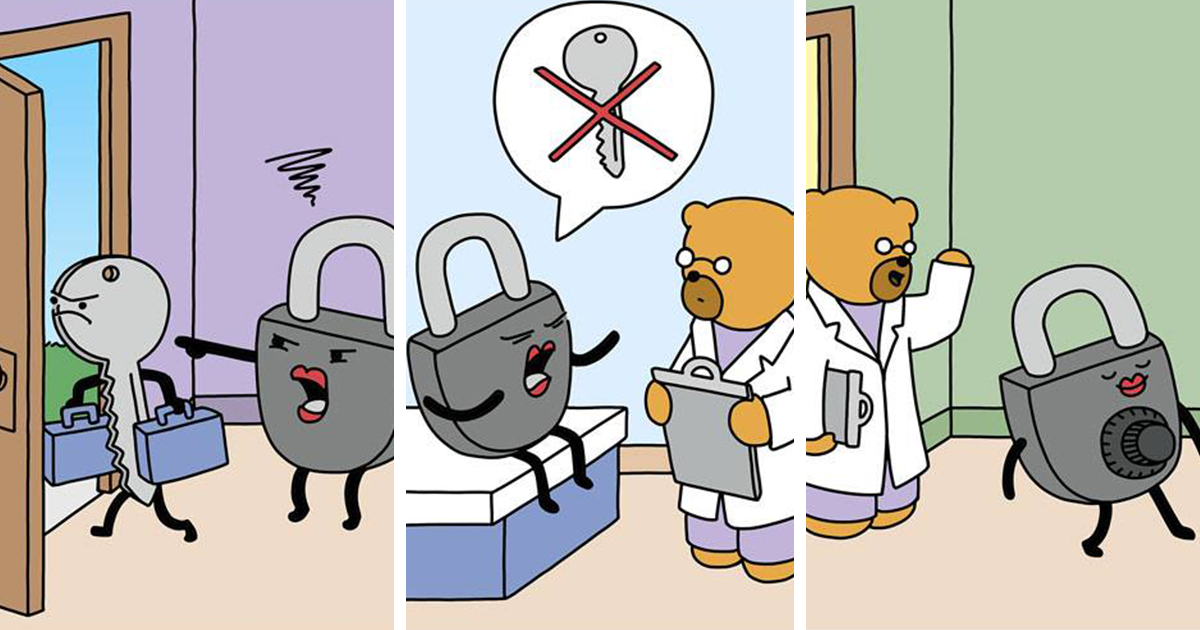
Some comics invite you in with soft colors, round characters, and the emotional safety of a plush toy aisle. Then, just when you are ready to relax, they politely push your expectations down an elevator shaft. That is the delicious trick behind Ryan Pagelow’s Buni universe, a webcomic world famous for looking adorable while behaving like it was raised by irony, bad luck, and a slightly suspicious cupcake.
The Bear Doctor comics are a perfect example. At first glance, the setup is sweet: a bear in a doctor’s coat, a patient in need, a clean visual gag, and the kind of simple cartoon language that anyone can understand. Then the ending arrives. Sometimes it is absurd. Sometimes it is dark. Sometimes it makes you laugh and immediately wonder whether laughing was legally permitted. That awkward half-second is exactly where these comics shine.
Ryan Pagelow, the Chicago-based creator of Buni, has built a recognizable style around wordless storytelling, cute visual design, and sharply timed twists. His main character, Buni, is an optimistic bunny with spectacularly bad luck, but the wider Buni world includes bears, food characters, animals, monsters, and medical situations that turn ordinary appointments into tiny comedy disasters. Bear Doctor is one of the funniest side characters because the doctor’s office is already a place filled with anxiety, surprise, and strange conversations. Add cartoon logic, and suddenly a raisin can request cosmetic help, a gingerbread man can need surgery, and a sick piece of cheese can turn into a punchline nobody saw coming.
Who Is Ryan Pagelow, the Artist Behind Buni?
Ryan Pagelow is the creator of Buni, a dark comedy webcomic that began online in 2010 after the idea of a cute but twisted comic had been developing in his mind for years. The character Buni is small, hopeful, and painfully unluckya combination that makes him both funny and strangely relatable. He lives in a bright cartoon world where teddy bears, cupcakes, zombies, unicorns, and everyday objects may look harmless, but they rarely behave that way for long.
Pagelow’s background helps explain the comic’s visual economy. He has worked in journalism, photography, and cartooning, and that mix shows. The panels are clean. The actions are clear. The joke rarely needs an explanation because the camera angle, expression, prop, and final image do the heavy lifting. This is especially important because many Buni comics use little or no dialogue. Instead of telling readers what to think, the art guides them panel by panel until the final reveal lands like a tiny cartoon anvil.
Buni has appeared on platforms such as GoComics and Webtoon, and the series has also been collected in the book Buni: Happiness Is a State of Mind. The comic was recognized by the National Cartoonists Society in the Online Comics short-form category, giving Pagelow’s strange little universe a well-earned place in modern webcomic culture.
Why Bear Doctor Works So Well
The genius of Bear Doctor is that the character needs almost no introduction. A bear in a white coat immediately says, “medical professional,” even before a stethoscope shows up to confirm the diagnosis. That instant recognition gives Pagelow more room to focus on the joke. Readers do not need a long setup. They know the scene: patient enters, doctor evaluates, something is wrong, and a solution is coming. The fun is discovering whether that solution is helpful, horrifying, ridiculous, or all three wearing one lab coat.
Doctor visits are also naturally rich comedy territory. People go to doctors because they want answers, comfort, transformation, or relief. In the Buni universe, those wishes become visual punchlines. A raisin might dream of becoming a grape again. A cookie or gingerbread character might face a medical problem that is funny because it belongs to dessert logic, not human tragedy. A sad patient might be treated with an ambulance full of puppies, which honestly sounds more effective than several modern wellness apps.
Bear Doctor is funny because the character blends authority with absurdity. Doctors are supposed to be serious. Bears are supposed to be either majestic forest animals or suspiciously cute stuffed companions. Put the two together, and the reader’s brain has to accept a medical system where your physician may also enjoy honey and scratching his back on trees. That contradiction creates instant comic energy.
The Power of Cute Comics With Dark Endings
Cute art lowers the reader’s guard. Rounded shapes, bright colors, gentle expressions, and simple characters create a safe emotional doorway. Dark humor then walks through that doorway holding a clipboard. The contrast is what makes the ending memorable. If the same joke were drawn in a gritty horror style, it might feel too heavy. If it were drawn in a purely silly style, it might feel too soft. Pagelow’s work sits right in the middle: sweet enough to attract you, sharp enough to surprise you.
This balance is not random. A good dark comic does not simply throw something unpleasant into the last panel and hope for applause. It builds a miniature expectation, then breaks it in a way that still feels logical. The ending should be unexpected but not meaningless. In Bear Doctor comics, the twist usually grows out of the patient’s identity. Food characters have food-related problems. Animals have animal-related problems. Everyday objects behave according to their own strange rules. The result feels absurd, but it also feels weirdly fair.
That is why readers keep scrolling. They are not just asking, “What happens next?” They are asking, “How will this adorable situation betray me?” It is the emotional equivalent of accepting candy from a cartoon villain because the wrapper is beautifully designed.
How Wordless Storytelling Makes the Jokes Universal
One of the strongest features of Buni comics is the limited use of words. Many strips rely almost entirely on images, expressions, props, and timing. This gives the comic an international advantage. A reader does not need to understand a pun in English to understand a scared patient, a confident doctor, a shocking diagnosis, or a final panel that flips the whole story upside down.
Wordless comics demand precision. Every panel must communicate quickly. There is no long speech bubble to rescue a confusing setup. In Bear Doctor comics, the medical setting does a lot of visual work: examination tables, machines, bandages, X-rays, surgical tools, hospital beds, ambulances, and doctor coats all help establish the scene instantly. Once readers know where they are, Pagelow can move fast toward the twist.
This also makes the humor feel clean and efficient. The joke is not buried under explanation. It arrives visually. A patient changes form. A treatment reveals a darker implication. A doctor’s solution is technically correct but emotionally outrageous. The reader processes the ending in a snap, and that snap is where the laugh lives.
What the 28 Bear Doctor Comics Reveal About the Buni Universe
The set of 28 Bear Doctor comics highlights how flexible the character is. Bear Doctor is not limited to one kind of gag. He can appear in wholesome jokes, medical parodies, dark punchlines, transformation stories, and surreal scenes where the patient’s problem only makes sense in a cartoon universe. That range keeps the concept fresh.
Some strips lean into body transformation. A character arrives with one problem and leaves in a different condition entirely. In a normal medical drama, that would require paperwork, insurance approval, and at least three people saying, “We need to run more tests.” In Buni, it takes a few panels and a devastating punchline.
Other strips use the doctor’s office as a place of emotional rescue. A sad figure may not need surgery at all; they may need affection, companionship, or a ridiculous cure that somehow works. These gentler strips show that dark humor in Buni does not mean every ending is cruel. Sometimes the surprise is that the comic becomes oddly sweet. The reader braces for disaster, then gets tenderness instead. That reversal can be just as satisfying.
Then there are the darker medical jokes, where life, death, decay, and recovery are filtered through cartoon objects. The trick is distance. A moldy piece of cheese in a hospital bed can be funny because it is cheese, not a person. The comic borrows the emotional shape of a serious hospital scene but replaces human tragedy with food logic. That substitution makes the joke safe enough to laugh at while still carrying a little sting.
Why Readers Love “Not-So-Cute” Endings
Readers love twist endings because they reward attention. A good twist makes the earlier panels feel smarter in hindsight. Suddenly, a tiny detail matters. A character’s expression becomes funnier. A harmless object becomes suspicious. The reader feels tricked, but in a friendly way, like being pranked by someone who also brought snacks.
Not-so-cute endings also reflect how people experience the internet. Modern readers scroll quickly. They see hundreds of images, jokes, headlines, and memes in a day. A comic has only a few seconds to earn attention. Pagelow’s cute-but-dark structure is perfect for that environment. The art catches the eye. The setup is easy to follow. The ending creates a reaction strong enough to share.
There is also something emotionally honest about the contrast. Life often looks cute from a distance and complicated up close. A cupcake can be adorable until it has feelings. A bunny can be optimistic while the universe keeps dropping anvils on his plans. A doctor can look comforting while delivering a diagnosis that makes no sense outside a cartoon fever dream. Buni exaggerates that truth until it becomes funny.
The Art Style: Simple, Expressive, and Sneakily Clever
Pagelow’s art style is deceptively simple. The characters often have rounded bodies, minimal facial features, and clear silhouettes. That simplicity is not a limitation; it is a strategy. It makes each character readable at a glance, which is essential for short-form comics. Readers instantly know who is worried, who is confused, who is pleased, and who is about to become part of the joke.
Bear Doctor’s design works because it communicates two ideas at once. The bear shape adds warmth and humor. The doctor costume adds authority and context. Together they create a character who can be comforting or alarming depending on the final panel. He is cute enough to trust and strange enough to fear. That is a surprisingly useful medical combination in a comic, though perhaps not in an actual emergency room.
The backgrounds are usually uncluttered, allowing the joke to remain the star. Props are chosen carefully. A medical chart, a hospital bed, a surgical light, or an ambulance can set the mood without slowing the pacing. This is one reason Buni comics work so well on mobile screens. They are compact, visual, and instantly readable.
Bear Doctor and the Comedy of Transformation
Transformation is one of the recurring engines of Bear Doctor humor. A patient wants to become healthier, prettier, younger, repaired, or saved. That desire is familiar. Everyone has wanted a quick fix at some point. Bear Doctor takes that ordinary wish and processes it through cartoon medicine, where the result may be technically successful and emotionally alarming.
This is why a raisin-to-grape idea is funny. It treats a dried fruit like a cosmetic patient seeking youthful volume. The joke is visual, simple, and slightly ridiculous. It also works because it maps human vanity onto food. Suddenly, the produce aisle has insecurities. Somewhere, a banana is considering therapy.
In other cases, surgery becomes a way to reveal the hidden logic of an object. A gingerbread patient’s medical problem can involve candy anatomy. A food character’s illness can involve freshness, mold, melting, or being eaten. These jokes are not random; they come from asking, “If this object were alive, what would its health problems be?” That question is silly, but it is also creatively powerful.
Why Bear Doctor Feels Different From Regular Doctor Comics
Many doctor comics depend on dialogue: a patient says something foolish, the doctor replies with a punchline, and the joke ends. Bear Doctor works differently. The humor is built through visual escalation. The reader watches the problem unfold instead of being told what is funny. That gives the comic a more cinematic feeling, even when it is only a few panels long.
The character also benefits from the larger Buni universe. Because readers already expect cute darkness from Pagelow, Bear Doctor can go in almost any direction. The clinic can become a place of healing, horror, transformation, or absurd kindness. The rules are flexible, but the tone is consistent. The world may be cruel, but it is also charming. It may be sweet, but it has teeth. Sometimes literally.
What Creators Can Learn From Bear Doctor
Artists and writers can learn several useful lessons from these comics. First, a strong visual premise can carry an entire series of jokes. “A bear doctor treats strange patients” is simple, but it creates endless possibilities. Second, contrast is powerful. Cute art plus dark endings can be more memorable than either element alone. Third, short comics need ruthless clarity. Every panel should move the reader closer to the payoff.
Another lesson is that recurring characters do not always need deep backstory. Bear Doctor does not require a long biography, a tragic origin, or a hospital administration subplot involving billing software. His role is clear. He is the doctor. The patients are strange. The treatment will probably be stranger. That is enough.
Finally, the comics show the value of restraint. Pagelow often lets the image do the talking. He trusts readers to understand the joke. That trust makes the payoff feel more satisfying because the reader participates in solving the visual puzzle.
Experience Notes: Reading Bear Doctor Comics in the Wild
Reading Bear Doctor comics is a very specific emotional experience. You begin with confidence. “Look,” you think, “a cute bear doctor. This seems safe.” That confidence usually lasts about two panels, which is generous by internet standards. Then a patient enters, and the brain begins doing calculations. Is that a fruit? Is that a cookie? Is that character sick, sad, doomed, or merely waiting for a punchline to happen to its entire existence?
The best way to enjoy these comics is to slow down. Because they are short and mostly visual, it is tempting to swipe through them quickly. But the fun often sits in the small details: the patient’s expression, the doctor’s calm reaction, the medical prop in the background, or the slight shift in mood before the final panel. The ending hits harder when you let the setup breathe. Think of it as comedy tea. Let it steep for three seconds before chaos.
There is also a strange comfort in the format. Even when the ending is dark, the world remains visually soft. The characters are not drawn to disgust or shock in a heavy-handed way. They are drawn to make absurdity feel approachable. That is why the comics can joke about medical fear, aging, sadness, decay, and bad luck without becoming miserable. The softness gives readers permission to laugh at uncomfortable ideas from a safe distance.
For fans of webcomics, Bear Doctor is especially satisfying because it understands internet pacing. The setup is immediate. The twist is clean. The shareability is high. You can send one to a friend with no explanation and wait for the response, which will probably be something like, “Why am I laughing at this?” That is the signature Buni effect: a laugh followed by mild self-investigation.
These comics also make you appreciate how much storytelling can happen without dialogue. A medical chart can be a setup. A bandage can be foreshadowing. A worried face can be a paragraph. A bear holding a clipboard can communicate more than a long caption if the visual rhythm is right. That is harder than it looks. Many simple comics are simple because they have nothing to say. Buni comics are simple because they know exactly what to say and refuse to waste your time.
After reading a batch of Bear Doctor comics, you may start viewing ordinary objects differently. A raisin is no longer just a raisin; it is a grape with a tragic backstory. A cookie is not a snack; it is a potential patient. Cheese in the refrigerator becomes a medical drama with poor survival odds. This is the quiet magic of Pagelow’s humor. It makes the everyday world feel animated, vulnerable, and ridiculous.
In the end, Bear Doctor is not just a funny side character. He is a perfect vehicle for the Buni formula: cute surface, dark twist, visual clarity, and emotional surprise. The comics work because they understand that humor does not have to choose between sweet and sinister. Sometimes the funniest joke is the one that smiles warmly, adjusts its stethoscope, and then tells you the diagnosis is “cartoon logic.”
Conclusion
Artist Ryan Pagelow’s Bear Doctor comics prove that a simple idea can become wildly entertaining when the execution is sharp. A bear in a doctor’s coat may sound like a one-note gag, but inside the Buni universe, it becomes a flexible comedy machine. The medical setting creates instant stakes, the cute art lowers the reader’s defenses, and the not-so-cute endings deliver the surprise.
These 28 Bear Doctor comics are funny because they understand contrast. They are adorable without being harmless, dark without being joyless, and strange without becoming confusing. They show why Buni remains such a memorable webcomic: it turns optimism, bad luck, and absurdity into tiny stories that travel easily across languages and screens.
Note: This article is written as an original SEO-friendly commentary and analysis based on publicly available information about Ryan Pagelow, Buni, and the Bear Doctor comics. It does not reproduce the original comic panels.