The Victoria’s Secret Fashion Show 2025 arrived with a familiar question fluttering behind every feathered wing: was this the big, glittery comeback fans wanted, or just a beautifully lit reminder that nostalgia is harder to revive than a group chat from 2013?
After the brand brought the runway show back in 2024 following a long break, the 2025 edition had a tougher job. It could not simply say, “Look, the Angels are back!” and expect the internet to throw confetti. This time, Victoria’s Secret had to prove it could balance old-school spectacle with modern expectations: diversity, confidence, entertainment, digital shopping, social-first streaming, and enough runway drama to make viewers put down their snacks.
So, did the Victoria’s Secret Fashion Show 2025 earn its wings, or did it trip over its own stilettos? The answer is more interesting than a simple yes or no. It was part fashion event, part brand reset, part pop-culture test, and part reminder that the internet will never agree on anythingnot even a pair of angel wings.
The Big Return: Why the 2025 Show Mattered
The Victoria’s Secret Fashion Show is not just another runway event. For decades, it was one of the most recognizable fashion spectacles in American pop culture. At its peak, it combined supermodels, music stars, theatrical sets, massive wings, glossy hair, and the kind of over-the-top production that made regular fashion week look like a polite coffee meeting.
But the world changed. Audiences became more critical of narrow beauty standards, the brand faced cultural backlash, and the old formula no longer felt untouchable. The show disappeared from its traditional annual calendar after 2018, then reappeared in new forms before returning to a live runway format in 2024.
That made the 2025 show feel like a second audition. The brand had already said, “We’re back.” Now it had to answer, “Back as what?” A museum exhibit of the 2000s? A fully modern fashion platform? A shoppable entertainment livestream? Or a little bit of everything wearing body shimmer?
Where and How the 2025 Show Happened
The 2025 Victoria’s Secret Fashion Show streamed live from New York City on October 15, 2025. Instead of relying on old-school television alone, the show leaned into modern viewing habits with a digital-first strategy. Fans could watch through Prime Video, Amazon Live, and Victoria’s Secret’s social channels, including Instagram, YouTube, and TikTok.
This mattered because the fashion show is no longer competing only with TV specials. It is competing with TikTok clips, Instagram Reels, YouTube recaps, celebrity livestreams, and the mighty attention span of someone scrolling while eating cereal at midnight. In other words, the show had to be a runway, a concert, a social media moment, and a shopping event all at once. No pressure, Angels.
Amazon Live also gave the event a commerce angle, allowing viewers to shop thousands of Victoria’s Secret and PINK styles connected to the show. That turned the runway into something closer to a live retail engine. The old Victoria’s Secret Fashion Show sold fantasy. The 2025 version tried to sell fantasy with a checkout button.
The Star Power: Models, Athletes, Icons, and New Faces
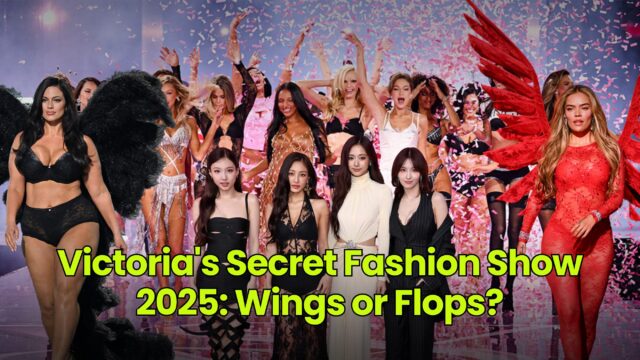
The 2025 runway mixed returning Victoria’s Secret favorites with models and public figures who reflected a broader idea of beauty and celebrity. Familiar names such as Gigi Hadid, Bella Hadid, Adriana Lima, Candice Swanepoel, Alessandra Ambrosio, Ashley Graham, Joan Smalls, and Anok Yai helped bring back the supermodel energy longtime fans expect.
At the same time, the show made room for newer and more varied runway stories. Angel Reese, the WNBA star, became one of the most talked-about additions because her appearance marked a major crossover between sports and fashion. Olympic gymnast Suni Lee also brought athletic star power, while models and personalities such as Alex Consani, Paloma Elsesser, Precious Lee, Yumi Nu, Barbie Ferreira, Iris Law, and others helped push the show beyond the narrow mold that once defined the brand.
Angel Reese and the Athlete-to-Runway Moment
Angel Reese’s appearance was more than a celebrity cameo. It was a smart cultural signal. Modern fashion audiences are not only following models; they are following athletes, creators, musicians, actors, and personalities with strong personal brands. Reese brought confidence, sports-world credibility, and a fan base that may not have watched a Victoria’s Secret runway show otherwise.
That move made the 2025 show feel more current. It suggested that “Angel” no longer has to mean one exact type of woman. It can include a basketball star, a mother, a curvy model, a trans model, a pop performer, a fashion veteran, or a newcomer getting her first big global runway moment.
The Music: A Strong All-Female Lineup
The performer lineup was one of the clearest wins of the night. Victoria’s Secret brought in Missy Elliott, Karol G, Madison Beer, and TWICE, creating an all-female lineup that felt energetic, global, and smartly built for online replay.
Madison Beer brought glossy pop glamour. Karol G delivered global superstar heat. TWICE connected the show to massive K-pop fandom power. Missy Elliott, the kind of performer who can turn a stage into a controlled explosion, gave the event a punch of legacy, rhythm, and authority.
That combination helped the show avoid one of the biggest dangers of comeback events: looking like a brand trying to cosplay its own past. The music made the runway feel more alive and gave different segments their own personality. In a world where clips matter almost as much as the full show, strong musical moments are not decorative. They are the replay value.
Wings: What Worked in 2025
1. The Show Remembered It Needed Spectacle
One of the biggest complaints about some recent fashion events is that they look expensive but feel emotionally flat. The 2025 Victoria’s Secret Fashion Show tried to bring back more glamour, more movement, and more runway theater. The return of fuller hair, dramatic wings, strong lighting, and recognizable Angels helped restore some of the visual language fans associate with the brand.
2. The Casting Felt More Modern
The strongest part of the 2025 show may have been its casting. Victoria’s Secret did not abandon its supermodel roots, but it widened the frame. That matters because fashion audiences are no longer impressed by beauty alone. They want personality, story, representation, and a reason to care.
Ashley Graham, Paloma Elsesser, Alex Consani, Angel Reese, Suni Lee, Anok Yai, and other standout names helped the show feel more connected to the current fashion conversation. This was not perfect representation, and no single runway show can fix an industry overnight. But compared with the brand’s older image, the difference was obvious.
3. The Digital Strategy Made Sense
Streaming through Prime Video, Amazon Live, YouTube, TikTok, and Instagram was a smart move. Younger viewers do not wait for a cable broadcast with popcorn and a calendar reminder. They watch what appears in their feeds, then decide whether it deserves their full attention.
By making the event easy to access across platforms, Victoria’s Secret gave itself a better chance of becoming part of the online conversation. The shoppable element also matched how modern fashion marketing works: see it, search it, share it, buy it, or at least add it to a cart and stare at it like it personally owes you money.
Flops: What Still Felt Off
1. The Nostalgia Was Not Fully Restored
For longtime viewers, the 2025 show still missed some of the old magic. The classic Victoria’s Secret runway had a very specific rhythm: huge themed segments, dramatic reveals, playful model moments, and a sense that each look was part of a larger fantasy world.
The newer format had glamour, but it sometimes felt caught between eras. It wanted to be nostalgic without bringing back the outdated parts. It wanted to be modern without losing the theatrical excess fans loved. That balance is tricky. Bring back too much, and the brand looks stuck in a problematic past. Change too much, and fans ask why the wings feel less airborne.
2. Live Streaming Can Be Messy
A live runway show has energy, but it also has less polish than a heavily edited broadcast. Older Victoria’s Secret shows benefited from tight editing, camera cuts, backstage packages, and carefully shaped pacing. Livestreaming feels immediate, but it can also make transitions seem awkward or reduce the impact of detailed looks.
That is not a fatal flaw. In fact, some viewers prefer the authenticity of live fashion. But for a brand built on fantasy, too much rawness can flatten the sparkle. The best future version may combine the excitement of live streaming with a polished post-show edit that lets the outfits, performances, and personalities breathe.
3. The Brand Still Carries Baggage
Victoria’s Secret cannot solve years of criticism with one runway show, no matter how many feathers it orders. The brand is still rebuilding trust with audiences who remember its past lack of inclusivity and its once-narrow definition of beauty.
The 2025 show made visible progress, but viewers are smart. They can tell the difference between real evolution and a marketing costume. To keep winning, Victoria’s Secret must continue showing diversity not just on the runway, but in product sizing, campaigns, leadership decisions, store experiences, pricing, and everyday customer messaging.
Was the 2025 Show Good for the Brand?
From a business perspective, the timing of the show made sense. Victoria’s Secret spent 2025 trying to sharpen its identity again: more confident, more glamorous, more connected to the word “sexy,” but with a broader and more modern interpretation. The fashion show became a public stage for that strategy.
The company also reported stronger sales momentum in 2025, including improved comparable sales and better-than-expected quarterly results. Of course, a single runway show does not magically repair a brand. Retail turnarounds require product, pricing, supply chain discipline, customer loyalty, and smart leadership. But the show helped create cultural noise, and in fashion retail, cultural noise is not a small thing. It is the glitter-covered oxygen.
The event also supported a larger shift from pure advertising to entertainment-commerce. Victoria’s Secret was not simply saying, “Here are products.” It was saying, “Here is a world, here are famous people inside it, here is music, here is a livestream, and yes, here is a way to shop before your rational brain catches up.”
Wings or Flops? The Honest Verdict
The Victoria’s Secret Fashion Show 2025 was not a total flop. It had too much star power, too much musical energy, and too many smart casting choices to be dismissed. It also showed that Victoria’s Secret understands at least part of the assignment: modern glamour has to include more kinds of bodies, more kinds of fame, and more ways to watch.
But was it a full pair of glorious, sky-scraping wings? Not quite. The show still needs a stronger creative identity. It needs clearer themes, more memorable fashion storytelling, and a better bridge between old spectacle and new values. It needs to bring back the “wow” without bringing back the worst parts of the brand’s past.
In simple terms: the 2025 show flew, but it did not soar the whole time. It had lift, wobble, sparkle, and a few moments where the landing gear made suspicious noises. Still, compared with where the brand was a few years ago, that is progress.
What Victoria’s Secret Should Do Next
If Victoria’s Secret wants the 2026 show to hit harder, it should treat the 2025 edition as a useful blueprint with room for tailoring. First, keep the diverse casting and expand it naturally. Second, build stronger themed segments so viewers remember not just who walked, but what world they walked through. Third, give the audience a polished replay version after the live event. Fourth, keep the music global, female-led, and high-energy. Fifth, make the product connection feel stylish rather than pushy.
Most importantly, the brand should avoid acting like nostalgia alone is a strategy. Nostalgia is seasoning. It is not the whole meal. The future of the Victoria’s Secret Fashion Show depends on whether the brand can create new iconic moments, not just remix old ones with better lighting.
Experience Section: Watching the 2025 Show Like a Pop-Culture Detective
Watching the Victoria’s Secret Fashion Show 2025 felt like opening a very fancy time capsule and finding a smartphone inside. Everything looked familiar at first: the wings, the glossy runway energy, the famous faces, the music, the pink carpet, the online chatter. But underneath the sparkle, the show was clearly trying to answer a modern question: can a brand famous for fantasy survive in an era that demands authenticity?
The most interesting experience was not simply watching the models walk. It was watching the internet react in real time. Some viewers celebrated the return of glamour. Others complained that the show still lacked the old electricity. Some praised the casting of athletes and curve models. Others wanted bigger sets, more fantasy, and stronger themes. Basically, the comment section became a second runway, except everyone was wearing opinions instead of wings.
One thing that stood out was how different the show feels when watched through social media clips. A runway moment that might seem brief in the full livestream can become huge on TikTok if the model has the right walk, the performer hits the right beat, or the camera catches a perfect expression. That means Victoria’s Secret is no longer designing only for the room. It is designing for screenshots, reaction videos, fan edits, and the merciless court of group chats.
The all-female music lineup also made the event feel more like a celebration than a throwback. Missy Elliott brought authority and fun. Karol G brought global star presence. TWICE brought fandom power. Madison Beer added polished pop appeal. Together, they gave the show a broader cultural footprint than fashion alone could provide.
The casting created the biggest emotional shift. Seeing athletes like Angel Reese and Suni Lee alongside established supermodels suggested that the definition of runway charisma is expanding. Beauty was still part of the show, of course, but confidence, achievement, personality, and public identity mattered too. That made the show feel more connected to 2025 than a simple revival would have.
Still, the experience was not flawless. At times, the show seemed unsure whether it wanted to be a luxury fantasy, a social media concert, a nostalgic comeback, or a shoppable livestream. The answer can be “all of the above,” but only if the creative direction is sharp enough to hold everything together. In 2025, the ingredients were there. The recipe still needed a little more heat.
For casual viewers, the show was entertaining. For longtime fans, it was encouraging but not fully satisfying. For marketers, it was a case study in brand rehabilitation. For fashion watchers, it was a reminder that spectacle must evolve or risk becoming a costume party for its own past.
The personal takeaway is simple: Victoria’s Secret has not completely solved its runway identity, but it has made the conversation interesting again. And in pop culture, being interesting is half the battle. The other half is making people care enough to come back next year. The 2025 show did that. It may not have been perfect, but it had pulse, ambition, and enough feathers to keep everyone talking.
Conclusion
The Victoria’s Secret Fashion Show 2025 was neither a flawless comeback nor a glittery disaster. It was a transitional show with real wins: stronger casting, smart digital distribution, a memorable all-female performer lineup, and a clearer attempt to modernize the brand’s fantasy. It also had weaknesses: uneven nostalgia, occasional livestream flatness, and the ongoing challenge of proving that inclusivity is more than runway decoration.
So, wings or flops? Mostly wingswith a few feathers still loose. Victoria’s Secret is flying again, but the next challenge is altitude. If the brand can combine theatrical fashion, modern representation, sharper storytelling, and cultural confidence, the show could become more than a comeback. It could become relevant again for a generation that loves glamour, but refuses to be fooled by glitter alone.