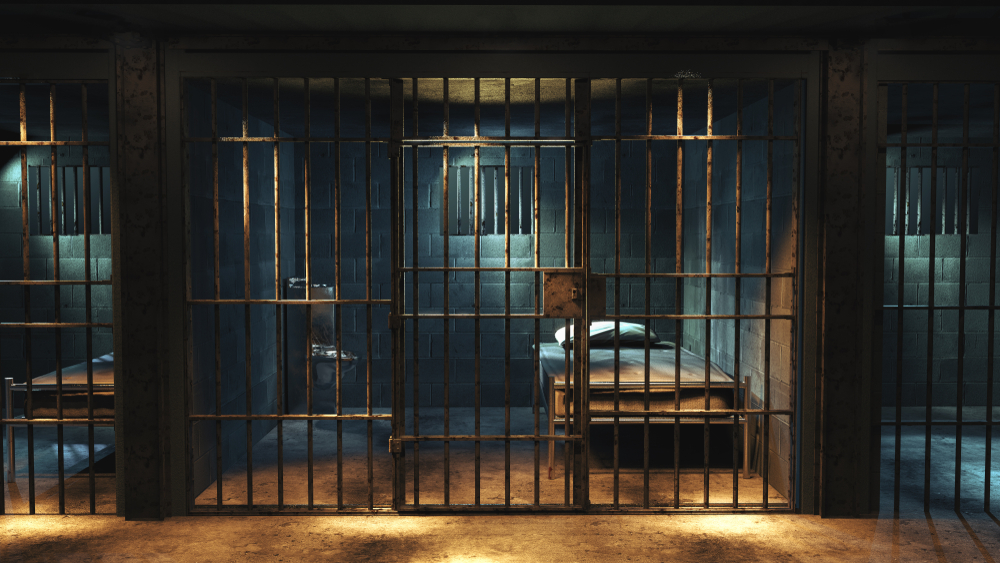
Joy in prison is not the same thing as pretending everything is fine. It is not denial, and it is certainly not a magic trick. It is the stubborn, human decision to keep a piece of yourself alive when life is crowded, loud, monitored, and often unfair. Incarceration brings real loss: freedom, privacy, family contact, routine, and control. But it does not erase the possibility of meaning. Across U.S. correctional guidance and research, the strongest protective factors keep pointing to the same themes: education, purposeful routine, family connection, physical activity, mental health support, and structured programs that help people build skills and stability.
That matters because prison is also a place where many people are carrying serious emotional weight. The Bureau of Justice Statistics has reported high rates of mental health problems among incarcerated people, including substantial shares with a history of mental illness and recent psychological distress. In other words, “finding joy” is not a luxury topic. For many people, it is part of survival, regulation, and recovery.
Redefine Joy Before You Try to Chase It
In prison, joy usually arrives in smaller packages than it does on the outside. It may look like a calm morning before count, a useful class, a letter from home, a clean bunk, a moment of laughter, or the quiet relief of making it through a hard day without losing your temper. If you expect joy to feel big and cinematic, you may miss the kind that actually keeps people going. The healthier goal is not to force happiness. It is to build enough stability that hope has room to breathe.
A useful mindset is to treat joy as something you practice, not something you wait for. That means paying attention to what lowers chaos, what restores dignity, and what helps time feel less empty. The prison environment is built around control, but people still have choices inside that structure. A person can choose how to speak, what to read, what to learn, what to feed their mind, and who to trust. Those choices are small, but they are real.
Build a Daily Routine That Gives the Day a Shape
One of the fastest ways to feel swallowed by prison life is to let the day become one long blur. A routine gives the mind something to hold onto. Wake up with a simple order. Make the bed. Wash up. Stretch. Read a few pages. Write something down. Check on your responsibilities. Repeat. It sounds basic because it is basic, and basic habits are often the first repair work that leads to a better mood.
Correctional systems themselves recognize how important structured activity is. The Federal Bureau of Prisons includes education, work, recreation, wellness, and library access as part of institutional life, and its First Step Act program materials list needs areas such as education, family/parenting, mental health, recreation/leisure/fitness, and work. That structure is not just administrative. It is also psychological. The more a person can anchor the day in useful habits, the less likely the mind is to spin out into boredom, anger, or hopelessness.
Use the hour you control
You may not control the whole day, but you can often control the next hour. That is enough to begin with. Read for twenty minutes. Clean your area. Practice a breathing pattern. Review notes from a class. Write a letter. One hour handled well can soften the emotional tone of the next three.
Use Education as a Source of Self-Respect
Education can be one of the most powerful ways to find joy in prison because it changes the story you tell yourself. Instead of “I am stuck,” the story becomes “I am still capable.” The BOP states that its education programming includes literacy, GED preparation, English classes, parenting classes, post-secondary opportunities, and access to library materials. Those offerings matter because learning creates progress, and progress creates pride.
There is also a practical side to this. The National Institute of Justice describes reentry as a continuum that includes program participation, educational attainment, case planning, and preparation for release. So even if a class seems ordinary, it can help a person build the confidence and skills needed later. A person who learns to finish assignments, speak up in class, or study consistently is also practicing patience and discipline. Those are joy-building muscles.
Protect Your Mind Like It Is Part of Your Job
It is. Mental health is not a side issue in prison; it is central. National data show that many incarcerated people arrive with mental health histories, and many more deal with stress, depression, trauma, or anxiety while confined. SAMHSA and NAMI both emphasize that justice-involved people often face treatment gaps, behavioral health barriers, and difficult transitions. That means finding joy often starts with reducing internal chaos, not forcing positivity.
Practical mental care does not have to be dramatic. It can mean asking for help early instead of late. It can mean using grievance and counseling channels appropriately. It can mean noticing when anger is really fatigue, grief, or shame wearing a tougher mask. It can mean learning to pause before reacting. The American Psychological Association has highlighted the importance of mental health work in correctional settings, including approaches that improve care and behavior. That is a reminder that emotional support is not weakness; it is maintenance.
Move Your Body So Your Mood Has Somewhere Better to Go
Exercise is one of the most reliable tools for mood, and prison research keeps pointing in that direction. Reviews and studies on incarcerated populations have found associations between physical activity and better perceived physical and mental health, along with lower indicators of anxiety and depression. The BOP also recognizes recreation and wellness as part of healthy living in custody.
That does not mean turning prison into a fitness contest. It means using movement to release pressure. Walking laps when allowed. Doing bodyweight exercises. Stretching the back after a long day. Breathing deeply before a tense interaction. Moving with intention can change the emotional weather of a cell block. Many people discover that exercise gives them something prison tries to take away: a sense of agency.
Keep it simple
Consistency matters more than intensity. Ten minutes daily is better than a heroic workout once in a while. A modest routine can improve sleep, reduce agitation, and make the day feel less stuck.
Stay Connected to People Who Remind You Who You Are
One of the clearest findings in correctional and reentry research is that family contact matters. Vera and NIJ have both noted that visitation and family support are linked to better well-being and better reentry outcomes. Prison Fellowship similarly emphasizes the value of maintaining family ties and stable home connections. When people inside have healthy contact with loved ones, they often feel less isolated and more motivated to keep going.
The reference above is not a typo in the logic of the article; the point is simple: relationships give life texture. Letters can become a lifeline. A steady phone call can create a reason to stay patient. A visit can become proof that someone still sees your humanity. Even when contact is imperfect, it can provide emotional continuity. The data and guidance from NIJ, Vera, and BOP materials all support the idea that connection is not sentimental fluff; it is part of rehabilitation and well-being.
If family is complicated, connection can still be found elsewhere: a mentor, chaplain, counselor, teacher, or peer who is steady and respectful. Joy often grows in relationships that are safe, consistent, and free of performance.
Find Meaning in Service, Faith, and Contribution
Joy becomes more durable when it is attached to purpose. For some people, that means faith. For others, it means being useful: tutoring another person, helping someone understand a form, cleaning a shared area without being asked, or supporting a newcomer who looks lost. Prison Fellowship and other community organizations have long pointed to the role of faith-based support, forgiveness, and reconciliation in prison life. You do not have to share one belief system to understand the effect of meaning. People who feel needed often feel less defeated.
Contribution also restores dignity. When a person can say, “I helped,” even in a small way, that sentence fights back against the prison identity of “I am only what I did wrong.” Joy grows when a person becomes more than a case number in their own mind.
Use Books, Writing, and Humor as Quiet Resistance
Libraries matter in prison because imagination matters. The BOP says institution libraries carry fiction, nonfiction, newspapers, magazines, and legal materials. Books can widen the room even when the walls stay the same. Writing can do the same thing. A journal can hold anger without letting it run the house. A poem can hold grief without naming it as defeat. A letter can hold tenderness in a place that often feels hard-edged.
Humor deserves a place here too. Not cruel humor. Not sarcasm that only deepens pain. The better kind: the kind that lets people breathe. In places where control is constant, being able to laugh at an absurd moment can be a form of mental self-defense. Humor does not erase hardship, but it can make hardship less total.
What Joy Looks Like When the Day Is Rough
There will be bad days. Some days will be dull. Some will be noisy. Some will be heartbreaking. On those days, joy may look tiny. It might be drinking water slowly and deliberately. It might be not answering a provocation. It might be finishing the book chapter. It might be writing one honest paragraph in a notebook. It might be praying, meditating, or sitting still until the nervous system calms down.
Do not underestimate the value of “small wins.” In prison, small wins are not small. They are proof of life continuing in the right direction. A person who keeps their temper once, keeps their reading habit twice, and keeps their dignity three times is building something stronger than a mood. They are building resilience.
How to Hold onto Joy Without Becoming Naive
Finding joy in prison does not mean pretending prison is acceptable. It does not mean ignoring injustice, suffering, or trauma. It means refusing to let those things be the only story. Joy inside prison is often a disciplined practice of noticing what is still good, still possible, and still worth protecting. That might be education, family, movement, prayer, learning, service, or simply a clean mind at the end of a long day.
The evidence is consistent: people do better when they have structure, skills, connection, and support. Correctional programs, mental health care, family contact, and physical activity all contribute to that picture. But the deeper lesson is personal. A person can survive a hard environment without surrendering their inner life. That is where joy begins.
Experiences and Practical Lessons from Prison Life
People who have lived through incarceration often describe a turning point that does not look dramatic from the outside. It is usually ordinary. The first person realizes that waking up at the same time every day makes the chaos feel less loud. Another discovers that one class can change the way the future looks, because learning gives the day a purpose beyond waiting. Someone else finds that letters from home are not just comforting; they are structural. They help a person keep track of who they were before prison and who they still want to be after it.
Many incarcerated people also learn that peace is easier to protect than to rebuild. One small conflict can swallow an entire week if a person keeps feeding it. That is why routines, distance from drama, and careful speech become so valuable. A calm response is not weakness; it is emotional conservation. In a setting where stress can be constant, energy is precious. People who do best often protect their energy with almost military discipline: no unnecessary arguments, no borrowed trouble, no romanticizing people who only bring chaos. They learn that joy is easier to find when the mind is not constantly on alert.
There are also stories of joy coming from contribution. A person who helps another inmate understand reading material may discover, for the first time in years, that they are useful in a healthy way. Someone else may be known for keeping the area tidy, organizing books, or sharing food fairly. These acts may sound small, but they create identity. They say, “I am not just here. I matter here.” That feeling can change how a person carries themselves for the rest of the sentence.
Exercise often shows up in these experiences as well. Not because it solves everything, but because movement creates a private space inside a public institution. A person doing push-ups, stretching, walking, or following a simple routine may feel their thoughts settle in a way that talking alone never achieved. Some people describe this as “getting my head right.” Others simply say they feel less trapped for an hour. Either way, the effect is real: the body becomes an ally instead of a container for tension.
Books and writing are another recurring source of meaning. A novel can carry someone out of the room. A notebook can carry a person through anger without letting that anger explode. Many people only discover their voice after they have no easy place to hide from themselves. In that sense, prison can become a painful but powerful editor. It strips away distractions and forces a person to see what they value. If they are lucky and persistent, they emerge with more honesty, more patience, and a sharper sense of what joy actually requires.
Perhaps the deepest experience is this: joy in prison is often modest, but modest joy is still joy. A good day may only last an hour. A good conversation may only last ten minutes. A good laugh may be interrupted by a count or a correction. Still, those fragments matter. They are evidence that the human spirit can remain responsive, creative, and alive even in a place designed to narrow life. That is not sentimental. That is strength.
Note: The SEO metadata is included below in JSON for easy publishing.