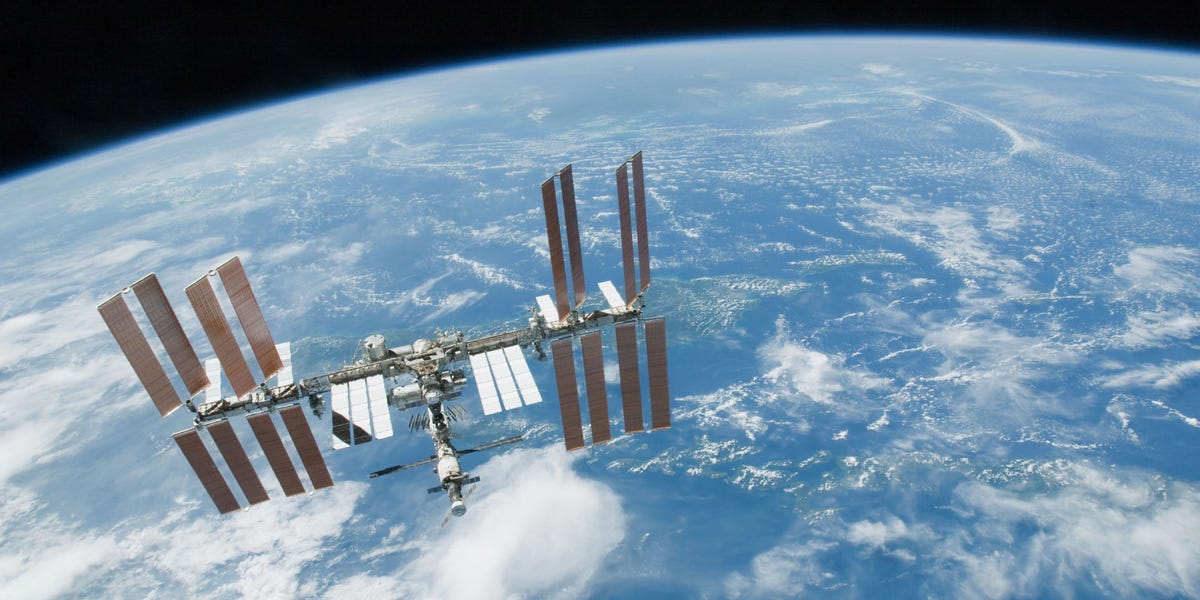
The International Space Station is one of humanity’s most impressive machines: a science laboratory, spacecraft, home, gym, workshop, greenhouse, camera platform, and very expensive floating apartment all rolled into one. It circles Earth at high speed, supports astronauts from multiple nations, runs experiments around the clock, and quietly reminds us that even the most advanced technology still has one surprisingly familiar problem: sooner or later, the batteries need replacing.
Yes, even the International Space Station needs new batteries. Not the kind you steal from the TV remote during a snack emergency, of course. The ISS uses large, carefully engineered rechargeable batteries as part of its electric power system. These batteries store energy produced by the station’s solar arrays and keep vital systems running when the station passes into Earth’s shadow. Without them, life support, communications, research equipment, and other critical systems would face a serious problem every time the Sun disappears behind our planet.
The story of the ISS battery upgrade is more than a maintenance note. It is a lesson in space engineering, long-term planning, renewable energy, robotics, risk management, and the humble truth that “change the batteries” sounds simple until the battery is outside a spacecraft traveling around Earth.
Why the ISS Needs Batteries in the First Place
The International Space Station gets its power from solar arrays. These huge wings convert sunlight into electricity and make the station look a little like a dragonfly that joined NASA. The arrays are enormous, stretching across the station’s truss structure and collecting sunlight while the station is on the day side of Earth.
But low Earth orbit comes with a catch. The ISS repeatedly moves from sunlight into darkness as it travels around the planet. When the station is in direct sunlight, its solar arrays generate electricity for current operations and charge the batteries. When the station enters Earth’s shadow, those batteries take over. In other words, the ISS power system behaves a lot like a solar-powered home with battery storage, except the home is moving through space and the electricians wear spacesuits.
Sunlight, Shadow, Repeat
During each orbit, the space station experiences periods of daylight and eclipse. The exact timing changes depending on orbital conditions, but the basic challenge is constant: energy must be available whether the Sun is shining on the solar arrays or not. The batteries smooth out that cycle, storing extra power and releasing it when needed.
This matters because the ISS does not get to “pause” operations during orbital night. Astronauts still need air circulation, temperature control, water systems, computers, navigation, communications, lighting, and scientific equipment. The refrigerator does not get to turn off just because Earth is photobombing the Sun.
The Original ISS Batteries: Reliable but Aging
The station’s original U.S. segment battery system used nickel-hydrogen batteries. These were not bargain-bin batteries. Nickel-hydrogen technology has a long history in space because it is durable, rechargeable, and capable of handling many charge-and-discharge cycles. For years, these batteries performed the quiet, unglamorous work that made everything else possible.
Still, every technology has a service life. The ISS was assembled over many years, and its earliest systems were designed with the best available engineering of their time. As the station aged, NASA and its partners had to upgrade major components to keep the orbiting laboratory healthy. Batteries were high on that list because energy storage is not optional in space. It is the difference between a functioning research station and a very shiny museum piece.
Why Not Just Keep the Old Batteries?
Keeping old hardware forever sounds economical until the hardware becomes heavier, less efficient, harder to maintain, or less capable than newer alternatives. Nickel-hydrogen batteries were dependable, but newer lithium-ion batteries offered more power capacity in a smaller and lighter package. That is a very big deal in space, where every pound launched from Earth must earn its ride.
The lithium-ion upgrade allowed the station to replace two old nickel-hydrogen battery units with one new lithium-ion battery and an adapter plate. That simple-sounding swap reduced the total number of battery units while improving energy storage capability. On Earth, that might be called decluttering. In orbit, it is called a carefully planned power-system modernization.
The Big Battery Upgrade: 48 Old Units, 24 New Ones
The ISS battery replacement campaign was not a quick Saturday chore. NASA completed a multi-year upgrade that replaced 48 aging nickel-hydrogen batteries with 24 lithium-ion batteries and adapter plates. The work unfolded across several years, multiple cargo deliveries, robotic operations, and spacewalks.
The first major lithium-ion battery installation work began in 2017. Astronauts and ground controllers worked together to install new batteries, connect electrical systems, and prepare the station for continued operation. Later spacewalks continued the effort, swapping batteries on different power channels across the station’s truss.
By 2021, NASA announced that spacewalkers had completed the battery replacement effort. The upgrade closed a major chapter in ISS maintenance and helped prepare the station’s power system for future needs, including additional solar array upgrades.
What Are Adapter Plates?
Adapter plates are the unsung heroes of the ISS battery upgrade. Because one lithium-ion battery replaced two nickel-hydrogen battery units, engineers needed a way to complete the electrical and mechanical connections properly. Adapter plates helped bridge that design difference, making the new battery configuration compatible with the existing power system.
Think of them as extremely sophisticated power-system translators. They are not glamorous, but without them, the new batteries could not simply slide into the old architecture and politely introduce themselves.
Spacewalks: The World’s Most Complicated Battery Change
Changing a battery on Earth can be annoying. Changing a battery on the International Space Station requires years of planning, launch logistics, robotic choreography, spacesuit checks, detailed procedures, and astronauts working outside the station in the vacuum of space.
During the battery upgrade campaign, astronauts performed spacewalks to install adapter plates, connect power cables, remove old units, and install new lithium-ion batteries. Some work could be supported by robotic systems such as the station’s robotic arms, but astronauts still had to perform key tasks outside the station.
A Spacewalk Is Not a Stroll
The word “spacewalk” sounds charming, as if astronauts are taking a scenic float with excellent views. In reality, an extravehicular activity is a demanding engineering operation. Astronauts train extensively underwater and in simulators before they ever touch a handrail outside the ISS. Every motion matters. Tools must be tethered. Timelines must be followed. Communications with Mission Control must stay clear.
When astronauts replaced ISS batteries, they were handling large orbital replacement units while wearing pressurized suits. Even small tasks become more challenging when gloves are bulky, body positioning is limited, and the workplace is the outside of a spacecraft. The view is spectacular, but nobody is there for sightseeing. The job is maintenance, and the stakes are high.
Why Lithium-Ion Batteries Were the Right Upgrade
Lithium-ion batteries are widely used on Earth in laptops, phones, electric vehicles, power tools, and home energy storage systems. Their popularity comes from a useful combination: high energy density, rechargeability, and relatively compact size. For the ISS, those traits made lithium-ion batteries a strong successor to nickel-hydrogen units.
The new lithium-ion batteries offered improved power capacity with less mass and volume. That matters because spacecraft systems must be efficient not only electrically but also physically. A smaller, lighter battery system can free up launch mass, simplify logistics, and improve long-term operations.
Space Batteries Are Not Laptop Batteries with a Passport
Although the phrase “lithium-ion” may sound familiar, ISS batteries are not ordinary consumer electronics parts. Space-rated batteries must survive launch vibration, orbital thermal conditions, repeated cycling, radiation exposure, strict safety requirements, and integration with a complex spacecraft power system.
Engineers also have to think about failure modes. A battery in space cannot simply be returned to the store with a receipt and a disappointed facial expression. It must be tested, monitored, protected, and installed within a system designed to isolate problems before they threaten the station.
The 2019 Battery Hiccup: Space Engineering Is Honest Work
The ISS battery upgrade was successful, but it was not magically perfect. In 2019, one newly installed lithium-ion battery experienced a problem related to a blown fuse during installation. NASA temporarily reinstalled nickel-hydrogen batteries as part of the response while teams investigated and adjusted procedures.
This moment is important because it shows how real engineering works. Spaceflight is not about pretending nothing ever goes wrong. It is about building systems, teams, and procedures that can respond when something does. The ISS program handled the issue through analysis, replacement planning, and continued operations.
Redundancy Is the Space Version of “Bring a Spare”
Redundancy is a favorite word in aerospace for a reason. Space systems need backup paths, spare parts, and flexible procedures. The ISS battery upgrade included extra planning because power systems are central to station survival. When a problem appeared, engineers had options. That is not luck; that is design discipline.
On Earth, redundancy might mean keeping a phone charger in your bag. On the ISS, it means having replacement hardware, trained astronauts, ground controllers, fault procedures, and enough operational margin to keep the station safe while the team solves the problem.
How Batteries Support Science on the ISS
The International Space Station is not just a symbolic outpost. It is a working laboratory where researchers study biology, physics, materials science, Earth observation, human health, combustion, fluid behavior, and technologies for future exploration. All of that requires power.
Experiments run in racks, freezers, incubators, gloveboxes, and specialized facilities. Computers collect data. Cameras observe Earth and space. Life science research needs stable conditions. Crew health equipment must remain functional. A reliable electric power system makes this scientific work possible.
Better batteries do not make headlines as easily as rocket launches, but they quietly support every experiment that needs electricity during orbital night. In that sense, the ISS battery upgrade was also a science upgrade.
What the ISS Battery Story Teaches About Renewable Energy
The ISS is one of the most dramatic examples of solar power plus battery storage. It collects sunlight when available and stores energy for periods when sunlight is blocked. That same basic concept is becoming more common on Earth as homes, businesses, and utilities pair solar panels with batteries.
Of course, the ISS is not a neighborhood rooftop system. It operates in a harsher environment, under strict safety rules, with far more complex hardware. Still, the principle is familiar: renewable energy works best when storage is available to balance supply and demand.
The Space Station as a Floating Energy Lesson
The ISS reminds us that generation is only half of the energy story. Solar arrays produce electricity, but batteries help make that electricity useful at the right time. Without storage, power availability would rise and fall too sharply. With storage, the station can keep working through the natural rhythm of sunlight and shadow.
This lesson applies far beyond spaceflight. Whether powering a spacecraft, a hospital backup system, a remote research station, or a home during an outage, energy storage adds resilience. The ISS just teaches the lesson while traveling around the planet.
The Human Side of Space Maintenance
It is easy to imagine space exploration as a series of grand moments: launches, dockings, moonwalks, Mars rovers, and dramatic mission-control applause. But space exploration also depends on maintenance. Filters need replacing. Software needs updating. Pumps, cameras, computers, spacesuits, and batteries need attention.
That may sound ordinary, but ordinary work becomes extraordinary in orbit. The ISS battery replacement campaign required astronauts, flight controllers, engineers, cargo vehicle teams, robotics specialists, safety experts, and international partners. It was not one heroic wrench turn. It was a long, coordinated effort.
In a way, the ISS is like a house that never stops moving and cannot call a local repair service. The residents are also scientists, pilots, technicians, and emergency responders. The landlord is a global partnership. The repair manual is very thick.
Why the Upgrade Matters for the Future
The ISS battery upgrade helped extend the station’s usefulness and prepared its power system for continued research. It also supported later work to augment the station’s solar arrays. As spacecraft age, thoughtful upgrades become essential. You do not keep a laboratory alive for decades by admiring it from the ground. You keep it alive by maintaining it.
Future space stations, lunar bases, Mars missions, and deep-space habitats will face similar power challenges. They will need durable solar arrays, reliable batteries, fault-tolerant electronics, and maintenance plans that account for limited access. The ISS provides decades of practical experience that engineers can use for the next generation of human spaceflight.
Experience Notes: What the ISS Battery Upgrade Feels Like From an Earthbound Perspective
Following the ISS battery replacement story is a little like watching the world’s most advanced home-improvement project. The task is familiar enough to understand: old batteries out, new batteries in. But every detail is turned up to maximum difficulty. There is no garage, no hardware store run, no “hold this flashlight for me,” and definitely no tossing a dead battery into a kitchen drawer where old batteries go to retire mysteriously.
The first experience this topic brings to mind is how often people underestimate maintenance. We celebrate new technology when it launches, but the real test comes years later. A device, building, car, website, or spacecraft is only as good as the care it receives over time. The ISS battery upgrade shows that maintenance is not a boring afterthought. It is the reason big ideas keep working after the ribbon-cutting moment has passed.
The second experience is the importance of planning before failure. Many people replace batteries only when the remote stops working or the car will not start. The space station cannot afford that attitude. NASA did not wait for the power system to become a crisis. Engineers studied battery performance, planned cargo deliveries, trained crews, staged hardware, and worked through procedures years in advance. That is a useful model for Earth life too. Replace the smoke alarm battery before it chirps at 2 a.m. Schedule the roof inspection before the rainy season. Back up the laptop before it decides to become modern art.
The third experience is respect for teamwork. A spacewalk may show two astronauts outside the station, but the work represents hundreds of people behind the scenes. Someone designed the battery. Someone tested it. Someone wrote the procedure. Someone trained the crew. Someone watched the telemetry. Someone checked the safety rules. Success in space is rarely a solo act, even when the camera focuses on one person with a wrench.
The fourth experience is humility. The ISS is a masterpiece of engineering, yet it still needs replacement parts. That is not a weakness. It is reality. Machines age, materials change, environments punish hardware, and technology improves. The smartest systems are not the ones that never need service. They are the ones designed so service is possible.
Finally, the ISS battery story makes advanced science feel surprisingly human. Everyone understands the mild panic of a low-battery warning. The station’s version is far more complex, but the principle is recognizable. Power matters. Preparation matters. Good tools matter. And sometimes, whether you are holding a TV remote or maintaining a spacecraft, progress begins with a fresh battery.
Conclusion: Even Space Needs a Power Plan
The International Space Station battery upgrade is a perfect example of practical brilliance. It was not flashy in the way a launch is flashy, but it was essential. By replacing aging nickel-hydrogen batteries with newer lithium-ion batteries, NASA and its partners strengthened the station’s electric power system, supported ongoing research, and prepared the orbiting laboratory for future upgrades.
The lesson is simple and surprisingly down-to-Earth: even the most advanced machines need care. The ISS may orbit above storms, cities, oceans, and mountains, but it still depends on smart maintenance, careful planning, and reliable energy storage. Sometimes even the International Space Station needs new batteriesand when it does, the repair job becomes a masterclass in engineering.