Note: This guide focuses on the lacecap hydrangeas most commonly grown in American gardens, especially bigleaf hydrangeas (Hydrangea macrophylla) and mountain hydrangeas (Hydrangea serrata). Many of these bloom on old wood, which means next year’s flowers are already forming on stems that grew this year. In plain gardener English: prune too late or too hard, and your hydrangea may punish you with leaves, leaves, and more leavesbut no flowers.
Introduction: Why Lacecap Hydrangeas Need a Gentle Hand
Lacecap hydrangeas are the elegant cousins at the hydrangea family reunion. While mophead hydrangeas show up wearing giant pom-poms, lacecaps arrive with a flatter, more delicate flower head: tiny fertile flowers in the center, framed by showy outer florets that look like nature hired a floral designer. They bring texture, pollinator appeal, and a soft cottage-garden look without screaming for attentionunless, of course, you prune them at the wrong time. Then they scream silently by refusing to bloom.
Learning how to prune lacecap hydrangeas is not about attacking the shrub with clippers like you are trimming a hedge shaped like a mailbox. It is about timing, restraint, observation, and making clean cuts only where they help the plant. The best pruning method depends on whether your lacecap blooms on old wood, new wood, or both. Most traditional lacecap hydrangeas bloom mainly on old wood, so the safest pruning window is soon after flowering in summer. Dead, damaged, or diseased stems can be removed whenever you clearly identify them, but major shaping should be thoughtful and light.
This 9-step guide walks you through the practical process: when to prune, what to cut, what to leave alone, and how to avoid accidentally deleting next year’s flower show. Grab your bypass pruners, take a deep breath, and remember the golden rule of lacecap hydrangea pruning: when in doubt, cut less.
How to Prune Lacecap Hydrangeas: 9 Steps
Step 1: Identify What Kind of Lacecap Hydrangea You Have
Before making a single cut, identify your plant as closely as possible. “Lacecap” describes the flower shape, not always the exact species. Most lacecaps are bigleaf hydrangeas or mountain hydrangeas, and both often bloom on old wood. Some newer reblooming cultivars can flower on both old and new growth, which makes them more forgiving, but not indestructible.
Check the plant tag if you still have it. Look for names such as Hydrangea macrophylla, Hydrangea serrata, “lacecap,” “reblooming,” or “remontant.” If your hydrangea has blue, pink, purple, or lavender lacecap flowers and broad green leaves, there is a good chance it is a bigleaf type. If it has smaller leaves, a slightly more refined habit, and delicate lacecap blooms, it may be a mountain hydrangea.
This matters because old-wood hydrangeas set next year’s buds in late summer and fall. If you cut them back in winter or early spring, you may remove the very buds you were hoping to admire. That is not pruning; that is floral sabotage with handles.
Step 2: Choose the Right Time to Prune
The best time to prune lacecap hydrangeas that bloom on old wood is right after the flowers fade, usually in summer. In many regions, gardeners aim to finish pruning by late July or early August. This gives the plant enough time to develop strong new growth and set buds for the following year.
Avoid heavy fall pruning. Fall is when the plant is preparing for dormancy, and pruning then can remove developing buds or encourage tender new growth that may be damaged by cold weather. Also avoid cutting back old-wood lacecaps in late winter unless you are only removing dead stems that you can clearly confirm are lifeless.
If you live in a colder region, spring can be useful for cleanup because winter injury is easier to see once buds begin to swell. Wait until new growth appears, then remove only dead wood. Live stems may look boring and brown outside but still be green inside, so do not assume a cane is dead just because it lacks sparkle.
Step 3: Gather and Clean the Right Tools
Use sharp bypass pruners for most lacecap hydrangea pruning. Bypass pruners work like scissors and make cleaner cuts than anvil pruners, which can crush stems. For thicker, older canes, use loppers. A small pruning saw may help on mature shrubs with woody stems, but if you need power tools, you are probably no longer pruningyou are negotiating with a shrub that has become a landlord.
Clean your tools before you begin, especially if you have recently pruned diseased plants. A wipe with 70% isopropyl alcohol is a simple way to reduce the spread of fungal or bacterial problems. Keep the blades sharp so each cut is smooth, not ragged. Ragged cuts heal poorly and can invite disease or dieback.
Wear gloves if the stems are rough or if you are reaching into a dense shrub. Also bring a small tarp or bucket for clippings. Future-you will appreciate not having to pick tiny stems out of mulch like a person searching for dropped spaghetti.
Step 4: Remove Dead, Damaged, or Diseased Wood First
Start with the obvious problems. Dead stems are often brittle, hollow, gray, or brown all the way through. A quick scratch test can help: lightly scrape the bark with your pruner blade or fingernail. Green beneath the bark usually means the stem is alive. Brown, dry tissue usually means it is dead.
Cut dead stems all the way back to the base of the plant or to a healthy set of buds. Remove broken branches, stems damaged by winter, and any canes showing signs of disease. If a stem is rubbing against another stem, remove the weaker or badly placed one. Rubbing creates wounds, and wounds are open invitations to trouble.
This step can be done at almost any time if the wood is clearly dead or diseased. However, if you are unsure, wait until spring growth makes the plant’s intentions obvious. Hydrangeas are dramatic in winter. Some stems look dead enough to qualify for a detective show but leaf out just fine in May.
Step 5: Deadhead Spent Flowers Carefully
Deadheading means removing old flower heads. On lacecap hydrangeas, this is mostly cosmetic. Some gardeners leave dried blooms on the shrub for winter interest, where they look charming with frost or snow. Others prefer a tidier appearance and remove spent blooms after flowering.
To deadhead, cut just above the first strong pair of healthy buds beneath the spent flower. Do not cut far down the stem unless you are intentionally shaping the plant during the proper summer pruning window. Remember, those upper nodes may carry future flower potential.
If you want dried hydrangea flowers for arrangements, wait until the blooms feel slightly papery before cutting. Fresh hydrangea blooms often wilt in a vase faster than a teenager asked to unload groceries. Mature blooms dry better and last longer indoors.
Step 6: Thin Out a Few Older Stems
Once dead and damaged wood is gone, look at the overall structure. Mature lacecap hydrangeas can become crowded, with old canes blocking light and airflow from the center. Good airflow helps reduce leaf diseases and keeps the shrub healthier.
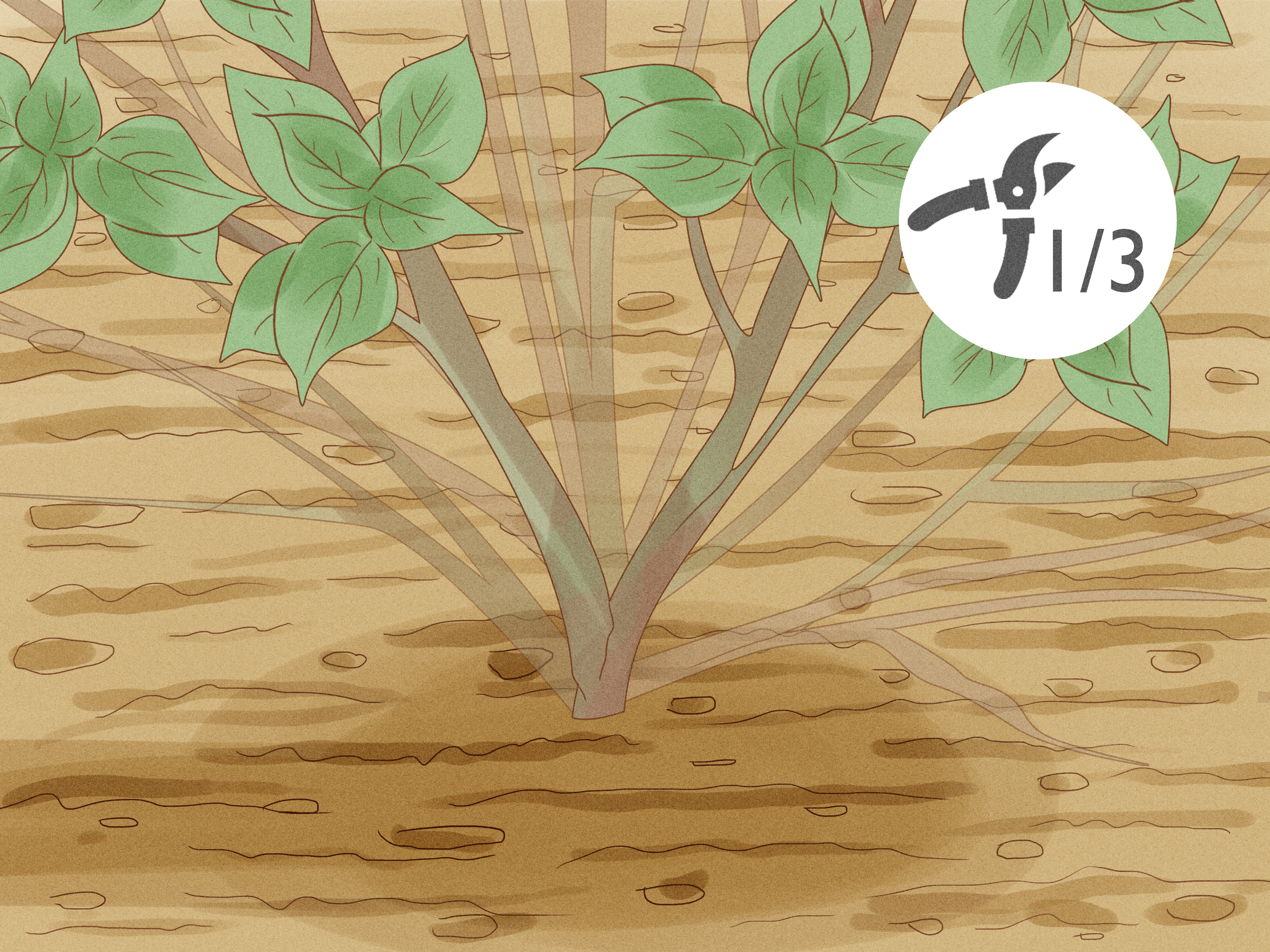
For an established shrub, remove a small number of the oldest stems at ground level. These stems are usually thicker, woodier, and less productive. Do not remove more than about one-third of the shrub in a single season. For old-wood lacecaps, lighter is better. A few smart thinning cuts can refresh the plant without sacrificing next year’s blooms.
Think of thinning as editing a paragraph. You are not deleting the whole article; you are removing the clutter so the best parts can shine. Cut old stems at the base rather than shearing the whole shrub into a rounded blob. Lacecaps look best when their natural arching habit is preserved.
Step 7: Shape Lightly Without Shearing
After thinning, step back and look at the shrub from several angles. This is not just for drama. It helps you avoid over-pruning one side. Remove wayward stems that stick out awkwardly, but make cuts back to a healthy bud or side branch. Avoid flat-topping the shrub or shearing it like a boxwood hedge.
Lacecap hydrangeas have a graceful form, and heavy shearing can ruin that natural shape. Worse, it can remove flower buds. If the plant is too large for its location every year, pruning harder is not the best long-term fix. Consider transplanting it during the appropriate season or replacing it with a smaller cultivar.
Make cuts about one-quarter inch above a healthy bud when shortening a stem. Angle the cut slightly so water does not sit on the cut surface. Clean cuts are small things, but gardening success is often built from small things done consistently well.
Step 8: Avoid the Big Mistakes That Stop Blooms
The most common lacecap hydrangea pruning mistake is cutting the shrub back hard in late winter or early spring. This may be fine for smooth or panicle hydrangeas, which bloom on new wood, but it can be disastrous for traditional lacecaps. You may get a healthy green shrub with zero flowers, which is basically a salad with branches.
Another mistake is pruning too late in summer or fall. By then, the plant may already be forming buds for next year. Cutting at that time can reduce or eliminate blooms. Over-fertilizing is another issue. Too much nitrogen encourages leafy growth at the expense of flowers. If your hydrangea looks lush but refuses to bloom, check your pruning timing, winter bud damage, deer browsing, and fertilizer habits.
Finally, do not panic-prune after winter. Many hydrangea stems leaf out slowly. Give the plant time to show green buds before removing questionable wood. Patience is cheaper than replacing a perfectly good shrub you accidentally turned into mulch.
Step 9: Care for the Shrub After Pruning
After pruning, water the plant well if the weather is dry. Hydrangeas prefer consistent moisture, especially during hot summers. Add a two- to three-inch layer of organic mulch around the base to help conserve soil moisture and moderate temperature swings. Keep mulch a little away from the stems to prevent rot.
Do not fertilize heavily right after summer pruning. If your soil is poor, use a balanced, slow-release fertilizer in spring according to label instructions. For blue or pink lacecap hydrangeas, remember that flower color may depend on soil pH and aluminum availability, especially in bigleaf types. Acidic soil tends to encourage blue tones, while more alkaline soil tends to encourage pink tones. However, pruning will not change flower color; it only changes how many chances the plant has to show off.
Monitor the plant through the season. If new shoots appear from the base, that is a good sign. Protect old-wood lacecaps from harsh winter winds where possible, because cold damage can kill flower buds even when pruning was perfect.
Common Questions About Pruning Lacecap Hydrangeas
Can I Cut a Lacecap Hydrangea to the Ground?
You can, but you usually should not. Cutting a traditional old-wood lacecap hydrangea to the ground may remove the stems that would have produced flowers. The plant may survive and regrow, but blooms may be limited or absent for a year or more. Severe rejuvenation pruning is best reserved for badly neglected, damaged, or oversized shrubs when you accept the trade-off.
Should I Remove Brown Flower Heads?
Yes, if you prefer a tidy look. No, if you enjoy winter texture. Brown flower heads do not necessarily harm the plant. Remove them after bloom or in spring, but cut carefully above healthy buds.
Why Did My Lacecap Hydrangea Not Bloom?
The usual suspects are pruning at the wrong time, winter injury, late spring frost, deer browsing, too much shade, or too much nitrogen fertilizer. If the plant is healthy but flowerless, review when and how it was pruned first.
Experience-Based Tips: What Pruning Lacecap Hydrangeas Teaches You Over Time
After pruning lacecap hydrangeas for several seasons, most gardeners learn one big lesson: the plant usually needs less help than we think. The first instinct is often to “clean it up” aggressively, especially in early spring when the shrub looks like a bundle of dry sticks. But lacecaps are slow to reveal themselves. A stem that looks lifeless in March may push out green buds in April or May. Waiting a few extra weeks can be the difference between a shrub full of flowers and a shrub full of regret.
One practical experience is to walk around the plant before cutting. Look at it from the front, sides, and even from a window where you usually see it. This helps you prune for the way the shrub actually fits into the garden. A branch that seems awkward up close may be the one creating a graceful outline from the patio. Hydrangeas are landscape plants, not tabletop centerpieces, so context matters.
Another useful habit is marking the pruning window on your garden calendar. When the lacecap blooms begin to fade, set a reminder to deadhead and lightly shape the shrub. Many gardeners miss this window because summer gets busy. One day you are enjoying blue lacecap flowers with iced tea; the next day it is October, and the plant has already set buds. A simple reminder prevents accidental late pruning.
Experience also teaches restraint with older stems. Removing one or two old canes from the base can improve airflow and encourage fresh growth. Removing half the shrub because you “got into a rhythm” can reduce flowering dramatically. Pruning can be oddly satisfying, which is exactly why gardeners need boundaries. Put the pruners down, step back, and ask, “Does this cut solve a real problem?” If the answer is no, let the plant keep its branch.
In colder climates, winter protection can matter as much as pruning. Lacecap hydrangeas that bloom on old wood carry their flower buds through winter. If icy winds or sudden temperature drops damage those buds, spring pruning cannot magically restore them. Planting lacecaps in a sheltered location with morning sun and afternoon shade often leads to better performance. Mulch helps protect roots, but flower buds are above ground, so site selection is part of the pruning story.
One of the best lessons comes from observing bloom patterns. If flowers appear mostly on lower branches, the top buds may have been winter-killed. If blooms are absent across the whole shrub after a hard pruning, timing was probably the issue. If the shrub grows huge leaves but few flowers, fertilizer or shade may be involved. Lacecap hydrangeas give clues; the gardener’s job is to notice them.
Finally, pruning lacecap hydrangeas teaches patience. This is not a plant that rewards dramatic annual haircuts. It rewards careful timing, small corrections, and respect for its natural shape. When pruned lightly after bloom and protected from common mistakes, a lacecap hydrangea becomes one of the most graceful shrubs in the garden. It may never shout like a mophead, but it knows how to whisper beautifullyand in gardening, a good whisper can stop people in their tracks.
Conclusion: Prune Lightly, Time It Right, and Let Lacecaps Shine
Pruning lacecap hydrangeas is not complicated once you understand the main rule: most traditional lacecaps bloom on old wood, so heavy pruning at the wrong time can remove next year’s flowers. The best approach is to identify your plant, prune soon after flowering, remove dead or damaged wood, thin a few older stems when needed, and preserve the shrub’s natural shape.
Use clean, sharp tools, make thoughtful cuts, and avoid treating lacecap hydrangeas like panicle or smooth hydrangeas. When you respect their growth habit, they reward you with delicate blooms, graceful structure, and a softer, more refined garden look. In short: do less, but do it at the right time. Your lacecap hydrangea will handle the fancy floral part.