Note: This article is based on real child-development guidance and general parenting information from reputable U.S. sources. It is intended for informational and entertainment purposes, not medical advice.
There are few joys in life as pure, as ridiculous, and as suspiciously perfect as playing with a baby when you are not the person on diaper duty. It is one of civilization’s finest loopholes. You get the gummy smile, the tiny hand wrapped around your finger, the dramatic squeal that sounds like a tea kettle winning the lottery, and all the social credit of being “so great with babies.” Then, the second the room gets quiet in a way that feels ominous, you can hand that tiny potato-human right back to the parent with the respectful urgency of someone returning a live grenade.
And honestly? That is awesome.
This oddly specific pleasure deserves a place in the grand museum of everyday delights because it combines three glorious things at once: the emotional payoff of connection, the comedy of temporary responsibility, and the sweet relief of knowing that if the situation turns into a Code Brown, you are spiritually, legally, and logistically off the hook.
But there is more to this than a punch line. Playing with a baby is not just cute filler before the next bottle, nap, or emergency wardrobe change. It is meaningful. Those silly faces, made-up songs, and games of peekaboo are part of how babies learn to connect, communicate, and trust the world around them. So yes, this is a love letter to the fun side of hanging out with babies. It is also a small celebration of how something so simple can be good for everyone involved, especially when somebody else is holding the wipes.
Why this tiny moment feels so disproportionately wonderful
Adults do not always get many low-stakes wins. Most of our day is invoices, emails, mysterious lower-back pain, and trying to remember why we walked into the kitchen. Then a baby enters the chat. Suddenly, you shake a rattle like a deranged maraca artist and receive the kind of full-body laughter most comedians would sell a kidney to earn. It is instant feedback. You are funny. You are fascinating. You are, for one shining moment, the greatest entertainer on Earth.
That is part of the magic. Babies are fully committed audiences. They do not care if your hair is messy, your shirt is wrinkled, or your last five ideas at work went nowhere. If you make a surprising sound and wiggle your eyebrows with conviction, you are a star. Their delight is immediate and unfiltered. There is no “circle back next week.” There is only joy.
Even better, the relationship is refreshingly simple. You are not negotiating screen time. You are not explaining taxes. You are not debating whether dinner counts as “healthy” if it contains lettuce next to fries. You are existing in a small, goofy universe where the current plot is, “What if this spoon was an airplane?” and that plot absolutely slaps.
The diaper exception is what elevates the experience from sweet to elite. It creates the perfect balance of intimacy and escape. You can be loving without being exhausted, engaged without being on call, and deeply invested in the outcome of a rattle performance without having to Google whether that diaper rash cream can be used twice in one afternoon.
The baby is not just having fun. The baby is doing important work.
Here is the charming twist: all that clowning around is not trivial. For babies, play is serious business dressed up in drool. When adults respond to a baby’s sounds, expressions, and movements with back-and-forth interaction, it helps build the foundation for social, emotional, and language development. In other words, your dramatic gasp after the baby says “ba!” is not just theater. It is a conversation starter.
That is why classics like peekaboo, pat-a-cake, gentle songs, funny noises, and face-to-face imitation show up again and again in infant guidance. They are simple, but they do a lot. Babies learn patterns. They begin to expect that when they make a sound, someone may answer. They notice faces, voices, rhythm, and repetition. They start connecting delight with human interaction, which is a pretty beautiful design feature if you think about it.
Even basic play helps babies practice big skills in baby-sized ways:
Back-and-forth interaction
When a baby coos and you coo back, or when they kick and you respond with a smile and words, you are participating in a tiny social dance. It may look like nonsense from the outside. To the baby, it is relationship, timing, and communication in action.
Attention and curiosity
Babies are natural investigators. They stare at your face like they are trying to solve a centuries-old mystery. Playing with a scarf, soft toy, mirror, board book, or your extremely expressive eyebrows helps them focus, explore, and make sense of what is happening around them.
Early language building
Talking, singing, narrating, and repeating sounds during play exposes babies to language long before they can use words themselves. You are not “just babbling.” You are building a sound-rich world where language feels warm, interactive, and worth paying attention to.
Emotional security
Warm, responsive play tells a baby, “You matter. I see you. I am here.” That sense of safety does not require expensive toys or a Pinterest-worthy nursery. It often starts with eye contact, a calm voice, and someone willing to spend five minutes pretending the stuffed giraffe is the CEO of Giggles.
The glory of being the “fun adult”
Every baby benefits from having loving, responsive people around them. Parents are the center of the universe, of course. But babies also thrive in a broader circle of trusted adults: grandparents, aunts, uncles, older siblings, family friends, neighbors, and honorary cousins who somehow become permanent fixtures at birthday parties.
That is where this awesome thing gets even better. When you play with a baby and give the parent a few uninterrupted minutes to eat, sit, breathe, or stare at a wall in silence like it is a luxury spa experience, you are not only being delightful. You are being useful.
You become a pressure valve. A bright little patch in the day. The person who swoops in, jingles keys with Oscar-worthy commitment, and buys the adults around you a little time. That matters. Caring for a baby is beautiful, but it is also repetitive, exhausting, messy, and occasionally powered by caffeine and pure survival instinct. The fun adult helps balance the equation.
And there is a special kind of pride in that role. You are not the one handling the 3 a.m. wake-up. You are not researching nipple flow rates or the exact difference between “fussy” and “overtired.” But for fifteen magical minutes, you are the VIP. The baby lights up when you arrive. Your joke absolutely lands. Your silly song gets an encore. It is like being a guest star on a beloved show without having to join the writer’s room.
How to do it well, even if you are not a baby whisperer
The good news is that babies are not asking for a Broadway production. They are not expecting a carefully curated curriculum. Great baby play is often slow, simple, and face-to-face.
Try old-school classics
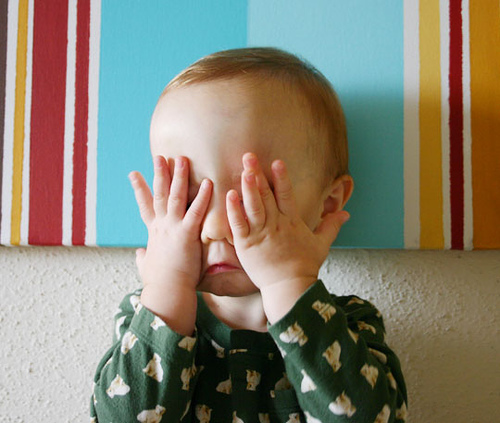
Peekaboo remains undefeated because babies are very into the concept of “Where did your face go?” Pat-a-cake is basically rhythm, touch, and surprise rolled into one neat package. Silly songs, clapping games, and exaggerated reactions also work beautifully because repetition makes babies feel in on the joke.
Narrate the moment
Talk about what you are doing. “You found the duck!” “You are kicking so hard!” “Look at your little socks!” This does not need to sound smart. In fact, the less you sound like a corporate presentation, the better. Warm, simple language is perfect.
Follow the baby’s lead
If the baby wants to stare at a spoon for four straight minutes like it is the moon landing, congratulations: you are now on Team Spoon. Babies are excellent at choosing what interests them. Your job is not to redirect every second. Your job is to notice, respond, and join them there.
Keep it low-tech
A soft toy, a board book, a mirror, a washcloth, a gentle song, and your face can go a long way. Babies tend to care more about responsive human interaction than flashy gadgetry. Your grin beats a blinking plastic contraption more often than most toy catalogs would like to admit.
Respect the cues
Play is wonderful, but babies are not always in the mood to party. If they look away, fuss, arch, yawn, or get overwhelmed, it is okay to pause. Not every moment has to be a circus. Sometimes the best move is a quieter tone, less stimulation, or handing the baby back with grace and speed.
The diaper line is what makes the joke work
Let us address the obvious. The reason this awesome thing is so funny is that diaper changing is the hard boundary between “adorable bonding” and “biological warfare.” One minute you are receiving a soft little smile that makes the world feel manageable. The next minute, a smell arrives with the confidence of a marching band.
And this is exactly why the experience is so cherished. You get to be deeply present for the best parts without carrying the full operational burden. It is the emotional equivalent of visiting a farm, petting the horses, saying “What a peaceful life,” and then going home before anyone asks you to muck a stall.
That does not make the joy less meaningful. In fact, it may make it more noticeable. Because you are not multitasking through a hundred care duties, you can actually be in the moment. You can laugh. You can observe the baby’s tiny expressions. You can admire the weird seriousness with which they inspect their own toes. You can appreciate the miracle of a human being who believes your sneezing sound effect is groundbreaking comedy.
Sometimes, limited responsibility is exactly what allows delight to bloom.
What this awesome thing says about human nature
This tiny scenario is funny because it reveals something true about people. We love connection, but we also love boundaries. We want closeness, laughter, belonging, and sweetness. We just do not always want to be the person carrying the emergency changing pad like a field medic.
There is no shame in that. In fact, the world probably works better when people can contribute in different ways. Some people are marathon parents. Some are expert bottle washers. Some are genius nap schedulers. Some are incredible at making babies laugh until they hiccup. And yes, some are only available for the premium package known as “cuddles, songs, and absolutely no diaper involvement.” That still counts.
The baby does not care about your exact job description. The baby cares that you are warm, attentive, and fun to be with. The parent cares that you showed up and made the day easier. And you get to leave feeling lighter, happier, and perhaps smugly clean-handed.
Extended experiences: the strangely universal joy of being the clean-handed hero
Maybe you have lived this exact scene. You visit a friend who has not slept properly since the previous administration. Their baby is on a blanket doing the powerful, uncoordinated wiggle that looks like interpretive dance. You kneel down, make one goofy face, and suddenly the baby smiles at you like you have personally solved inflation. The parent, who has seen many things and folded a great deal of laundry, says, “Wow, she likes you.” That sentence alone can power a person for weeks.
Then the performance begins. You do the voice. Not your normal voice. The baby voice. The one that would get you removed from a business meeting but earns rave reviews in a nursery. You jingle a soft toy. You sing a song with only half the lyrics because apparently “Old MacDonald” leaves your brain under pressure. The baby laughs anyway. It does not matter. You are crushing it.
At some point, the baby leans into you in that warm, floppy way babies do, as if bones are still a suggestion. A tiny hand grabs your shirt. Their head lands on your shoulder for three perfect seconds. In that moment, the world becomes absurdly gentle. You think, “I would protect this little person with my life.” Then, almost immediately, you hear a suspicious noise from somewhere south of the onesie and think, “I would also like to transfer this little person back to a more qualified adult.”
That, right there, is the whole masterpiece.
Or maybe you are the aunt, uncle, cousin, grandparent, godparent, neighbor, or longtime family friend who specializes in the handoff. You arrive, scoop up the baby, and parade around the living room like a cruise director for someone who cannot yet sit in a chair by themselves. You point at lamps. You narrate ceiling fans like nature documentaries. You introduce the baby to a houseplant with more ceremony than some people get at weddings. And it works. The baby is enchanted. You are enchanted. Everyone wins.
Until the baby goes still.
Anyone who has ever held a baby knows that certain silences are not peaceful. They are strategic. They are loaded. They are the emotional equivalent of seeing dark clouds gather over the horizon while someone quietly says, “Huh.” You feel it before you know it. The baby’s expression changes. Time slows. You become extremely interested in locating a parent. This is not cowardice. This is instinct.
Yet the beauty is that none of this cancels out the goodness of what came before. The laughter was real. The connection was real. The baby’s bright eyes following your face around the room were real. You were not pretending to care just because you do not want diaper duty. You cared very much. You simply also enjoyed the fine print of temporary stewardship.
And maybe that is why this little experience stays with people. It is one of those rare moments that is wholesome and hilarious at the same time. It reminds us that delight does not have to be complicated. Sometimes it is just ten minutes on the floor, a game of peekaboo, a little drool on your sleeve, and the quiet triumph of walking away before the wipes come out.
That is not cheating. That is one of life’s great arrangements.
Conclusion
#859 Playing with a baby and not having to change its diaper belongs in the hall of everyday wonders because it captures a near-perfect human experience: joy without dread, intimacy without total responsibility, and laughter without latex gloves. It is funny because it is true. It is sweet because it is real. And it is memorable because so many of us have lived some version of it, whether as the fun aunt, the goofy uncle, the visiting friend, the proud grandparent, or the family pal who knows exactly when to say, “Here you go,” and pass the baby back with loving respect.
Best of all, this awesome thing reminds us that little moments matter. A silly song matters. A smile matters. A few minutes of focused, playful attention matter. Babies are not asking for perfection. They are asking for connection. If you can bring warmth, fun, and a well-timed handoff, you have already done something wonderful.