There is a strangely uncomfortable financial position where your paycheck looks impressive, your career is going well, and your friends assume you have money falling out of the kitchen cabinetsyet your net worth tells a much less glamorous story. Welcome to the world of the High Earner Not Rich Yet, commonly shortened to HENRY.
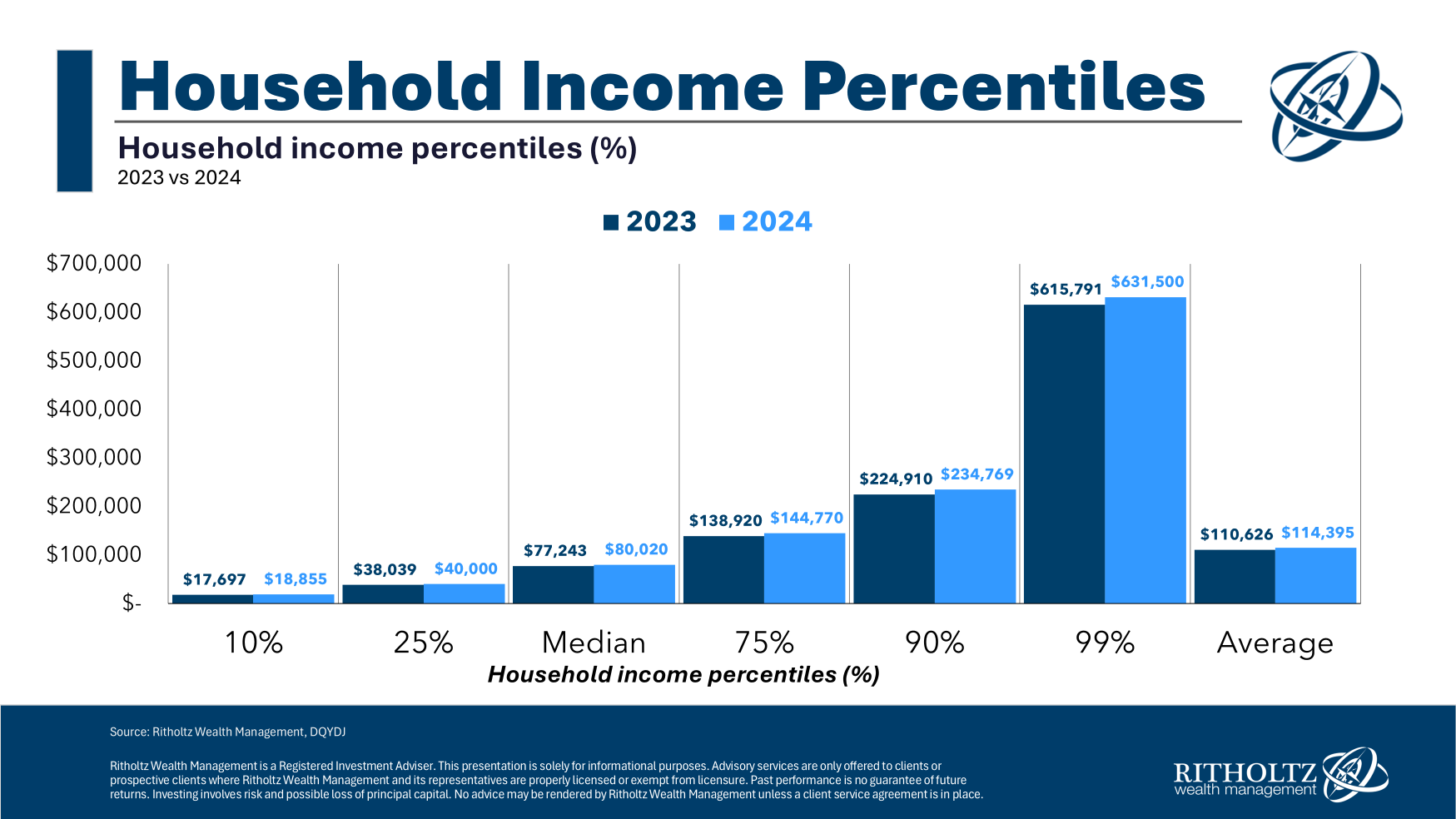
A HENRY typically earns considerably more than the average American household but has not converted enough of that income into investments, retirement accounts, business equity, home equity, or other durable assets. There is no universally accepted salary cutoff. Some definitions focus on households earning well into six figures, while the broader idea applies to anyone whose income has risen much faster than their accumulated wealth.
Research basis: HENRY definitions and U.S. income context.
The distinction matters because income and wealth are not the same thing. Income is money flowing through the front door. Wealth is what remains after spending, taxes, debt, and financial mistakes have escorted most of it out the back.
Fortunately, being a HENRY can be a temporary stage rather than a permanent lifestyle. A strong income provides one enormously valuable resource: financial capacity. The trick is getting more of that capacity working for your future instead of merely upgrading the present.
What Does High Earner Not Rich Yet Mean?
The phrase describes professionals and households with strong earnings but comparatively modest accumulated wealth. Doctors finishing lengthy training, attorneys carrying student loans, technology workers in expensive cities, executives supporting families, entrepreneurs reinvesting in businesses, and younger professionals who recently received large salary increases can all fit the description.
Consider two hypothetical households.
Household A earns $120,000 and consistently invests $25,000 per year while keeping fixed expenses controlled. Household B earns $300,000 but spends nearly everything after taxes on housing, cars, travel, tuition, subscriptions, restaurants, and debt payments.
Which household looks richer?
Probably Household B.
Which one may eventually become wealthier?
Quite possibly Household A.
That is the HENRY paradox. A high salary can create the appearance of wealth long before it creates actual financial independence.
Why High Earners Can Still Feel Broke
1. Lifestyle Creep Arrives Wearing Expensive Shoes
One of the biggest enemies of wealth building is lifestyle inflation. Your salary increases, so the apartment becomes a house. The reliable car becomes a luxury SUV. Weekend takeout turns into restaurant reservations. Economy becomes premium economy, then business class starts whispering your name.
None of those purchases is automatically irresponsible. The problem starts when every increase in income produces an almost equal increase in spending.
Financial institutions including Fidelity, Schwab, and Morningstar regularly warn about lifestyle creep because money that could increase savings and investment contributions can quietly become permanent monthly obligations instead.
Research basis: lifestyle inflation and saving after raises.
A $30,000 raise does surprisingly little for long-term wealth if $27,000 of new annual spending immediately shows up to greet it.
2. High-Cost Cities Consume High Salaries
A six-figure income stretches very differently in Manhattan, San Francisco, Boston, Los Angeles, or Washington, D.C. than it does in a lower-cost region.
Housing is often the heavyweight champion of the monthly budget. Add childcare, transportation, insurance, utilities, healthcare, dining, and local taxes, and an income that sounds spectacular nationally may feel considerably more ordinary locally.
Bureau of Labor Statistics expenditure data illustrates how dramatically household costs vary across metropolitan areas, which helps explain why salary alone provides an incomplete picture of financial comfort.
Research basis: U.S. household expenditure patterns.
3. Student Loans Delay Wealth Building
Many high-income professions require expensive education. Physicians, dentists, lawyers, MBAs, and other professionals can enter their prime earning years carrying substantial student debt.
Someone earning $250,000 at age 32 may therefore have less net worth than someone earning half that amount who began investing at 22 with little debt.
That does not mean advanced education was a financial mistake. It simply means the balance sheet needs time to catch up with the income statement.
4. High Earners May Become Overconfident
A large paycheck can create a dangerous assumption: I can always earn more later.
Maybe. But careers can change. Bonuses disappear. Companies restructure. Health problems happen. Industries evolve. Businesses fail. Burnout is also capable of turning a prestigious career into something you suddenly want to escape before your next Monday morning meeting.
A HENRY who depends entirely on future income is financially different from someone whose assets can increasingly support the lifestyle.
Income Rich vs. Asset Rich
The most useful question is not, “How much do I make?” It is:
How much of what I make becomes mine permanently?
Your net worth is roughly:
Assets − Liabilities = Net Worth
Assets may include cash, retirement accounts, taxable investments, business ownership, and home equity. Liabilities include mortgages, student loans, credit cards, personal loans, and other debts.
U.S. Census research on household wealth demonstrates the importance of accumulated assets such as home equity when evaluating financial position. Salary is useful, but a balance sheet reveals much more about long-term financial strength.
Research basis: U.S. household wealth and home equity.
A person earning $400,000 with $450,000 of debt and $40,000 invested may be financially less secure than a household earning $150,000 with a paid-down mortgage and $700,000 invested.
The goal for a High Earner Not Rich Yet is therefore relatively simple to describe, even if executing it takes years: convert income into productive assets faster than lifestyle expenses expand.
How to Stop Being a HENRY
Know Where the Money Actually Goes
High earners sometimes believe budgeting is something people do when money is tight. In reality, the more money flowing through a household, the easier it can become for large amounts to disappear unnoticed.
You do not need to account for every latte like a forensic accountant investigating a coffee-related felony.
Instead, identify the categories that actually matter:
- Housing
- Transportation
- Childcare and education
- Debt payments
- Travel
- Dining and entertainment
- Insurance
- Investing
- Retirement contributions
The Consumer Financial Protection Bureau emphasizes understanding cash flow because realistic spending information makes it easier to plan savings and debt reduction.
Research basis: budgeting and financial well-being.
Build an Emergency Reserve
A strong income does not eliminate the need for emergency savings. In some cases, high earners need larger reserves because their lifestyles involve larger fixed commitments.
A household carrying an expensive mortgage, private-school bills, two vehicle payments, and significant insurance premiums cannot instantly reduce expenses to zero after a job loss.
A commonly discussed target is several months of essential living expenses, adjusted for job stability, household structure, income volatility, and other circumstances. CFPB and Vanguard guidance both emphasize maintaining accessible reserves for unexpected expenses or income interruptions.
Research basis: emergency savings.
The Federal Reserve’s 2025 household survey, released in 2026, also found that 63% of adults said they could cover a hypothetical $400 emergency using cash or its equivalent, illustrating why financial resilience cannot simply be assumed from appearances.
Research basis: Federal Reserve household financial resilience data.
Attack Expensive Debt
High-interest consumer debt deserves special attention because interest charges compete directly with wealth accumulation.
If investments are growing on one side of the balance sheet while expensive credit-card balances are compounding on the other, your financial life resembles running up an escalator that is headed down.
Prioritize debt according to interest rate, tax treatment, liquidity needs, and personal circumstances. The strategy does not need to be emotionally dramatic. It needs to be mathematically useful and sustainable.
Use Tax-Advantaged Accounts
High earners have a powerful incentive to understand workplace retirement plans and other tax-advantaged opportunities available to them.
For 2026, the IRS raised the employee elective-deferral limit for many 401(k), 403(b), and governmental 457 plans to $24,500. Additional catch-up provisions may apply depending on age and plan type.
Research basis: official 2026 retirement plan limits.
Contribution rules, income restrictions, employer plans, and tax circumstances can become complicated for high earners, so personalized advice from a qualified tax or financial professional can be valuable.
Invest the Raise Before You Learn to Spend It
One of the most effective ways to prevent lifestyle creep is increasing automated savings whenever income rises.
Suppose you receive an additional $2,000 per month after taxes. You might automatically direct $1,200 toward investments or financial goals and keep $800 for lifestyle improvements.
You still enjoy the raise. Your future self also gets a raise.
This approach is psychologically easier than allowing the full increase to become spending and later attempting to cut your lifestyle back down.
Diversify Instead of Hunting for a Financial Miracle
High earners are not automatically expert investors. Success in medicine, technology, sales, law, or entrepreneurship does not magically include a complimentary degree in portfolio management.
Investor.gov emphasizes diversification and asset allocation as core investing concepts. Diversifying cannot eliminate market risk, but spreading assets can reduce dependence on the success of a single investment.
Research basis: diversification and asset allocation.
That is particularly relevant when a large percentage of someone’s wealth consists of employer stock. Your salary and investment portfolio already depend on the same company; concentrating even more money there can amplify risk.
The Mathematics of Turning Income Into Wealth
Imagine a 35-year-old professional earning $250,000 annually who decides to invest $50,000 each year.
Ignoring taxes and assuming a hypothetical long-term average return of 7%, investing $50,000 at the end of every year for 20 years would grow to roughly $2 million. Actual investment returns are unpredictable, of course, and markets do not provide smooth annual returns.
The important concept is not the precise projection. It is that consistent contributions plus compounding can eventually transform employment income into investment wealth.
The SEC describes compound interest as earning returns on both principal and accumulated returns. Time makes that process especially powerful.
Research basis: compound interest concepts.
A high earner has an additional advantage: the ability to contribute meaningful amounts early enough for compounding to matter.
Watch Your Fixed Costs More Than Your Coffee
Personal finance discussions sometimes become strangely obsessed with tiny purchases.
Could you save money by making coffee at home? Sure.
Will a $5 coffee destroy a $300,000 household income? Probably not.
For HENRY households, the larger opportunities usually live inside larger decisions:
- A house requiring $3,000 more per month than necessary
- Two luxury vehicle payments
- Frequent premium travel financed without a dedicated budget
- Expensive recurring memberships
- Private education decisions
- Consumer debt carrying high interest
Cutting a $6 purchase produces $6.
Changing a recurring $2,000 monthly commitment produces $24,000 per year.
Big financial decisions deserve big financial attention.
What Does “Rich” Actually Mean?
Another problem with being a High Earner Not Rich Yet is that the finish line keeps moving.
At $80,000, $150,000 sounds rich.
At $150,000, $300,000 sounds rich.
At $300,000, you meet somebody earning $800,000 who owns three companies and suddenly wonder whether you should be eating instant noodles.
Comparison is a remarkably efficient machine for manufacturing financial dissatisfaction.
A better definition of wealth focuses on financial flexibility. Can you survive an unexpected expense? Can you leave a terrible job? Can you take time away from work? Are retirement assets growing? Is debt declining? Could investment income eventually support meaningful portions of your lifestyle?
Those questions measure financial independence more effectively than the logo on your car.
Experiences Related to Being High Earner Not Rich Yet
The First Big Paycheck Feels Like Financial Freedom
A common HENRY experience begins with a career breakthrough. After years of school, junior positions, long hours, or business uncertainty, income suddenly jumps.
Imagine going from $75,000 to $150,000. For the first few months, your checking account seems enormous. Purchases that once required planning suddenly look trivial.
The natural reaction is often, “I worked hard for this. I should finally enjoy it.”
That is perfectly reasonable.
Then enjoyment quietly develops a monthly payment schedule.
A better apartment adds $1,500. The new car adds $900. Restaurants add $700. Travel averages another $1,000. Suddenly the extra salary has employees, and every dollar has already been assigned a job before payday arrives.
The $200,000 Salary That Somehow Disappears
Another familiar experience is looking at annual income and wondering where it went.
A couple might earn $230,000 combined and genuinely avoid obviously reckless spending. Yet after taxes, retirement contributions, mortgage payments, daycare, insurance, groceries, student loans, home repairs, vacations, and miscellaneous family expenses, cash accumulation can remain frustratingly slow.
This is where guilt is less useful than analysis.
The household should examine whether expensive years are temporarydaycare and student loans, for exampleor whether lifestyle costs will continue indefinitely.
Temporary expenses create future opportunities. When daycare ends or debt disappears, redirecting that money immediately toward investments can change the trajectory dramatically.
The Bonus Trap
Variable compensation creates another classic HENRY experience.
A professional receives a $40,000 bonus and immediately begins mentally spending $40,000.
Unfortunately, taxes have opinions.
By the time the money reaches the bank, several planned purchases may already exceed the amount actually received.
A healthier system is deciding in advance how windfalls will be divided. For example, part could go to long-term investing, part toward debt or another financial goal, and part toward guilt-free spending.
The exact percentages matter less than establishing the rule before the money arrives wearing a tiny sign saying, “Buy something ridiculous.”
The Moment Net Worth Finally Starts Moving
The encouraging experience comes when high earners stop measuring success by income and begin measuring annual changes in net worth.
Imagine starting a year with $180,000 in investments and $90,000 in debt. Twelve months later, investments reach $240,000 while debt drops to $60,000.
The lifestyle may look almost identical from the outside, yet net worth has improved substantially.
Repeat that process for several years and something important changes. Investment growth becomes noticeable. Debt payments disappear. Raises increase contributions instead of consumption. Financial emergencies become inconveniences rather than crises.
The HENRY stage begins fading.
The Most Valuable Upgrade Is Optionality
Eventually, many former HENRYs discover that the best thing money buys is not necessarily a larger house or another luxury product.
It is options.
Enough savings can allow you to reject a terrible job offer. Enough investments can make a career break realistic. Low debt can make entrepreneurship less frightening. A healthy balance sheet can make layoffs annoying rather than catastrophic.
That is when a high income begins producing something more meaningful than expensive possessions: control over your time.
Conclusion: Make the High Income Count
Being a High Earner Not Rich Yet is not necessarily a financial failure. For many professionals, it is simply the stage between developing substantial earning power and accumulating substantial assets.
The danger is remaining there indefinitely.
If every raise creates another expense, every bonus funds another upgrade, and every high-income year ends without meaningful growth in net worth, even an extraordinary salary can produce surprisingly ordinary financial security.
The solution does not require living like a college student forever. Build adequate cash reserves. Control expensive debt. Keep major fixed expenses reasonable. Take advantage of appropriate tax-advantaged accounts. Automate investing. Diversify thoughtfully. Increase savings when income increases. And, most importantly, track whether your net worth is actually moving forward.
Your paycheck tells you what your labor is worth today. Your assets determine how much freedom that labor may purchase tomorrow.
Note: This article provides general educational information rather than individualized investment, tax, or legal advice. Financial decisions should reflect your income, goals, debts, tax circumstances, risk tolerance, and professional guidance when appropriate.