When people hear “smallest country,” they often picture a place that could fit inside a large American city. That is sometimes true, but this ranking is about population, not land area. A country can have mountains, forests, hundreds of islands, and enough ocean territory to make a mapmaker request overtimeyet still have fewer residents than a midsize suburb.
The smallest countries in the world by population include European microstates, remote Pacific republics, Caribbean island nations, and several lightly populated countries in Africa and South America. Some are wealthy financial centers. Others depend heavily on tourism, fishing, remittances, natural resources, or international assistance.
This list uses approximate 2025 midyear population estimates and counts widely recognized sovereign states. Dependencies and overseas territories are excluded, so places such as Greenland, Bermuda, the Cayman Islands, and the Faroe Islands do not appear. Population estimates are not permanent tattoos; censuses, migration, births, deaths, and statistical revisions can move countries slightly up or down the ranking.
The 20 Least Populated Countries in the World
The first group contains the true population featherweights. Most are microstates or island nations, and several have fewer residents than a single professional football stadium can hold.
-
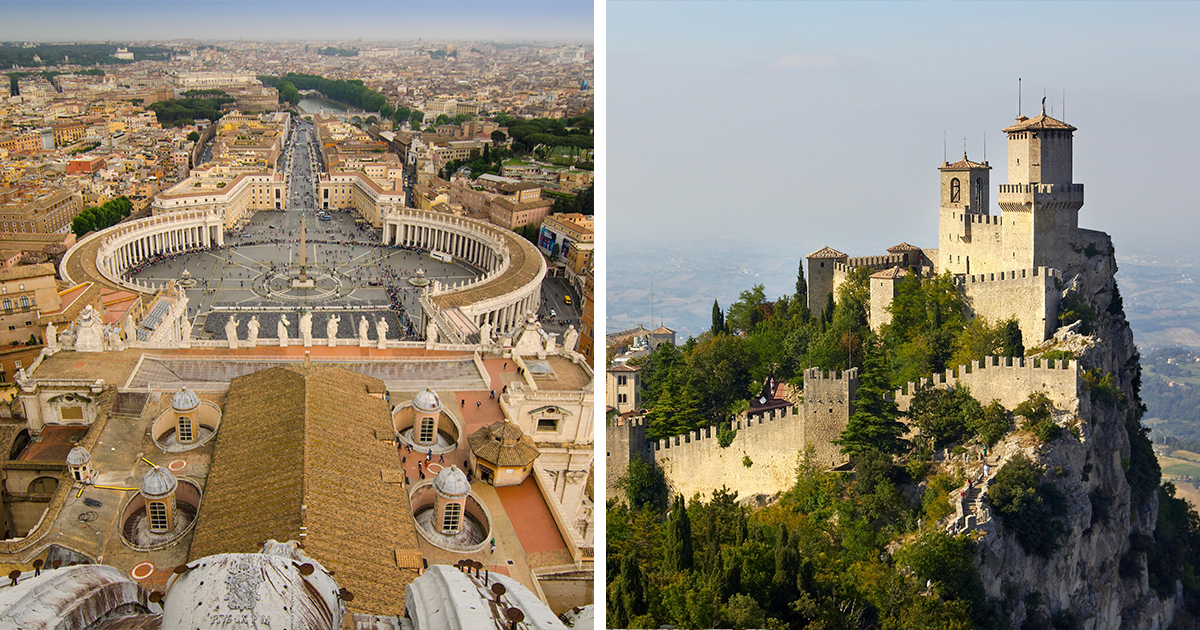
Vatican City About 501 People
Vatican City is the world’s least populated sovereign country and its smallest by land area. Citizenship is usually connected to service for the Holy See rather than simply being born there.
-
Tuvalu About 9,492 People
Tuvalu consists of nine low-lying Pacific islands. Fishing licenses, foreign assistance, remittances, and revenue from its famous “.tv” internet domain support its compact economy.
-
Nauru About 12,025 People
Nauru is a tiny Pacific republic once enriched by phosphate mining. It has no officially designated capital, although most government offices are located in Yaren District.
-
Palau About 17,663 People
Palau includes hundreds of islands but only a small permanent population. Its brilliant lagoons, reefs, and Rock Islands make tourism an essential economic engine.
-
San Marino About 33,572 People
Surrounded entirely by Italy, San Marino claims to be the world’s oldest surviving sovereign republic. Its medieval towers provide scenery that looks suspiciously designed for postcards.
-
Marshall Islands About 36,282 People
This Pacific republic comprises coral atolls spread across an enormous ocean area. Emigration, especially under its special relationship with the United States, has reduced the resident population.
-
Monaco About 38,341 People
Monaco packs luxury apartments, yachts, casinos, and a Formula One circuit into approximately two square kilometers. It is tiny, glamorous, and not especially friendly to modest real-estate budgets.
-
Liechtenstein About 40,128 People
Located between Switzerland and Austria, Liechtenstein combines Alpine landscapes with banking, manufacturing, and specialized industries. It is also one of the world’s two doubly landlocked countries.
-
Saint Kitts and Nevis About 46,922 People
This two-island Caribbean federation is the smallest sovereign state in the Western Hemisphere by both population and area. Tourism replaced sugar as a leading economic activity.
-
Dominica About 65,871 People
Dominica is known as the Caribbean’s “Nature Island” because of its rainforests, hot springs, waterfalls, and volcanic terrain. It should not be confused with the Dominican Republic.
-
Andorra About 82,904 People
Tucked between France and Spain in the Pyrenees, Andorra attracts shoppers, hikers, and skiers. Tourism and retail activity help this mountainous microstate perform above its population weight.
-
Antigua and Barbuda About 94,209 People
This Caribbean nation is famous for beaches, sailing, and resort tourism. Barbuda is much less densely populated than Antigua and suffered extensive damage from Hurricane Irma in 2017.
-
Saint Vincent and the Grenadines About 99,924 People
The country includes the main island of Saint Vincent and a chain of smaller Grenadine islands. Sailing, agriculture, tourism, and regional trade all contribute to its economy.
-
Tonga About 103,742 People
Tonga is a Polynesian kingdom made up of more than 170 islands. Its population is supported by agriculture, tourism, fishing, and remittances from Tongans living overseas.
-
Federated States of Micronesia About 113,683 People
Spread across the western Pacific, Micronesia consists of four states and hundreds of islands. Its land area is small, but its maritime territory is impressively enormous.
-
Grenada About 117,303 People
Nicknamed the “Spice Island,” Grenada produces nutmeg, cinnamon, cloves, and other crops. Tourism also plays a major role in this compact Caribbean economy.
-
Seychelles About 132,779 People
Seychelles is an Indian Ocean archipelago celebrated for granite beaches, marine biodiversity, and high-end tourism. Most residents live on the island of Mahé.
-
Kiribati About 136,488 People
Kiribati’s islands are scattered across a vast section of the Pacific and span all four hemispheres. Distance, transportation costs, and rising seas create serious development challenges.
-
Saint Lucia About 180,149 People
Saint Lucia is recognized for the dramatic Pitons, volcanic beaches, rainforest trails, and a strong tourism sector. Its mountainous landscape makes even short drives surprisingly adventurous.
-
Samoa About 219,306 People
Samoa combines Polynesian traditions with a modern island economy based on services, agriculture, tourism, and remittances. Most residents live on the islands of Upolu and Savai‘i.
Small Countries With Populations Between 200,000 and One Million
These countries remain tiny by global population standards, although many possess large marine zones, distinct languages, extensive histories, and strong cultural identities.
-
São Tomé and Príncipe About 240,254 People
Located in the Gulf of Guinea, this tropical African island country produces cocoa and is developing tourism around its forests, beaches, and volcanic scenery.
-
Barbados About 282,623 People
Barbados has a relatively dense population for its size and a service-oriented economy. Tourism, international business, culture, and cricket give it a large global profile.
-
Vanuatu About 335,169 People
Vanuatu contains dozens of inhabited Pacific islands and remarkable linguistic diversity. Tourism and agriculture are important, while cyclones and volcanic hazards remain recurring concerns.
-
Iceland About 398,266 People
Iceland is geographically substantial compared with most countries on this list, but much of its volcanic interior is sparsely inhabited. Most residents live near Reykjavík.
-
The Bahamas About 403,033 People
The Bahamas consists of hundreds of islands and cays, although only a fraction are inhabited. Tourism and financial services dominate its economy.
-
Belize About 422,924 People
Belize is the least populated independent country in mainland Central America. Its barrier reef, Maya sites, forests, and English-speaking heritage distinguish it from its neighbors.
-
Brunei About 466,330 People
Brunei is a small, oil-rich sultanate on the island of Borneo. Hydrocarbon revenue supports high living standards and extensive public services.
-
Cabo Verde About 527,326 People
This Atlantic island nation lies west of Senegal. Music, tourism, remittances, maritime services, and a large overseas diaspora are central to its identity.
-
Maldives About 529,676 People
The Maldives is composed of low-lying coral islands in the Indian Ocean. Tourism drives the economy, while sea-level rise makes climate adaptation an urgent national priority.
-
Malta About 545,405 People
Malta is small in land area but densely populated. Its Mediterranean location, historic ports, tourism, financial services, technology, and film industry support a diverse economy.
-
Montenegro About 632,729 People
Montenegro combines Adriatic beaches with rugged mountains and medieval towns. Tourism is especially important along the Bay of Kotor and the country’s scenic coastline.
-
Suriname About 639,850 People
Suriname is South America’s smallest sovereign country by population. Most residents live near the Atlantic coast, while tropical forest covers much of the interior.
-
Luxembourg About 680,453 People
Luxembourg is one of Europe’s smallest countries but an influential financial and institutional center. A large portion of its workforce commutes from neighboring countries.
-
Bhutan About 796,682 People
Bhutan is a mountainous Himalayan kingdom known for environmental protection and its Gross National Happiness philosophy. Development is managed cautiously to protect culture and landscapes.
-
Guyana About 835,986 People
Guyana has a small population distributed mainly along its Atlantic coast. Major offshore oil discoveries have rapidly transformed its economic outlook.
-
Solomon Islands About 838,645 People
The Solomon Islands includes hundreds of Pacific islands with residents spread across many communities. Logging, fishing, agriculture, aid, and regional trade support the economy.
-
Comoros About 882,847 People
Comoros lies between Madagascar and mainland Africa. Its volcanic islands produce vanilla, cloves, and ylang-ylang, an ingredient widely used in perfumes.
-
Fiji About 933,154 People
Fiji is a regional hub for transportation, diplomacy, education, and tourism in the South Pacific. Most people live on the two largest islands, Viti Levu and Vanua Levu.
The Remaining 22 Smallest Countries by Population
Once the ranking crosses one million residents, the countries may no longer feel microscopic. Globally, however, they remain smaller than many major metropolitan areas.
-
Djibouti About 1.18 Million People
Djibouti occupies a strategic location near the Red Sea and Gulf of Aden. Ports, logistics, foreign military bases, and regional trade shape its economy.
-
Eswatini About 1.26 Million People
Eswatini is a landlocked monarchy between South Africa and Mozambique. Manufacturing, agriculture, forestry, and regional commerce provide much of its economic activity.
-
Mauritius About 1.27 Million People
Mauritius developed from a sugar-dependent island into a diversified economy involving tourism, finance, textiles, technology, and business services.
-
Estonia About 1.34 Million People
Estonia is internationally known for digital government and technology entrepreneurship. Its modest population has not stopped it from becoming one of Europe’s most connected societies.
-
Cyprus About 1.37 Million People
Cyprus sits in the eastern Mediterranean and has long served as a crossroads between Europe, Asia, and Africa. Tourism and services are important economic sectors.
-
Timor-Leste About 1.42 Million People
Timor-Leste became fully independent in 2002. Petroleum revenue, agriculture, public investment, and efforts to diversify the economy influence its development.
-
Trinidad and Tobago About 1.51 Million People
This Caribbean republic has a major energy industry and is famous for Carnival, calypso, soca, and steelpan music. Tobago is smaller and more tourism-oriented.
-
Bahrain About 1.64 Million People
Bahrain is an island kingdom in the Persian Gulf. Finance, oil refining, aluminum production, logistics, and services support its densely urbanized economy.
-
North Macedonia About 1.81 Million People
North Macedonia is a landlocked Balkan country with mountains, lakes, Ottoman-era architecture, and ancient archaeological sites. Skopje is its capital and largest city.
-
Latvia About 1.85 Million People
Latvia has experienced long-term population decline associated with low birth rates, aging, and emigration. A large share of its residents lives around Riga.
-
Equatorial Guinea About 1.94 Million People
Equatorial Guinea consists of a mainland region and several islands. Petroleum transformed its economy, although wealth and development outcomes remain unevenly distributed.
-
Slovenia About 2.12 Million People
Slovenia combines Alpine mountains, forests, caves, vineyards, and a short Adriatic coastline. Its central European location supports manufacturing, trade, and tourism.
-
Guinea-Bissau About 2.25 Million People
This West African country includes mainland territory and the Bijagós Archipelago. Cashew nuts dominate agricultural exports, leaving the economy vulnerable to changing prices.
-
Lesotho About 2.36 Million People
Lesotho is completely surrounded by South Africa and is sometimes called the “Kingdom in the Sky” because its entire territory lies at high elevation.
-
Botswana About 2.56 Million People
Botswana is larger than France by land area but has a very small population. The Kalahari Desert covers much of the country, while diamonds support the economy.
-
Gabon About 2.59 Million People
Gabon is heavily forested and relatively urbanized. Oil, minerals, timber, and biodiversity conservation all play significant roles in national policy.
-
Albania About 2.77 Million People
Albania features Adriatic and Ionian beaches, rugged mountains, and expanding tourism. Emigration has strongly influenced its population size and demographic structure.
-
The Gambia About 2.82 Million People
The Gambia is mainland Africa’s smallest country by area and follows the Gambia River inland from the Atlantic. Senegal surrounds nearly all of it.
-
Lithuania About 2.83 Million People
Lithuania is the largest of the three Baltic states by population. Like Latvia, it has experienced demographic pressure from aging, low fertility, and past emigration.
-
Jamaica About 2.84 Million People
Jamaica’s population is modest, but its global cultural influence is enormous. Reggae, dancehall, athletics, cuisine, and Rastafari have traveled far beyond the island.
-
Armenia About 2.95 Million People
Armenia is a landlocked country in the South Caucasus with an ancient cultural heritage and a large global diaspora. Yerevan contains a substantial share of the population.
-
Moldova About 3.00 Million People
Moldova completes this list of the 60 smallest countries by population. Agriculture, wine production, remittances, migration, and economic ties with Europe shape modern life.
Why Do So Many Small Countries Appear in the Caribbean and Pacific?
Geography explains much of the pattern. Many of the least populated countries are isolated island states with limited land, scarce freshwater, small domestic markets, and expensive transportation links. A remote nation cannot simply add a six-lane interstate and connect itself to the neighboring continent. The neighboring continent may be several thousand miles away.
Small populations can make government more accessible, communities more connected, and public programs easier to test on a national scale. However, they also limit the number of specialized workers, taxpayers, doctors, engineers, and customers available within the country.
Many small island economies depend on a narrow group of industries, especially tourism, fishing, financial services, agriculture, remittances, and foreign assistance. A hurricane, global recession, pandemic, commodity-price crash, or airline disruption can therefore affect an unusually large share of national income.
Small Population Does Not Mean Small Influence
Population rankings reveal little about cultural or political importance. Jamaica transformed global music. Iceland became influential in renewable energy and literature. Estonia built a reputation for digital government. Luxembourg plays a significant role in European finance and institutions, while Qatar has developed major influence in energy, aviation, media, and diplomacy.
Land Size and Population Size Are Different Measures
Botswana, Guyana, Suriname, Iceland, and Namibia demonstrate why population should not be confused with physical area. These countries have extensive territory but comparatively few residents because of deserts, forests, mountains, climate, or settlement patterns.
Practical Experiences When Exploring the World’s Smallest Countries
Researching or planning travel to a small country feels different from organizing a trip to a large nation. The first surprise is that “small” does not always mean “easy.” Monaco can be crossed quickly, but reaching Tuvalu, Palau, or the Marshall Islands may require limited flight schedules, long connections, and careful planning. Missing one flight can turn a tidy itinerary into an accidental extended vacation.
Transportation within small island nations can also be more complicated than the map suggests. A country may have very little land yet be scattered across an ocean area larger than several U.S. states combined. Boats, domestic flights, weather conditions, and cargo schedules may matter more than road distance. A location that appears next door on a map can still require hours of travel.
Another lesson is that capital cities are not always giant urban centers. In microstates and island nations, the capital may feel like a quiet town where government buildings, shops, homes, and community spaces share the same few streets. Travelers accustomed to anonymous megacities may quickly notice that everyone seems to know everyoneor at least knows someone’s cousin.
Limited scale can create practical constraints. Hotel inventories may be small, rental vehicles can sell out, imported products may cost more, and stores may close earlier than visitors expect. Reliable internet, credit-card acceptance, health care, and transportation options should be checked before arrival instead of being treated as automatic.
Respectful behavior becomes especially important in close-knit communities. A careless visitor cannot disappear into a crowd as easily as in New York, London, or Tokyo. Local dress expectations, rules concerning sacred sites, photography customs, reef protection, and village protocols should be taken seriously. In many places, asking permission produces a warmer welcome than pointing a camera first and developing manners later.
Small countries also make demographic change easier to see. When several hundred young adults leave for education or employment, the effect can be noticeable in schools, businesses, public services, and family structures. Conversely, the arrival of foreign workers can rapidly alter housing demand and population composition in financial centers or energy-producing states.
Climate risk becomes tangible rather than abstract in low-lying nations. Coastal erosion, saltwater intrusion, storm damage, freshwater limitations, and high-tide flooding can affect everyday decisions. Residents are not discussing a distant documentary; they are deciding where to build homes, roads, schools, and power systems.
The most valuable experience is realizing that population is only one measurement. A country with 40,000 residents still has political debates, regional differences, traditions, entrepreneurs, artists, and complicated history. Small nations are not miniature theme parks. They are full societies operating at a scale that makes both their strengths and vulnerabilities unusually visible.
Conclusion
The 60 smallest countries in the world by population show how remarkably varied sovereign states can be. Some occupy a single urban enclave, while others control scattered islands or broad, lightly inhabited landscapes. Some are global financial centers; others are agricultural, tourism-dependent, resource-rich, or highly vulnerable to environmental shocks.
What unites them is not one culture, climate, or development model. It is simply that their national populations are smaller than those of many cities. Their influence, identity, and importance, however, cannot be measured by counting residents alone. Sometimes the smallest voices travel surprisingly farespecially when they have good music, dramatic scenery, smart diplomacy, or a very marketable internet domain.