Christmas crafts for kids are proof that holiday magic does not require a designer budget, a spotless dining table, or a parent who has “just one quick idea” and then accidentally builds a gingerbread village with working streetlights. In 2025, the best easy Christmas crafts are simple, affordable, safe, colorful, and flexible enough for toddlers, preschoolers, grade-schoolers, tweens, and the occasional adult who still believes glitter is a personality trait.
This guide gathers 60 easy Christmas crafts for kids to make at home using paper plates, craft sticks, cotton balls, yarn, pipe cleaners, cardboard tubes, washable paint, felt, buttons, pom-poms, recycled boxes, paper bags, and other supplies you probably already own. The goal is not perfection. The goal is laughter, creativity, sticky fingers, handmade decorations, and tiny artists proudly announcing, “I made this!” before placing a googly-eyed reindeer directly in the center of your carefully styled mantel.
Whether you need Christmas ornament crafts, DIY holiday cards, classroom-friendly projects, homemade gifts, winter crafts, or no-stress activities for a snowy afternoon, these ideas are designed to be practical, cheerful, and parent-approved. Adult supervision is still important, especially with scissors, hot glue, small beads, buttons, bells, and anything that looks suspiciously delicious to children under three.
Why Christmas Crafts Are Great for Kids
Holiday crafting is more than “keeping the kids busy while cookies cool.” When children cut paper, squeeze glue, string beads, mold clay, fold tissue paper, paint cardboard, and arrange decorations, they practice fine motor skills, hand-eye coordination, problem-solving, patience, planning, and creative confidence. Even better, crafts give kids a screen-free way to participate in family traditions.
For parents, Christmas crafts also solve a very real seasonal problem: the house needs decorating, relatives need gifts, and children need something to do besides asking whether Santa can track Amazon packages. Handmade Christmas crafts check all three boxes. They decorate the home, become meaningful keepsakes, and give kids a joyful role in the holiday season.
Quick Safety Tips Before You Start
Before the glitter parade begins, set up a kid-friendly craft station. Cover the table with newspaper, kraft paper, or an old tablecloth. Use washable supplies when possible. Keep sharp scissors, craft knives, hot glue guns, small beads, bells, buttons, and tiny pom-poms away from toddlers and children who still explore the world by tasting it. Choose non-toxic art materials labeled for children, and match each project to your child’s age and ability.
For younger kids, focus on large pieces, stickers, cotton balls, crayons, washable markers, glue sticks, and paper shapes. Older kids can try more detailed projects like yarn wrapping, beaded ornaments, paper quilling, hand sewing, or salt dough decorating. Remember: the safest craft is one where the adult prepares risky steps ahead of time and lets the child enjoy the creative part.
60 Easy Christmas Crafts for Kids to Make at Home
Paper Christmas Crafts
- Paper plate Santa face: Use a paper plate, cotton balls, red construction paper, and crayons to make Santa’s beard, hat, and cheerful face.
- Folded paper Christmas trees: Fold green paper into triangles, stack them, and decorate with stickers, sequins, or hole-punched paper ornaments.
- Paper chain garland: Cut strips of red, green, white, and gold paper, then loop them together for classic Christmas décor.
- Handprint wreath: Trace your child’s hand on green paper several times, cut out the shapes, and arrange them in a wreath circle.
- Paper snowflakes: Fold white paper, snip simple shapes, and unfold to reveal snowflakes that look fancy even when they are wonderfully lopsided.
- Christmas countdown rings: Make a paper chain with one ring for each day until Christmas, then let kids tear off one ring daily.
- Santa beard countdown: Draw Santa’s face and add numbered circles to his beard. Kids glue on one cotton ball each day.
- Paper candle craft: Roll yellow and red paper into a candle shape and add a tissue-paper flame for a safe, glowing holiday look.
- Christmas tree cone: Roll green cardstock into a cone and let kids decorate it with pom-poms, stickers, yarn, or paper stars.
- Holiday greeting cards: Fold cardstock and decorate with drawings, fingerprints, washi tape, or cut-out Christmas shapes.
Christmas Ornament Crafts for Kids
- Salt dough ornaments: Mix flour, salt, and water, roll the dough, cut festive shapes, bake until dry, then paint and seal.
- Craft stick snowflakes: Glue craft sticks into snowflake shapes and decorate with paint, glitter glue, or stick-on gems.
- Pom-pom ornaments: Fill clear plastic ornaments with colorful pom-poms for a soft, cheerful, mess-light decoration.
- Photo frame ornaments: Glue craft sticks into a frame, add a child’s photo, and finish with ribbon for hanging.
- Button Christmas trees: Stack green buttons on pipe cleaners, add a star bead at the top, and twist into a tiny tree ornament.
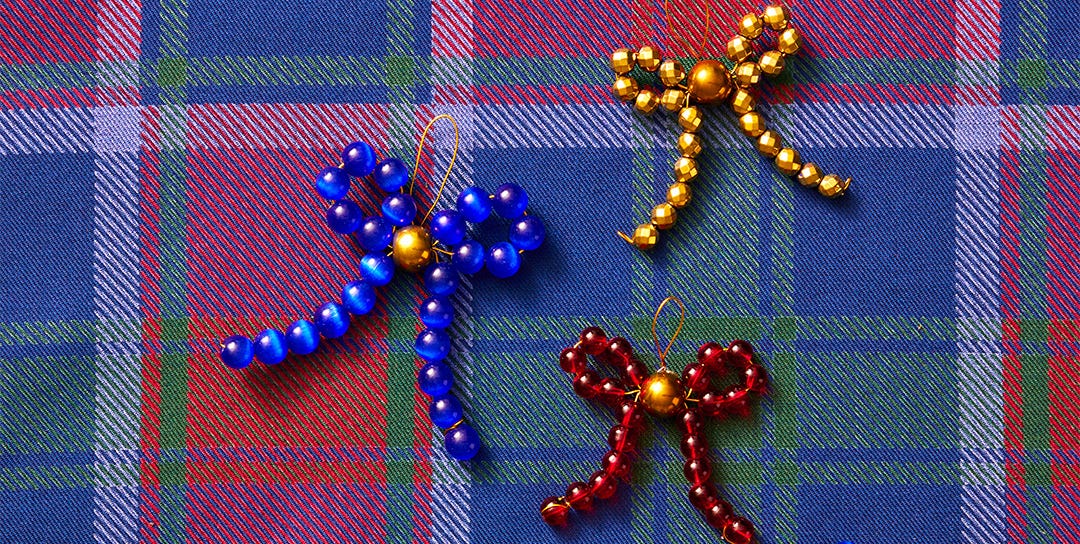
- Beaded candy canes: String red and white beads onto a pipe cleaner and bend it into a candy cane shape.
- Fingerprint light ornaments: Let kids press painted fingerprints along a drawn string to create colorful Christmas lights.
- Wood slice reindeer: Paint a small wood slice brown, add googly eyes, a red pom-pom nose, and pipe cleaner antlers.
- Mini wreath ornaments: Thread green beads onto a pipe cleaner, twist into a circle, and add a red ribbon bow.
- Snowman lid ornament: Paint jar lids white, stack or decorate them as snowmen, and add ribbon for hanging.
Recycled Christmas Crafts
- Cardboard tube reindeer: Paint a toilet paper roll brown, add antlers, eyes, and a red nose. Rudolph has never been so tubular.
- Egg carton bells: Cut egg carton cups, paint them gold or silver, and add yarn loops for pretend bells.
- Cardboard gingerbread house: Turn a small shipping box into a gingerbread house with paint, cotton snow, and paper candy.
- Paper bag reindeer puppet: Use a brown paper lunch bag, traced hand antlers, and a pom-pom nose for a puppet show.
- Milk carton Christmas village: Rinse cartons, cover them with paper, draw windows, and arrange them into a snowy village.
- Magazine collage tree: Cut green scraps from old magazines and glue them into a layered Christmas tree.
- Cardboard tube candles: Paint tubes red or white, add paper flames, and group them for pretend holiday candles.
- Bottle cap ornaments: Paint bottle caps as snowmen, ornaments, or tiny wreaths, then glue them onto cardstock.
- Scrap wrapping paper mosaic: Save gift wrap scraps and let kids create a Christmas tree, star, stocking, or ornament collage.
- Cardboard stocking: Cut stocking shapes from cereal boxes and decorate with yarn, stickers, buttons, or markers.
Winter and Snowman Crafts
- Cotton ball snowman: Glue cotton balls onto a snowman outline and add paper buttons, a scarf, and a carrot nose.
- Snow globe plate craft: Use a paper plate, blue paper, white paint dots, and a child’s photo inside a snowy scene.
- Mitten garland: Cut mitten shapes from paper, decorate each one, and clip them onto yarn with clothespins.
- Marshmallow snow painting: Dip marshmallows in white paint and stamp snowy dots onto blue paper.
- Q-tip snowflakes: Arrange cotton swabs into snowflake patterns and glue them onto dark paper.
- Shaving cream snow art: Mix shaving cream and glue for puffy snow paint that dries with a raised texture.
- Paper cup snowman: Turn white paper cups upside down and decorate them with markers, pom-poms, and paper scarves.
- Winter window suncatcher: Stick tissue paper squares onto contact paper and frame them as snowflakes or ornaments.
- Snowy pinecone trees: Paint pinecones green, dab the tips with white paint, and place them in small clay or paper bases.
- Frozen-inspired crown: Cut snowflake shapes from paper and attach them to a headband for royal winter drama.
Christmas Gift Crafts Kids Can Make
- Handprint tea towel: Use fabric paint to stamp a child’s handprint onto a plain towel for a grandparent-worthy gift.
- Decorated picture frame: Let kids glue buttons, pom-poms, foam shapes, or stickers around a plain frame.
- DIY bookmarks: Cut cardstock strips and decorate them with drawings, ribbons, and holiday messages.
- Painted flower pots: Paint small terracotta pots in Christmas colors and fill them with candy or a tiny plant.
- Homemade gift tags: Cut tags from cardstock and let kids stamp, color, or write names on each one.
- Kindness coupon book: Staple small cards together with gifts like “one hug,” “help set the table,” or “read together.”
- Clay pinch pot: Use air-dry clay to make a tiny bowl for rings, coins, or holiday treasures.
- Painted rock nativity or village: Paint smooth rocks as simple houses, stars, sheep, or holiday characters.
- Thumbprint mug art: Use paint made for ceramics and adult help to create thumbprint lights or reindeer on a mug.
- Memory jar: Decorate a jar and fill it with written holiday memories, jokes, or sweet notes.
Christmas Crafts for Toddlers and Preschoolers
- Sticker Christmas tree: Draw a tree outline and let toddlers fill it with large stickers.
- Do-a-dot ornament page: Use dot markers to decorate printed ornament shapes with bright circles.
- Torn paper candy cane: Let kids tear red and white paper and glue pieces onto a candy cane outline.
- Felt Christmas tree board: Cut a large felt tree and felt ornaments so little kids can decorate again and again.
- Cotton ball Santa hat: Glue cotton balls along the brim and tip of a red paper Santa hat.
- Jingle bell shaker: Put bells inside a sealed plastic container, decorate the outside, and shake along to holiday music.
- Big-shape nativity scene: Use simple paper circles, triangles, and rectangles to build a beginner-friendly scene.
- Paint-in-a-bag Christmas tree: Place paper and paint inside a sealed zip bag so toddlers can squish color without redecorating the dog.
- Giant cardboard ornament: Cut a large ornament shape from cardboard and let kids cover it with crayons and stickers.
- Cookie cutter stamping: Dip Christmas cookie cutters in washable paint and stamp trees, stars, bells, and gingerbread people.
How to Choose the Right Craft by Age
For ages 2 to 3, choose crafts with big shapes, washable crayons, large stickers, dot markers, cotton balls, and glue sticks. The project should be more about exploring textures and colors than following directions. A toddler’s Santa may look like a red potato with a beard, and that is holiday art history in the making.
For ages 4 to 6, kids can handle simple cutting, folding, painting, stamping, and gluing with supervision. They usually enjoy recognizable results, such as snowmen, wreaths, reindeer, stockings, and Christmas trees. This is a great age for paper plate crafts, craft stick ornaments, handprint keepsakes, and cotton ball scenes.
For ages 7 to 10, introduce more steps and choices. Kids can make salt dough ornaments, beaded candy canes, yarn-wrapped wreaths, paper snowflakes, cardboard villages, and handmade gifts. They are old enough to personalize designs, write messages, and understand that “less glue” is not an attack on their artistic freedom.
For tweens, offer projects that feel stylish rather than babyish. Try wood slice ornaments, minimalist paper stars, painted mugs, air-dry clay bowls, garlands, gift tags, yarn trees, or recycled holiday décor. Let them choose a color palette. In 2025, kid crafts do not have to be only red and green; icy blue, soft pink, natural kraft paper, white, gold, and Scandinavian-inspired neutrals all work beautifully.
Budget-Friendly Supplies for Christmas Crafting
You do not need a craft room that looks like a boutique exploded. A strong Christmas craft kit can start with cardstock, construction paper, paper plates, craft sticks, cotton balls, glue sticks, washable paint, child-safe scissors, markers, crayons, pipe cleaners, yarn, pom-poms, ribbon, felt, googly eyes, and recycled cardboard. Add a few seasonal extras like jingle bells, glitter glue, wooden ornaments, and clear plastic baubles if your budget allows.
Recycled materials are especially useful. Cardboard tubes become reindeer, egg cartons become bells, cereal boxes become stockings, gift wrap scraps become mosaics, and shipping boxes become gingerbread houses. This approach saves money, reduces waste, and teaches children that creativity often begins with looking at ordinary things in a new way.
How to Keep Christmas Crafting Fun Instead of Frantic
The secret is preparation. Before inviting kids to the table, cut difficult shapes, pour paint into small trays, place supplies in bowls, and decide where finished crafts will dry. Keep wipes nearby. Create one sample if the project has steps, but avoid demanding that children copy it exactly. A sample is a guide, not a tiny dictator.
Use “process art” thinking whenever possible. Instead of saying, “Your snowman’s buttons are in the wrong place,” ask, “Tell me about your snowman.” Instead of fixing every crooked star, celebrate the imagination behind it. The most memorable Christmas crafts are not the neatest ones. They are the ones with stories.
of Real-Life Experience: What Christmas Crafting With Kids Actually Teaches You
After doing Christmas crafts with kids, you learn a few truths very quickly. First, no child has ever used “just a little glitter.” Glitter is not a craft supply; it is a long-term household resident. You will find it on the table, on the floor, in your hair, on the cat, and somehow inside a sock in March. That said, glitter glue is a wonderful compromise because it gives the sparkle without turning your kitchen into a festive crime scene.
Second, kids care much more about participation than perfection. Adults often imagine the final result before the craft begins. Children usually care about the squish of glue, the sound of paper tearing, the joy of choosing the biggest pom-pom, and the thrill of making Santa’s eyes two completely different sizes. When you step back and let them lead, their personalities show up in the project. One child makes a careful, symmetrical wreath. Another creates a snowman with seven buttons, three scarves, and a backstory involving space travel. Both are excellent.
Third, the best Christmas crafts become family time capsules. A handprint wreath from 2025 is not just green paper. It is proof that your child’s hand used to be that small. A crooked salt dough star is not just an ornament. It is a memory of the afternoon when flour covered the counter, someone sneezed into the dough, and everyone laughed. Handmade decorations gain emotional value because they carry the fingerprints of a real day.
Fourth, crafting teaches patience in a gentle way. Paint has to dry. Glue needs time. Salt dough ornaments cannot be hung immediately. Children slowly learn that some beautiful things happen in steps. This is useful far beyond Christmas. A child who waits for paint to dry is practicing self-control, planning, and delayed gratification, even if they ask “Is it dry yet?” every 14 seconds.
Fifth, holiday crafts can help kids feel useful. Let them make place cards, gift tags, ornaments, garlands, or cards for relatives. Suddenly they are not just watching adults prepare for Christmas; they are helping create it. That sense of contribution matters. A child who hangs their own paper chain or gives Grandma a handmade bookmark feels proud because their work has a real place in the celebration.
Finally, Christmas crafting reminds families to slow down. The season can become a blur of shopping, cooking, decorating, wrapping, traveling, and trying to remember where the tape went. Sitting down with paper, glue, yarn, and paint creates a pause. It invites conversation. It turns an ordinary afternoon into a tradition. And years later, when you pull a slightly bent reindeer ornament from the storage box, you may not remember the mess. You will remember the tiny hands that made it.
Conclusion
These 60 easy Christmas crafts for kids to make at home in 2025 prove that holiday creativity can be simple, affordable, safe, and genuinely meaningful. From paper snowflakes and salt dough ornaments to cardboard gingerbread houses and handmade gifts, each project gives children a chance to build skills, express imagination, and become part of the Christmas magic.
The best advice? Choose crafts that match your child’s age, prepare supplies before you begin, supervise small parts and tools, and let go of perfect results. A lopsided star, a wild-eyed reindeer, or a snowman with purple hair may become the decoration your family loves most. Christmas is not about flawless crafts. It is about making memories that stick around long after the glue dries.