Some cities grow politely. They add a new train station here, a glass office tower there, maybe a coffee shop where a hardware store used to be. Then there are cities that seem to wake up one morning, look in the mirror, and say, “New personality, who dis?”
In only a few decades, certain places have transformed so dramatically that old photographs look like scenes from a different planet. Fishing villages became futuristic skylines. Industrial districts became global finance hubs. Dangerous neighborhoods became urban innovation case studies. Sand, paddy fields, and hillside settlements turned into metros, airports, parks, universities, stadiums, and skyscrapers tall enough to make clouds feel underdressed.
This article explores five cities that changed unrecognizably in only a few decades: Shenzhen, Dubai, Shanghai’s Pudong district, Medellín, and Doha. Their stories are not identical, and they are not all perfect success stories. Rapid urban transformation brings opportunities, but also rising costs, social pressure, environmental questions, and the occasional feeling that city planners drank three espressos and opened a 3D modeling program. Still, these examples show how policy, money, infrastructure, migration, technology, and ambition can reshape the urban world at astonishing speed.
1. Shenzhen, China: From Border Town to Tech Powerhouse
If urban transformation had a world championship, Shenzhen would be standing on the podium waving politely while everyone else checked whether the rules allowed that much growth.
In the late 1970s and early 1980s, Shenzhen was a modest area near Hong Kong, known more for fishing villages, fields, and low-rise settlements than for global innovation. Then China designated it as one of the country’s first Special Economic Zones. That decision changed almost everything. The idea was simple but powerful: create a place where market-oriented reforms, foreign investment, export manufacturing, and experimental economic policies could be tested at full speed.
What followed was not ordinary growth. It was an urban explosion. Factories arrived. Roads expanded. Ports became busier. Migrants came from across China looking for work. Over time, Shenzhen moved beyond its reputation as a manufacturing hub and became one of the world’s most important technology cities.
How Shenzhen changed
The city’s skyline now includes headquarters, research campuses, shopping districts, cultural centers, and residential towers. Companies associated with electronics, telecommunications, drones, software, and advanced manufacturing helped push Shenzhen from “workshop of the world” toward “laboratory of the future.”
What makes Shenzhen especially fascinating is the speed of its identity shift. Many cities industrialize over a century. Shenzhen compressed that process into a few decades, then quickly began upgrading into design, finance, high-tech research, and global logistics. It is a city that looks like someone pressed fast-forward on urban capitalism.
Of course, speed has trade-offs. Housing costs rose. Migrant workers faced pressure. The natural environment was strained. Older neighborhoods disappeared under redevelopment. But as an example of how policy and location can produce radical urban change, Shenzhen remains one of the clearest cases in modern history.
2. Dubai, United Arab Emirates: From Creek-Side Trading Port to Vertical Fantasy
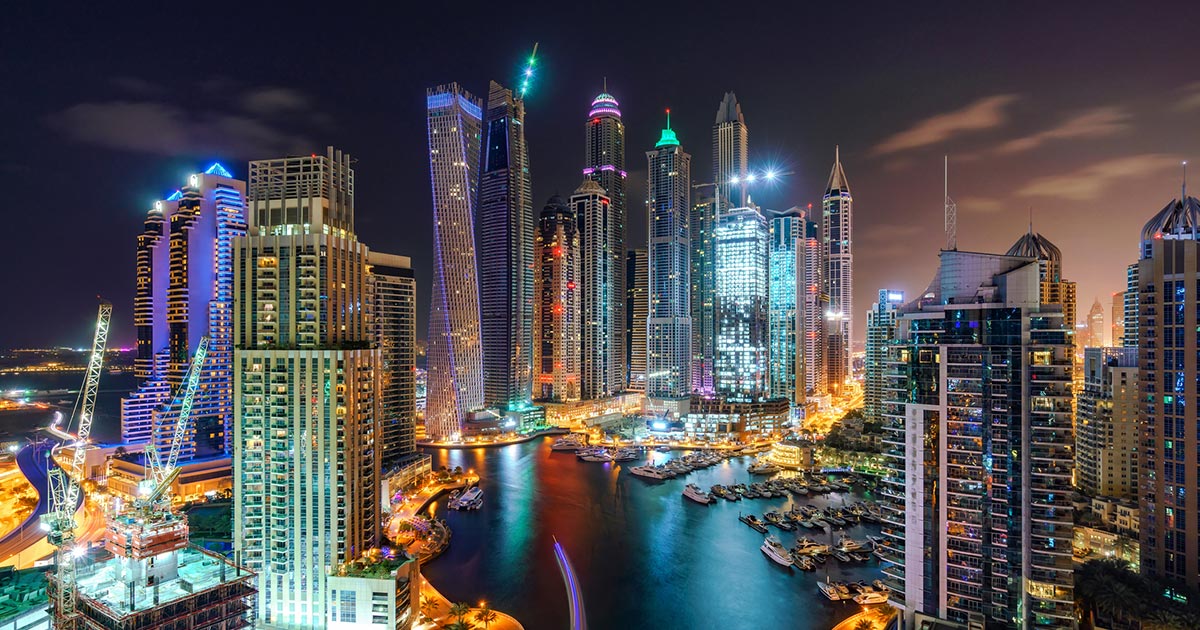
Dubai’s transformation is so visually dramatic that “before and after” photos almost feel unfair. In older images, you see a low-rise trading settlement around Dubai Creek, with boats, sand, modest buildings, and a practical relationship with the desert. In today’s photos, you see a skyline that appears to have been designed by architects who were told, “Please make it taller, shinier, and more visible from space.”
Dubai’s rise was powered by trade, oil revenue, tourism, aviation, real estate, and an aggressive strategy to become a global business and lifestyle hub. The city did not simply build buildings; it built an international brand. Luxury hotels, artificial islands, giant malls, record-breaking towers, and major transportation infrastructure turned Dubai into one of the most recognizable cities on Earth.
What changed Dubai so quickly?
Dubai’s leaders invested heavily in airports, ports, roads, free zones, and tourism infrastructure. The city positioned itself as a bridge between Europe, Asia, and Africa. Emirates airline helped connect Dubai to the world, while business-friendly zones attracted international companies and workers.
The Burj Khalifa, opened in 2010, became the city’s most famous symbol. But Dubai’s real transformation is not just one tower. It is the entire urban system around it: the metro, highways, business districts, artificial waterfronts, entertainment zones, and residential communities that turned desert space into a global cityscape.
Dubai’s population growth tells the story just as clearly as its skyline. By the end of 2024, the emirate’s population was estimated at more than 4.2 million residents, with even higher daytime activity because many workers and visitors enter from surrounding areas. That is a lot of people, cars, elevators, brunch reservations, and air conditioners working overtime.
Yet Dubai also faces serious questions. Can rapid real estate development remain sustainable? How does the city balance luxury branding with affordability? How does a desert metropolis handle heat, water use, and long-term climate risk? Dubai changed unrecognizably, but its next challenge is proving that spectacle can also become resilience.
3. Pudong, Shanghai: From Fields to Financial Futurism
Across the Huangpu River from Shanghai’s historic Bund sits Pudong, one of the most dramatic urban transformations of the late twentieth and early twenty-first centuries. Today, Pudong is famous for the Oriental Pearl Tower, Shanghai Tower, Jin Mao Tower, Shanghai World Financial Center, luxury hotels, banks, elevated roads, and a skyline that looks like a science-fiction film with a very serious banking license.
But not long ago, much of Pudong was known for farmland, warehouses, docks, and lower-density development. The turning point came in 1990, when China announced the development and opening of Pudong New Area. The goal was to make Pudong a center of finance, trade, advanced industry, and international business.
Why Pudong matters
Pudong was not just a construction project. It was a national statement. Shanghai had once been one of Asia’s great commercial centers, and Pudong helped restore the city’s role as a global financial and economic hub. Special development zones, new infrastructure, foreign investment, and landmark architecture gave Pudong a new identity within a single generation.
The Lujiazui financial district became the star of the show. Its towers rose across from the colonial-era buildings of the Bund, creating one of the world’s most famous visual contrasts: old Shanghai on one side, future-facing Shanghai on the other. It is basically an urban history textbook you can photograph from a river cruise.
Pudong also benefited from airports, bridges, tunnels, metro lines, and industrial parks. The area became connected not only to central Shanghai but also to global trade and finance networks. What had once been peripheral became central.
The lesson from Pudong is that infrastructure and policy can completely rewrite a city’s internal geography. A district once treated as secondary can become the visual and economic face of an entire metropolis. Still, Pudong’s rise also reflects the pressures of rapid modernization: high land values, intense redevelopment, and the loss of older landscapes that once defined the area.
4. Medellín, Colombia: From Fear to Urban Innovation
Not every city transformation is about taller skyscrapers. Medellín’s change is powerful because it is also a story of social repair. In the late twentieth century, Medellín was internationally associated with drug violence, fear, and one of the highest homicide rates in the world. For many outsiders, the city’s name became shorthand for danger.
Then Medellín began to change its story. The transformation did not happen by magic, and it did not erase every problem. But through public transportation, education, urban design, neighborhood investment, libraries, parks, cable cars, and escalators, the city began reconnecting isolated hillside communities to the urban core.
Infrastructure as social healing
Medellín’s famous Metrocable system is more than transit. It is a symbol of inclusion. In a city where many poorer communities were built on steep hillsides, conventional transportation was difficult. Cable cars helped connect residents to jobs, schools, hospitals, and public life. Suddenly, neighborhoods that felt physically and socially distant became part of the city’s daily movement.
Another iconic project is the outdoor escalator system in Comuna 13. What might sound like a quirky engineering idea became a practical and symbolic intervention. Residents who once climbed exhausting hillside routes could move more easily, while the neighborhood gained visibility as a center of street art, tourism, and community resilience.
Medellín’s transformation shows that urban change is not only about buildings; it is about dignity. A library in the right place can matter as much as a luxury tower. A cable car can be both transportation and a message: “You belong to the city.”
That said, Medellín is not a fairy tale with a neat final chapter. Inequality, crime, and displacement concerns remain. Tourism can bring money but also gentrification. Still, the city’s shift from global symbol of violence to global case study in urban innovation is one of the most remarkable transformations of recent decades.
5. Doha, Qatar: From Coastal Capital to Global Event City
Doha’s transformation accelerated dramatically in the twenty-first century. Once a smaller Gulf capital shaped by pearling history, coastal trade, and low-rise urban life, Doha became a city of towers, museums, highways, metro stations, stadiums, waterfront districts, universities, and carefully planned megaprojects.
Qatar’s wealth from natural gas helped fund this rapid development, but Doha’s transformation was also tied to national strategy. The city became the country’s showcase: a place designed to attract global attention, host international events, support education and culture, and present Qatar as a major player on the world stage.
The World Cup effect
The 2022 FIFA World Cup accelerated infrastructure investment across Doha and nearby areas. New stadiums, the Doha Metro, improved roads, accommodation projects, public spaces, and event planning systems all contributed to a city that looked very different from its late twentieth-century self.
The Doha Metro, which opened before the tournament, changed how many residents and visitors moved through the city. Alongside the Lusail Tram and major highway improvements, it helped create a more connected urban region. During the World Cup, millions of trips were recorded across metro and tram systems, showing how quickly new infrastructure can become part of a city’s identity.
Doha also invested in cultural architecture, including major museums and waterfront development. The West Bay skyline, Education City, Msheireb Downtown Doha, and Lusail’s expansion all reflect a deliberate effort to modernize while creating a distinct national image.
Like Dubai, Doha faces questions about sustainability, climate, migrant labor, and long-term use of event infrastructure. But visually and functionally, the city has changed so dramatically in a few decades that older photographs now feel like historical postcards from a quieter coastline.
What These Fast-Changing Cities Have in Common
Although Shenzhen, Dubai, Pudong, Medellín, and Doha are very different places, their transformations share several patterns.
1. Big policy decisions changed the game
Shenzhen became a Special Economic Zone. Pudong was opened for major development. Singapore-style planning influenced many global urban conversations. Doha used national development goals and the World Cup as accelerators. Medellín invested in social urbanism. In each case, city change began with decisions, not just construction cranes.
2. Infrastructure came first, or at least very early
Metro lines, airports, ports, roads, cable cars, bridges, and public spaces are the bones of transformation. A skyline may get the postcard, but transportation gets people to work. Infrastructure is the difference between a city that merely grows and a city that functions.
3. Migration powered growth
Fast-changing cities attract people: workers, entrepreneurs, students, investors, tourists, artists, engineers, and families. Population growth brings energy and diversity, but it also creates pressure on housing, schools, transit, and public services.
4. Image mattered
Dubai, Doha, and Pudong all used architecture to communicate ambition. Medellín used design to communicate inclusion. Shenzhen used technology to communicate innovation. Cities do not only build for residents; they build for reputation.
5. Transformation has costs
Rapid urban development can displace communities, raise rents, strain ecosystems, and erase memory. The best cities do not simply ask, “How fast can we grow?” They ask, “Who benefits, who pays, and what do we preserve?”
Experiences and Lessons From Cities That Changed Unrecognizably
Walking through a city that has changed beyond recognition can feel exciting, confusing, and slightly suspicious, as if Google Maps has started writing fiction. You may stand on a metro platform where there used to be fields, eat dinner beside a waterfront that was recently industrial land, or look up at a tower where older residents remember open sky. The experience is thrilling because you can feel history moving. It is also humbling because you realize cities are not fixed objects. They are living arguments about money, memory, power, design, and hope.
One common experience in rapidly transformed cities is the contrast between old and new. In Dubai, traditional creek-side trading areas and ultra-modern towers belong to the same story, even when they look like they were designed centuries apart. In Shanghai, the Bund and Pudong stare at each other across the river like two chapters in the same book. In Medellín, hillside neighborhoods and new transit systems show how infrastructure can change daily life without pretending the past never happened.
For travelers, these cities are fascinating because they reward curiosity. The obvious attractions matter: skyscrapers, museums, metro systems, waterfronts, shopping districts, and observation decks. But the deeper experience comes from asking better questions. What did this neighborhood look like before? Who lived here? Who built this? Who was pushed out? Who gained opportunity? What problem was this bridge, train, cable car, or public square designed to solve?
For residents, rapid transformation can be more complicated. A new metro line may shorten a commute and raise nearby rent at the same time. A redeveloped district may create jobs while removing familiar streets. A city’s global fame may bring investment, but also crowds, higher prices, and pressure to perform for visitors. Urban change is rarely purely good or bad. It is usually a giant mixed bag with a ribbon on it.
The biggest lesson is that successful transformation needs more than impressive buildings. Cities become truly better when growth improves ordinary life: shorter commutes, safer streets, affordable housing, cleaner air, better schools, accessible parks, and public spaces where people can exist without buying a $12 smoothie. Medellín’s cable cars and libraries remind us that beauty and dignity can be practical. Shenzhen’s rise shows how economic opportunity can reshape millions of lives. Dubai and Doha prove that vision and investment can build global destinations quickly, while also warning that sustainability must catch up with ambition.
Another lesson is that memory matters. A city that erases all traces of its past risks becoming impressive but shallow. The best urban transformations preserve some older textures: markets, historic streets, local food, community rituals, waterfront traditions, and public stories. Without memory, a city becomes a luxury showroom. With memory, it becomes a place.
So when we look at cities that changed unrecognizably in only a few decades, we should admire the engineering, but also listen for the quieter human story. Behind every tower are workers. Behind every metro map are daily routines. Behind every new district is a before-and-after that someone experienced personally. Cities change fastest when ambition meets money, but they change best when ambition remembers people.
Conclusion: The Future Is Being Built Faster Than We Think
The five cities in this list prove that urban identity can change with astonishing speed. Shenzhen became a tech giant. Dubai became a global skyline. Pudong turned fields into financial futurism. Medellín used design and transportation to rebuild trust. Doha transformed into a modern capital with world-event infrastructure.
These cities are not perfect, and that is exactly why they are worth studying. Their successes are impressive, but their challenges are just as important. Housing affordability, climate pressure, inequality, cultural preservation, and long-term livability will decide whether today’s spectacular transformations become tomorrow’s sustainable cities.
Still, one thing is clear: cities are not frozen in time. A place that seems quiet today may become a global hub within a generation. A neighborhood once ignored may become central. A transit line, policy change, or public investment can alter how millions of people live. The urban future is not coming slowly. In many places, it is already under construction, probably blocking traffic, and definitely wearing a hard hat.
Note: This article was prepared for web publication in standard American English and synthesizes verified urban-development information without inserting source links into the body content.