Nature has been running the world’s most successful design studio for about 3.8 billion years, and somehow it still does not have a LinkedIn page. Every leaf, shell, feather, mushroom, coral branch, spider web, and butterfly wing is doing something clever: solving a problem, saving energy, attracting attention, protecting life, or simply looking so good that humans immediately think, “I need that on a mug.”
That is why nature-inspired creations perform so well online. They are instantly understandable, visually satisfying, and emotionally warm. A handmade ring shaped like a tiny fern, a lamp that looks like moonlit coral, a dress that seems to float like jellyfish, or a building cooled by termite-mound logic can stop a scrolling thumb faster than a cat sitting in a salad bowl. These works combine art, science, sustainability, and a little bit of “how did someone even think of that?”
Below are 30 beautiful creations inspired by nature that people love sharing online, from delicate crafts to ambitious examples of biomimicry, biophilic design, and organic architecture. Some are handmade treasures; others are high-tech innovations. All of them prove the same thing: when humans pay attention to nature, the results can be wildly creative.
Why Nature-Inspired Creations Feel So Irresistible
Nature-inspired design appeals to people because it feels familiar without being boring. Curves, spirals, branching patterns, waves, petals, shells, and honeycomb structures are all forms our brains recognize. They appear in forests, beaches, gardens, clouds, rivers, and even the human body. That recognition creates comfort, while the craftsmanship adds surprise.
There is also a practical reason these creations feel smart. Biomimicry studies how nature solves problems and translates those lessons into human design. Lotus leaves have inspired self-cleaning surfaces. Gecko feet have inspired dry adhesives. Shark skin has influenced drag-reducing materials. Termite mounds have inspired passive ventilation. Nature is not just pretty; nature is annoyingly competent.
30 Beautiful Creations Inspired by Nature
1. Pressed Flower Jewelry
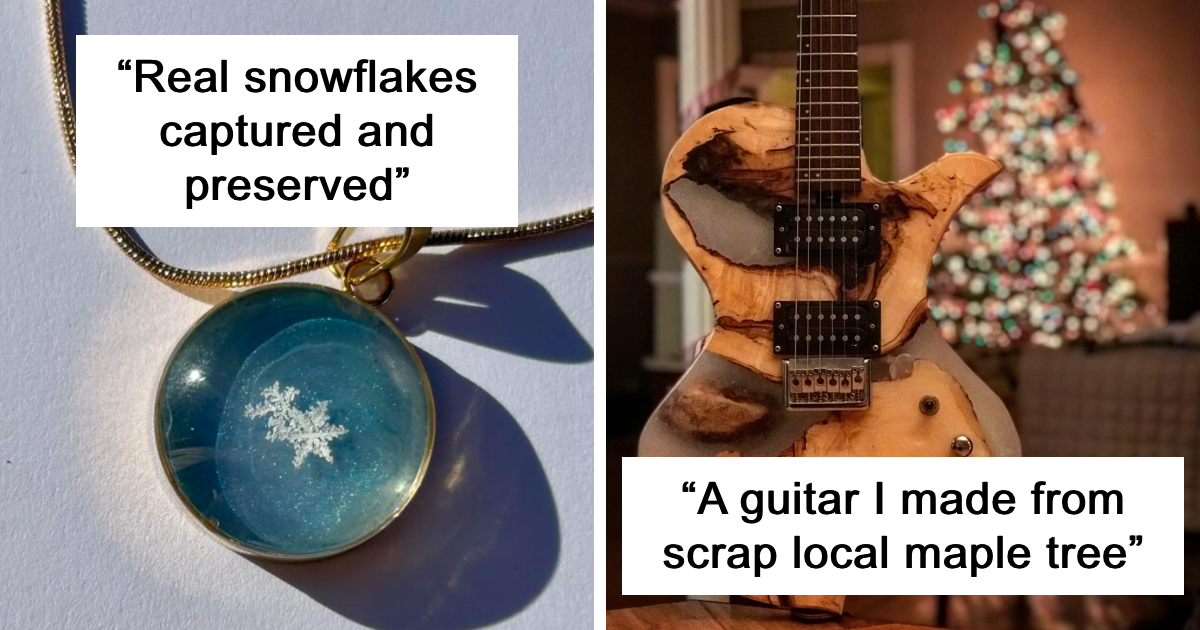
Pressed flower necklaces, rings, and earrings turn small petals into wearable keepsakes. These pieces often preserve daisies, forget-me-nots, lavender, Queen Anne’s lace, or tiny ferns in resin or glass. They feel personal because every bloom has its own shape and color variation, making each piece a miniature garden that does not require watering.
2. Botanical Embroidery Hoops
Embroidery artists have transformed simple hoops into wildflower meadows, mossy forests, and delicate vines. Thread is especially good at mimicking stems, petals, seed heads, and leaf veins. Online viewers love these works because they look soft, slow, and peacefulthe complete opposite of a phone battery warning at 2 percent.
3. Ceramic Bowls Shaped Like Leaves
Leaf-shaped ceramics are popular because they combine usefulness with organic beauty. Artists often press real leaves into clay to capture their veins, edges, and natural asymmetry. The result is a serving dish or decorative bowl that looks handmade in the best possible way: imperfect, textured, and alive.
4. Driftwood Lamps
Driftwood lamps bring the beach indoors without requiring sand in your socks. Makers use weathered branches, twisted roots, and ocean-smoothed wood to create lighting that feels rustic and sculptural. The irregular shapes cast interesting shadows, making the lamp look different from every angle.
5. Moss Wall Art
Preserved moss walls have become a favorite in homes, offices, cafés, and wellness spaces. They introduce texture, color, and a forest-like mood without the daily care of living plants. These designs connect to biophilic design, which focuses on bringing natural forms, materials, and sensory cues into human spaces.
6. Mushroom-Inspired Lamps
Mushroom lamps are whimsical, cozy, and slightly magical. Some look like glowing toadstools from a fairy tale; others are sleek glass or ceramic pieces inspired by fungi caps and stems. They are proof that mushrooms can be décor icons, not just the mysterious ingredient hiding under pizza cheese.
7. Mycelium Packaging
Mycelium, the root-like network of fungi, has inspired biodegradable packaging and material experiments. Designers grow it around agricultural waste to form lightweight shapes that can replace foam-like materials. It is earthy, sustainable, and surprisingly futuristiclike nature quietly filing a patent against plastic.
8. Coral-Inspired Lamps and Sculptures
Coral forms have inspired lamps, wall pieces, and 3D-printed sculptures with branching structures. These creations look delicate yet complex, echoing the underwater architecture of reefs. Their beauty also carries a subtle environmental message, reminding viewers of fragile marine ecosystems.
9. Shell-Shaped Architecture
Shells have long inspired architects because they are strong, curved, and efficient. Shell-inspired roofs, pavilions, and interiors often use sweeping forms that feel protective and graceful. The best versions do not simply copy a seashell; they borrow its logic of strength through curvature.
10. Lotus-Inspired Self-Cleaning Surfaces
The lotus leaf is famous for staying clean even in muddy environments. Its microscopic surface structure helps water roll away while carrying dirt with it. This natural trick has inspired paints, coatings, and textiles designed to resist grime. Online, the idea feels almost magical: a surface that behaves like it has chores and actually does them.
11. Gecko-Inspired Grippers
Gecko feet can cling to surfaces thanks to tiny hair-like structures that create close contact. Engineers have studied this ability to develop dry adhesives and robotic grippers. The resulting designs are not only clever but visually fascinating, especially when a machine lifts objects using a lesson borrowed from a lizard.
12. Butterfly-Wing Color Effects
Butterfly wings inspire artists and scientists because their colors can come from structure, not just pigment. Tiny scales interact with light to create shimmering blues, greens, and iridescent effects. Jewelry, textiles, makeup packaging, and experimental materials all borrow from this phenomenon.
13. Bird-Inspired Train and Vehicle Forms
Birds have influenced transportation design for centuries, from Leonardo da Vinci’s flying sketches to modern aerodynamic forms. The kingfisher-inspired nose of Japan’s high-speed train remains one of the most famous examples of biomimicry: a bird’s beak helped engineers reduce noise and improve efficiency. It is a reminder that birdwatching can, apparently, lead to better trains.
14. Honeycomb Shelves
Honeycomb shelves are beloved because they look clean, geometric, and natural at the same time. Bees use hexagons because the shape is efficient and strong. Designers use hexagons because they look fantastic on a wall and make people feel organized even when the junk drawer says otherwise.
15. Spider-Web Installations
Spider webs have inspired large-scale installations, tensile structures, jewelry, and digital art. Their beauty comes from tension, spacing, and repetition. A web can look fragile, but it is engineered with remarkable efficiency. Artists who borrow this structure often create pieces that feel airy, suspended, and quietly dramatic.
16. Wave-Inspired Furniture
Chairs, benches, tables, and shelves inspired by waves often use flowing lines and continuous curves. These pieces can make a room feel calmer because they avoid harsh edges. A wave-shaped bench may not make you hear the ocean, but it can make your hallway look like it has better vacation plans than you do.
17. Pebble-Shaped Rugs and Cushions
Pebble-inspired rugs and cushions imitate the rounded stones found along rivers and beaches. They are soft, playful, and tactile. Online audiences love them because they look cozy and sculptural at once, like someone convinced a rock garden to become a nap zone.
18. Tree-Branch Bookshelves
Branch-like bookshelves turn storage into sculpture. The branching form is practical because it naturally separates objects, while also suggesting growth and movement. These shelves are often shared online because they make books look like fruit on a literary tree, which is exactly the kind of wholesome nonsense the internet needs.
19. Flower-Inspired Cakes
Botanical cakes decorated with buttercream flowers, edible petals, vines, or pressed floral designs are a major source of online admiration. They combine baking skill with garden aesthetics. The best ones look almost too beautiful to cut, although somehow everyone finds the courage.
20. Succulent-Inspired Cupcakes
Succulent cupcakes are tiny edible plant illusions made with piped frosting. Their popularity comes from the contrast: they look like houseplants but taste like dessert. This is one of nature-inspired design’s greatest achievements, because it finally answers the question, “What if my cactus was buttercream?”
21. Feather-Inspired Fashion
Feathers inspire fashion through layering, movement, texture, and color. Designers use feather-like silhouettes, prints, pleats, and textiles to create garments that feel light and kinetic. Even without actual feathers, a dress can evoke wings, flight, and motion.
22. Algae-Inspired and Living Fashion
Some experimental fashion designers are working with living organisms, algae-based materials, and biofabrication. These projects push clothing beyond decoration and into conversation with ecology. When a garment glows, changes, or grows from biological material, the internet understandably leans closer to the screen.
23. Pinecone-Inspired Textiles
Pinecones open and close in response to humidity, and that behavior has inspired adaptive textiles and smart materials. Designers are interested in fabrics that breathe, shift, or respond to the environment without heavy mechanical systems. The concept feels poetic: clothing that takes weather advice from a pinecone.
24. Termite-Mound-Inspired Buildings
Termite mounds regulate temperature through complex ventilation. Architects have studied these systems to create buildings that cool more efficiently using passive airflow. This kind of nature-inspired architecture is beautiful because the elegance is not only visual; it is functional.
25. Desert-Beetle Water Collectors
The Namib Desert beetle collects water from fog using textured surfaces on its body. Designers have explored this strategy for fog-harvesting materials and water-collection systems. It is a stunning example of small-scale survival inspiring big human ideas.
26. Nacre-Inspired Materials
Nacre, also known as mother-of-pearl, is strong because of its layered structure. Scientists and designers study it to develop tough composites and beautiful surface finishes. Its shimmer also makes it a favorite in jewelry, tile, furniture, and decorative objects.
27. Diatom-Inspired 3D Prints
Diatoms are microscopic algae with intricate glass-like shells. Under magnification, they look like tiny architectural masterpieces. Designers and engineers use diatom geometry as inspiration for 3D-printed structures, patterns, jewelry, and experimental materials.
28. Cactus-Inspired Planters
Cactus-inspired planters and vases use ribbed forms, spines, and sculptural silhouettes. Some are playful and cartoonish; others are minimalist and elegant. They work especially well in modern interiors because the cactus shape is instantly recognizable and visually bold.
29. Floral Murals
Large floral murals bring gardens to blank walls. Whether painted by hand or created digitally, they can transform a room, storefront, nursery, or outdoor wall into a bright botanical scene. These murals are popular online because they provide instant before-and-after satisfaction.
30. Nature-Inspired Tattoos
Nature tattoos remain endlessly popular: wildflowers, moths, birds, waves, leaves, mushrooms, mountains, snakes, bees, and celestial landscapes. They are personal symbols as much as decorations. A tiny fern tattoo can represent growth; a moth can suggest transformation; a mountain can say, “I hike emotionally, at least.”
What These Creations Teach Us About Good Design
The best nature-inspired creations do not merely copy the appearance of the natural world. They study how nature works. A flower is not beautiful only because it has petals; it is beautiful because it balances color, structure, pattern, attraction, and efficiency. A shell is not impressive only because it spirals; it protects life through geometry. A mushroom is not charming only because it looks like a tiny umbrella; it is part of a larger network that recycles nutrients and builds soil.
That distinction matters. Decorative inspiration says, “This looks like a leaf.” Biomimetic inspiration asks, “What can this leaf teach us?” The strongest projects often combine both approaches. A moss wall can be visually calming and improve the mood of an interior. A honeycomb shelf can look stylish and use a structurally efficient pattern. A gecko-inspired gripper can look like science fiction while solving a real engineering challenge.
Nature-inspired design also encourages sustainability. Many creators now prefer natural fibers, reclaimed wood, plant-based dyes, biodegradable materials, and low-waste methods. This does not mean every leaf-shaped spoon automatically saves the planet. But it does show a shift in taste: people want objects that feel connected to living systems, not disposable trends.
Experiences Related to Nature-Inspired Creations
One reason these creations are so exciting to share online is that they often begin with a simple personal moment. Someone notices the way sunlight hits a fern. Someone picks up a shell on a beach and studies the spiral. Someone sees a mushroom after rain and thinks, “That would make a strangely adorable lamp.” Nature-inspired creativity rarely starts with a grand speech. It usually starts with attention.
Anyone who has tried making nature-inspired art knows that nature is both generous and extremely humbling. A leaf looks simple until you try to draw every vein. A butterfly wing seems symmetrical until you notice the tiny differences. A flower looks easy until you attempt to pipe one in frosting and accidentally create what can only be described as a cabbage having an identity crisis. These small failures are part of the experience. They teach patience and observation.
Visiting a botanical garden, forest trail, beach, or even a neighborhood park can become a design exercise. The best ideas often come from asking practical questions. Why does this seed pod open this way? Why does this shell feel strong? Why do branches divide at different angles? Why does moss make a wall feel calmer? These questions move creativity beyond surface beauty and into deeper understanding.
Nature-inspired projects also create emotional connection. A person might make jewelry using flowers from a wedding bouquet. A ceramic artist might press leaves from a childhood home into clay. A woodworker might turn storm-fallen branches into lamps or tables. A baker might decorate a cake with edible flowers from a family garden. These creations carry memory, which is why people are proud to share them. They are not just objects; they are little biographies in botanical form.
There is also a community effect. Online makers often inspire one another through process videos, sketches, behind-the-scenes photos, and finished reveals. A moss wall leads someone else to try a terrarium. A shell lamp inspires a ceramic bowl. A floral embroidery hoop encourages a beginner to buy thread, stab fabric repeatedly, and call it art. This shared enthusiasm is one of the healthiest parts of the internet: people looking at the natural world, making something beautiful, and encouraging others to try.
For beginners, the easiest way to start is to choose one natural form and one material. Try drawing a single leaf, sculpting one mushroom, embroidering one flower, carving one wave, or arranging one small pressed-flower frame. The goal is not perfection. The goal is to notice more. Once you start studying nature carefully, you realize the world is packed with design lessons: spirals, grids, folds, gradients, textures, layers, and patterns that repeat without feeling mechanical.
That is the real magic behind beautiful creations inspired by nature. They remind us that creativity is not separate from the living world. It is a response to it. Every handmade flower, wave-shaped chair, mossy wall, butterfly-colored surface, and shell-like building is part of a longer conversation between human imagination and natural intelligence. And honestly, nature is carrying the group projectbut at least we are finally taking notes.
Conclusion
Beautiful creations inspired by nature continue to capture attention because they combine wonder with familiarity. They can be tiny enough to wear, large enough to live inside, delicate enough to decorate a cake, or advanced enough to guide robotics and sustainable materials. From pressed flower jewelry to termite-inspired buildings, these works show that nature is more than a mood board. It is a teacher, engineer, artist, and occasional show-off.
As more people share nature-inspired art and design online, the trend becomes bigger than aesthetics. It encourages slower looking, smarter making, and more respect for the systems that already surround us. The next time a leaf, shell, feather, mushroom, or wave catches your eye, do not scroll past it in real life. Study it. Sketch it. Build from it. Or at the very least, appreciate that nature has been designing masterpieces long before humans invented comment sections.
Note: This article synthesizes real, publicly documented ideas from nature-inspired art, biomimicry, biophilic design, architecture, materials research, and contemporary creative practices.