There is a special kind of betrayal that happens when you spend five minutes cleaning a mirror, step back proudly, and discover that it now looks like a foggy crime scene. The fingerprints may be gone, but the streaks have multiplied like they were invited to a reunion.
The good news: getting a streak-free mirror is not about buying a cabinet full of fancy sprays or developing the arm strength of a professional window washer. It is mostly about using the right cloth, applying less cleaner than you think, and finishing with a dry buff. Once you understand the basic rhythm, even the bathroom mirror that has survived toothpaste splatters, hairspray, and a chaotic Monday morning can look impressively clear.
This guide explains three reliable ways to clean mirrors without streaks, plus the common mistakes that make a freshly cleaned mirror look worse than it did before. Whether you prefer a homemade glass cleaner, a store-bought spray, or a simple dish-soap solution, there is a method here for your mirror-cleaning personality.
Why Do Mirrors Get Streaky in the First Place?
A mirror does not need much to look dirty. A little bathroom steam, a few fingerprints, a fine mist of hairspray, or one enthusiastic toothpaste-brushing session can leave a visible film behind. The trouble is that mirrors are brutally honest. They reflect light, which means they also highlight every dried droplet, lint fiber, and swipe mark.
Most streaks come from one of four problems: too much cleaning product, a dirty cloth, mineral-heavy tap water, or wiping in random circles until the surface becomes a modern-art masterpiece. The solution is simple: use a clean lint-free cloth, apply only a small amount of liquid, work from top to bottom, and polish away leftover moisture before it dries.
What You Need for Streak-Free Mirror Cleaning
Before choosing a method, gather a few basics. You do not need all of them every time, but having them nearby makes the job much easier.
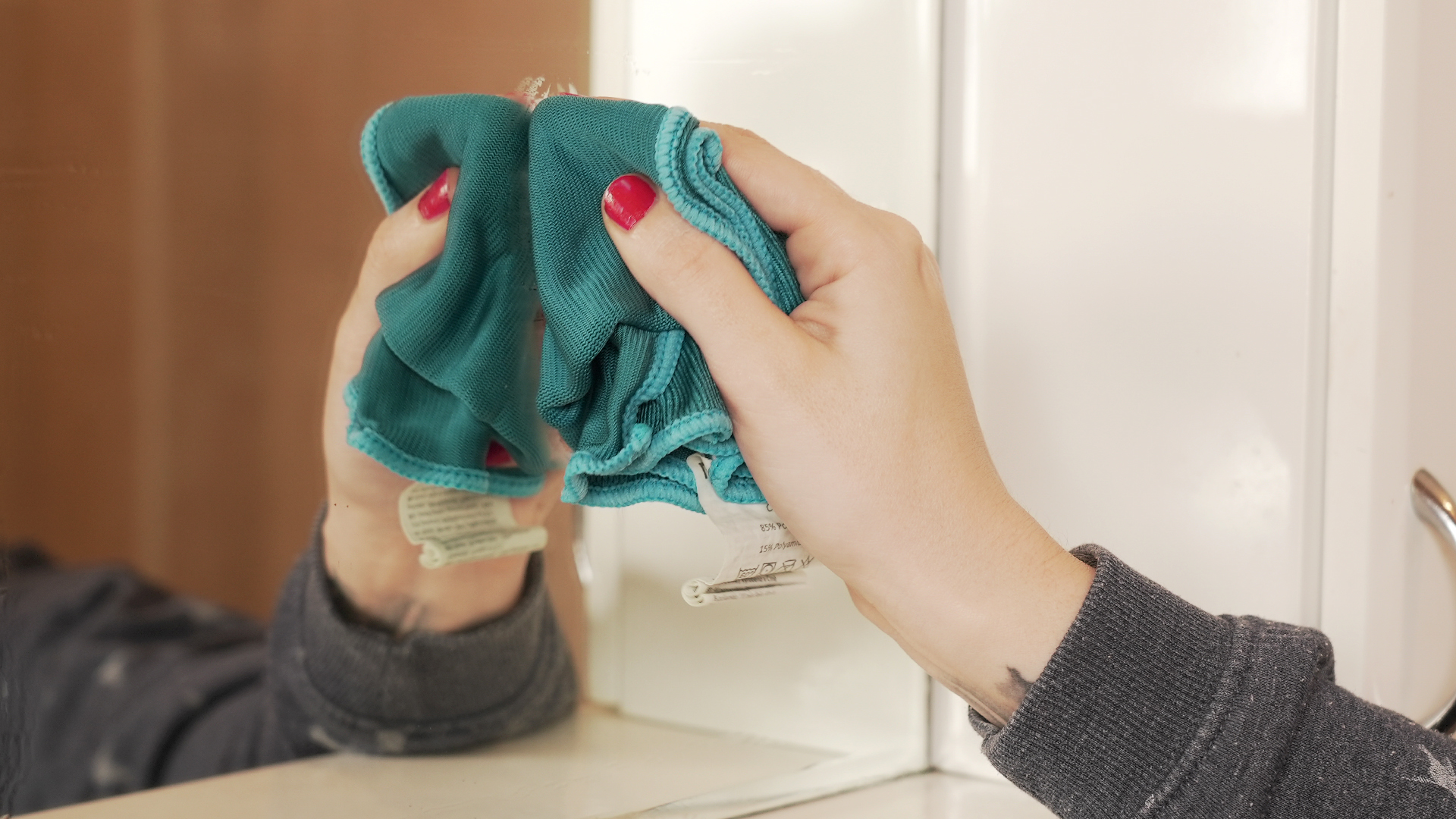
- Two clean microfiber cloths: one for cleaning and one for dry polishing
- Distilled water, especially if your tap water leaves mineral spots
- White vinegar for a homemade mirror cleaner
- A commercial glass cleaner, if you prefer a ready-to-use option
- Rubbing alcohol and cotton swabs for sticky spots or makeup smudges
- Coffee filters as a lint-free backup when microfiber cloths are unavailable
One important rule applies to every method: do not soak the mirror. Excess liquid can run into the edges, collect around the frame, and leave marks behind. A mirror is not a houseplant. It does not need misting until it drips.
Way No. 1: Use a Vinegar and Distilled Water Spray
A vinegar-and-water solution is one of the easiest ways to clean mirrors without streaks. It is inexpensive, simple to mix, and especially useful for bathroom mirrors with water spots or a thin film of product residue.
What You Need
- Equal parts distilled white vinegar and distilled water
- A small spray bottle
- Two dry microfiber cloths
- A cotton swab with rubbing alcohol for stubborn spots
How to Clean a Mirror With Vinegar
- Start by using a dry microfiber cloth to remove dust, loose hair, and powdery debris. Skipping this step can turn tiny particles into streaky smudges once liquid enters the conversation.
- Check for stubborn toothpaste spots, makeup residue, or fingerprints. Dab those areas lightly with rubbing alcohol on a cotton swab before cleaning the whole mirror.
- Lightly mist your vinegar solution onto a microfiber cloth instead of spraying the mirror heavily. This helps control drips and keeps cleaner away from the edges and frame.
- Wipe from the top of the mirror to the bottom in long S-shaped or zigzag passes. The goal is to guide moisture downward instead of pushing it around in circles.
- Immediately use a second dry microfiber cloth to buff the mirror. Work gently and check the surface from an angle to catch any hidden haze.
This method works well for everyday bathroom mirror cleaning because vinegar helps cut through light mineral residue and grime. Distilled water is especially helpful in homes with hard water because it is less likely to leave behind the tiny mineral spots that make a mirror look cloudy after it dries.
Be careful around stone surfaces: if your mirror hangs over marble, limestone, or another natural-stone countertop, avoid letting vinegar drip onto the surface. Wipe up any drips right away and keep the cleaning solution on the cloth rather than spraying freely.
Way No. 2: Use a Commercial Glass Cleaner and the Two-Cloth Method
Sometimes convenience wins, and that is perfectly reasonable. A good glass cleaner can make quick work of fingerprints, bathroom splatters, and greasy smudges. The trick is not the brand name on the bottle. The trick is using very little product and following it with a separate dry cloth.
Why the Two-Cloth Method Works
One cloth loosens and removes dirt. The second cloth removes leftover moisture and residue. Trying to do both jobs with one damp cloth is like trying to wash and dry a car with the same wet sponge. Technically possible, emotionally exhausting, and unlikely to produce a great result.
How to Clean a Mirror With Glass Cleaner
- Dust the mirror first with a dry microfiber cloth.
- Apply two or three light sprays of glass cleaner to a clean microfiber cloth. Avoid turning the cloth into a tiny rainstorm.
- Wipe the mirror in overlapping horizontal or S-shaped strokes, working from top to bottom.
- Use light pressure. Scrubbing aggressively often redistributes oils instead of removing them.
- Grab a second dry microfiber cloth and buff the surface until it looks clear from several angles.
This approach is especially helpful for large wall mirrors, entryway mirrors, and mirrors in busy households where fingerprints seem to appear overnight. It is also a smart option when you need a fast cleanup before guests arrive and would prefer not to explain why the hallway mirror is wearing what appears to be a handprint accessory.
When to Choose an Ammonia-Free Glass Cleaner
If you are sensitive to strong smells or cleaning a small bathroom with limited ventilation, an ammonia-free glass cleaner may be more comfortable to use. Follow the product label, open a window or run the exhaust fan when possible, and never mix cleaning products together. Glass cleaning should be satisfying, not a chemistry experiment with surprise fumes.
Way No. 3: Clean Mirrors With Warm Water, a Drop of Dish Soap, and a Dry Buff
For mirrors coated in greasy fingerprints, hairspray mist, makeup residue, or lotion splatters, a tiny amount of dish soap can be surprisingly effective. Dish soap is designed to break down oils, which makes it useful when plain vinegar spray is not quite enough.
The important word here is tiny. Too much dish soap can leave a residue that creates the exact streaks you are trying to avoid. This method is less “make a bubbly bath” and more “add one polite drop and move on.”
What You Need
- A bowl of warm distilled water
- One or two drops of mild dish soap
- A clean microfiber cloth
- A second dry microfiber cloth or lint-free coffee filters
How to Use Dish Soap on a Mirror
- Mix warm distilled water with one or two drops of dish soap.
- Dip a microfiber cloth into the mixture, then wring it out thoroughly. The cloth should feel barely damp, not wet enough to audition for a swimming pool commercial.
- Wipe the mirror gently from top to bottom, focusing on oily spots and visible residue.
- Use a second dry microfiber cloth to polish the mirror immediately.
- If you see a small streak after drying, buff it with a dry coffee filter or a fresh microfiber cloth.
This gentle method is useful for mirrors near a vanity, where foundation, skincare products, hairspray, and fingerprints can create a more stubborn film. It also works nicely for decorative mirrors in bedrooms and hallways that need an occasional refresh but do not require a heavy-duty cleaner.
Mirror-Cleaning Mistakes That Cause Streaks
Even the best mirror cleaner can fail when the technique is working against it. Avoid these common mistakes for a clearer, shinier finish.
Using Too Much Cleaner
More spray does not equal more shine. Too much liquid takes longer to dry and leaves behind residue. A light mist on the cloth is usually enough for a standard bathroom mirror.
Cleaning in Direct Sunlight
When sunlight hits the glass, cleaning solution can dry before you have time to wipe and buff it. That quick drying often creates streaks. Clean mirrors when the surface is cool, such as early in the morning, later in the day, or away from direct sunlight.
Using a Dirty or Fabric-Softener-Coated Cloth
A cloth that has collected dust, laundry residue, or grease can leave more behind than it picks up. Wash microfiber cloths separately when possible, skip fabric softener, and keep one cloth dedicated to glass and mirror cleaning.
Relying on Paper Towels for Every Job
Paper towels can work in a pinch, but they may leave lint or break apart when the mirror is very wet. A flat-weave microfiber cloth is usually a more reliable choice. Coffee filters can be a handy substitute because they are smooth, lint-free, and excellent for final buffing.
Forgetting the Final Dry Buff
This is the step that separates “mostly clean” from “why does this mirror look professionally polished?” The final dry buff removes leftover moisture, catches faint streaks, and gives the glass a brighter finish.
How Often Should You Clean Mirrors?
Bathroom mirrors often need attention once a week, although a household with kids, frequent hair styling, or enthusiastic skincare routines may need quicker touch-ups. Bedroom and hallway mirrors can usually wait longer unless they collect dust or fingerprints.
A quick daily wipe with a dry microfiber cloth can make deeper cleaning easier later. Think of it as preventative maintenance for the mirror and emotional maintenance for anyone who has ever noticed a giant toothpaste dot five minutes before leaving the house.
Quick Troubleshooting for Cloudy or Streaky Mirrors
The Mirror Looks Clean but Still Hazy
The issue is often leftover product residue. Buff the mirror with a fresh dry microfiber cloth. If the haze remains, repeat the cleaning process using less solution.
Water Spots Keep Returning
Try distilled water instead of tap water, especially in areas with hard water. Treat stubborn spots first with a small amount of vinegar solution or rubbing alcohol, then wipe and buff dry.
The Streaks Appear Only Near the Edges
Too much spray may be collecting around the frame. Apply cleaner directly to the cloth next time and keep the cloth only lightly damp. Wipe the edges carefully with a dry cloth after cleaning.
The Mirror Has Black Spots or Dark Edges
Dark patches around the edges can indicate damage to the mirror backing rather than ordinary dirt. Cleaning may improve the surface, but it will not repair deteriorated backing. In that case, consider consulting a glass or mirror professional before using stronger products.
Everyday Experiences: What Mirror Cleaning Looks Like in Real Life
Mirror-cleaning advice sounds wonderfully calm on paper. In real life, it often begins when you are already late, your bathroom lighting is aggressively honest, and the mirror has somehow collected toothpaste, eyebrow pencil dust, and what may be the ghost of last week’s dry shampoo.
One common experience is the rushed weekday bathroom cleanup. You notice smudges while brushing your teeth, grab a paper towel, spray the mirror enthusiastically, and start wiping in circles. For a few seconds, everything looks promising. Then the room light catches the surface, revealing broad cloudy swirls. The lesson is not that you are bad at cleaning. The lesson is that mirrors punish overconfidence. A dry microfiber cloth and a 30-second final buff would have saved the day.
Another familiar situation happens in homes with hard water. The mirror may look fine right after cleaning, but once it dries, faint dots and a cloudy outline appear near the bottom. It can feel as though the mirror has decided to grow freckles. In many cases, tap-water minerals are the culprit. Switching to distilled water for homemade cleaner often makes a noticeable difference because there are fewer minerals left behind after the liquid evaporates.
Vanity mirrors create their own category of chaos. These mirrors deal with foundation, setting spray, toothpaste, lotion, and the occasional mysterious fingerprint that no one admits to making. A vinegar solution works beautifully for routine care, but oily makeup residue may need a tiny amount of dish soap first. The biggest surprise for many people is how little soap is needed. A single drop can help lift residue; several drops can create a soapy film that turns the mirror into a streaky disappointment.
Large hallway mirrors bring a different challenge: they look clean until you walk past them from another angle. This is where the side-angle inspection becomes useful. Stand a few feet away and look across the glass rather than directly at it. Streaks, missed fingerprints, and little drips reveal themselves much faster. It feels a bit like checking the paint job on a car, except there is less pressure and nobody is asking whether you know what you are doing.
Then there is the “company is coming over” mirror-cleaning moment. The goal is not perfection worthy of a luxury hotel lobby. The goal is to remove the obvious marks quickly and make the room feel fresh. A commercial glass cleaner, one microfiber cloth, and one dry buffing cloth can transform a mirror in minutes. For a small touch-up, a coffee filter can also work surprisingly well as a final polish.
The best real-life lesson is that streak-free mirrors come from consistency, not intensity. You do not need to scrub harder, use more cleaner, or turn a simple task into an afternoon project. Dust first, use a light touch, wipe in controlled passes, and buff dry. Once that routine becomes automatic, mirror cleaning stops being a frustrating chore and becomes one of those satisfying little tasks that makes a whole room look brighter.
Conclusion: The Secret to a Truly Streak-Free Mirror
The best way to clean mirrors without streaks is not complicated: use a clean microfiber cloth, keep liquid to a minimum, work from top to bottom, and finish with a dry polish. A vinegar-and-distilled-water spray is excellent for everyday cleaning, a commercial glass cleaner is perfect for speed, and a tiny amount of dish soap can tackle oily residue.
Choose the method that fits the mess in front of you, not the one that sounds most dramatic. With the right tools and a lighter hand, your bathroom mirror, vanity mirror, or hallway mirror can look clear enough to reflect your best sideplus the pile of laundry behind you, unfortunately.
Note: This guide is intended for ordinary glass mirrors. For antique, damaged, framed, or heavily deteriorated mirrors, use minimal moisture and follow any care instructions provided by the manufacturer or restoration professional.