Your entryway is basically your home’s handshake. It’s the first thing guests see, the last thing you see when you sprint back inside because you forgot your keys, and the place where shoes go to retire (sometimes permanently). A great entryway rug does three jobs at once: it makes the space look finished, it protects your floors from grit and heel-click chaos, and it quietly tells people, “Welcome. We have our lives together… mostly.”
Below are 20 entryway rug ideasplus practical sizing, material, and styling adviceso your foyer, hallway, or mudroom feels warmer, cleaner, and a whole lot more “come on in” than “please ignore the mail pile.”
Before You Shop: A Quick Entryway Rug Checklist
- Measure the traffic path. Cover the “landing zone” where people naturally step, turn, and kick off shoesnot just a decorative corner nobody uses.
- Test the door swing. If your front door grazes the rug, choose a low-pile or flatweave so you’re not doing daily tug-of-war.
- Pick a “real life” material. Entryways see dirt, water, pet paws, and the occasional mystery smear. Durable fibers and easy-care construction matter.
- Plan for grip. A non-slip rug pad helps prevent sliding, reduces curling corners, adds cushion, and protects floors. Trim it slightly smaller than the rug so it doesn’t peek out.
- Decide your vibe. Calm and neutral? Bold and joyful? Cozy cottage? Clean modern? Your entry rug is the fastest way to set the tone.
How to Choose the Right Entryway Rug Size (Without Guessing)
Rug sizing in an entryway is part math, part common sense, and part “will this make my house look like it’s wearing the right size pants?” Here are simple rules that work in most homes:
- Small entry or tight doorway: a doormat-size rug or small area rug can work, as long as it gives both feet a place to land when you step inside.
- Medium foyer: go big enough to visually define the space. If you have a bench or console, the rug should feel like it belongs with that furniture, not floating alone.
- Hallway entry: runners should be long enough to guide you inward. A runner that stops too soon can feel abruptlike the rug gave up halfway through the mission.
- Always leave a border: showing a little flooring around the rug keeps the layout looking intentional rather than wall-to-wall-by-accident.
20 Entryway Rug Ideas That Instantly Warm Up Your Welcome
1) The “Pull-You-In” Runner for Long Hallways
If your entry is more hallway than foyer, a runner is your best friend. It creates a clear path, visually stretches the space, and gives everyone plenty of room to wipe their feet without awkwardly hovering near the door.
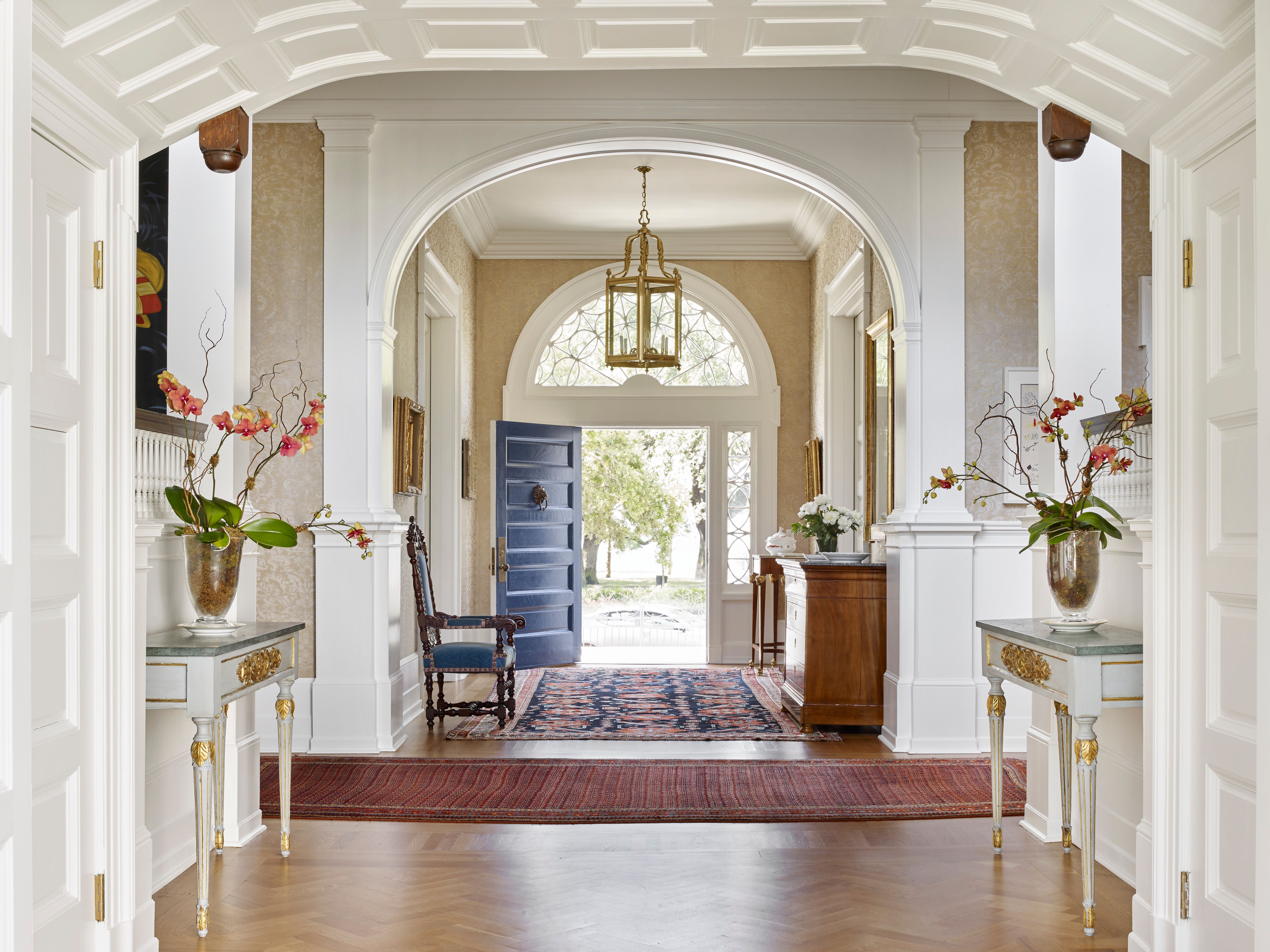
2) A Slightly Oversized Rug That Defines the Foyer Zone
In a true foyer, treat the rug like a boundary line: “Here’s where the outside ends and the inside begins.” A larger foyer rug also makes the entry feel like a roomnot just a pass-through with a light fixture.
3) A Vintage-Style Persian for Instant Character
Want your entryway to feel collected, not copied-and-pasted from a catalog? Try a vintage-look Persian or Turkish-inspired rug. The intricate pattern is forgiving (translation: it hides dirt), and it adds that “this house has stories” energy.
4) A Washable Rug for Kids, Pets, and Actual Weather
If your household includes sticky fingers, muddy paws, or a general talent for spilling things while standing still, washable rugs are a sanity saver. Choose low-pile styles that fit your washer (or have removable covers) so cleaning is more “toss and done” than “panic and scrub.”
5) An Indoor/Outdoor Rug for the “Shoes Optional” Crowd
Indoor/outdoor rugs are built to handle mess and moisture, which makes them great for doors that open to patios, backyards, pools, and all the chaos those places bring. They’re also easier to shake out or hose off when life gets… outdoorsy.
6) Layered Look: A Doormat on Top of a Bigger Rug
Layering isn’t just for sweaters and dramatic reveals. Pair a sturdy base rug (neutral is easiest) with a smaller doormat on top. You get depth, texture, and a “designer did this on purpose” vibeeven if your designer is you, on a Tuesday night.
7) A Bold Stripe to Visually Stretch the Space
Stripes are basically optical illusion magic. Run them lengthwise down a narrow entry to make it feel longer, or sideways to make a tight space feel wider. Bonus: stripes look crisp even when your life isn’t.
8) A High-Contrast Geometric for Modern Flair
Geometric patterns add structure and energyperfect if your entryway is a little beige. Go black-and-white for a clean modern look, or pick a colorful geometric for a playful “Hi, I’m fun!” first impression.
9) A Natural-Fiber Rug for Texture (In Covered, Low-Mess Spots)
Natural fibers like sisal or jute bring that earthy, coastal, “I buy lemons just for the bowl” look. They’re best in covered entries where they won’t get soaked, and they pair beautifully with wood floors, white walls, and woven baskets.
10) A Flatweave That Lets Doors Glide Like Butter
Flatweaves sit close to the floor, which makes them ideal when door clearance is tight. They also tend to trap less debris than high pile, making vacuuming faster and less dramatic.
11) A Dark, Patterned Rug That Camouflages Everyday Dirt
Light rugs can look gorgeous in an entryway… for about 11 minutes. If you’d rather not live in constant vigilance, pick deeper tones or busy patterns that hide tracked-in dust until cleaning day.
12) A Soft-but-Low Pile Rug for Barefoot Comfort
Entryways don’t have to be all business. Choose a rug that feels pleasant underfoot without being fluffy enough to catch every pebble. Think “cozy landing pad,” not “shaggy ankle trap.”
13) A Pop of Color to Bring a Neutral Entry to Life
If your entry is mostly white walls and wood floors, a colorful rug is an instant mood boost. Pick one main accent color and repeat it once elsewhereart, a bench cushion, or a planterto make it look intentional.
14) A Round Rug to Break Up Straight Lines
Round entryway rugs shine in compact foyers and in spaces with lots of angles (hello, awkward nooks). They soften sharp lines and create a welcoming “gather here” feeling.
15) A Statement Rug Under a Console Table
Have a console table in the entry? Anchor it with a rug that has personality. That table + rug combo reads like a styled vignette, and suddenly your entry looks like it has a plan.
16) Two Matching Runners for Extra-Long Hallways
In a long entry or hallway, one runner can sometimes look like it ran out of steam. Using two identical runners creates rhythm and continuitylike the hallway is wearing a coordinated outfit instead of whatever was clean.
17) A Stair Runner That “Talks” to Your Entry Rug
If your entry includes stairs, think of the stair runner and entry rug as roommates: they don’t have to match, but they should get along. Shared colors, similar pattern scale, or complementary neutrals keep the transition smooth.
18) The Faux “Inlaid Rug” Look with Patterned Tile
Love the idea of a rug but hate the idea of fibers collecting dirt? Some entryways use patterned tile arranged like a “rug” inset. It’s durable, dramatic, and basically laughs in the face of muddy boots.
19) A Seasonal Swap Strategy (Because Your Entry Has Moods)
Think of entry rugs like jackets: you don’t wear the same one in August and January. Rotate lighter styles in spring/summer and richer colors or cozier textures in fall/winter. Your space will feel refreshed without a full redesign.
20) The Practical Combo: Rug + Boot Tray + A Sense of Peace
If you live anywhere with rain, snow, or enthusiastic puddles, add a boot tray beside your rug. The rug handles everyday traffic; the tray catches the mess. Together, they’re an anti-chaos team.
Styling Tips That Make Any Entryway Rug Look Intentional
- Leave a visible border. Even in small entryways, showing some floor around the rug prevents the “randomly shoved in there” look.
- Center it with something. Align the rug with the door, hallway, or a console table so it doesn’t look like it’s drifting off into the ocean.
- Mind the pile height. High-traffic entry? Low pile or flatweave is easier to clean and less likely to snag.
- Use a non-slip rug pad. It’s the behind-the-scenes hero for safety, comfort, and fewer curled corners.
- Repeat one element. Pull a color from the rug into artwork, a tray, a lamp, or a pillow so the whole entry feels cohesive.
Maintenance: Keep It Cute, Not Crusty
Entryway rugs work hard. Pay them back with small, regular upkeep:
- Vacuum frequently. Grit builds up fast near doors and can wear fibers down over time.
- Shake out what you can. Outdoor-friendly rugs and mats often look better instantly after a good shake or quick sweep.
- Spot clean ASAP. The longer a stain sits, the more it tries to become part of your home’s “permanent décor.”
- Rotate occasionally. This spreads wear more evenly, especially if everyone walks in the same exact line like it’s a runway.
- Follow the care tag. Some rugs love a gentle wash; others prefer professional cleaning. Respect their boundaries.
Conclusion
The best entryway rug ideas balance style and function: the rug should look great, feel good underfoot, and stand up to whatever the day tracks in. Whether you pick a washable runner, a vintage-inspired pattern, a natural-fiber neutral, or a layered doormat combo, the goal is the samemake the first few steps into your home feel warm, easy, and unmistakably welcoming.
Extra: Real-World Experiences and Lessons From Entryway Rugs (500+ Words)
Let’s talk about what actually happens once the rug is down and real life shows up wearing sneakers. The first lesson: size matters more than most people think. A too-small entryway rug can make the whole space feel accidentallike you bought it to cover a scuff and then just… stopped trying. A slightly larger rug (even just a few inches wider or longer) makes the entry read as a real “zone,” which feels calmer and more put-together. If you’re stuck between sizes, the bigger option usually looks betterespecially in a foyer where you want that “welcome” moment to feel generous.
The second lesson: door clearance is the sneaky villain. Plush rugs are cozy, surebut if your door scrapes them, the rug will eventually start to curl, ripple, or migrate. That’s when you begin doing the little daily rug-adjustment dance: tug, flatten, sigh, repeat. Flatweaves and low-pile rugs don’t have the drama. They lie flatter, vacuum easier, and stay out of the door’s way like a polite houseguest who actually helps clean up.
Third: a rug pad is not optional if you value ankles and dignity. People skip pads because they’re “boring,” but a non-slip rug pad is basically insurance against the rug sliding when you’re carrying groceries, juggling a coffee, and trying to kick the door shut with your hip. Pads also make rugs feel thicker and more luxe, which is the kind of upgrade you notice daily. If you’ve ever tripped on a curled corner, you already know: the pad is cheaper than your pride.
Fourth: pattern is your best friend in an entryway. A solid, light-colored rug looks stunning in photosand then immediately turns into a crime-scene report of everything tracked inside. Patterns (vintage styles, geometrics, tight repeats) hide the evidence. Darker rugs help too, but don’t assume “dark = carefree” if you have linty pets. Anyone with a golden retriever and a black rug has lived through the fluffy confetti era. The sweet spot for many homes is a mid-tone rug with pattern and a bit of texture: forgiving without feeling heavy.
Fifth: layering solves more problems than it should. When an entryway feels flat, the layered doormat-over-rug approach adds dimension fast. But it’s not only about looksit’s also a practical “scrape zone.” The smaller mat catches most dirt first, which helps the larger rug stay nicer longer. It’s like giving your rug a bouncer. Layering also lets you swap the top mat seasonally (or whenever it gets gross) without replacing the entire rug.
Finally, a gentle reminder from the school of hard knocks: maintenance is easiest when you plan for it. If you know you’ll never hand-scrub a rug (no judgment), choose a washable rug or a hose-friendly indoor/outdoor style. If you love natural fibers, place them where they won’t get soaked. If your entry is basically a mudroom in disguise, embrace low pile, durable fibers, and a boot tray. The “perfect” entryway rug isn’t the fanciestit’s the one that survives your household and still looks like it wants people to come inside.