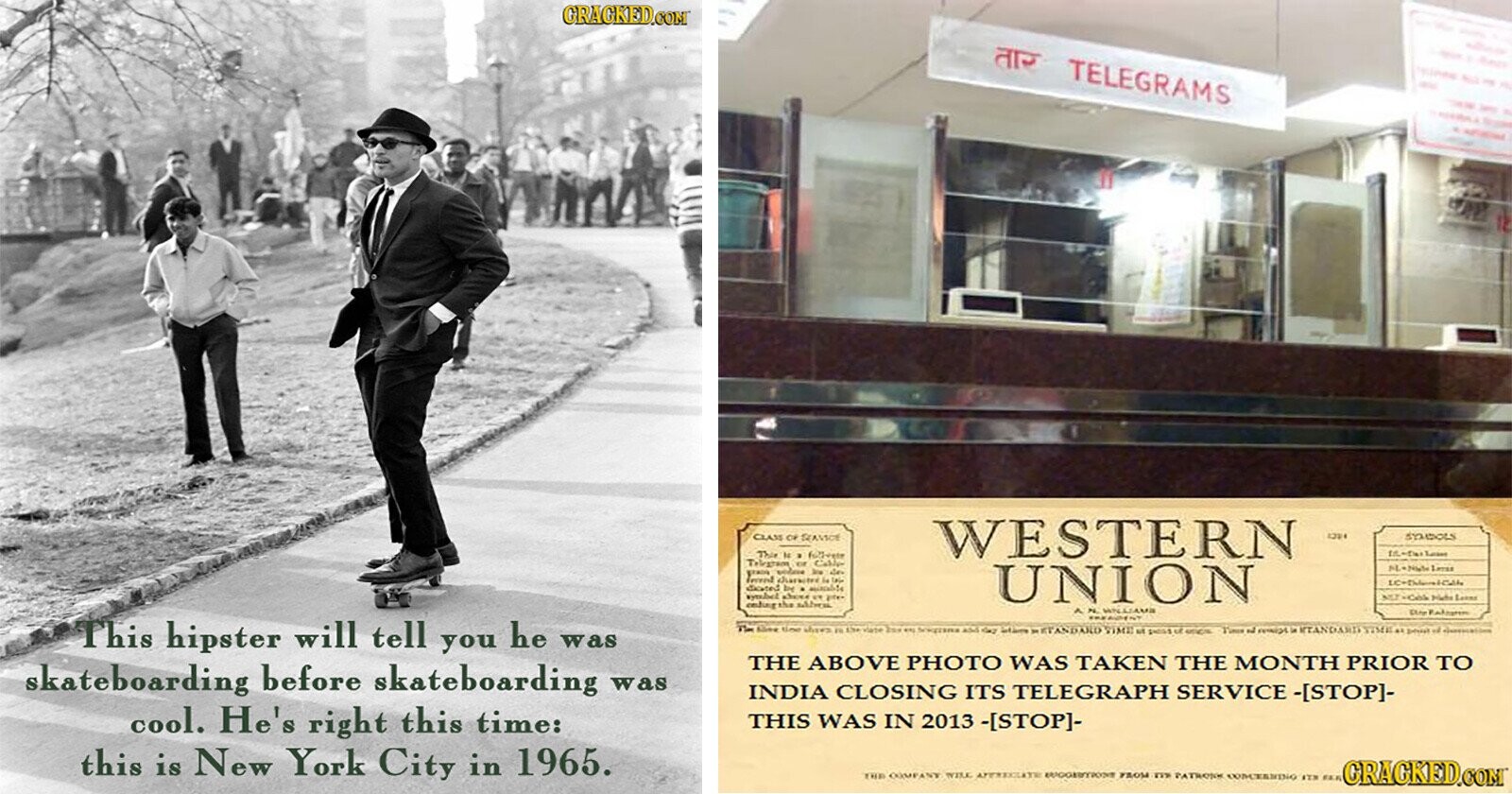
Every so often, an old photograph crawls out of an archive, dusts off its sepia shoulders, and makes the internet yell, “Waitwas that guy from the future?” A man in 1940s sunglasses. A beachgoer who appears to be checking a phone. A century-old child who looks weirdly like a modern celebrity. These images do not prove time travel, but they do prove something almost as strange: the past was much more modern than we imagine.
The best “photos that look like time travel” are not usually hoaxes. Many are real historical images misunderstood through modern eyes. We see a rectangle near someone’s face and think “smartphone.” We see a relaxed T-shirt in 1941 and think “Brooklyn coffee shop.” We see color in a World War II factory scene and assume it must have been taken yesterday. Our brains are talented little chaos machines, and old photos give them a playground.
This article explores 19 types of historical photos that create that delicious time-slip feeling. Some are famous internet mysteries; others come from the larger world of archival photography, early technology, fashion history, and visual culture. Think of this as a guided tour through the museum wing labeled: “No, Probably Not a Portal, But Still Extremely Weird.”
Why Some Old Photos Look Shockingly Modern
Old photographs can feel futuristic for several reasons. First, fashion repeats. Sunglasses, striped shirts, work jackets, bobbed hair, athletic sweaters, and minimalist dresses have all taken multiple laps around the style racetrack. Second, technology often existed earlier than most people realize. Portable cameras, hearing aids, radio devices, electric vehicles, television demonstrations, and color photography were all part of the pre-smartphone world. Third, photo restoration and colorization can make historical scenes look less distant. A crisp, high-resolution scan of a 1930s street can feel like a still from an indie film shot last Tuesday.
The result is visual whiplash. We know the caption says 1898, 1928, or 1943, but the image speaks a language our eyes associate with the present. That tension is exactly what makes these photographs irresistible.
19 Photos That Look Like Time Travel
1. The 1941 “Hipster” at a Canadian Bridge Opening
One of the most famous time-travel-looking photos shows a crowd at the 1941 reopening of the South Fork Bridge in British Columbia. Among the hats and formal coats stands a young man wearing sunglasses, casual clothing, and holding a small camera. Online, he became the “time-traveling hipster.” In reality, his clothes and camera were plausible for the period. The photo feels modern because he looks relaxed, individualistic, and camera-ready in a way we associate with today’s street style.
2. The 1928 Charlie Chaplin Film Premiere “Phone User”
Footage connected to Charlie Chaplin’s film The Circus appears to show a woman walking with a device held near her ear. The internet did what the internet does: it screamed “cell phone” and knocked over a chair. More grounded explanations point to early hearing-assistance devices or simple misinterpretation of movement. The scene still looks eerie because the gesturehand to ear, mouth movingmatches our everyday phone behavior so perfectly.
3. The 1898 Girl Who Looks Like Greta Thunberg
A photograph from the Klondike Gold Rush era shows three children at work, including a girl with a striking resemblance to climate activist Greta Thunberg. The image is real, and the resemblance is uncanny enough to make even sensible people blink twice. But lookalikes happen. Human faces repeat patterns across generations, and archival photos occasionally produce celebrity doppelgängers with suspiciously excellent timing.
4. The 1943 Beachgoer Who Seems to Be Checking a Phone
A crowded wartime beach scene from Cornwall has circulated online because one man appears to be looking down at something in his hands. Modern viewers see a phone. A more likely explanation is a cigarette, paper, small camera, or personal object. The image tricks us because the posture is so familiar: head tilted down, shoulders slightly curled, attention absorbed. In other words, the man has “texting neck” before texting existed.
5. The 1995 Mike Tyson Fight “Smartphone”
A viral video from a 1995 Mike Tyson fight seems to show someone in the audience holding up a smartphone-like device. Since camera phones were not available to consumers in the way we know them today, people jumped to a sci-fi conclusion. The likely answer is much less dramatic: a compact video camera or camcorder. Still, the rectangular shape and filming gesture are so modern that the scene feels like someone forgot to turn off airplane mode before entering the 1990s.
6. Color Photos from the 1930s and 1940s That Look Too New
Many people imagine the Great Depression and World War II in black and white. Then they encounter vivid color images from the Farm Security Administration and Office of War Information, and suddenly the past looks alarmingly close. Factory workers, railroads, aviation trainees, and small-town streets appear in color with a realism that can feel almost contemporary. Color does not make the past newer, but it makes it harder to emotionally file away as “ancient history.”
7. 1890s Photochrom Travel Views That Look Like Early Instagram
Photochrom prints from the late 19th and early 20th centuries show cities, landscapes, hotels, canals, and tourist sites in rich color. They were not color photographs in the modern sense; they were ink-based photolithographs based on black-and-white negatives. Still, they look like someone took a vintage vacation photo and ran it through a tasteful filter called “Grand Tour With Money.” Their polished color makes the 1890s feel surprisingly scrollable.
8. Early Street Style That Looks Like Modern Fashion Blogging
Some old city photographs show people whose outfits would not look out of place outside a coffee shop today: long coats, sharp boots, wide-leg pants, newsboy caps, striped tops, and circular glasses. The time-travel illusion comes from selective attention. We notice the one person who looks current and ignore the dozen people dressed exactly as expected for the era. History, like your closet, contains more variety than the stereotypes suggest.
9. Old Sunglasses That Look Like Modern Designer Frames
Sunglasses are a frequent culprit in time-travel claims. A person wearing dark, rounded, sporty, or aviator-style glasses in an old photo can look weirdly contemporary. But tinted lenses and protective eyewear existed long before influencer vacations. Pilots, drivers, mountain climbers, beachgoers, and people with light sensitivity all had reasons to wear glasses that now read as fashionable. Sometimes the “future man” is just a guy with good eye protection.
10. Early Portable Cameras Mistaken for Modern Gadgets
Small cameras are another classic source of confusion. By the early 20th century, camera makers had already produced portable models for amateurs and travelers. In old photos, a compact camera can look like a phone, a pager, or a mysterious black box from a spy movie. The irony is beautiful: people mistake old cameras for modern devices while looking at the photograph those old camera cultures helped create.
11. Television Demonstrations Before Television Felt Normal
Photographs from early television exhibitions can seem futuristic because we associate screens with the modern home. Yet television was demonstrated publicly before it became common in American living rooms. The 1939 New York World’s Fair, with its “World of Tomorrow” energy, offered exactly the kind of scene that can look like time travel: people in old-fashioned clothes staring at technology that feels ahead of its decade.
12. Old Electric Cars That Look Like They Belong in a Startup Pitch
Electric vehicles are not a brand-new idea. Early automobile history included electric cars, especially for urban driving. Photos of elegant early electric vehicles can feel like a timeline glitch because modern culture often treats EVs as a sudden invention. Seeing one beside women in long skirts or men in bowler hats produces the perfect “Wait, they had that?” moment.
13. Factory Photos That Look Like Sci-Fi Sets
Industrial photography can be surprisingly futuristic. Rows of machines, glowing furnaces, control panels, goggles, helmets, and metal frameworks can look like a retro-futurist movie set. During World War II, images of aircraft plants, shipyards, laboratories, and manufacturing lines often captured technology at a dramatic scale. The people may be from the 1940s, but the machinery can look like it is auditioning for a spaceship scene.
14. Teenagers from the Past Who Look Like They Have TikTok Accounts
Nothing collapses time faster than a teenager with attitude. Archival photos of young people leaning against cars, laughing on sidewalks, wearing casual jackets, or giving the camera a skeptical stare can feel shockingly present. The hairstyles change, but the expression remains: “My parents are embarrassing, and I would like a snack.” Youth culture has always had its own gravity.
15. Historical Selfies Before the Selfie Era
Long before front-facing phone cameras, people made self-portraits using mirrors, timers, cables, and clever setups. Some early self-portraits feel exactly like modern selfies because the intention is the same: “Here I am, and I look interesting enough to document.” The tools changed. The human desire to control our own image absolutely did not.
16. Old Beach Photos That Look Like Modern Summer Posts
Beach photographs are especially good at bending time. Swimsuits, towels, sunglasses, lounging poses, and crowded shorelines create familiar visual grammar. Even when the clothing is clearly old-fashioned, the mood is recognizable. People are hot, sandy, slightly sunburned, and pretending they are relaxed. A 1940s beach can look like a modern vacation post with fewer plastic water bottles and more wool than anyone deserves in direct sunlight.
17. Restored Family Photos That Feel Like They Were Taken Yesterday
Digital restoration can remove scratches, sharpen faces, balance contrast, and sometimes add color. When done carefully, it helps viewers connect with real people instead of treating them like distant historical props. But it can also create the time-travel effect. A great-grandparent in a restored portrait may suddenly look like someone you could pass at Target. The emotional result is powerful: the past stops looking dead and starts looking paused.
18. Old City Streets That Resemble Modern Urban Photography
Some street scenes from New York, Chicago, San Francisco, or other cities look modern because urban life has consistent rhythms: crowds, advertisements, traffic, storefronts, construction, and people hurrying with purpose. Replace horse-drawn wagons with delivery bikes, and the composition may feel surprisingly familiar. Cities are time machines by design; they stack eras on top of each other and dare photographers to keep up.
19. Photos Where the Background Looks Older Than the Person
The strongest time-travel illusion often happens when one person looks modern while everything around them screams “history textbook.” A casual jacket in a formal crowd, a relaxed pose in a stiff portrait, or a familiar haircut in an old street scene can make the subject appear misplaced. Usually, they are not misplaced at all. They are simply proof that people in the past were individuals, not extras hired to wear beige and look solemn.
What These Photos Really Tell Us About History
The charm of time-travel-looking photos is not that they prove someone parked a DeLorean behind the barn. It is that they reveal how narrow our imagination of the past can be. We tend to compress old decades into a few symbols: top hats for the 1800s, flappers for the 1920s, victory rolls for the 1940s, bell-bottoms for the 1970s. Real life was messier, broader, and more inventive.
People experimented with clothing. Companies built gadgets earlier than we remember. Photographers captured casual moments, not just formal portraits. Archives preserved ordinary gestures that now feel strangely modern. In many cases, the so-called “time traveler” is just someone who escaped the visual stereotype of their decade.
That is what makes these images valuable for readers, history fans, and anyone who enjoys a good internet mystery. They remind us that history was not lived in black and white. It was lived in color, noise, awkward posture, weird accessories, bad hair days, and the occasional person who accidentally dressed like a 21st-century art student.
How to Spot a Fake Time-Travel Photo Claim
Check the Source
Look for museum records, library archives, newspaper databases, or reputable fact-checking sites. A real photo usually has metadata: date, photographer, location, collection name, or catalog number. A screenshot with five laughing emojis is not metadata, even if one of the emojis wears sunglasses.
Research the Object
Before assuming someone is holding a smartphone, search for period objects that had similar shapes. Early cameras, cigarette cases, hearing aids, radios, notebooks, wallets, and small mirrors can all fool modern viewers. The past had pockets full of stuff, too.
Look Beyond the One “Suspicious” Detail
Viral posts often crop images tightly. The full photograph may reveal context that changes everything: a beach, a factory shift, a film premiere, a public demonstration, or a crowd event. Context is the difference between “time traveler caught” and “man rolling a cigarette while history minds its own business.”
Experiences Related to Photos That Look Like Time Travel
The first time you encounter a convincing time-travel-looking photograph, there is a tiny, ridiculous thrill. You know better. You are an adult. You pay bills, compare shipping fees, and understand that physics is not easily defeated by a guy in sunglasses. Still, your brain whispers, “But what if?” That moment is the magic. It is not really about believing in time travel. It is about feeling history become unstable for one second.
Many people have that experience while looking through family albums. A grandmother in cat-eye glasses suddenly looks like a movie star from a modern fashion campaign. A grandfather leaning on a car has the exact pose of someone’s profile picture. An aunt from 1968 appears to have invented festival style before festivals had brand sponsorships. These discoveries can be funny, but they can also be moving. They make relatives feel less like “ancestors” and more like people who had moods, taste, jokes, crushes, and probably at least one regrettable haircut.
Archives create a similar feeling on a larger scale. When you browse historical photo collections, you start noticing moments that school textbooks rarely emphasize. A worker laughs during a break. A child stares into the camera with startling confidence. A city street looks chaotic in a way that feels familiar. A storefront sign, a lunch counter, or a train platform suddenly bridges a century. You realize that people in the past were not waiting around to become history. They were trying to get through Tuesday.
There is also a lesson in humility. Modern viewers often assume we are the first generation to be stylish, distracted, experimental, or technologically obsessed. Old photos disagree. People posed. People performed identity. People adopted gadgets. People copied trends, resisted trends, and accidentally started new ones. The tools were different, but the human behavior is recognizable.
That is why “photos that look like time travel” remain popular. They are shareable mysteries, yes, but they are also small emotional bridges. They let us laugh at visual coincidences while remembering that the past was alive, detailed, and full of surprises. A suspicious rectangle in someone’s hand may not be a phone from the future. A modern-looking outfit may not be evidence of a portal. But the feeling these photos create is real: for a moment, time folds, the archive winks, and history looks directly back at us.
Conclusion
Photos that look like time travel work because they sit at the intersection of history, technology, fashion, and imagination. They are not proof that someone cracked the secret of jumping centuries. They are proof that the past was more diverse, inventive, colorful, and oddly familiar than we often give it credit for.
From the 1941 “hipster” to old color photographs that feel startlingly fresh, these images remind us to question first impressions. A strange object might be an early hearing aid. A “smartphone” might be a camera. A futuristic outfit might simply be good style arriving ahead of schedule. The mystery is fun, but the truth is often richer.
So the next time an old photo seems to show a traveler from the future, enjoy the goosebumps. Then zoom out, check the context, and appreciate the better discovery: history was never as dull, distant, or predictable as we imagined.