Stamped concrete patios are the design world’s clever little magic trick: one minute you are looking at plain concrete, and the next it is pretending to be slate, brick, flagstone, wood, cobblestone, or something that looks suspiciously more expensive than it actually is. For homeowners who want a beautiful outdoor living space without babysitting loose pavers or paying natural stone prices, stamped concrete can be a seriously practical choice.
The best part? A stamped concrete patio is not limited to one look. It can feel rustic, modern, Mediterranean, farmhouse, coastal, or “I definitely hired a landscape designer, but please do not ask what it cost.” With the right pattern, color, border, finish, and layout, stamped concrete can turn a basic backyard slab into a polished outdoor room.
Below are 12 stamped concrete patio ideas we love, along with design tips, practical notes, and a few honest reminders. Because yes, stamped concrete is gorgeous, but like every patio material, it has opinions. It needs proper installation, thoughtful drainage, control joints, periodic sealing, and a contractor who knows the difference between “decorative texture” and “accidental fossil bed.”
Why Choose a Stamped Concrete Patio?
Stamped concrete is poured concrete that is colored, textured, and patterned before it fully hardens. Contractors press large rubber mats into the surface to create the look of natural materials. Common stamped concrete patterns include ashlar slate, random stone, flagstone, brick, cobblestone, herringbone, wood plank, and seamless texture skins.
Homeowners love stamped concrete patio designs because they offer design flexibility, a continuous surface, and a wide range of colors. Compared with individual stone or paver units, stamped concrete can create a cleaner, more unified look. It is especially useful for large patios, pool decks, walkways, outdoor kitchens, and backyard entertainment spaces.
Still, stamped concrete is not a “pour it and ignore it forever” material. It should be installed over a well-prepared base, finished with the correct texture, sealed properly, and maintained over time. In cold climates or areas with shifting soil, cracks can happen. The goal is not to pretend concrete is immortal. The goal is to design smartly so the patio ages gracefully instead of dramatically.
12 Stamped Concrete Patio Ideas We Love
1. Ashlar Slate for a Classic, Upscale Patio
Ashlar slate is one of the most popular stamped concrete patterns, and for good reason. It mimics rectangular pieces of cut stone arranged in a neat but natural-looking layout. The result is elegant without feeling too formal. Think “nice backyard dinner party,” not “museum courtyard where whispering feels mandatory.”
This design works beautifully with gray, charcoal, tan, or soft brown color blends. For a modern home, choose cool gray tones with a matte sealer. For a warmer traditional house, try buff, beige, sandstone, or walnut accents. Ashlar slate is especially attractive when paired with black metal furniture, woven outdoor chairs, built-in planters, or a pergola.
Design tip: Ask for subtle color variation rather than one flat color. Natural stone is rarely one uniform shade, and the same rule applies here. A little depth makes stamped concrete look richer and more believable.
2. Random Flagstone for a Natural Garden Look
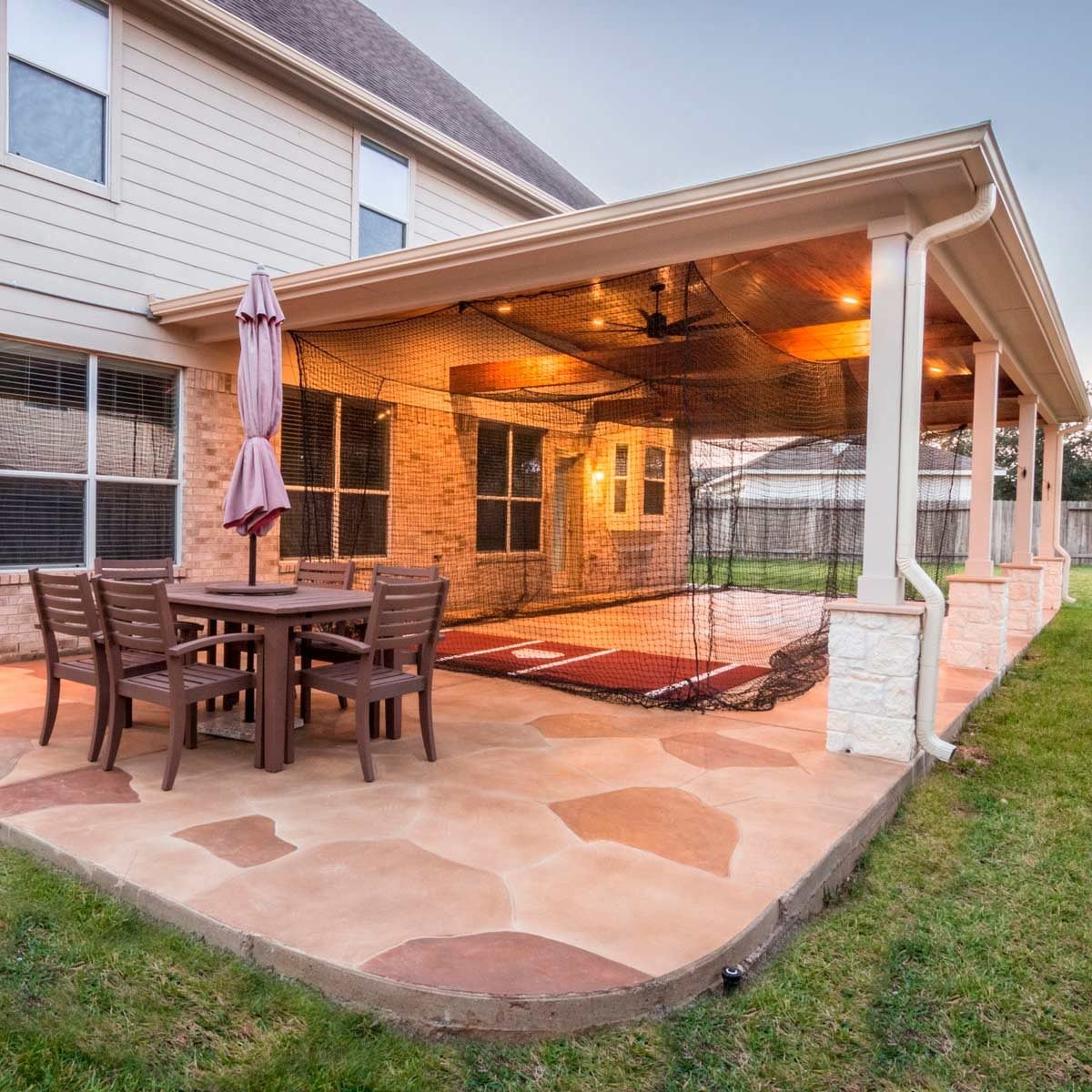
If ashlar slate is the well-dressed cousin, random flagstone is the relaxed friend who shows up with lemonade and muddy garden gloves. This stamped concrete patio idea creates an organic, irregular stone pattern that feels right at home near flower beds, shrubs, water features, and winding walkways.
Random flagstone looks best in earthy colors such as sandstone, limestone gray, warm taupe, buff, and soft terracotta. It is a great choice for cottage gardens, rustic patios, and backyard spaces that blend into the landscape. Because the pattern already feels natural, you can keep the surrounding decor simple: wood benches, clay pots, string lights, and plenty of greenery.
Design tip: Use a slightly darker release color in the joints and texture lines. This adds shadow and makes the stamped surface appear more dimensional.
3. Wood Plank Stamped Concrete for Warmth Without Wood Maintenance
Wood plank stamped concrete is perfect for homeowners who love the look of a deck but do not love splinters, staining schedules, warped boards, or discovering that nature has turned their outdoor flooring into a snack bar. This pattern can imitate wide boards, weathered barn wood, or modern linear planks.
Wood-look stamped concrete works especially well around fire pits, covered patios, outdoor dining spaces, and transitional indoor-outdoor areas. It brings warmth to concrete while keeping the durability of a slab. Popular colors include driftwood gray, cedar brown, espresso, walnut, and weathered beige.
Design tip: Keep the plank direction intentional. Running the stamped planks parallel to the longest edge of the patio can make the space feel larger. Running them toward a focal point, such as a fireplace or garden view, can guide the eye.
4. Herringbone Brick for Timeless Charm
Brick-pattern stamped concrete is a classic choice for traditional homes, colonial-style architecture, courtyards, and cozy patios. A herringbone layout adds extra movement and polish, making the surface feel carefully designed rather than simply poured.
Red brick tones are the obvious choice, but do not stop there. Soft brown, charcoal, antique rose, clay, and weathered tan can all create a beautiful brick-inspired patio. A stamped herringbone patio looks especially charming with boxwood planters, white trim, black lanterns, and bistro furniture.
Design tip: Consider a contrasting border. A soldier-course border around a herringbone field can make the patio look more finished and help define edges near lawn or garden beds.
5. Seamless Stone Texture for a Modern Minimalist Patio
Not every stamped concrete patio needs obvious grout lines or dramatic patterns. Seamless texture skins create the look of natural stone texture without repeating tile-like shapes. The result is subtle, clean, and modern.
This is a smart option for contemporary homes, large patios, and minimalist outdoor spaces where furniture, architecture, or landscaping should be the star. Seamless stamped concrete can resemble slate, limestone, sandstone, or lightly weathered stone. It also works well when paired with saw-cut lines for a custom geometric layout.
Design tip: Use this pattern when you want texture without visual clutter. It is also a practical choice for patios with curved edges, because there are no obvious pattern lines to fight the shape.
6. Cobblestone Stamped Concrete for Old-World Character
Cobblestone stamped concrete adds instant character. It can make a backyard feel like a European courtyard, a historic garden path, or the charming entrance to a café where the croissants are definitely overpriced but worth it.
This stamped concrete patio idea works best in smaller areas, accent zones, walkways, or patios with a vintage design theme. Gray, charcoal, brown, and muted tan color blends help create an aged look. Cobblestone can feel busy on a very large patio, so consider using it as a border or focal section rather than across the entire surface.
Design tip: Pair cobblestone with climbing plants, iron furniture, lantern-style lighting, and stone planters for a cohesive old-world effect.
7. Large-Format Stone Stamps for a Clean Luxury Look
Large-format stamped stone patterns are ideal for homeowners who want a patio that feels spacious and high-end. Bigger “stone” shapes create fewer visual breaks, which can make small patios feel calmer and large patios feel more luxurious.
This style pairs well with modern outdoor kitchens, sleek fire tables, built-in seating, and poolside entertaining zones. Choose soft gray, ivory, greige, or limestone-inspired colors for a sophisticated finish. A low-sheen sealer often looks more natural than a high-gloss finish, especially if the goal is understated elegance.
Design tip: Large-format patterns need careful layout planning. Ask your contractor how the stamp pattern will line up with steps, doors, edges, and control joints before the pour begins.
8. Stamped Concrete With a Contrasting Border
A border is one of the simplest ways to make a stamped concrete patio look custom. It frames the space, defines the patio shape, and can visually separate different outdoor zones. Borders can be stamped in brick, stone, cobblestone, or a smooth band with a contrasting color.
For example, an ashlar slate patio with a charcoal brick border feels polished and intentional. A wood plank stamped patio with a darker smooth concrete border feels modern. A random stone patio with a warm brown edge feels rustic and grounded.
Design tip: Borders are also useful for hiding slight pattern interruptions near edges. Decorative and practical? We love a patio feature that multitasks.
9. Two-Tone Stamped Concrete for Extra Depth
Color is where stamped concrete really starts showing off. A two-tone finish uses a base color and an accent or release color to highlight texture, joints, and pattern details. This creates depth and helps the concrete look more like natural stone, brick, or wood.
Popular combinations include light gray with charcoal release, tan with walnut release, sandstone with brown accents, and warm beige with terracotta highlights. The key is restraint. Too much contrast can make the patio look theatrical, as if the concrete is auditioning for a role in a theme park.
Design tip: Ask to see physical samples in outdoor light. Colors can look very different in shade, full sun, and evening light. A color that looks soft indoors may look much stronger outside.
10. Stamped Concrete Around a Fire Pit
A stamped concrete patio with a fire pit creates an outdoor gathering space that works across multiple seasons. Whether you choose a built-in stone fire pit, a gas fire table, or a portable bowl, stamped concrete provides a durable surface for seating and foot traffic.
Circular stamped patterns can look beautiful around a round fire pit, while rectangular ashlar or plank patterns work well with modern fire tables. Add Adirondack chairs, deep seating, outdoor pillows, and side tables for snacks. Because snacks are not optional. They are patio infrastructure.
Design tip: Keep safety and heat clearance in mind. Follow manufacturer recommendations for fire features, and avoid placing extreme heat directly on decorative sealed concrete unless the system is designed for it.
11. Stamped Concrete Patio With an Outdoor Kitchen
Outdoor kitchens need surfaces that can handle traffic, furniture, spills, and the occasional dramatic barbecue sauce incident. Stamped concrete is a strong candidate because it can create a unified floor under grills, prep counters, dining areas, and lounge zones.
For outdoor kitchens, consider patterns that are attractive but not overly textured. Deep grooves can collect crumbs, grease, and dirt. Ashlar slate, seamless stone, and large-format stone patterns often work well because they balance visual interest with practical cleaning.
Design tip: Choose a sealer appropriate for outdoor food and entertainment areas, and clean spills promptly. Decorative concrete is durable, but it is not a magic force field against oil, wine, mustard, or Uncle Rick’s secret marinade.
12. Poolside Stamped Concrete With Slip-Resistant Texture
Stamped concrete can be a beautiful choice around pools, but the finish matters. A poolside patio needs texture for traction, a sealer suitable for wet areas, and a color that will not become unbearably hot under bare feet. Light gray, beige, sand, and limestone tones are popular because they feel fresh and reflect more heat than darker colors.
Patterns such as seamless stone, slate, and light flagstone can look resort-like around a pool. Avoid extremely deep textures or sharp pattern edges where people walk barefoot. The patio should say “relaxing weekend,” not “tiny obstacle course.”
Design tip: Ask about slip-resistant additives for the sealer. Glossy sealed concrete can become slick when wet, so pool areas deserve extra planning.
How to Choose the Right Stamped Concrete Patio Design
Match the Pattern to Your Home’s Architecture
The best stamped concrete patio ideas look like they belong with the house. A herringbone brick pattern may look perfect beside a colonial or traditional home. Seamless slate may suit a modern build. Random flagstone can soften a cottage or farmhouse exterior. Wood plank stamped concrete can bridge rustic and contemporary styles.
Before choosing a pattern, look at your home’s roof color, siding, trim, stonework, brick, doors, and landscaping. The patio should complement those elements instead of competing with them. Outdoor design is a conversation, not a shouting contest.
Think About Color in Real Outdoor Light
Stamped concrete color can come from integral color, color hardener, stains, antiquing release, or a combination of techniques. The same sample can look different depending on sunlight, shade, moisture, and the surrounding landscape. That is why real samples matter.
Neutral colors are usually the safest long-term choice. Gray, taupe, beige, tan, brown, charcoal, and soft stone tones tend to age well and work with changing furniture styles. Bold colors can be beautiful, but use them carefully unless you are fully committed to a patio with main-character energy.
Plan Control Joints Into the Design
Concrete naturally expands, contracts, and moves. Control joints help guide cracking in a more predictable way. A good stamped concrete patio design includes joints that make sense visually. They can be aligned with pattern lines, borders, or architectural features so they feel intentional.
This is one reason professional installation matters. Stamping concrete is time-sensitive, and joint planning requires experience. A great contractor thinks about beauty and physics at the same time, which is basically patio wizardry with a trowel.
Choose the Right Sealer Finish
Sealer protects stamped concrete and enhances color, but the finish changes the whole mood. A matte or low-sheen sealer looks more natural and modern. A satin finish adds a little richness without going full mirror-ball. A high-gloss finish can make colors pop, but it may look less natural and can be slippery if not treated correctly.
Patios usually need resealing periodically, depending on climate, use, sun exposure, and the type of sealer. Heavy traffic, pool chemicals, freeze-thaw conditions, and strong sunlight can shorten the timeline. Keep an eye on fading, dullness, or water no longer beading on the surface.
Stamped Concrete Patio Maintenance Tips
Stamped concrete is fairly low maintenance, but it still benefits from regular care. Sweep the patio to remove grit and leaves. Rinse it with a garden hose when dirt builds up. Use mild cleaners for stains, and avoid harsh chemicals unless approved for sealed decorative concrete.
Do not use metal shovels on the surface in winter, because they can scratch the sealer. Be careful with deicing salts, especially during the first winter after installation. Place protective pads under furniture legs, and move heavy planters occasionally so moisture does not sit trapped underneath.
Most importantly, watch the sealer. When the surface looks dull, patchy, faded, or more absorbent, it may be time to clean and reseal. A fresh sealer can revive color and protect the texture, but too many layers or the wrong product can cause cloudiness, peeling, or slipperiness. When in doubt, ask a decorative concrete professional before turning your patio into a chemistry experiment.
Common Mistakes to Avoid
Picking a Pattern Without Considering Scale
A tiny patio with a huge stone pattern can feel awkward. A massive patio with a small busy pattern can feel visually chaotic. Choose a stamp size that matches the scale of the space.
Going Too Dark in Hot, Sunny Areas
Dark colors can look dramatic, but they may absorb more heat. For pool decks, barefoot zones, or patios in full sun, lighter colors are often more comfortable.
Ignoring Drainage
A beautiful patio that sends water toward your house is not a patio. It is a slow-motion problem. Proper slope and drainage planning are essential.
Using Too Many Decorative Elements
Stamped pattern, bold color, contrasting border, glossy sealer, decorative saw cuts, and highly patterned furniture can be too much at once. Let one or two elements lead, then keep the rest balanced.
Real-World Experience: What Homeowners Often Learn After Living With a Stamped Concrete Patio
One thing people often discover after installing a stamped concrete patio is that the design looks different once life moves in. The empty slab may look impressive on day one, but the real personality appears after the furniture, planters, grill, lighting, pets, kids, and weekend coffee cups arrive. That is why it helps to design the patio around how it will actually be used, not just how it looks in a contractor brochure.
For example, a family that loves outdoor dining may appreciate a smoother ashlar slate texture under the table, because chair legs move more easily. A household that hosts evening gatherings may care more about how the patio looks under warm lighting than in bright noon sun. Someone with a pool may quickly learn that slip resistance matters more than dramatic gloss. Beauty gets attention, but comfort gets used.
Another experience many homeowners mention is the importance of choosing colors that age well. On a sample board, a bold reddish-brown or deep charcoal might look exciting. Across 600 square feet of backyard, it can become a very loud decision. Neutral colors tend to be more forgiving. They also make it easier to update outdoor furniture over time. A beige, gray, or taupe patio can work with black, white, teak, navy, green, terracotta, or patterned cushions. A very specific color may demand that every future chair, umbrella, and flowerpot ask permission first.
Maintenance is another lesson. Stamped concrete is easier than many materials, but it is not maintenance-free. Leaves can leave marks if they sit wet for too long. Grease near grills should be cleaned quickly. Planters can trap moisture and create rings. Furniture feet can scratch if dragged carelessly. None of this means stamped concrete is fragile; it simply means the patio appreciates basic manners.
Homeowners also learn that sealer changes the look dramatically. A newly sealed patio can appear darker, richer, and shinier. That can be wonderful, but it can also surprise people who expected a dry natural-stone look. If you prefer subtle elegance, ask about matte or low-sheen sealers. If you love a wet-look finish, make sure slip resistance is addressed, especially around pools, steps, and shaded areas.
Finally, the best stamped concrete patios are planned as complete outdoor rooms. The concrete is only one layer. Shade, seating, lighting, plants, privacy, storage, and traffic flow all matter. A simple stamped patio with comfortable chairs and good lighting can feel more inviting than an expensive pattern with nowhere pleasant to sit. In other words, do not spend your entire budget on the floor and then furnish it like a bus stop.
If there is one practical takeaway, it is this: choose the stamped concrete pattern you love, but design for real life. Think about bare feet, spilled drinks, muddy shoes, hot afternoons, winter weather, furniture movement, and how often you actually want to maintain the surface. A patio should not just photograph well. It should make Tuesday dinner outside feel like a tiny vacation.
Conclusion
Stamped concrete patios are popular because they offer a rare combination of beauty, flexibility, durability, and value. Whether you love ashlar slate, random flagstone, herringbone brick, wood plank texture, cobblestone charm, or a sleek seamless stone finish, there is a stamped concrete patio idea that can fit your home and lifestyle.
The smartest designs balance style with practicality. Choose colors that complement your house, plan control joints carefully, think about drainage, use the right sealer, and maintain the surface over time. Stamped concrete may imitate stone, brick, or wood, but it performs best when treated as its own material with its own strengths.
Done well, a stamped concrete patio can become the best room your house never had: an outdoor space for coffee, cookouts, quiet evenings, birthday parties, and those five minutes when everyone agrees to put their phones down and look at the sunset. Miracles do happen.
Note: This article is intended for design inspiration and general homeowner education. For structural requirements, drainage, local codes, freeze-thaw concerns, pool safety, and sealer selection, consult a qualified concrete contractor in your area.