A full-size end table is wonderful until it blocks the walkway, crowds the sofa, and turns reaching for a glass of water into a minor furniture-related obstacle course. In compact rooms, every inch has a job, and oversized furniture rarely earns employee-of-the-month honors.
That is where slim side tables come in. These narrow, lightweight-looking pieces provide a landing spot for a drink, phone, book, lamp, or suspiciously large bowl of popcorn without claiming half the living room. They are especially useful beside apartment sofas, between closely spaced chairs, next to platform beds, and in corners where a standard nightstand simply refuses to cooperate.
The best slim side tables are not merely smaller versions of conventional furniture. Their proportions, bases, materials, and heights are intentionally designed for tight spaces. Some slide over a sofa cushion like a compact desk. Others use open frames that preserve sightlines and keep a room feeling airy. A few are so sculptural that they look like modern art with a practical side hustle.
Below are 10 easy pieces that demonstrate how a narrow side table can deliver useful surface area, attractive design, and small-space flexibility without creating visual congestion.
Research basis:
Why Slim Side Tables Work So Well
Small spaces do not always require tiny furniture. They require furniture with the right footprint. A bulky square table can interrupt traffic even when its tabletop is technically useful. A narrow table, on the other hand, can follow the line of a sofa arm, occupy an overlooked gap, or tuck beneath upholstered furniture.
Height is just as important as width. In most living-room arrangements, the tabletop should sit close to the height of the adjacent sofa or chair arm. When the surface is dramatically higher, it can feel awkward and top-heavy. When it is too low, placing a drink becomes an impromptu stretching exercise. A table positioned just below the armrest usually feels natural and easy to reach.
Slim tables can also replace larger coffee tables in especially tight rooms. A pair of movable accent tables offers flexible surfaces when needed and can be relocated when guests arrive. One table might support a laptop during the day, serve snacks in the evening, and become a plant stand when it is off duty. That is a respectable résumé for a piece of furniture barely wider than a hardcover novel.
Research basis:
10 Easy Pieces for Narrow Spaces
1. Room & Board Slim End Table
The name does not play games: the Slim End Table is built specifically for spaces where conventional end tables feel too heavy. Its hand-welded steel frame creates a delicate outline, while the material gives the table enough weight and stability for everyday use. Two fixed shelves provide more practical storage than the minimal silhouette initially suggests.
Available in multiple sizes and finishes, it can function as a living-room end table, a compact bedside table, or a narrow storage surface beside a reading chair. The powder-coated versions introduce color without adding visual bulk, while natural steel brings subtle industrial character. It is an excellent choice for people who need real storage but do not want their furniture to resemble a small filing cabinet.
Research basis:
2. Blu Dot Strut Side Table
The Blu Dot Strut Side Table takes a straightforward square top and gives it architectural energy through angled legs. At approximately 20 inches square and 18 inches high, it is not the narrowest piece in this collection, but its open base and crisp geometry prevent it from feeling bulky.
Use it beside a low sofa, between two lounge chairs, or as a compact table in a home office. The powder-coated version has a clean contemporary attitude, while the wood edition introduces warmth without losing the recognizable Strut silhouette. This is the table for someone who wants minimalism but would prefer it not arrive wearing a completely expressionless face.
Research basis:
3. HAY Wood Slit Side Table
Inspired by folded paper and origami, the HAY Wood Slit Side Table turns a small surface into a sculptural object. Its proportions are especially useful in narrow layouts: roughly 11 inches wide, 19.5 inches deep, and 14 inches high. That elongated shape can slip beside a chair or occupy a slender opening near a sofa.
The low height works best with lounge seating rather than tall sofa arms. Its geometric base creates enough visual interest that the table can remain nearly empty and still contribute to the room. Add a book, a ceramic cup, or a small vase; piling on seven decorative objects would be like putting a winter coat on a ballet dancer.
Research basis:
4. West Elm Streamline Side Table
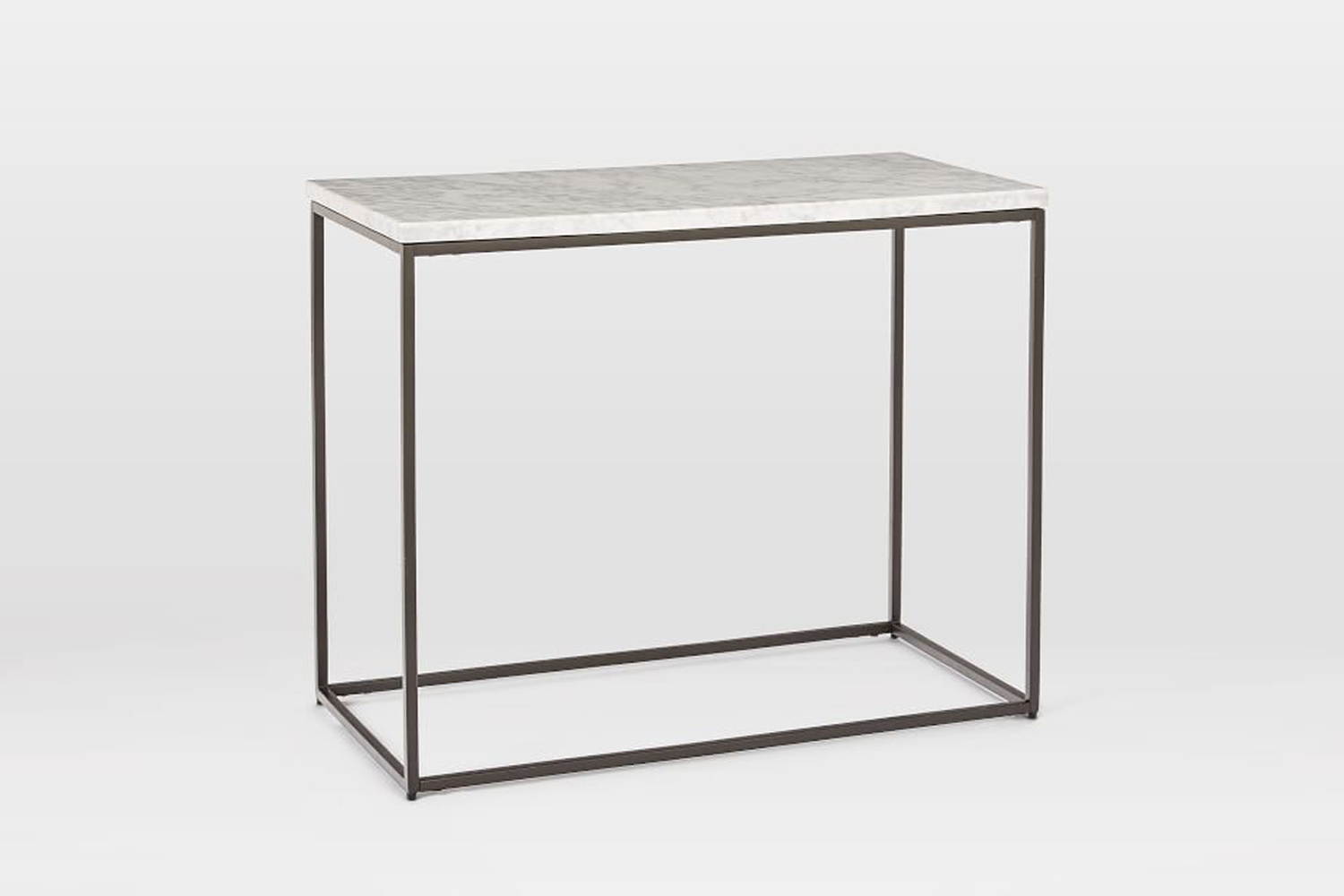
The Streamline Side Table proves that “narrow” does not have to mean “tiny.” Its elongated top measures about 28 inches wide but less than 14 inches deep, creating generous surface area without projecting far into the room. At approximately 23 inches high, it pairs comfortably with many contemporary sofas.
The slim metal frame keeps the footprint visually light, while wood or marble top options allow the table to lean casual, refined, or slightly glamorous. It is particularly effective beside a sofa with a long arm or in a narrow bedroom where a conventional nightstand would consume too much walking space. The extra width also accommodates a lamp and a drink without forcing them into an uncomfortable first date.
Research basis:
5. Yamazaki Tosca End Table
Few tables embrace narrow living as enthusiastically as the Yamazaki Tosca End Table. Its usable top is approximately 16.5 inches wide and only about 6.6 inches deep, making it suitable for genuinely difficult gaps. The white steel frame and wooden top give it the brand’s familiar combination of Japanese-inspired simplicity and practical organization.
A lower shelf adds storage for books, a small basket, or a folded throw. Because the table weighs just over five pounds, it can be moved easily from the sofa to the bedside or into a guest room. The top is best suited to carefully selected essentials rather than a sprawling decorative display. Consider it a strict but fair landlord for your belongings.
Research basis:
6. Yamazaki Plain C Side Table
A C-shaped table solves a common small-space problem by sliding its base beneath a sofa or bed. The upper surface can then hover above the cushion or mattress edge, putting a laptop, snack, or coffee within easy reach. Yamazaki’s Plain C Side Table stands roughly 22 inches high and combines a slim steel structure with a warm wooden top.
This design is especially useful in homes without room for a permanent desk. It can provide a temporary work surface during the day and retreat beside the sofa when the laptop closes. Before buying any C-table, measure the clearance beneath your furniture; even the most elegant base becomes considerably less helpful when it cannot slide under anything.
Research basis:
7. Crate & Barrel Cruz 10-Inch C Table
The Cruz C Table is designed around an especially compact rectangular top measuring approximately 10 inches across. Its metal construction and burnished finishes give it more polish than many utilitarian laptop tables, allowing it to blend into a sophisticated living room instead of looking borrowed from an office break area.
The narrow surface is appropriate for a drink, remote control, phone, or small plate. Because it is a C-table, it can move closer to the seated user than a traditional end table. It is ideal for apartment sofas, reading chairs, and rooms where every surface must remain easy to relocate.
Research basis:
8. Thuma C Side Table
Thuma’s C Side Table uses a minimal form that tucks around the curve or arm of upholstered seating. The streamlined structure makes it useful as a temporary desk, dining surface, or conventional end table, particularly in a room where furniture must adapt throughout the day.
Its appeal lies in restraint. There are no drawers, oversized shelves, decorative brackets, or mysterious knobs pretending to be important. The shape performs one clear task: bringing a usable surface closer without occupying a large block of floor. Pair it with a modern sofa or place it beside an accent chair that lacks enough space for a full-width table.
Research basis:
9. Serena & Lily Deen Side Table
The Deen Side Table introduces a softer, more decorative alternative to all-metal minimalism. Its open storage and tailored proportions make it suitable for a small bedroom, guest room, or coastal-inspired sitting area. The open design provides space for books or a basket without creating the visual density of a closed nightstand.
This type of table is particularly helpful when a bedroom needs some storage but cannot accommodate a wide bedside cabinet. Keep the lower area edited and use the top for a reading lamp, water glass, and perhaps one attractive object. The word “perhaps” is important; small nightstands can move from styled to overcrowded with breathtaking speed.
Research basis:
10. West Elm Reeve Mid-Century Marble Side Table
The Reeve Mid-Century Marble Side Table combines a broad 28-inch surface with a depth of only about 14 inches. That shape is useful beside long sofa arms, in narrow seating areas, or against a wall where a square end table would project too far into the walkway.
A marble top provides visual substance, while the slender base keeps the overall form from becoming heavy. The mix works well in rooms that need a little material contrast beside soft upholstery. Because natural stone is heavier than wood or thin steel, this table is less suited to constant relocation, but it offers greater stability for lamps and decorative objects.
Research basis:
How to Choose the Right Slim Side Table
Measure the Actual Gap
Do not estimate narrow spaces by staring at them thoughtfully. Measure the width, depth, and available walking clearance. Remember that angled legs, broad bases, and projecting shelves may require more room than the tabletop dimensions suggest.
Match the Height to Your Seating
A tabletop near the height of the sofa or chair arm is usually easiest to use. Slightly lower is generally better than noticeably higher. Sit in the chair and lower your hand as though placing a drink; the natural landing point provides a surprisingly useful height test.
Choose the Surface for the Job
A drink table can be extremely small. A lamp table needs a broader and more stable top. A laptop table should provide enough depth for the device and enough clearance for comfortable positioning. Decide what the table must hold before falling in love with a surface barely large enough for one ambitious coaster.
Consider Visual Weight
Open metal bases, glass, pale wood, and thin profiles help preserve an airy appearance. Solid blocks and dark closed cabinets can still work, but they contribute more visual mass. In tight rooms, seeing more floor usually makes the layout feel less crowded.
Think About Movement
Lightweight tables are useful in flexible living spaces, but stability matters in homes with children, pets, or exuberant adults who gesture while telling stories. Look for a sufficiently broad base, balanced construction, and a top that does not wobble when touched.
Real-World Experience: What Living With a Slim Side Table Reveals
The first lesson of using a slim side table is that convenience depends more on placement than surface area. A small table positioned exactly where your hand naturally falls can be more useful than a large table located two feet away. This becomes obvious during ordinary routines: setting down coffee, charging a phone, reaching for reading glasses, or finding the remote before the streaming service asks whether anyone is still watching.
The second lesson is that narrow tables encourage better editing. A generous coffee table can accumulate mail, cables, candles, magazines, snack wrappers, and at least one object nobody remembers purchasing. A six- or ten-inch-deep surface forces decisions. The lamp stays. The coaster stays. The pile of expired coupons receives a long-overdue farewell. This limitation often makes the entire seating area feel calmer.
C-tables are especially satisfying in daily use because they bring the surface directly over the edge of a sofa. They work well for a laptop, tablet, or quick meal, but the furniture clearance must be checked carefully. Sofas with very low frames, reclining mechanisms, or thick rails may prevent the base from sliding underneath. Measuring both the table base and sofa clearance avoids the classic experience of assembling a clever space-saving table only to discover that it saves space somewhere else.
Weight also changes the experience. A lightweight steel table can move from room to room with one hand. That flexibility is valuable in small homes where the same corner might function as a workplace, reading nook, and entertaining area. However, an extremely light table can shift when bumped. Felt pads or nonslip protectors may help, particularly on smooth wood or tile floors.
Material maintenance becomes noticeable because side tables live close to drinks. Powder-coated steel is generally easy to wipe clean. Wood benefits from coasters and quick attention to spills. Marble provides a luxurious surface but may stain or etch if acidic liquids are ignored. Glass and mirrored metal visually disappear, yet they also display fingerprints with the enthusiasm of a detective collecting evidence.
Open shelves are useful, although they work best when treated as display-storage hybrids. One basket, a few books, or a folded throw looks intentional. Filling every inch with cables, medication bottles, receipts, and miscellaneous chargers turns the airy table into a transparent junk drawer. The storage may technically work, but the room loses the visual lightness that made the table appealing.
Finally, a slim side table often proves more versatile than expected. It may begin beside the sofa, migrate to the guest room as a nightstand, spend a week holding a plant, and return to the living room during a party. That adaptability is the real advantage. A good narrow table does not merely fit into a small space; it responds when the space changes.
Conclusion
Slim side tables are small-space problem solvers disguised as attractive furniture. The strongest designs balance compact dimensions with useful height, stable construction, and enough surface area for daily essentials. A narrow steel table can deliver storage without heaviness, while a C-table can create an instant workspace beside a sofa. Longer, shallow designs offer room for lamps and books while preserving valuable walking space.
Before choosing one, measure the full footprint, compare the tabletop height with your seating, and decide what the surface must hold. The winning table is not necessarily the smallest or most expensive. It is the one that quietly makes the room easier to use without constantly reminding everyone that space is limited.