The Afteroom Bar Chair is what happens when Scandinavian restraint meets a very practical question: how little furniture can you use while still creating a chair people actually want to sit on? Designed by Stockholm-based Afteroom Studio for the Danish design brand now known as Audo Copenhagen, this elevated seat replaces decorative fuss with a slim steel structure, a compact backrest, and carefully balanced proportions.
It looks almost like a chair reduced to a line drawing. Yet behind that simple silhouette are thoughtful decisions about stability, counter clearance, foot support, material contrast, and everyday comfort. This guide examines the Afteroom Bar Chair’s design, dimensions, materials, available configurations, styling potential, advantages, limitations, and real-world usabilitywithout pretending that “minimalist” automatically means “perfect for everyone.”
What Is the Afteroom Bar Chair?
The Afteroom Bar Chair is a tall, four-legged seating design created by Afteroom Studio and produced by Audo Copenhagen. Its basic construction combines a slender powder-coated steel frame with plywood, wood veneer, foam, or upholstery, depending on the selected model. The standard upholstered-seat version measures approximately 39.8 inches high, 19.7 inches wide, and 21.7 inches deep, with a seat height of about 28.9 inches. These proportions place it firmly in the bar-height category rather than the counter-height category.
The chair belongs to a broader Afteroom collection that includes dining chairs, counter chairs, stools, benches, and accessories. Across the collection, the designers repeatedly use honest materials, uncomplicated geometry, and a “less is more” approach. In other words, this is not a chair that arrives wearing twelve decorative pillows and asking where the chandelier is.
Afteroom Studio and Its Design Philosophy
Afteroom Studio was founded and is directed by Hung-Ming Chen and Chen-Yen Wei, Taiwanese-born designers working from Stockholm. Their stated goal is to create objects that endure visually and functionally, becoming more valuable to their owners as time passes rather than looking exhausted after the next trend cycle.
Their work blends Nordic simplicity with international influences. The resulting furniture tends to look calm, intelligent, and slightly architectural. The Afteroom Bar Chair is frequently described as influenced by Bauhaus functionalism because its visual identity comes directly from structure, proportion, and purpose instead of added ornament.
From MENU to Audo Copenhagen
Older product listings may identify the chair as a MENU design, while newer listings use the Audo Copenhagen name. This is not evidence that the chair has entered a furniture witness-protection program. MENU and by Lassen were united under the Audo Copenhagen identity in 2023, bringing their established collections into one design house.
Design Characteristics of the Afteroom Bar Chair
A Silhouette Built From Essentials
The chair’s most recognizable feature is its visual economy. Four narrow legs rise into a circular or gently shaped seat, while a low backrest appears to float behind the sitter. Crossbars strengthen the base and create a convenient footrest without making the frame look heavy.
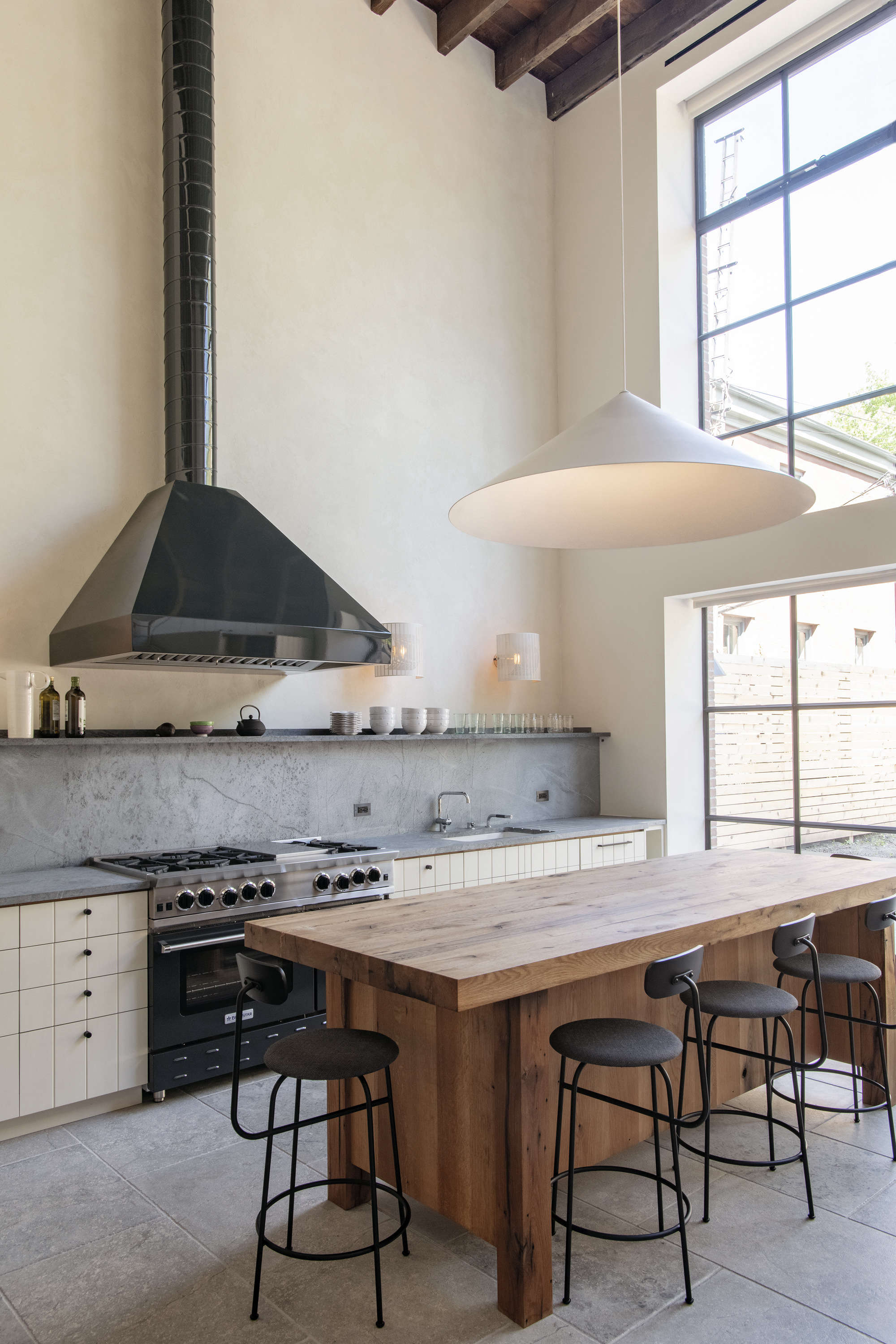
This combination gives the Afteroom Bar Chair an unusually light presence for a full-height bar chair. In an open kitchen, that matters. Large upholstered stools can create a visual barricade along an island, while the Afteroom design allows light, flooring, cabinetry, and architectural details to remain visible.
Four Legs for Stability
The elevated Afteroom seating designs use four legs to provide additional support and stability while retaining the collection’s stripped-back appearance. The steel structure does not require a chunky pedestal, a wide sled base, or a complicated swivel mechanism. Audo describes the concept as using minimal material while maintaining support.
This is particularly useful at bar height, where even a small amount of wobble can feel more dramatic than it would in an ordinary dining chair. The four-point base also makes the seat visually familiar and easy to position beside other furniture.
Steel and Wood Create Useful Contrast
Powder-coated steel gives the chair its crisp outline and structural strength. Wood veneer versions soften that industrial character with visible grain and warmer color. Upholstered configurations add another layer of texture, making the design feel more residential and comfortable without covering its defining geometry.
The material contrast helps the chair work across several interior styles. It can look appropriately disciplined in a modern apartment, pleasantly understated in a Scandinavian kitchen, or intentionally graphic in a hospitality space.
Afteroom Bar Chair Dimensions and Proper Fit
The standard bar-height upholstered-seat model is approximately 39.8 inches tall, 19.7 inches wide, and 21.7 inches deep. Its seat is about 28.9 inches above the floor. The corresponding counter-height model uses a lower seat of approximately 25 inches and is intended for conventional kitchen counters and islands.
| Measurement | Approximate Bar Chair Size |
|---|---|
| Overall height | 39.8 inches |
| Seat height | 28.9 inches |
| Width | 19.7 inches |
| Depth | 21.7 inches |
Bar Height Versus Counter Height
A common buying mistake is ordering a bar chair for a standard kitchen island. Typical kitchen counters are approximately 34 to 36 inches high and usually pair with seats measuring 24 to 27 inches high. Bar-height surfaces are commonly around 40 to 42 inches and pair with seats in the 28-to-33-inch range.
Therefore, the roughly 28.9-inch Afteroom Bar Chair seat works best with a genuinely elevated bar or table. For a standard 36-inch island, the Afteroom Counter Chair is usually the more comfortable choice. Measure the vertical distance from the floor to the underside of the surfacenot merely to the top of a thick countertopand aim for enough room to sit without negotiating with the counter using your kneecaps.
How Many Chairs Will Fit?
The chair is less than 20 inches wide, but the physical width is not the only measurement that matters. Each sitter needs elbow room, and stools should not be packed together like books on an overcrowded shelf. Kitchen-planning guidance commonly recommends roughly 28 to 30 inches of counter width per person for maximum comfort, along with sufficient clearance behind the seats.
For a 72-inch bar, two chairs will feel generous and three may work if the overhang, legs, and surrounding circulation permit it. Before ordering, mark each chair’s footprint on the floor with painter’s tape. This unglamorous five-minute exercise can prevent a very glamorous purchasing mistake.
Available Versions and Materials
Wood Veneer Models
Wood veneer versions emphasize the original chair’s light, graphic structure. Depending on the market and current collection, finishes may include natural oak, dark-stained oak, black-painted ash, or related options. The wooden seat and backrest introduce warmth while preserving the thin profile.
This version is especially attractive in kitchens containing timber cabinetry, natural stone, or matte black hardware. The repeating wood tone can connect the chair to the room, while the black frame provides enough contrast to prevent everything from becoming one large beige smoothie.
Upholstered-Seat Models
The upholstered-seat Afteroom Bar Chair combines a padded seat with a wood veneer backrest and powder-coated frame. It offers a practical compromise for buyers who appreciate the clarity of the original design but expect to remain seated for breakfast, conversation, remote work, or an unusually long discussion about where to order dinner.
Upholstery choices vary by retailer and region. Fabric selection affects not only color but also maintenance, tactile comfort, durability, and the chair’s overall mood.
Afteroom Bar Chair Plus
The Plus model adds a wider backrest and more extensive upholstery. Its overall form remains slender, but the larger padded surfaces make it more suitable for longer sitting periods. Retail listings show Plus models in bar and counter heights, with multiple textile and leather choices.
Visually, the Plus feels softer and more substantial. The original model is the better expression of radical simplicity; the Plus is the version most likely to win over someone who looks at a tiny backrest and immediately begins drafting a complaint on behalf of their lumbar region.
Comfort: Better Than It Looks, but Not a Lounge Chair
The Afteroom Bar Chair is more supportive than its delicate silhouette suggests. The footrest gives the legs a natural resting point, the four-legged base feels grounded, and the backrest provides a clear contact point without surrounding the body.
However, expectations matter. The compact back is designed for upright, casual seatingnot for leaning back through a three-hour movie. A wood seat will feel firmer than a padded alternative, while the standard upholstered version improves pressure relief without turning the chair into an armchair on stilts.
For quick breakfasts, coffee, cocktails, and conversational seating, the standard chair offers a sensible balance. For daily meals, lengthy work sessions, or commercial settings where guests may remain seated for an extended period, the Plus version’s wider upholstered back may be the stronger choice. Design publications and retailer guides consistently treat back support, seat padding, material quality, and intended sitting duration as central considerations when choosing bar seating.
How to Style the Afteroom Bar Chair
Modern and Scandinavian Kitchens
Place the black-framed chair beside pale oak cabinets, honed stone counters, simple pendant lights, and warm white walls. The chair’s curves prevent the room from feeling overly rigid, while its steel frame repeats black faucets, window frames, or cabinet pulls.
Industrial Interiors
Against brick, concrete, stainless steel, or dark cabinetry, the Afteroom Bar Chair can reinforce an industrial palette without adding unnecessary bulk. Choose upholstery or natural veneer to keep the room from feeling like a highly organized loading dock.
Small Apartments
The open frame is valuable in compact rooms because it occupies less visual space than a heavily upholstered stool. Architectural Digest notes that well-planned islands and multifunctional furniture can make small kitchens substantially more useful; visually light seating supports that goal by keeping sightlines open.
Restaurants, Bars, and Offices
The chair’s recognizable silhouette can work in hospitality areas, shared kitchens, meeting bars, and reception spaces. Certain current Plus configurations are listed with commercial furniture certifications and long manufacturer warranties, although specifications should always be verified for the exact model, region, and intended application.
Advantages and Possible Drawbacks
Reasons to Choose It
- Distinctive minimalism: The design is recognizable without being visually loud.
- Compact appearance: Its open steel frame keeps kitchens and dining spaces feeling less crowded.
- Multiple comfort levels: Veneer, upholstered-seat, and Plus versions suit different preferences.
- Coordinated collection: Matching dining and counter-height pieces can create continuity across an interior.
- Durable material strategy: Powder-coated steel, plywood, veneer, and replaceable components support long-term use.
Reasons It May Not Be Ideal
- Premium positioning: Authentic designer furniture costs more than mass-market bar seating, and prices rise with upgraded upholstery.
- Limited recline: The small backrest supports upright sitting but does not provide lounge-style comfort.
- Fixed height: It does not swivel or adjust, so accurate surface measurements are essential.
- Indoor use: Current product information generally identifies the chair as unsuitable for outdoor exposure.
- Upholstery requires care: Light fabrics can be less forgiving around red wine, tomato sauce, children, and adults who behave like children.
Cleaning and Maintenance
Dust the frame and wooden components regularly with a soft, dry cloth. Avoid abrasive pads, harsh chemical cleaners, and soaking the veneer. Spills should be blotted promptly instead of rubbed enthusiastically into a larger and more expressive stain.
For upholstered versions, use the care instructions supplied for the selected textile or leather. Retail care guidance commonly recommends gentle vacuuming with a soft attachment and cautious spot treatment using appropriate mild products. Strong solvents, oil-based cleaners, radiators, and intense direct sunlight may damage or discolor certain coverings.
Periodically inspect the glides, seat connections, and footrest. Audo currently lists replacement glides and several small spare components for Afteroom seating, which is useful because a chair is easier to keep than to replace when one tiny floor glide decides to disappear into another dimension.
Is the Afteroom Bar Chair Worth Buying?
The Afteroom Bar Chair is best suited to buyers who value authentic contemporary design, restrained materials, and visual lightness. It earns its place not by offering every possible feature but by refining a few essential ones: stable seating, a footrest, modest back support, and a silhouette that complements rather than dominates the room.
It is less suitable for shoppers who prioritize adjustable height, swiveling, thick cushioning, armrests, or budget pricing. Those features are not absent by accident; they are outside the design’s deliberately narrow mission.
Before buying, confirm the surface height, select the correct bar or counter model, compare the standard and Plus backrests, and request upholstery samples when available. Designer furniture is too expensive for choosing fabric colors by squinting at a phone screen during lunch.
Living With the Afteroom Bar Chair: Practical Experience
In everyday use, the first noticeable quality of the Afteroom Bar Chair is not the seat but the space around it. Many bar chairs behave like small pieces of architecture, creating a dense row of backs, arms, cushions, and legs. The Afteroom chair leaves much more of the room visible. In an open-plan kitchen, that can make the island feel connected to the living area rather than fenced off from it.
Pulling the chair away from the bar is straightforward because the frame is visually and physically manageable. It does not have a broad pedestal base that catches shoes or requires a complicated sideways maneuver. The rear backrest also gives the user a natural point to hold, although upholstered surfaces should not be treated like luggage handles.
Once seated, the footrest becomes an important part of the experience. At nearly 29 inches high, a bar seat can leave shorter users feeling as though their feet have been officially removed from the conversation. The crossbar provides a stable place to rest them and helps create a more balanced upright posture.
The compact backrest feels surprisingly useful during coffee, breakfast, or casual conversation. It touches the lower or middle back without forcing a rigid posture. Nevertheless, users who enjoy leaning deeply into a chair may find the standard back too restrained. For a 20-minute meal, it is usually sufficient. For an evening of cards, a long tasting menu, or three consecutive video meetings, the Plus model is likely to feel more accommodating.
The choice between a wooden and upholstered seat changes the experience considerably. Veneer feels crisp, cool, and architecturally honest. It is also easy to wipe clean, making it practical near food preparation areas. Padding feels friendlier during longer sessions, but fabric introduces more maintenance. A household that regularly hosts guests may appreciate upholstery; a household containing enthusiastic spaghetti eaters may appreciate wood.
Movement around the chair also deserves attention. Its open frame makes the floor easy to see, but the splayed legs occupy more area than the round seat suggests. In a narrow passage, enough clearance behind the chair remains essential. A beautifully proportioned stool can still become an obstacle course when placed 18 inches from a wall.
Visually, the chair tends to disappear and reappear depending on the surroundings. Against dark cabinetry, a black frame nearly dissolves, leaving the seat and backrest to float. Against a pale wall, the outline becomes graphic and sculptural. Natural veneer makes the design warmer; dark upholstery gives it a sharper, restaurant-like character.
Another practical advantage is that the chair does not depend on a trend-heavy shape. Rounded bouclé stools, oversized channel-tufted seats, and brightly colored pedestal chairs may be delightful, but they often announce a particular design era. The Afteroom chair’s simpler geometry is easier to combine with future changes in lighting, cabinet color, hardware, or flooring.
Noise and floor protection depend partly on the condition of the glides. On hard flooring, properly fitted glides help the chair move more quietly and reduce scratching. They should be inspected occasionally, particularly in busy kitchens where chairs are dragged several times a day. Lifting rather than pulling remains the kindest technique, even if nobody in the household follows that excellent advice until the floor develops evidence.
Overall, living with the Afteroom Bar Chair is an exercise in appreciating restraint. It does not massage the sitter, rotate dramatically, or conceal snacks inside a secret compartment. Instead, it performs its role with composure. When correctly matched to the bar height and chosen in a suitable finish, it provides stable seating, useful support, and a refined visual rhythm without making the kitchen feel crowded.
Conclusion
The Afteroom Bar Chair succeeds because it understands the difference between simple and unfinished. Every visible element contributes to structure, support, comfort, or proportion. Its powder-coated frame creates stability, its footrest improves usability, and its wood or upholstered surfaces bring warmth to an otherwise graphic silhouette.
Buy the standard version for the clearest expression of Afteroom Studio’s minimalism. Choose the upholstered-seat configuration when daily comfort matters, or consider the Plus model for a broader backrest and longer sitting periods. Most importantly, measure the bar first. No amount of Danish design prestige can rescue a chair whose seat is five inches too high for the counter.