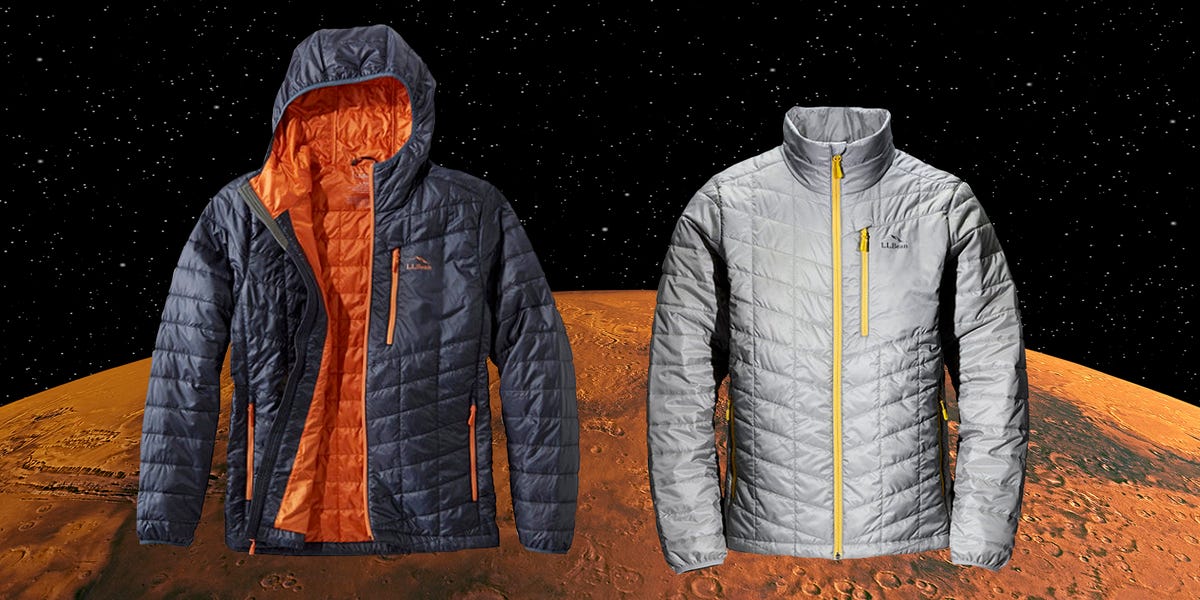
Some jackets fight weather the way a toaster fights a bathtub: bravely, briefly, and with a lot of regret.
Others are built like tiny personal spacecraftengineered for violent temperature swings, moisture, wind,
and that special kind of cold that makes your eyelashes file for divorce.
“NASA tech” in clothing can sound like marketing glitter, but a surprising amount of real space research
has quietly migrated into everyday gear. Not because astronauts needed to look cute on a catwalk (though,
honestly, spacesuits already have big “runway puffer” energy), but because space is a masterclass in
thermal chaosand solving thermal chaos on a spaceship creates tools that work pretty well in a sleeting parking lot.
In this deep-dive, we’ll break down which space-derived materials actually show up in modern outerwear,
how they work, what they’re good at (and what they’re not), and how a “NASA-inspired” jacket can legitimately
help you stay warmer, drier, and less sweaty when the forecast chooses violence.
What “NASA Tech” Really Means in a Weather-Fighting Jacket
Let’s clear up the confusion: NASA doesn’t typically manufacture consumer jackets. What it does do is fund,
develop, test, and document technologies for aerospace needsthen many of those technologies get licensed,
commercialized, or adapted by private companies. The result is a pipeline of “space-to-street” innovations:
insulation that weighs almost nothing, textiles that buffer temperature swings, and reflective layers that manage heat.
When a jacket claims NASA roots, it’s usually referencing one of these paths:
- Technology transfer and licensing: A company adapts a space-developed material or method.
- SBIR-funded research: NASA funds early-stage development with commercial potential.
- NASA-problem, Earth-solution: Spacecraft thermal control becomes outdoor thermal control.
The most common “NASA-adjacent” features you’ll see in outerwear cluster into three categories:
reflective insulation, aerogel-based insulation, and phase change materials (PCMs). Each fights the elements
differentlyand the magic is in how they’re combined.
The Big Three Space-Inspired Tricks That Make a Jacket Feel Like a Mini Habitat
1) Reflective insulation: the “space blanket” effect (but smarter)
Reflective insulation has one job: reduce heat loss by reflecting your body’s radiant heat back toward you.
NASA popularized multilayer insulation (the shiny “blanket” look you’ve seen wrapped around spacecraft) because
radiation is a big deal in space. On Earth, you’re dealing with convection and evaporation toobut reflective layers
can still help, especially in cold, windy conditions.
In jackets, reflective tech usually appears as a dotted or patterned metallic print on the lining. That pattern matters:
a full solid reflective sheet can trap moisture and turn you into a human terrarium. The dot layout aims to reflect heat
while leaving breathable channels so sweat vapor can escape.
Where it shines: standing still in cold air, windy commutes, stadium games, early morning dog walks,
and any scenario where you’re generating heat but not enough to “outrun” the cold.
Where it disappoints: high-output activity (snow shoveling, fast hiking) if the jacket can’t vent well.
Reflective tech can’t “create” warmthit can only help you keep more of what you already produce.
2) Aerogel insulation: “mostly air,” absurdly effective
Aerogel is famous for being incredibly low in thermal conductivitymeaning it slows heat flow extremely well.
Classic silica aerogel is also famously brittle (great for science demos, less great for elbows). But aerogel composites
and blankets evolved to be flexible enough for real-world use, including apparel and footwear.
In a jacket, aerogel-based insulation can provide impressive warmth without the bulk of thick synthetic fill or down.
Think “less Michelin Man, more stealth warmth.” That makes it attractive for travel jackets, city wear, and layering systems
where you want mobility and packability.
Where it shines: cold + wind, long periods outdoors, and situations where lightweight warmth matters
(commuting, winter travel, casual hikes).
Where it disappoints: if the design doesn’t protect the insulation from compression, you can lose loft-related benefits.
Also, aerogel is not a force fieldyou still need a good shell fabric and construction to block wind and manage moisture.
3) Phase change materials (PCMs): a temperature “shock absorber”
PCMs are the nerdy secret behind some “never too hot, never too cold” comfort claims.
The concept is simple: a PCM absorbs heat when it melts (solid to liquid) and releases that heat when it solidifies again
(liquid back to solid). In textiles, PCMs are often microencapsulatedtiny capsules embedded in fibers or coatings
so the fabric can buffer temperature swings around skin comfort ranges.
In practical terms, PCMs don’t necessarily make you dramatically warmer in deep cold.
What they do well is smooth the ride: when you walk from freezing street air into a heated train, or when you start moving
uphill and your body heat spikes, PCMs can absorb some of that surge so you feel less clammy and less “boil-in-bag.”
Where it shines: stop-and-go lifestylescommuters, travelers, parents on sidelines, photographers,
anyone bouncing between indoor heat and outdoor cold.
Where it disappoints: PCMs have finite capacity. Once they’ve absorbed their “quota” of heat, they can’t keep absorbing
until they cool and reset. It’s more thermostat-like than furnace-like.
The Unsung Heroes: Comfort Tech Borrowed from Spacesuit Logic
A jacket’s performance isn’t only about insulation. Comfort is an ecosystem: sweat management, odor control, lining feel,
and how quickly the whole system dries. Space work pushed a lot of research into how humans stay comfortable in sealed,
high-stakes environmentswhere “a little sweaty” becomes “a serious problem.”
Moisture and thermal regulation: don’t confuse “warm” with “comfortable”
If you’ve ever been warm and wet at the same time, you understand why comfort tech matters.
Moisture pulls heat away from your body, and damp layers can make mild cold feel vicious. That’s why many high-performing jackets
pair insulation with linings engineered to move moisture, dry quickly, and reduce that sticky “plastic raincoat” experience.
PCMs can play a role here by dampening temperature spikes that cause sweating in the first place.
Reflective linings can also help maintain warmth with less bulkmeaning you may not need to overdress, which is often the first step
toward perspiration disaster.
Odor control: helpful, but not a free pass to skip laundry forever
Some NASA-adjacent textile innovations focus on antimicrobial approaches or odor reduction, especially for base layers.
In a jacket, odor control is usually a secondary benefit (your jacket is not your gym shirt), but it can matter for travel,
multi-day wear, and gear that lives in a backpack.
Important reality check: “antimicrobial” doesn’t mean “never wash.” It means “helps slow the funk.”
Your jacket still needs careespecially if its water-repellent finish or breathable membrane depends on staying clean.
How NASA-Inspired Materials Actually Battle the Elements
Let’s map the tech to the weather villains it fights. Think of your jacket as a layered defense system:
an outer shell for wind and water, insulation for heat retention, and inner comfort layers for moisture control.
NASA-inspired materials often enhance the middle and inner parts of that stack.
Cold air: retaining heat without wearing a sleeping bag
Aerogel insulation and reflective linings both reduce heat loss. Aerogel slows heat transfer; reflective layers reduce radiant loss.
Combined, they can make a jacket feel warmer at lower weight and thicknessespecially useful when you want mobility.
Wind: the silent thief
Wind strips away the warm microclimate around your body (hello, wind chill).
NASA-derived insulation alone can’t stop wind; that’s the shell’s job. But when the shell blocks wind,
high-performance insulation becomes dramatically more effective because you’re not constantly losing warmed air.
Wet weather: water management is a system, not a slogan
“Waterproof” can mean a lot of things, and not all of them are good for comfort.
A jacket that resists rain but traps sweat can leave you damp anywayjust from the inside.
The best designs treat water as a two-direction problem: keep external moisture out, and let internal vapor escape.
Reflective patterned linings and breathable constructions help here by aiming for warmth without sealing you in.
PCMs can help moderate overheating that leads to sweat build-up. The takeaway: comfort and dryness aren’t separate features;
they’re a shared outcome.
Temperature swings: the real everyday challenge
Most people don’t spend their day at a constant temperature.
You go from cold sidewalk to warm office, from a windy platform to a packed subway car, from a sunny trail to a shaded valley.
This is where PCMs are the sneaky MVP: they can buffer transitions so you feel less “freeze/boil/freeze” throughout the day.
Shopping Smarter: How to Spot Real “NASA Tech” vs. Space-Themed Vibes
Not every “NASA” claim is equally meaningful. Some are rooted in legitimate spinoff materials; others are basically “galaxy wallpaper.”
Here’s how to separate engineering from branding.
Look for specific material language
- Aerogel composite insulation (often described as aerogel-infused or aerogel blanket insulation)
- Thermal reflective lining with breathable patterning (dots, grids, mapped zones)
- Phase change materials (PCM) or “temperature-regulating microcapsules”
Ask how the jacket vents
Great insulation is useless if you can’t dump heat when you need to.
Pit zips, two-way zippers, breathable panel mapping, and adjustable cuffs/hem all matter. If the jacket is “NASA warm”
but has no way to vent, it may be “NASA sweaty” too.
Check construction basics: the classics still count
Space-derived materials perform best when the fundamentals are solid:
sealed seams (for rain shells), well-designed baffles (for insulation distribution), a hood that actually fits,
and cuffs that don’t invite wind like it’s a party guest.
Myths, Limits, and the Physics That Keeps You Honest
Myth: Reflective linings work equally well in all conditions
Reflective linings primarily address radiant heat loss. In strong wind or heavy sweat, convection and evaporation can dominate.
The lining helps, but it’s not a cheat code. A wind-blocking shell and smart layering still matter.
Myth: Aerogel means “warm forever” at any thickness
Aerogel insulation can be remarkably effective at low bulk, but warmth still depends on coverage, fit, and whether cold air can leak in.
A jacket with elite insulation but poor sealing around wrists/waist/neck will feel colder than it should.
Myth: PCMs are a heater
PCMs store and release heat; they don’t generate it. Think of them as a battery for thermal comfort.
When conditions let them “recharge,” they’re great at smoothing swings. When you’re in deep cold for hours with no reset,
their benefits can diminish.
A Practical Layering Playbook for a NASA-Tech Jacket
If you want the tech to work with you instead of against you, pair it with a simple layering strategy:
Base layer: manage moisture first
Use a wicking base (synthetic or merino) so sweat doesn’t sit on skin.
This reduces evaporative cooling and helps the whole system stay warm.
Mid layer: add adjustable warmth
A light fleece or thin synthetic mid layer gives you flexibility. If your jacket already uses high-efficiency insulation
(like aerogel composites), you may not need a bulky mid layerjust something that traps air and moves moisture.
Shell behavior: treat your jacket like a thermostat, not a vault
Zip down early, vent before you sweat, and tighten up when you stop moving.
NASA-inspired materials reward small adjustments because they’re designed to manage transitions and efficiency.
Conclusion: Space Science, Meet Sidewalk Weather
A jacket “powered by NASA tech” isn’t automatically better than every other optionbut when the claim is rooted in real,
commercialized innovations, it can be meaningfully different. Reflective linings help return radiant warmth without heavy bulk.
Aerogel-based insulation offers impressive cold protection at low thickness. Phase change materials can smooth the uncomfortable
swings that make everyday winter feel like a thermostat prank.
The best part is that you don’t need a rocket budget to benefit. You just need to look past the space-themed buzzwords and focus
on what’s actually inside the jacket: materials, construction, and ventilation. Combine that with smart layering, and you get a system
that handles wind, cold, damp, and variable activity like it was designed for… well… hostile environments.
Which, if we’re being honest, is exactly what a February parking lot is.
Experience Add-On: 7 Real-World Moments Where “Space Tech” Feels Surprisingly Practical
You don’t need to be on a lunar mission to appreciate the tiny engineering miracles inside a good jacket. What you need is a day where
the weather can’t commit to a personalityand you’re stuck living in the awkward in-between. Below are common, relatable situations where
NASA-inspired features tend to feel less like a gimmick and more like a quiet advantage.
1) The “cold start” commute that begins before your brain does
That first blast of air when you step outsidebefore your body has ramped up any heatcan make winter feel personal.
Reflective linings often feel most noticeable here because they help you keep the warmth you’re already producing, even if it’s not much yet.
You’re not instantly tropical, but the edge comes off faster. It’s the difference between “I regret everything” and “okay, we can do this.”
2) The indoor/outdoor ping-pong game (office, car, store, repeat)
One of the most annoying parts of winter is not the coldit’s the constant switching.
You walk quickly outside, heat up, then step indoors and suddenly you’re overheating under your own insulation.
PCMs are built for this kind of chaos. People often describe the feeling as “less spiky”: fewer moments where you swing from chilly to sweaty.
It’s subtle, like good suspension in a caryou notice it most when it’s missing.
3) The windy corner that turns your street into a wind tunnel
Wind is a thief with excellent cardio. When your shell blocks wind well, efficient insulation gets to do its job properly.
Aerogel composites can feel especially nice in wind because you get warmth without extra bulk flapping around or restricting movement.
That makes everyday walking feel less like you’re pushing through a cold ocean current.
4) The “standing still” penalty (sidelines, transit stops, outdoor events)
Movement creates heat; stopping takes it away. If you’ve ever watched a game outside or waited for late public transit,
you know how quickly your comfort can collapse. Reflective tech can help in these low-output moments because it’s most effective
when your body heat is limited and you need to conserve every bit. Pair it with a hood and sealed cuffs and you’ve got a much better
defense against the standstill freeze.
5) Travel days: airports are basically climate roulette
Airports are famous for two things: long walks and unpredictable temperature zones. You speed-walk to a gate (warm),
then sit near a vent that’s blasting arctic air (cold), then hustle again (warm). Jackets that combine breathable warmth with
temperature-buffering materials tend to feel less annoying on these days. You can keep the jacket on more often without feeling like you’re
marinating in your own heat, which is a surprisingly big quality-of-life upgrade when you’re carrying a bag and a mild grudge.
6) Light rain plus cold: the moodiest weather combo
Cold rain is where “warmth” and “dryness” become inseparable. If water soaks in, you lose heat fast.
A good shell matters most here, but efficient insulation also helps because you can stay warm without piling on thick layers that trap moisture.
In this scenario, breathable construction and smart venting can be as valuable as the insulation itself.
The jacket works best when it keeps rain out and lets internal moisture escape before it turns into a damp chill.
7) The “I dressed for winter… but then I carried groceries uphill” moment
This is the everyday athlete’s tragedy: you dress for the cold, then do something mildly strenuous, and now you’re overheating.
Jackets with patterned reflective linings and PCM-based comfort features can help reduce the runaway “sweat spike,” especially if you crack a zipper early.
The experience many people aim for is simple: you finish the task warm, not drenchedand you don’t feel instantly cold the second you stop moving.
Put all that together and the headline becomes less mysterious: NASA-inspired materials aren’t about turning you into an astronaut.
They’re about making a jacket more efficient at the same job you’ve always needed it to domanage heat, moisture, and windacross wildly changing conditions.
Space just happens to be the ultimate stress test. Your daily life is the consumer version of that test… with fewer meteoroids and more parking lots.