Note: This article is written as original web content synthesized from historical technology references, museum records, vintage electronics documentation, watch history resources, calculator history archives, and modern maker discussions.
Before smartphones politely bullied us into checking the time 147 times a day, there was a far more theatrical way to know whether you were late: press a tiny button and watch red numerals glow like they had just escaped from a science-fiction movie. That tiny glow came from LED bubble displays, one of the most charming pieces of 1970s electronic design. They were small, bright, futuristic, and just impractical enough to become unforgettable.
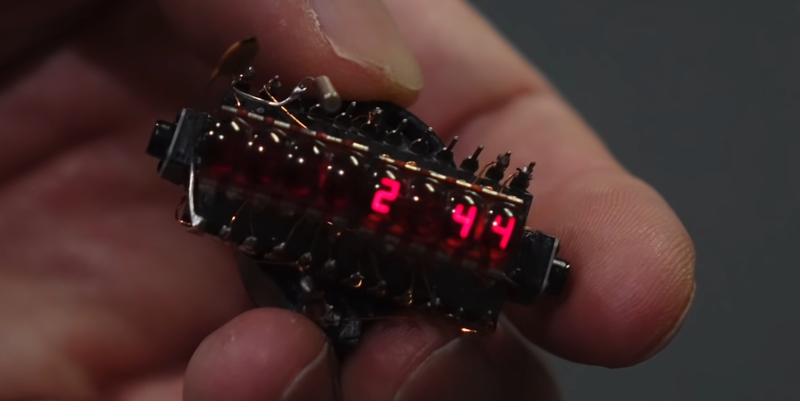
The phrase “LED bubbles from the 1970s tell the time” sounds like a lost disco lyric, but it describes a real and fascinating corner of technology history. These displays were seven-segment LED modules covered with tiny magnifying lenses, often molded right into the plastic package. The “bubble” enlarged each digit, making the miniature red display easier to read. You could find them in calculators, digital watches, clocks, lab instruments, and hobby electronics before liquid crystal displays became cheaper, thinner, and far less hungry for battery power.
Today, vintage LED bubble clocks have become favorites among collectors, retro-computing fans, watch nerds, and makers who enjoy building modern projects with old-school parts. They are not merely nostalgic decorations. They are glowing reminders of the moment when timekeeping jumped from gears and hands into silicon, quartz, and code.
What Are LED Bubble Displays?
An LED bubble display is a compact numeric display that usually shows digits through a seven-segment layout. Each number is formed by lighting a combination of seven small bars, with an optional decimal point. What made the “bubble” version special was the clear lens placed above each digit. Because early LED digits were tiny, the lens acted like a magnifying glass, turning a microscopic red number into something a human could read without squinting like a detective studying a ransom note.
These displays were typically red because early efficient LEDs were commonly made with materials that produced red light. Green, yellow, and other colors existed later, but red became the signature look of early digital watches and calculators. If you imagine a 1970s digital watch, you probably picture a black face, a brushed metal case, and glowing red numbers that appear only when summoned by a button. That is the LED era in one image.
Why the Bubble Lens Was Needed
Early LED technology was impressive, but it had limits. Small LED dies used less power, but they also created small characters. A bigger digit required more material, more current, and more cost. The bubble lens was an elegant compromise: keep the digit physically small, then enlarge its appearance optically.
This design gave bubble displays their distinctive personality. The digits looked slightly rounded, deep, and jewel-like. They did not merely display numbers; they glowed with presence. In an age when electronics were rapidly shrinking from room-sized machines into pockets and wrists, that glow felt like the future had finally become portable.
The 1970s: When Time Went Digital
The 1970s were a wild decade for consumer electronics. Calculators moved from office equipment to shirt pockets. Quartz watches challenged mechanical watchmaking. Semiconductor companies entered the watch business. People began to expect machines to calculate, count, alarm, time, and display information instantly. The humble LED bubble display was right in the middle of this transformation.
The Hamilton Pulsar, introduced in the early 1970s, became one of the most famous symbols of this shift. It was not just a watch; it was marketed almost like a wrist computer. Press a button and red LED digits appeared on a dark screen. That sounds ordinary now, but at the time it was a revelation. A wristwatch no longer needed hands, gears, or a visible dial. It could hide the time until asked, then reveal it with a tiny electronic performance.
Of course, this futuristic experience was expensive at first. Early LED watches could cost as much as serious luxury items. But as Texas Instruments, Hewlett-Packard, National Semiconductor, Litronix, and other electronics companies pushed display and chip technology forward, prices dropped. Suddenly, digital watches were no longer only for celebrities, executives, or people who wanted their wrist to look like it worked for NASA.
How LED Bubbles Tell The Time
A vintage LED bubble clock looks simple from the outside: digits, a case, a power source, and maybe a few buttons. Inside, it is a miniature orchestra. A timekeeping circuit counts seconds, usually with help from a quartz crystal or a line-frequency reference in older clock designs. Driver circuitry sends current to the LED segments. Multiplexing allows several digits to share control lines by lighting them rapidly one after another. Your eyes blend the sequence into a stable display.
This trick is one of the reasons vintage electronics feel so magical. At any given instant, not every digit may be lit continuously. Instead, the circuit scans through the display quickly enough that persistence of vision fills in the rest. The clock is basically juggling light faster than you can complain about being late.
Seven Segments, Infinite Charm
The seven-segment display is one of the most successful user-interface designs ever created. With only seven bars, it can show the numbers 0 through 9 clearly enough for clocks, calculators, meters, and appliances. It is not glamorous in a modern high-resolution sense, but it is efficient, readable, and instantly recognizable.
Bubble LEDs add texture to that simplicity. Each digit appears under its own lens, giving the display a modular, almost gem-like look. That is why makers still love them. A modern OLED screen may show a perfect interface, but a bubble LED display feels alive. It has depth, glow, and a tiny bit of imperfectionthe good kind, like vinyl crackle or the click of a mechanical keyboard.
From Calculators to Watches to Clocks
Bubble LED displays became popular partly because the 1970s were the golden age of portable calculators. Early handheld calculators needed numeric displays that were compact, readable, and exciting enough to make the product feel advanced. LED displays did that beautifully. They made math glow.
Watches followed a similar path. The LED watch was one of the first consumer products that made semiconductor technology personal. Instead of a chip hidden inside a machine at work, the technology was on your wrist. It made time feel modern, precise, and slightly dramatic. You did not glance at an LED watch casually. You pressed the button and received the time like classified information.
Digital clocks also benefited from LED display technology. Wall clocks, desk clocks, clock radios, and experimental hobby clocks all used seven-segment numerals. Some used larger displays without bubble lenses, while smaller projects and compact devices leaned into magnified modules. The aesthetic became part of the decade’s visual language: red digits in the dark, chrome or plastic cases, and a sense that tomorrow had arrived a little early.
The Hewlett-Packard Connection
Hewlett-Packard played a major role in the history of LED display technology. HP calculators of the 1970s are still admired for their engineering, keyboards, display quality, and durability. The HP-35 scientific calculator, introduced in the early 1970s, helped redefine what a handheld calculator could be. Later, the HP-01 calculator watch pushed the idea even further by combining a digital watch, calculator, calendar, stopwatch, and computing functions into a wrist-worn device.
The HP-01 looked like something a Bond villain might use to calculate interest rates while escaping in a stainless-steel submarine. It had many tiny buttons, some meant to be pressed with a stylus stored in the bracelet. It was not the sleek smartwatch of today, but conceptually, it was far ahead of its time. It showed that once time became digital, it could be manipulated, calculated, stored, and combined with other functions.
That is the bigger story behind LED bubbles. They were not just display parts. They were gateways into the idea that ordinary objects could become computational.
Why LCD Eventually Took Over
For all their beauty, LED displays had a serious weakness: power consumption. A red LED digit needs current to emit light. In a watch, that matters a lot. Early LED watches often kept the display off most of the time. You pressed a button to see the hour because leaving the display on would drain the batteries quickly. This made LED watches dramatic, but not always practical.
Liquid crystal displays solved that problem. LCDs use far less power because they control light rather than generating it directly. They can remain visible continuously on a tiny battery. As LCD technology improved in the late 1970s and early 1980s, it became the obvious choice for mass-market digital watches and calculators.
LEDs did not disappear, of course. They became essential in indicators, signs, automotive lights, appliances, and eventually high-efficiency lighting. But the bubble LED display, as a mainstream timekeeping technology, had a relatively short reign. That short reign is exactly why collectors love it. It represents a specific moment: after mechanical time, before LCD dominance, during the age of red digital wonder.
Modern Maker Projects Keep LED Bubbles Alive
Today, LED bubble displays are popular in retro electronics projects. Makers often combine vintage displays with modern microcontrollers, real-time clock modules, 3D-printed cases, and USB power. The result is a clock that looks like it came from 1975 but behaves with 21st-century reliability.
Some builders use old Texas Instruments timekeeping chips or period-correct driver circuits to preserve the authentic engineering style. Others use Arduino, Raspberry Pi Pico, ESP32, or similar boards to make programming easier. Both approaches have value. One is historical restoration; the other is creative revival. Either way, the glowing bubbles return to the desk, where they continue doing what they do best: making time look cool.
Why Collectors Love Them
Collectors appreciate LED bubble clocks and watches for several reasons. First, they are visually distinctive. A red bubble display has a look that modern screens rarely imitate convincingly. Second, they are tied to important milestones in electronics history. Third, they are tactile. Buttons, metal cases, tiny lenses, replaceable parts, and visible circuit boards create a physical relationship with technology.
There is also the thrill of rescue. Many vintage LED watches and displays no longer work when found. Batteries leaked. Contacts corroded. Segments failed. Cases cracked. Restoring one can feel like persuading a tiny time machine to wake up after a 50-year nap.
Design Lessons From 1970s LED Bubbles
LED bubble displays teach several design lessons that still matter. The first is that constraints can create beauty. The bubble lens existed because early LEDs were small and power-sensitive. Instead of treating that limitation as a failure, engineers turned it into a feature. The display became recognizable because of the solution to its weakness.
The second lesson is that interaction matters. A push-button LED watch made checking the time feel intentional. Today, we are surrounded by always-on information. The 1970s LED watch did the opposite: it made information appear only when requested. That small interaction made the moment memorable.
The third lesson is that visual identity matters. Modern devices often hide their technology behind seamless glass rectangles. Vintage LED bubbles proudly reveal their engineering. You can understand the display by looking at it. Seven segments make a number. A lens enlarges it. A pulse of current lights it. The result is simple, honest, and delightful.
Specific Examples of LED Bubble Timekeeping
One classic example is the early LED digital watch inspired by the Hamilton Pulsar era. These watches often had dark mineral crystal fronts, metal cases, and red displays that appeared at the press of a side button. The experience was futuristic in the 1970s and still feels theatrical today.
Another example is the HP-01 calculator watch from 1977. While not simply a bubble-display clock, it belongs to the same family of LED-era wrist electronics. It combined timekeeping and calculation in a way that anticipated later wearable computing. It was complicated, expensive, and brilliantthe kind of product that makes engineers smile and accountants reach for aspirin.
A third example is the modern hobbyist bubble LED clock. Builders use vintage multi-digit displays, often salvaged from calculators or old stock, and drive them with modern timing circuits. These clocks may show hours and minutes, seconds, date, or even temperature. The magic is that the display remains vintage while the supporting electronics become easier to maintain.
Buying or Building a Vintage LED Bubble Clock
If you want to own an LED bubble clock, you generally have two paths: buy a finished vintage-inspired clock or build one yourself. Buying is easier, but building offers a deeper appreciation for the technology. You learn about segment mapping, multiplexing, current limiting, timekeeping modules, and the small heartbreak of discovering that one segment refuses to light because electronics enjoy drama.
When evaluating vintage parts, check the display carefully. Missing segments, dim digits, cracked lenses, and corroded pins can make restoration difficult. For watches, battery compartments are especially important. Old batteries can leak and damage contacts or circuit boards. For clocks, confirm whether the device uses a safe modern power supply or an older mains-powered design that may need professional attention.
For beginners, a low-voltage modern kit is usually the best entry point. It captures the LED bubble look without requiring risky repairs. More advanced collectors may enjoy restoring original watches, calculators, and clock modules, but patience is required. Vintage electronics reward curiosity, not rushing.
The Emotional Appeal of Red Digits in the Dark
Part of the appeal of LED bubble displays is emotional. They belong to a period when electronics still felt visibly electronic. The glow was not hidden. The components were not sealed behind anonymous surfaces. You could look at a device and imagine the current moving through it.
That red glow also carries cultural associations: space exploration, early computers, science-fiction props, calculator watches, arcade cabinets, stereo receivers, and late-night bedside clocks. It feels both technical and cozy. It can look like a spacecraft control panel or a sleepy alarm clock on a woodgrain nightstand. Not many technologies can pull off both.
Hands-On Experience: Living With an LED Bubble Clock
Using an LED bubble clock today is a different experience from checking a phone. A phone tells you the time while also tempting you with messages, videos, weather, headlines, and twelve notifications from apps you forgot you installed. An LED bubble clock has better manners. It tells the time and then minds its own business.
The first thing you notice is the glow. It is not the cold, flat brightness of a modern screen. It has depth. The tiny lenses make each digit look like it is floating inside a drop of red glass. In a dim room, the effect is surprisingly warm. It is technical, but not sterile. It feels like a small machine with a personality.
Setting the time can also be part of the charm. On modern devices, time often updates automatically. With a retro-style LED bubble clock, you may press physical buttons to adjust hours and minutes. That tiny ritual makes you aware of the clock as an object. You are not just configuring software; you are communicating with a device.
There is also a gentle slowness to it. Some vintage-style clocks refresh in a way that makes the digits flicker slightly when viewed from an angle or through a camera. That would be considered a flaw on a modern display, but here it feels authentic. It reminds you that the clock is scanning digits, driving segments, and performing its little routine many times per second.
Visitors tend to notice it. A bubble LED clock on a desk becomes a conversation starter faster than most smart speakers. People ask whether it is old, whether it still works, whether the parts are original, and why the numbers look so cool. The answer is simple: because engineers in the 1970s solved problems with style.
Living with one also changes how you think about technology. It proves that usefulness and delight do not have to be separate. The clock does one job, but it does that job with character. It does not need animations, subscriptions, cloud syncing, or a firmware update that somehow takes 23 minutes. It just glows, counts, and turns time into a tiny red performance.
For a workspace, it adds atmosphere without distraction. For a shelf, it becomes a piece of electronic sculpture. For a collector, it represents a bridge between calculators, watches, clocks, and early personal computing. For a maker, it is an invitation to learn. You can start with a display and end up understanding multiplexing, current control, microcontrollers, vintage semiconductor history, and why old data sheets are both useful and emotionally confusing.
The best part is that LED bubbles still feel futuristic, even though they are rooted in the 1970s. That is rare. Many old technologies become purely nostalgic. Bubble LEDs remain visually fresh because they are so direct. Light passes through a lens. Segments form numbers. Time appears. No swipe required.
Final Thoughts
LED bubbles from the 1970s tell the time, but they also tell a larger story. They tell us about the rise of portable electronics, the early excitement around digital watches, the engineering compromises behind small displays, and the visual language of a decade obsessed with the future. They remind us that technology does not have to be invisible to be advanced. Sometimes the best design is the one that lets the glow show.
Whether found in a vintage calculator, a rare LED watch, an HP-inspired wrist instrument, or a newly built maker clock, the bubble display remains a small masterpiece of practical imagination. It solved a readability problem, created a memorable aesthetic, and helped define the look of electronic timekeeping. Half a century later, those red digits still have the power to stop people in their trackswhich is impressive for something whose main job is telling you that you are five minutes late.