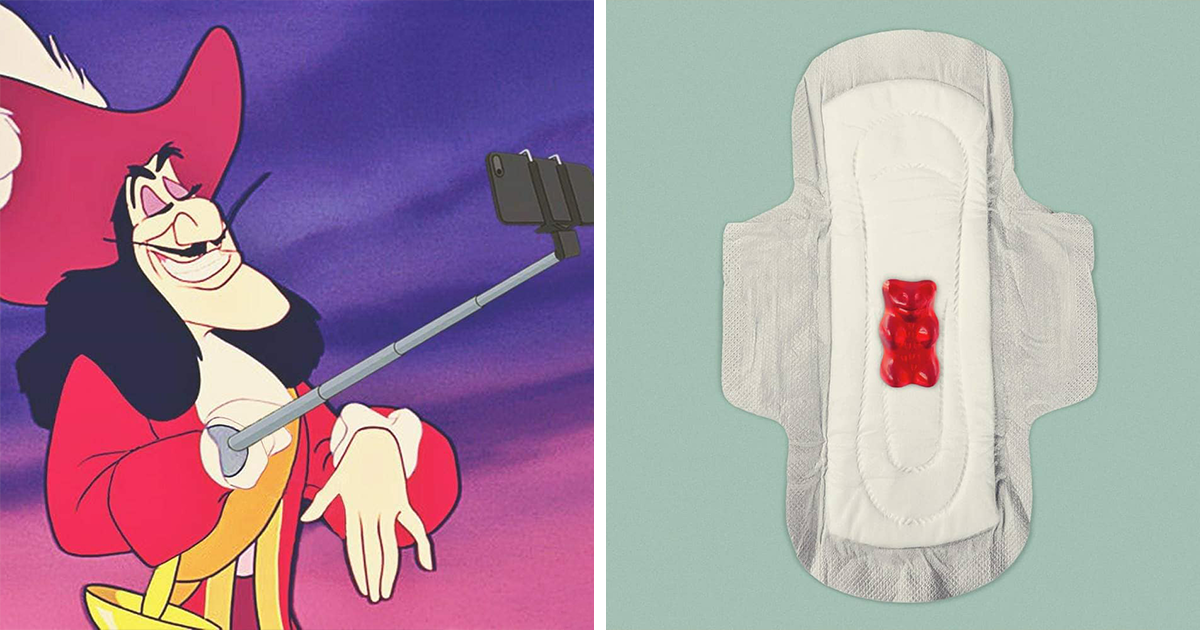
Some artists paint sunsets. Some sculpt marble. Suckertom takes a familiar piece of pop culture, gives it one deeply unnecessary twist, and sends it back into the world looking as though the internet sneezed on it. The result is a collection of silly and funny edits that can make a famous movie scene, classical statue, celebrity portrait, or ordinary object feel brand-newand slightly cursed.
The appeal of these 67 edits is not simply that they are strange. Plenty of online images are strange. What makes Suckertom’s work memorable is the precision of the joke. Each image begins with something viewers already recognize, then changes one visual detail until the original meaning collapses. A dramatic hero may become ridiculous. A serious artwork may acquire the emotional dignity of a rubber chicken. A glamorous celebrity may suddenly resemble an animal, a household object, or someone waiting unhappily at the motor vehicle office.
Who Is Suckertom?
Suckertom is the online name of Thomas Pohl, a German digital creator associated with Stuttgart. His work includes memes, collages, illustrations, animations, GIFs, and occasional sculptures. Pohl has described himself as a child of 1980s and 1990s pop culture, with interests spanning movies, television, skateboarding, design, fashion, and music. That background explains why his edits feel less like random Photoshop exercises and more like affectionate acts of cultural vandalism.
He did not begin with a grand plan to redefine digital art. According to interviews, the path started with deliberately ridiculous birthday cards made for friends. Their faces were inserted into absurd situations, and the reaction encouraged him to continue. He later began posting his strange creations online, where a private joke evolved into a recognizable visual style. That origin story matters because the work still feels personal and mischievous. It is polished enough to impress, but never so polished that it forgets to be stupid in the best possible way.
Why These Funny Photo Edits Work
They Start With Instant Recognition
A visual joke has only a moment to earn attention. Suckertom often begins with material that carries built-in meaning: a famous actor, a classic painting, a movie still, a superhero, a cartoon character, or an iconic pose. Viewers do not need an introduction. They already know the emotional rules of the image.
Then comes the interruption. The recognizable image is altered just enough to create a conflict between what the brain expects and what the eyes receive. Psychology researchers often describe humor as involving some form of incongruity or a “benign violation”something feels wrong, but not threatening enough to stop being fun. Suckertom’s edits live in that sweet spot. They are visual violations wearing clown shoes.
They Let the Image Deliver the Punchline
Many internet memes depend on captions. Suckertom frequently lets the composition do the talking. A swapped face, misplaced object, exaggerated body part, or impossible combination becomes the entire punchline. The viewer discovers the joke rather than being told where it is.
They Respect the Craft While Disrespecting Everything Else
Good absurdist editing still requires control. Lighting, scale, perspective, edges, texture, and color must cooperate long enough for the impossible scene to feel visually coherent. Digital compositing commonly relies on selections, masks, layers, blending, and careful adjustments that help separate subjects and unite unrelated source images. When those technical choices are handled well, the audience can focus on the joke instead of a badly cut outline around someone’s head.
The Main Types of Suckertom Edits
Pop-Culture Scenes With One Terrible New Idea
Movies and television provide perfect raw material because their images arrive with familiar emotions. A heroic moment is supposed to feel heroic. A romantic scene is supposed to feel tender. A horror sequence is supposed to create tension. Insert the wrong object, replace a character, stretch a feature, or change the physical logic, and the original mood falls apart instantly.
Classical Art That Loses Its Serious Face
Paintings and statues carry an aura of importance. They are displayed in museums, surrounded by respectful lighting and visitors whispering as though the artwork might wake up. That solemnity makes them excellent targets for comic editing. Give a noble figure a modern accessory, change the subject’s expression, or introduce an everyday object, and centuries of dignity can evaporate in seconds.
Suckertom’s approach belongs to a much older tradition of collage and photomontage. Artists have long cut, rearranged, appropriated, and recombined familiar imagery to create surprise, criticism, fantasy, or comedy. Museums such as MoMA and the Getty document how collage, Dada, and photomontage used unlikely combinations to challenge conventional meaning. Suckertom brings that remix instinct into the fast, playful language of social media.
Celebrity Look-Alikes and Accidental Doppelgängers
One of Pohl’s best-known later formats uses a familiar glasses-removal meme to compare celebrities with animals, objects, or other people who share an oddly specific resemblance. Names connected with that series include Ron Perlman, Ed Sheeran, Adam Driver, Harrison Ford, Jay-Z, Jim Carrey, Ice Cube, Steve Buscemi, John Travolta, and Laura Dern.
Visual Puns That Should Not Work but Do
Some edits function like illustrated dad jokes. A name, pose, object, or phrase is interpreted too literally and turned into an image. The humor comes from commitment. The artist takes a weak verbal connection and renders it with enough technical care that the viewer must acknowledge the effort. It is the digital-art equivalent of building a marble monument to a pun that made everyone at dinner roll their eyes.
From Photomontage to Meme Culture
Although Suckertom’s work belongs comfortably on Instagram, its creative logic predates social media. Collage joins fragments to create a new whole. Photomontage applies that principle specifically to photographic material. Dada artists used chance, interruption, and absurd combinations; later artists used photographic reuse for political messaging, fantasy, criticism, and visual experimentation.
The internet accelerated this process. Images can now be copied, altered, captioned, reposted, and transformed in hours. The Library of Congress has treated memes, GIFs, webcomics, slang, and other online forms as cultural material worth preserving, while Smithsonian coverage has noted that these everyday digital artifacts document how people communicate. Suckertom’s funny edits fit that larger history: they are disposable jokes on one level and small records of shared pop-cultural memory on another.
What Makes the Collection Feel Distinctly Suckertom?
A Love of Pop Culture Without Too Much Reverence
The edits rarely feel like attacks on the source material. They feel like the behavior of a fan who loves a movie enough to place something ridiculous inside it. Nostalgia is present, but it is not protected behind glass. Childhood heroes, famous artworks, and cultural icons are treated as toys that can be rearranged.
A Strong “Send This to Someone” Quality
The best social-media humor is portable. It can survive outside its original feed, cross language barriers, and make sense in a group chat at 1:17 a.m. Because many Suckertom edits communicate through images rather than long captions, they travel easily. This shareability is central to meme culture, where recognizable visual material gains new value through repetition, modification, and new contexts.
What Digital Creators Can Learn From These 67 Edits
Begin With a Clear Visual Premise
A funny edit should be understandable before the viewer starts searching for an explanation. Ask what the image is doing in one sentence. “This actor looks like that animal” is clear. “This serious painting now contains an aggressively modern inconvenience” is clear. A strong premise gives the technical work a destination.
Change Less, but Change It Better
Adding twelve unrelated objects usually creates clutter, not comedy. One carefully chosen change can be stronger because the viewer immediately compares the altered detail with the familiar original. Restraint also improves realism. If the joke is intentionally ridiculous, the composition around it should remain disciplined.
Remember That Remixing Has Legal Boundaries
Creators working with existing photographs, film stills, artworks, and characters should understand that copyright rules vary by use and circumstance. In the United States, fair use can apply to commentary, criticism, parody, scholarship, and other purposes, but there is no automatic percentage or simple formula that guarantees protection. Publication, licensing, commercial use, and the amount transformed can matter, so creators should seek appropriate legal guidance for high-stakes projects.
Why Silly Digital Art Matters
It is easy to dismiss funny photo edits as lightweight entertainment. That is partly true; they are entertainment, and thank goodness. Not every image needs to heal society, expose corruption, or explain the tax code. Sometimes art performs a smaller but still useful job: it interrupts routine, rewards attention, and gives strangers something harmless to laugh about together.
Conclusion
67 Silly And Funny Edits By Suckertom is more than a parade of bizarre Photoshop decisions, although it is certainly also that. The collection demonstrates how recognition, timing, visual craft, nostalgia, and absurdity can cooperate in a single frame. Thomas Pohl does not need a long setup. He borrows an image viewers understand, finds its weakest point, and pokes it with a digital stick until the seriousness leaks out.
The result is an online gallery that rewards both casual scrolling and closer inspection. Some edits produce an immediate laugh. Others require a second look before the wrongness reveals itself. The best ones may stay lodged in memory long enough to ruin a perfectly respectable movie scene forever. That is not a bug. That is the art.
The Experience of Scrolling Through All 67 Suckertom Edits
Looking through a long collection of Suckertom edits creates a surprisingly specific rhythm. The first few images establish the rules: familiar culture will be treated with absolutely no ceremony. You recognize the source, notice the change, and laugh. By the tenth image, you begin preparing for the trick. Your eyes scan faces, hands, backgrounds, and props as though you are conducting a criminal investigation into suspicious Photoshop activity.
That anticipation becomes part of the experience. A normal-looking frame starts to feel dangerous. Is the celebrity’s head slightly too large? Is the statue holding something invented after the fall of Rome? Is the animal simply an animal, or is it about to be identified as the lost sibling of a famous actor? Suckertom turns viewers into active participants because the joke often depends on spotting the disturbance.
The collection also produces a pleasant conflict between admiration and embarrassment. You may admire the clean masking, convincing shadows, or neatly matched perspective while simultaneously realizing that these skills were used to create an image no responsible adult had requested. That contrast is central to the charm. The craft says, “I worked carefully on this.” The concept says, “Unfortunately, this is what I chose to work carefully on.”
Another part of the experience is the sudden appearance of personal favorites. A technically elaborate image may impress you, but a painfully simple comparison may be the one that causes the loudest laugh. Humor is unpredictable that way. One viewer may prefer cinematic mashups, another may enjoy vandalized classical art, and someone else may lose composure over a dog with the exact facial energy of a tired supporting actor.
After enough images, the collection begins changing the way you look at ordinary photographs. You start noticing possible edits everywhere. A politician’s gesture resembles a movie villain. A fruit has the hairline of a celebrity. A Renaissance portrait appears to be waiting for headphones and a takeout coffee. This is perhaps the most entertaining aftereffect of Suckertom’s work: it temporarily installs his visual operating system in the viewer’s brain.
There is also a social pleasure in imagining who should receive each image. One edit belongs in the family chat. Another is clearly destined for a movie-obsessed friend. A third is too weird to explain and therefore must be sent immediately. The collection does not ask for solemn contemplation; it encourages circulation, reaction, and playful argument over which edit is funniest, cleverest, or most cursed.
By the final stretch, the cumulative nonsense becomes its own artistic statement. Sixty-seven separate jokes reveal a consistent creative habit: look closely at culture, refuse to treat it as untouchable, and search for the ridiculous possibility hiding inside the familiar. Finishing the collection feels like leaving a comedy museum where the gift shop sells only altered memories. You return to normal images, but normal no longer looks completely trustworthy.