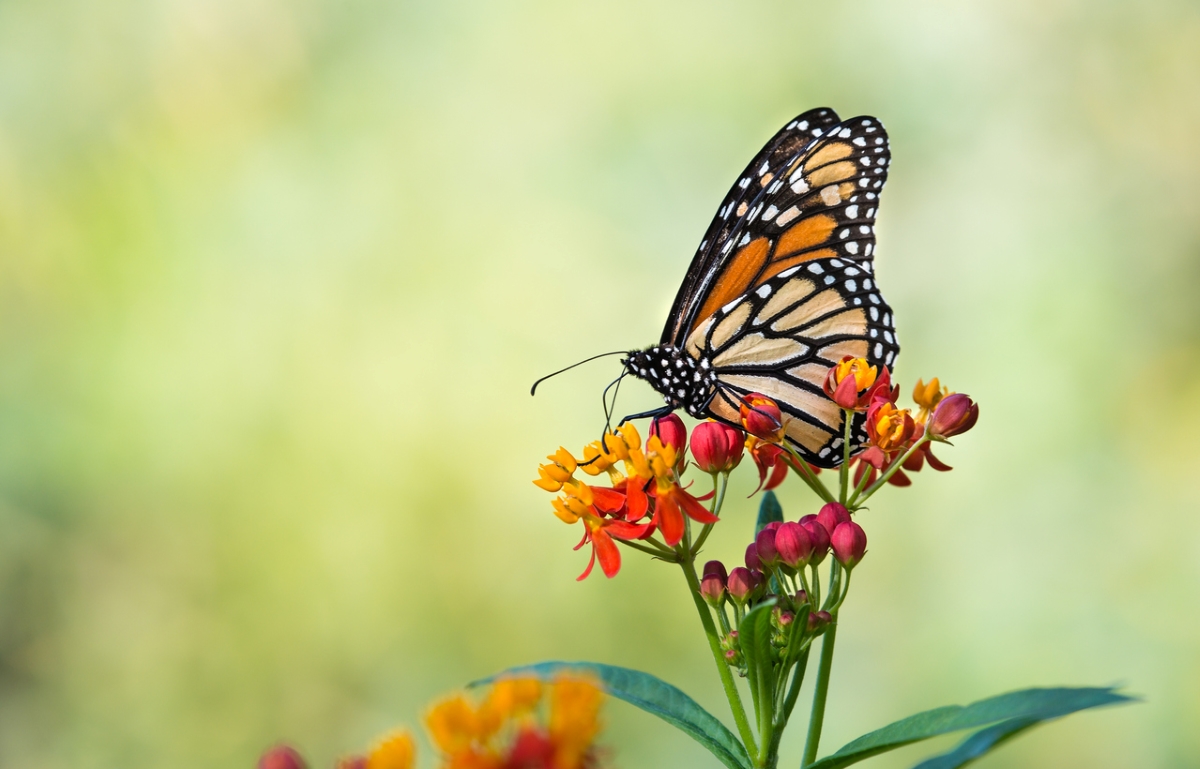
America’s skies are becoming quieter anmay give certain crop-eating insects longer seasons, wider ranges, and more opportunities to reproduce. The result is not a simple “fewer good bugs, more bad bugs” story, but it is an ecological warning that deserves immediate attention.
America Has Lost More Than One in Five Butterflies
A landmark nationwide analysis published in Science found that total butterfly abundance in the contiguous United States declined by 22% between 2000 and 2020. In practical terms, for every five butterflies that might have been seen at the beginning of the study period, only about four remained two decades later.
The researchers combined information from 35 monitoring programs, more than 76,000 surveys, and approximately 12.6 million individual butterfly observations. The dataset covered 554 species, making it the most comprehensive national assessment of American butterfly populations conducted to date. verage annual decline was about 1.3%. That figure may not sound apocalyptic when considered one year at a time. Compound it over two decades, however, and the cumulative loss becomes impossible to dismiss. Ecological decline often behaves like a slow leak: nothing seems dramatic until the tank is suddenly close to empty.
The losses reach far beyond a few rare species
The study contained enough data to calculate detailed trends for 342 species. Of those, 114 experienced statistically significant declines, while only nine showed significant increases. In other words, declining species outnumbered increasing ones by roughly 13 to one.
At least 107 species lost more than half of their recorded abundance, and 22 declined by more than 90%. Among the hardest-hit species were the Florida white, Hermes copper, tailed orange, Mitchell’s satyr, and West Virginia white. Even familiar butterflies were affected: national estimates indicated substantial declines in species such as the red admiral and American lady. outhwest experienced some of the steepest regional losses. Hotter conditions, drought, vegetation stress, water scarcity, and land conversion can combine there in especially punishing ways. Yet declines appeared across nearly every major region, showing that the problem cannot be written off as a local drought story or a temporary bad season.
Why Butterfly Populations Are Declining
There is no single butterfly villain twirling a tiny mustache behind the milkweed. Researchers instead point to several pressures that overlap, amplify one another, and vary by region.
Habitat loss removes both food and shelter
Butterflies need more than attractive flowers. Adults require nectar sources, but caterpillars often depend on specific host plants. Monarch caterpillars, for example, can eat only milkweed. Other species may rely on a narrow group of native grasses, shrubs, trees, or wildflowers.
When a meadow becomes a parking lot, a roadside is repeatedly mowed, or an agricultural landscape loses its hedgerows and uncultivated margins, butterflies do not simply relocate to the nearest decorative petunia. They may lose the exact plant required to complete their life cycle.
Habitat fragmentation creates an additional problem. A small patch of flowers may support a few adults temporarily, but isolated populations can struggle to find mates, escape extreme weather, or recolonize an area after a local crash. Migratory species also need connected chains of breeding, feeding, resting, and overwintering habitat across enormous distances.
Pesticides can hit species that were never the target
Insecticides are designed to kill insects, and their effects do not always stop neatly at the edge of a crop field. Spray drift, contaminated dust, residues on flowers, and chemicals carried into surrounding soil or water can expose butterflies and other beneficial insects.
Systemic insecticides present a particular concern because the chemical can move through plant tissues. Depending on the product, dose, timing, and exposure route, residues may reach leaves, pollen, or nectar. Caterpillars can be exposed while eating foliage, while adults may encounter residues as they feed.
Herbicides can cause harm indirectly by eliminating milkweed, native wildflowers, and other host plants. A chemical does not have to poison a butterfly directly to make the landscape unlivable. Removing its nursery and cafeteria is quite effective all by itself.
The Environmental Protection Agency has developed pollinator-protection practices intended to reduce pesticide exposure, including application safeguards, integrated vegetation management, habitat considerations, and measures addressing treated-seed dust. These efforts reflect the growing recognition that pest control must account for organisms beyond the intended target. ate change disrupts carefully timed life cycles
Butterflies are ectotherms, meaning their development and activity are strongly influenced by external temperatures. A warmer season can sometimes speed development or allow a species to expand northward. Unfortunately, warming can also push insects beyond their heat tolerance, dry out host plants, increase wildfire exposure, and scramble the timing between caterpillars and the plants they need.
A butterfly may emerge when temperatures signal that spring has arrived, only to discover that its nectar plants bloomed early and are already fading. A caterpillar’s host plant may wither during an intense drought. A false spring may encourage activity before a later freeze turns the buffet into a botanical ice cube.
Earlier research in the western United States found long-term butterfly declines associated particularly with warmer autumn temperatures. The newer national analysis indicates that climate pressures are interacting with pesticides and land-use changes rather than operating in isolation.
Why the Butterfly Decline Matters
Butterflies are visually charming, but their ecological value is not limited to improving calendars, greeting cards, and inspirational office posters.
They contribute to pollination
Adult butterflies transfer pollen as they move among flowers. They are generally less efficient than many bees at collecting and carrying pollen, but they can travel long distances and visit flowers that serve a wide range of wild plants.
The decline of butterflies is also part of a larger concern about pollinator health. Pollinating animals support the reproduction of most flowering plants and many food crops. Losing diversity makes ecosystems less resilient because different pollinators operate in different habitats, seasons, temperatures, and weather conditions. rpillars are an essential food source
A butterfly’s caterpillar stage is a protein-rich meal for birds, spiders, reptiles, amphibians, and other insects. Many songbirds rely heavily on caterpillars when feeding their chicks. Remove enough caterpillars, and the effects can travel upward through the food web.
This is one reason scientists describe butterflies as ecological indicators. Their populations respond relatively quickly to changes in temperature, vegetation, moisture, chemical exposure, and habitat quality. When butterflies decline broadly, they may be revealing stresses that are affecting many less-visible insects for which long-term data barely exist.
They help scientists measure environmental change
Butterflies are among the best-monitored insects in the United States because they are colorful, active during the day, and comparatively easy to identify. Thousands of volunteers contribute observations through community-science programs.
That accessibility is scientifically valuable. The nationwide analysis would not have been possible without local monitoring groups and people willing to walk the same routes, record species, and count individuals year after year. The cheerful hobby of butterfly watching has quietly become an environmental early-warning system.
Are Pest Populations Really Predicted to Surge?
Many climate models have projected that warming will increase pressure from agricultural and forest pests. The basic mechanism is plausible: insects are cold-blooded, so temperatures strongly influence their metabolism, development, reproduction, survival, and geographic range.
Warmer winters may allow more pests to survive until spring. Earlier springs can start activity sooner, while longer growing seasons can provide enough time for an additional generation. A species previously limited by cold weather may also move into higher elevations or more northern regions.
Research on pests affecting almonds, peaches, and walnuts in California, for example, projected that some insects could appear as much as 28 days earlier and move through generations up to 19 days faster. Such changes could add approximately half a generation within several decades, increasing the time crops remain exposed. newest field evidence adds an important warning against oversimplification
A 2026 study led by University of California, Davis researchers tested the expectation of universal pest proliferation using more than 141,000 field-year observations. The results did not show that every agricultural pest consistently becomes more abundant as temperatures rise.
Some pest populations increased, others decreased, and many showed no clear response. Rainfall, crop type, management practices, geography, extreme weather, and interactions with predators all influenced what happened in actual fields.
However, the study still identified a serious concern: pests often appeared to tolerate warming better than their natural enemies. Predatory insects and parasitoids help keep crop pests under control for free, working the agricultural night shift without submitting expense reports. If those natural enemies decline faster than the pests they consume, damaging outbreaks may become harder to prevent. ost accurate conclusion, therefore, is not that all pest populations will explode everywhere. It is that climate change is reshuffling insect communities, and certain pests may gain an advantage in particular crops and regions. At the same time, beneficial insects may lose habitat, become exposed to pesticides, or fall out of sync with the species they normally control.
The Dangerous Feedback Loop
A troubling cycle can develop when farmers and homeowners respond to increased pest risk with broader or more frequent insecticide applications. Those treatments may suppress the immediate target, but they can also kill predators, parasitoids, and pollinators.
With fewer natural enemies, the pest population may recover quickly or be replaced by a secondary pest that was previously kept in check. Additional spraying then becomes necessary, raising costs and increasing ecological damage. Insecticide resistance can make the cycle even worse.
Butterflies become collateral damage in this system even when they do not feed on the crop being protected. A nectar plant at the field edge, a patch of milkweed beside a drainage ditch, or a hedgerow used as shelter may receive enough exposure to reduce survival.
This is why the butterfly crisis and climate-related pest risks should not be treated as separate stories. Both are symptoms of landscapes losing diversity, natural checks and balances, and the capacity to absorb environmental change.
What Can Reverse the Butterfly Decline?
The scale of the problem is national, but solutions can operate from federal policy all the way down to a single backyard. Butterflies have short generation times, so populations can sometimes respond rapidly when habitat improves and major threats are reduced.
Restore connected native habitat
Conservation programs should protect remaining grasslands, wetlands, deserts, forest openings, migration corridors, and overwintering sites. Restored habitat must include both nectar flowers and the host plants required by caterpillars.
Small patches also matter when they form connected networks. Roadsides, utility corridors, parks, schoolyards, corporate campuses, farms, and residential gardens can function as stepping stones across otherwise hostile landscapes.
The Xerces Society’s national butterfly-conservation roadmap emphasizes protecting high-quality, pesticide-free habitat, improving management, reducing major stressors, filling scientific data gaps, and coordinating conservation across public and private lands. integrated pest management
Integrated pest management, commonly called IPM, begins with monitoring rather than automatic spraying. Growers identify the pest, measure its abundance, establish whether it has reached an economically damaging threshold, and select the least disruptive effective response.
Useful measures can include crop rotation, resistant plant varieties, physical barriers, sanitation, carefully timed planting, pheromone traps, biological controls, and targeted pesticide use only when necessary. Maintaining flowering strips and hedgerows can support predators and parasitoids that provide natural pest suppression.
Change how yards and public spaces are managed
Homeowners can replace part of a lawn with locally native plants, avoid spraying blooming flowers, tolerate some leaf damage, reduce nighttime lighting, and leave portions of stems or leaf litter undisturbed through winter.
A butterfly garden should provide flowers across the full growing season rather than producing one magnificent two-week buffet followed by four months of floral bankruptcy. Planting several individuals of each species in clusters also makes food easier for butterflies to locate.
Gardeners should research milkweed species before planting. Native milkweed suited to the region is generally preferable to tropical species that may remain green outside their natural seasonal cycle in warm climates.
Protect iconic species without ignoring the ordinary ones
The monarch butterfly has become a symbol of the pollinator crisis. In December 2024, the U.S. Fish and Wildlife Service proposed listing it as threatened under the Endangered Species Act, citing habitat degradation, insecticide exposure, climate effects, and threats to breeding, migration, and overwintering areas. As of the latest federal information, the proposal has not yet become a final listing rule. ch conservation can create habitat that benefits many other species, but it should not become the only focus. Small, brown, difficult-to-identify butterflies may lack celebrity status, yet they remain valuable parts of their ecosystems. Conservation should protect whole communities rather than operating like a red carpet reserved for orange wings.
A Season at Ground Level: Experiencing the Butterfly Gap
The butterfly decline is easiest to understand not through a national graph, but through the small changes noticed by gardeners, farmers, hikers, and longtime nature watchers.
Imagine a yard that has been planted for pollinators for several years. In May, native phlox opens beside golden Alexander. Milkweed pushes through the soil, coneflowers prepare for summer, and spicebush leaves unfold in the shade. The garden appears ready. It has nectar, shelter, water, and host plants. What it does not have is the number of butterflies the gardener remembers.
A cabbage white circles the vegetables. One eastern tiger swallowtail visits briefly before vanishing over a fence. Weeks pass before the first monarch appears. The garden is not completely empty, which makes the change easy to rationalize. Perhaps it is too windy. Perhaps spring was late. Perhaps the butterflies are enjoying a neighbor’s superior landscaping and judging this yard from afar.
By midsummer, aphids have multiplied on the milkweed. Japanese beetles chew through roses, and squash bugs patrol the vegetable patch like tiny armored vehicles. This can create the impression that insects are thriving. Yet “insects” are not one population moving in a single direction. A yard can simultaneously have fewer specialist butterflies, fewer beneficial predators, and a very successful outbreak of one adaptable pest.
The gardener’s first impulse may be to reach for a broad-spectrum insecticide. Instead, closer inspection reveals lady beetle larvae among the aphids and tiny parasitoid wasps visiting nearby flowers. A few aphids have become swollen, papery “mummies,” evidence that parasitoids are already at work. Spraying everything would kill both the problem and part of its solution.
Later in the season, a monarch finally deposits eggs beneath several milkweed leaves. The discovery changes how the garden is viewed. Leaves with holes are no longer signs of failure; they are proof that the plants are doing their job. A caterpillar eventually appears, then disappears. It may have pupated somewhere hidden, or it may have become food for a bird. Both outcomes belong to the ecosystem.
Experiences like this teach a difficult lesson: conservation rarely produces a perfectly manicured landscape. Healthy habitat contains chewed leaves, dead stems, spiders, wasps, beetles, and plants that occasionally look as though they have had a rough week. It also requires patience. Planting flowers does not instantly repair decades of habitat fragmentation or pesticide exposure.
Yet the experience can also be hopeful. Over several seasons, additional native plants fill gaps, flowering periods overlap, and fewer pest outbreaks require intervention. More skippers appear. A swallowtail caterpillar turns up on a host plant that was installed two years earlier. Neighbors begin asking about the flowers, and one replaces a strip of lawn with natives.
No single garden can reverse a 22% national butterfly decline. A connected neighborhood of gardens, parks, roadsides, farms, and protected natural areas, however, can create something much larger than the sum of its flower beds. Ground-level experience shows both sides of the crisis: the unsettling absence of butterflies and the surprising speed with which life can return when it is given food, shelter, and a fair chance.
Conclusion: The Future Is Not Written in Stone
The disappearance of American butterflies is not a sentimental concern detached from practical life. It is evidence that habitats are being simplified, food webs are being weakened, and environmental pressures are accumulating faster than many species can adapt.
Meanwhile, warming temperatures may allow certain agricultural pests to emerge earlier, survive winters, expand into new territory, or complete additional generations. The best current field evidence does not support a universal pest explosion, but it does suggest that pests may sometimes outperform the predators and parasitoids that naturally restrain them.
Responding with indiscriminate chemical control would risk accelerating the decline of butterflies and beneficial insects. A better strategy combines habitat restoration, climate action, careful pesticide use, integrated pest management, scientific monitoring, and support for natural enemies.
Butterflies have survived on Earth for more than 100 million years. Their current decline is not inevitable, and their rapid life cycles offer real potential for recovery. The question is whether people will rebuild the landscapes they need before colorful wings become something children mostly encounter in books.
Note: Climate responses differ among insect species, crops, and regions. Pest projections describe changing risks, not a guarantee that every pest population will increase everywhere.