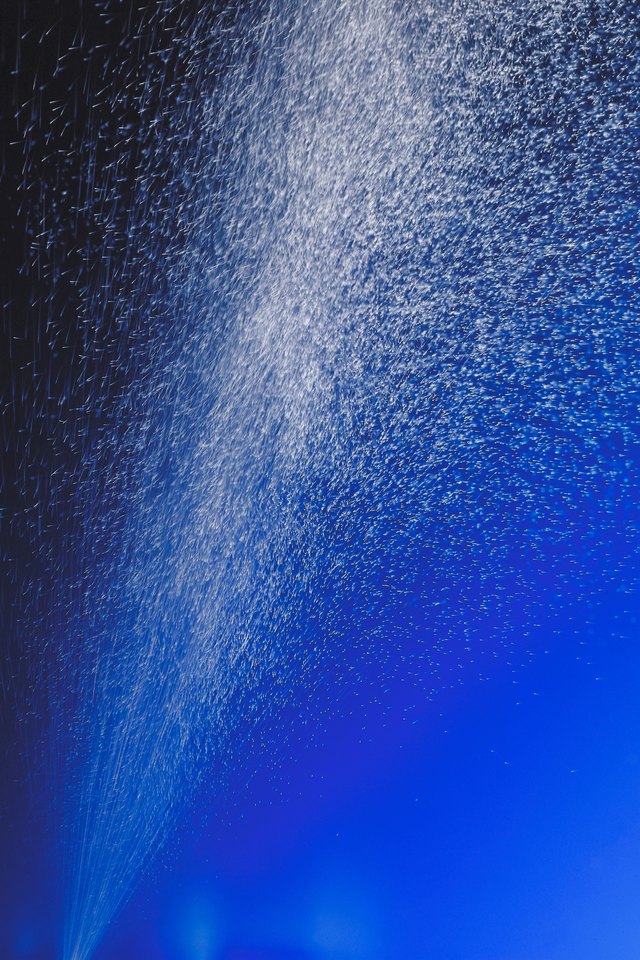
Atomizing water means breaking a continuous stream into a cloud of droplets. It sounds as easy as forcing water through a tiny hole, but a good mist depends on the right combination of pressure, nozzle geometry, flow, filtration, spray distance, and airflow. Get those elements right and you can create a controlled spray for cooling, humidification, dust suppression, testing, or light coating. Get them wrong and you may produce a miniature garden hose wearing a fog costume.
This guide focuses on pressure-driven, single-fluid atomization while also explaining when air-assisted nozzles make more sense. The goal is not to maximize psi. It is to produce the required droplet size and coverage safely, consistently, and without wasting water.
How Pressure Turns Water Into Mist
A pump raises the pressure upstream of a nozzle. As water moves through the nozzle’s restricted passages, pressure energy becomes velocity. The liquid exits as a fast jet, thin sheet, fan, or swirling cone. Turbulence and interaction with surrounding air then break that liquid structure into droplets.
Every spray contains a range of droplet sizes rather than one perfect size. Fine droplets provide more surface area and evaporate quickly, but they drift easily. Coarser droplets travel farther and hit harder, yet they are more likely to wet the target.
Pressure Changes More Than Droplet Size
For many single-fluid nozzles, flow follows an approximate square-root relationship with pressure:
Q2 = Q1 × √(P2 ÷ P1)
A nozzle flowing 0.20 gallon per minute at 40 psi would deliver about 0.30 gallon per minute at 90 psi. In general, pressure must rise fourfold to double flow through the same nozzle. Higher pressure usually produces finer droplets, but it also increases flow and impact and can alter the spray angle. Operating at either extreme of a nozzle’s rated range may create a poor pattern, excessive drift, or unnecessary wear.
Nozzle Design Is the Main Control
A hollow-cone nozzle uses swirl to form a thin rotating sheet and is commonly chosen for fine hydraulic atomization. A full-cone nozzle fills a circular area, while a flat-fan nozzle creates a narrow fan-shaped sheet. A solid-stream nozzle concentrates impact and is generally unsuitable when the goal is mist. Pressure can refine a pattern, but it cannot turn one nozzle family into another.
Hydraulic vs. Air-Assisted Atomization
Hydraulic Atomizing Nozzles
A hydraulic nozzle relies only on liquid pressure. It requires fewer components and is often the practical choice for clean-water misting, greenhouse humidification, evaporative cooling, and light dust control. Its limitation is that flow and droplet size are linked: increasing pressure usually raises flow while making droplets finer.
Air-Atomizing Nozzles
An air-atomizing, or twin-fluid, nozzle mixes water with compressed air inside or outside the nozzle. The air supplies extra breakup energy, allowing very small droplets at relatively low liquid pressure. Some systems independently control liquid pressure, atomizing-air pressure, and fan air, which is useful when low liquid flow and precise adjustment matter.
The trade-offs are a compressor, additional plumbing, noise, energy use, and more settings to maintain. Internal-mix designs are commonly used with low-viscosity liquids such as water; external-mix designs provide greater separation of air and liquid controls.
What You Need
- A clean water source or regularly maintained reservoir
- An inlet strainer and nozzle-compatible fine filter
- A pump rated to deliver the required flow at operating pressure
- A regulator or bypass valve, pressure gauge, and pressure-relief device
- Pressure-rated tubing, valves, fittings, and securely mounted manifolds
- An atomizing nozzle selected by pattern, capacity, material, and pressure range
- A check valve, shutoff valve, or anti-drip nozzle body
- Approved backflow protection when connected to potable plumbing
All components must be rated for at least the system’s maximum possible pressure. The relief setting must protect the weakest component, not merely match the pump’s advertised maximum.
How to Atomize Water With Pressure: Step by Step
1. Define the Spray You Need
Identify the application, desired pattern, target distance, acceptable surface wetting, operating time, airflow, and available water supply. Cooling a patio, humidifying a greenhouse, and generating test rain require different droplets and flow rates.
2. Select the Nozzle First
Use a manufacturer’s chart showing flow at pressure, spray angle, droplet information, filtration requirements, and recommended operating range. Choose a nozzle that meets the goal near the middle of that range. If you need a large flow change, select another orifice size instead of forcing the change with pressure.
3. Size the Pump From the Nozzle Demand
Multiply one nozzle’s rated flow by the number of nozzles. Then allow for pressure losses through filters, valves, tubing, fittings, elevation, and the manifold. For example, six nozzles rated at 0.05 gallon per minute need 0.30 gallon per minute at the selected pressure. Verify this point on the pump curve; “maximum psi” at almost zero flow is not useful operating capacity.
4. Assemble a Controlled System
Secure the pump and install the strainer, filter, regulator, gauge, relief device, valves, tubing, and manifold in the correct flow direction. Support the plumbing so vibration and weight do not stress fittings. Do not use unmarked hose, unrated household fittings, improvised patches, or hand-drilled tips in a high-pressure circuit.
5. Flush Before Installing Nozzles
Run clean water through the lines at low pressure with the nozzle tips removed. This clears plastic shavings, sealant, dust, and metal particles that could immediately clog a tiny passage. Clean the filter, install the nozzles correctly, and inspect every connection.
6. Start Low and Tune Gradually
Increase pressure slowly while watching the gauge and checking for leaks from a safe distance. Observe when the spray becomes fully developed. If the target becomes wet, reduce flow, increase evaporation distance, improve airflow, shorten operating cycles, or choose a lower-capacity nozzle. If droplets are too coarse, confirm pressure at the manifold, check for blockage, and consider a finer nozzle rather than simply maxing out the pump.
7. Measure the Result
Collect each nozzle’s output for the same timed interval and compare volumes. Use dark paper, cardboard, water-sensitive paper, or a clean target to inspect coverage. Test under realistic airflow because fine droplets that look perfect beside the nozzle may drift away outdoors.
Controlling Droplet Size
Within a nozzle’s approved range, raising pressure generally makes droplets smaller; lowering pressure makes them larger. A smaller-capacity orifice often produces a finer spray, while a different nozzle geometry can create a much bigger change than pressure alone. Adding atomizing air provides another route to very fine droplets.
Water properties also matter. Viscosity, density, surface tension, temperature, and contamination influence breakup. Nozzle charts are usually based on water under defined test conditions, so additives or unusual process liquids should be tested. EPA spray studies likewise identify nozzle type, orifice size, pressure, angle, airflow, viscosity, and surface tension as important variables.
Common Problems and Fixes
| Problem | Likely Cause | Fix |
|---|---|---|
| Stream instead of mist | Wrong nozzle, low pressure, damaged or missing insert | Verify the nozzle assembly and rated range |
| Lopsided pattern | Partial clog, worn tip, extreme pressure | Depressurize, clean correctly, inspect, and retest |
| Pulsing spray | Pump cycling, suction leak, restricted inlet | Clean the inlet, repair leaks, and stabilize pump control |
| Wet surfaces | Too much flow, coarse droplets, poor airflow | Use smaller nozzles, add distance, or improve ventilation |
| Excessive drift | Droplets too fine, wind, pressure too high | Reduce fines, shield the spray, or stop during wind |
| Repeated clogs | Poor filtration, scale, dirty reservoir, biofilm | Improve filtration, cleaning, and water management |
Safety and Water Hygiene
High-pressure water can injure eyes and skin, rupture hoses, and propel loose fittings. Keep people outside the test zone, wear appropriate eye and body protection, inspect hoses and couplings, secure the equipment, and never place a hand in front of a nozzle or use fingers to locate a leak. Before servicing, switch off the pump, isolate the supply, release stored pressure, and verify the gauge reads zero. OSHA guidance for high-pressure air and water work emphasizes controlled access, secure couplings, inspection, and appropriate protective equipment.
Misters can aerosolize microorganisms if water stagnates or biofilm develops. Use clean water, drain idle systems, clean reservoirs, service filters, and follow manufacturer-approved disinfection procedures. CDC guidance for recreational and produce misters recommends avoiding stagnation and regularly draining and cleaning reservoirs. Never use a homemade pressure atomizer for respiratory therapy or any application requiring sterile aerosol.
Experience-Based Lessons From Pressure-Mist Projects
The following lessons reflect common patterns reported by technicians, growers, equipment installers, and careful DIY builders rather than a claim of personal hands-on operation. They are the details that rarely look exciting in a shopping cart but often decide whether a misting project works.
First, the nozzle usually matters more than the pump. A common beginner mistake is buying a powerful pump and attaching whatever small brass tip happens to fit. The result may be a narrow jet, a noisy pump, or a cloud mixed with large drops. Experienced builders start with the desired droplet behavior and work backward through the nozzle chart. Once nozzle flow and pressure are known, pump selection becomes arithmetic instead of wishful thinking.
Second, pressure measured at the pump is not pressure at the nozzle. Long narrow tubing, dirty filters, undersized valves, elevation changes, and crowded manifolds consume pressure. A system may show 100 psi near the pump while the final nozzle receives much less. Adding a gauge near the manifold often explains why the first nozzle looks crisp and the last one merely drools with determination.
Third, clean water is a performance feature. Water can look clear while carrying particles large enough to block precision passages. Scale is equally sneaky. A system may work beautifully for a week and then develop crooked patterns one nozzle at a time. Proper filtration, flushing, and water-quality management are cheaper than attacking nozzles with wire, which can permanently enlarge an orifice.
Fourth, more fog does not always mean more cooling. In patio and greenhouse systems, the best setup often creates droplets that evaporate in moving air before soaking plants, floors, furniture, or people. Increasing pressure can make finer droplets, but it also changes flow and drift. A smaller nozzle, wider spacing, greater mounting height, shorter duty cycles, or better airflow may produce a better result.
Fifth, uniformity requires measurement. Installers often collect each nozzle’s output for one minute and compare the volumes. They also inspect patterns against a dark background and test under real ventilation or wind. This catches debris, pressure loss, reversed valves, and mismatched tips before the project is judged by a suspicious puddle.
Sixth, shutdown behavior deserves design attention. A system may atomize beautifully while running and then drip after the pump stops. Those drips can stain products, encourage algae, or create slippery surfaces. Anti-drip nozzle bodies, check valves, solenoids, correct manifold slope, and controlled depressurization solve a problem that higher pressure cannot.
Finally, maintenance is part of atomization. A reliable routine includes inspecting hoses, cleaning filters, flushing stagnant water, checking pump cycling, comparing nozzle output, and replacing worn tips. Nozzles gradually wear, especially with abrasive water. A worn orifice passes more flow and changes droplet size even though it still appears to spray. Treating the nozzle as a calibrated component keeps performance repeatable.
Conclusion
To atomize water with pressure, start with the required droplet size and spray pattern, select a nozzle designed to produce them, and size the pump around the nozzle’s actual flow at operating pressure. Add proper filtration, regulation, relief protection, rated plumbing, and routine testing. Pressure is an adjustment toolnot a substitute for correct nozzle selection. The best system is not the one with the highest psi; it is the one that creates a stable, useful mist at a safe operating point.
Note: This guide covers general clean-water misting, cooling, humidification, testing, and similar nonmedical uses. Follow all manufacturer instructions, plumbing codes, electrical requirements, sanitation practices, and workplace-safety rules. The article synthesizes guidance from established nozzle manufacturers, U.S. university extension programs, OSHA, CDC, and EPA resources.