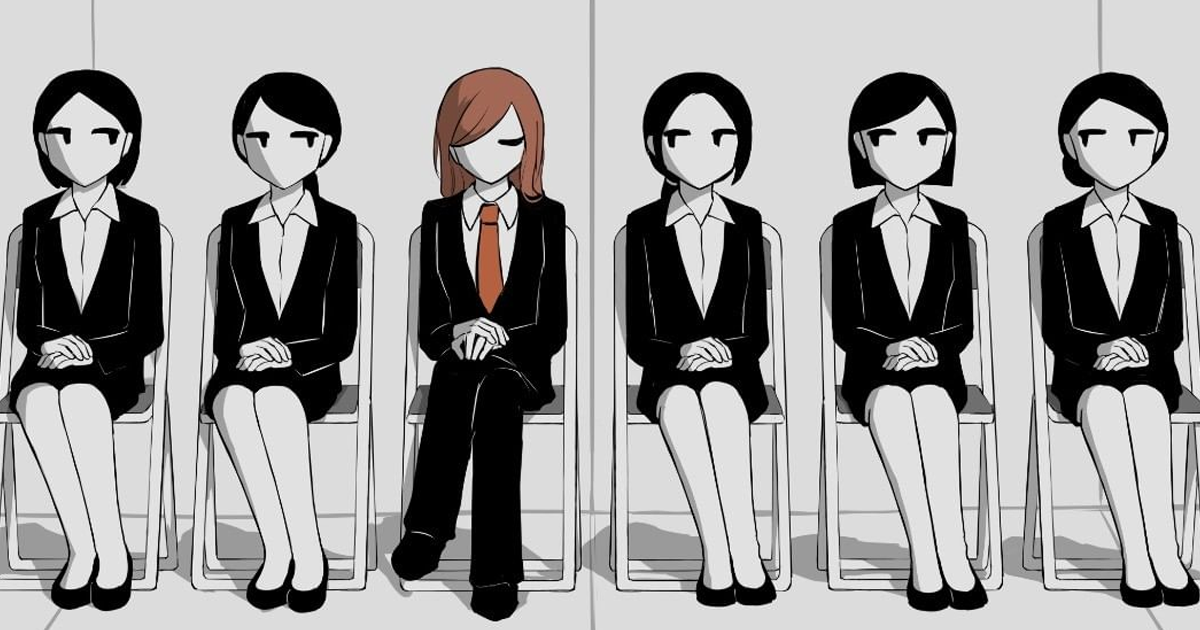
Some illustrations explain themselves politely. They introduce the subject, clarify the message, and practically hand you a brochure on the way out. Avogado6’s illustrations do no such thing. They quietly place a strange emotional puzzle in front of you, turn off the lights, and leave you alone with your thoughts.
The Japanese illustrator and animator has developed a recognizable visual language built from soft colors, familiar objects, vulnerable characters, and metaphors that become more unsettling the longer you examine them. The collection of 35 poetic existential illustrations featured here moves between loneliness, affection, exhaustion, identity, mortality, social pressure, and the tiny acts of kindness that keep ordinary life from becoming completely unbearable.
Avogado6 remains intentionally private, describing themselves online simply as an ordinary person who likes chemistry and creates visual works. Yet the art is anything but ordinary. The artist works across illustration, manga, animation, and music videos, while an extensive official archive documents years of prolific visual storytelling.
Who Is Avogado6?
Avogado6 is an internet-based Japanese creator known for communicating complicated emotions through concise visual metaphors. Personal biographical information is scarce, which feels strangely appropriate. The artist’s characters are often anonymous too: simplified human figures, animals, angels, ghosts, skeletons, and ordinary objects given emotional responsibilities they definitely did not request.
Instead of presenting a public personality, Avogado6 lets the work do the talking. That work includes standalone illustrations, short comics, animated videos, published art collections, and collaborations connected to music and broadcasting. The official portfolio stretches across multiple years and contains pieces with titles relating to anxiety, insomnia, flashbacks, exhaustion, social adaptation, heavy thoughts, memories, escape, failure, and emotional recovery.
This is one reason the illustrations spread so easily across languages. A cracked body does not require subtitles. Neither does a person carrying a burden much larger than themselves, a heart being repaired, or a lonely figure receiving comfort from an animal. The details may be culturally specific, but the emotional machinery is internationally familiar.
Why These Existential Illustrations Feel So Poetic
They Show Emotions Instead of Naming Them
Words such as “sad,” “lonely,” and “tired” are useful, but they are often too small for the experiences they describe. There is regular tiredness, and then there is the kind of exhaustion that makes your soul feel like a phone battery permanently stuck at 3 percent.
Avogado6 expands emotional vocabulary by turning invisible states into visible situations. A troubling thought may become a physical weight. Emotional distance may become an actual gap between two people. Social pressure can appear as machinery reshaping a body. Grief may leak, crack, grow roots, or occupy a room like an uninvited relative who has decided to stay until Thursday.
This approach resembles poetry because it does not define an emotion directly. It creates an image around the emotion and allows the viewer to enter from their own direction. Research and museum education materials on visual art emphasize that interpretation involves noticing individual elements, assigning meaning to them, and considering their combined significance.
Familiar Objects Become Emotional Symbols
One of Avogado6’s strongest techniques is the transformation of everyday objects. Beds, bottles, books, flowers, umbrellas, clocks, food, tools, doors, containers, and pieces of clothing stop functioning normally. Instead, they reveal what a character is afraid to say.
A container might represent emotional capacity. A damaged machine might suggest burnout. A mask may symbolize the face someone wears to satisfy coworkers, relatives, strangers, or the terrifying cashier who asks, “Any plans for the weekend?” A plant can represent hope, but it can also represent a problem that has been watered for far too long.
Because these objects are recognizable, the surrealism never feels completely alien. The viewer understands the visual ingredients immediately, even when the final recipe tastes like existential dread with a sprinkle of pastel sugar.
The Soft Palette Makes the Darkness Stronger
Avogado6 frequently uses gentle pinks, faded blues, muted greens, warm creams, and restrained shadows. At first glance, the illustrations can appear charming or even comforting. Then the viewer notices that someone is emotionally dissolving.
This contrast gives the work its particular tension. A harsher visual style might announce misery too loudly. Avogado6’s softer approach invites viewers closer before revealing the emotional trapdoor. The pictures whisper rather than shout, which can make them significantly harder to ignore.
The result is a visual mood that sits somewhere between an anime still, a modern fable, a dream recalled during breakfast, and the uncomfortable realization that you have been avoiding an important decision for six months.
What the 35 New Pictures Explore
Loneliness in a Crowded World
Many of these poetic illustrations examine isolation without relying on empty landscapes or dramatic crying scenes. Avogado6 often places loneliness inside relationships, workplaces, families, or groups. A character may be surrounded by others and still appear emotionally unreachable.
This form of loneliness is especially powerful because it is not simply the absence of people. It is the absence of recognition. The figures seem to ask whether being seen is the same as being understoodand whether either is possible when everyone is busy maintaining their own protective costume.
Some images suggest that the deepest distance can exist between people standing only inches apart. Others show companionship arriving from unexpected places, especially through animals, imaginary creatures, or quiet gestures. The contrast prevents the collection from becoming hopeless. It recognizes isolation while leaving a small window unlocked for connection.
The Pressure to Fit In
Avogado6 repeatedly questions what happens when individuals are squeezed into approved social shapes. Characters are measured, altered, restricted, packaged, copied, or positioned beside figures who appear nearly identical.
One picture from the collection prompted contrasting interpretations from viewers: some saw it as encouragement to be yourself, while others recognized the warning contained in the expression about the nail that sticks out being hammered down. That disagreement demonstrates the strength of ambiguous art. The same composition can represent individuality, punishment, resistance, or all three at once.
The artist does not offer a motivational-poster solution. There is no smiling character beneath the words “Be unique!” while an eagle flies over a mountain for unexplained corporate reasons. Instead, the illustrations acknowledge that authenticity has costs and conformity has costs too. The viewer must calculate the bill.
Burnout, Work, and Emotional Machinery
Several recurring motifs in Avogado6’s broader catalog involve labor, fatigue, social roles, insomnia, repetition, and the feeling of being mechanically consumed by daily obligations. Bodies behave like devices that can be emptied, overloaded, worn down, or improperly repaired.
It is an effective metaphor for burnout because machines are expected to keep functioning until something visibly breaks. Human beings often treat themselves the same way. We ignore warning lights, make another cup of coffee, open seventeen browser tabs, and describe the resulting chaos as “a productive morning.”
Avogado6’s characters remind viewers that functioning is not necessarily the same as living. A person may continue moving while becoming emotionally hollow. The artwork makes this gradual disappearance visible.
Mortality Without Grand Speeches
Death appears throughout the collection, but usually without theatrical darkness. Angels, skeletons, fading bodies, fragile objects, and interrupted journeys make mortality feel intimate rather than spectacular.
In one widely discussed illustration, viewers interpreted a young figure’s arrival among older deceased people as a contrast between a completed life and one that ended too early. That reading is not an official explanation, but it shows how Avogado6 creates enough narrative space for audiences to construct deeply personal stories.
The strongest images do not simply say, “Life is short.” Coffee mugs have already printed that message thousands of times. Instead, they ask what it means to leave something unfinished, to carry memories after someone is gone, or to recognize the value of an ordinary moment only after it becomes inaccessible.
Love as Care, Not Decoration
Although melancholy dominates the atmosphere, tenderness is never far away. Love appears as repair, patience, shelter, companionship, and the decision to remain beside someone whose problems cannot be solved with a cheerful sentence.
Animals frequently become emotional guardians. In one image, readers saw a cat comforting a grieving person and connected the scene to pets that had offered support during difficult periods. Another illustration was interpreted as Medusa finding love with a blind mana reading that transforms a mythological curse into a story about being accepted without fear.
These interpretations may differ from the artist’s intentions, but that is part of the experience. Avogado6 provides the structure; viewers bring memories, losses, relationships, and private meanings. The artwork becomes a meeting place between the two.
Japanese Visual Storytelling in a Digital Form
Avogado6’s illustrations are unmistakably contemporary, yet they also participate in Japan’s long relationship with illustrated storytelling. Japanese art has paired narrative and imagery across handscrolls, illustrated literature, prints, manga, and animation. The Metropolitan Museum of Art describes modern manga and graphic arts as continuations of deeply established storytelling traditions.
That does not mean every digital illustrator can be placed neatly on a historical family tree. Avogado6’s work is shaped by internet culture, anime-style character design, contemporary mental-health conversations, music-video aesthetics, and the rapid visual rhythm of social media.
Still, the artist uses an old and durable principle: one carefully composed image can suggest events that happened before the frame and consequences that will unfold after it. A viewer sees only a frozen moment but imagines an entire life surrounding it.
Why Ambiguous Art Stays With Us
Clear messages are efficient, but ambiguity is participatory. When an image refuses to explain itself, the viewer must become part detective, part poet, and part nosy neighbor peeking through the curtains of someone else’s subconscious.
MoMA has explored how art can elicit emotional reactions, while Smithsonian discussions of art and emotional expression note that images can help give form to feelings that are difficult to communicate verbally. These ideas help explain the attraction of Avogado6’s work, although viewing illustrations should not be confused with professional art therapy.
The images offer emotional recognition rather than diagnosis. A person scrolling late at night may encounter a drawing that resembles an experience they have never successfully described. That moment of recognition can be comforting, painful, or both. Sometimes the most accurate response to art is simply, “Oh. So that is what that feeling looks like.”
Ambiguity also encourages repeated viewing. On the first look, an illustration may seem humorous. On the second, sad. On the third, the viewer notices a background detail and suddenly needs to stare at the ceiling for several minutes.
A Reader’s Experience: What Happens When You Stop Scrolling
The best way to experience these 35 existential illustrations is not to race through them while half-watching television and arguing with a food-delivery app. Avogado6’s work rewards slowness. Each picture may be visually simple, but simplicity is not the same as emptiness. A small change in posture, scale, distance, or color can alter the emotional meaning of the entire scene.
Begin by looking at an image without searching for its official title or reading other people’s reactions. Notice the first emotion that appears. Do not immediately decide whether that emotion is correct. Art is not a standardized test, and nobody is waiting behind the illustration with a red pen. Your initial response may come from the character’s expression, an object, the amount of empty space, or a detail that reminds you of something unrelated.
Next, describe only what is physically present. Perhaps there are two figures separated by an unusual barrier. Perhaps someone is carrying an object that should be light but appears impossibly heavy. Perhaps a character’s body has become a room, container, machine, plant, or landscape. This quiet inventory separates observation from interpretation and often reveals details missed during the first emotional reaction. Museum engagement practices similarly encourage viewers to spend time noticing visual information before assigning meaning.
Then allow the metaphor to develop. Ask what the impossible element might represent. A hole could suggest loss, but it could also suggest freedom, hunger, memory, or emotional space. A thread could represent connection, control, responsibility, or the last fragile thing preventing collapse. The goal is not to discover a secret password hidden by the artist. The goal is to notice which interpretation your own experience makes available.
After forming your reading, examine how other viewers respond. This can be surprisingly revealing. One person may see grief where another sees relief. Someone may interpret a scene romantically, while another connects it to family, depression, work, childhood, or the death of a pet. These differences do not necessarily cancel one another. They show how a compact visual story expands when it passes through many lives.
The emotional rhythm of the complete gallery matters as well. Dark pieces sit beside playful ones. Human vulnerability is interrupted by absurdity, animals, affection, and moments of warmth. That variation resembles actual life more closely than nonstop tragedy would. A terrible week can still contain a funny dog, an excellent sandwich, and one unexpectedly kind message. Existential dread rarely has the courtesy to arrive without distractions.
By the final image, viewers may feel that they have learned something about Avogado6, yet the greater discovery is often personal. The collection exposes the metaphors we instinctively choose for our own emotions. Do we imagine stress as weight, noise, pressure, fire, water, machinery, or confinement? Do we picture love as rescue, repair, shelter, sacrifice, or simply staying nearby?
This is the most memorable experience offered by Avogado6’s art. The illustrations do not merely show strange fictional characters. They provide mirrors that are distorted enough to feel safe and accurate enough to feel uncomfortable. You can laugh, admire the composition, and continue scrolling. Or you can pause long enough for one quiet picture to explain something you have been unsuccessfully trying to tell yourself.
Conclusion
Avogado6’s 35 poetic existential illustrations demonstrate how much emotional weight a small image can carry. Through pastel colors, anime-inspired figures, visual metaphors, and carefully controlled ambiguity, the artist turns loneliness, burnout, conformity, grief, affection, and mortality into scenes that can be understood without lengthy explanations.
The work is dark without being completely hopeless and cute without becoming emotionally shallow. It recognizes that human beings are fragile, contradictory creatures who want independence and connection, honesty and protection, rest and achievementpreferably all before Monday morning.
Most importantly, these illustrations respect the viewer’s imagination. They do not dictate one universal meaning. They create enough silence for personal memories to enter. Each picture becomes a question, and every viewer supplies a slightly different answer.
Note: Interpretations discussed in this article are editorial readings and audience responses rather than definitive explanations from the artist. Individual viewers may understand each illustration differently.