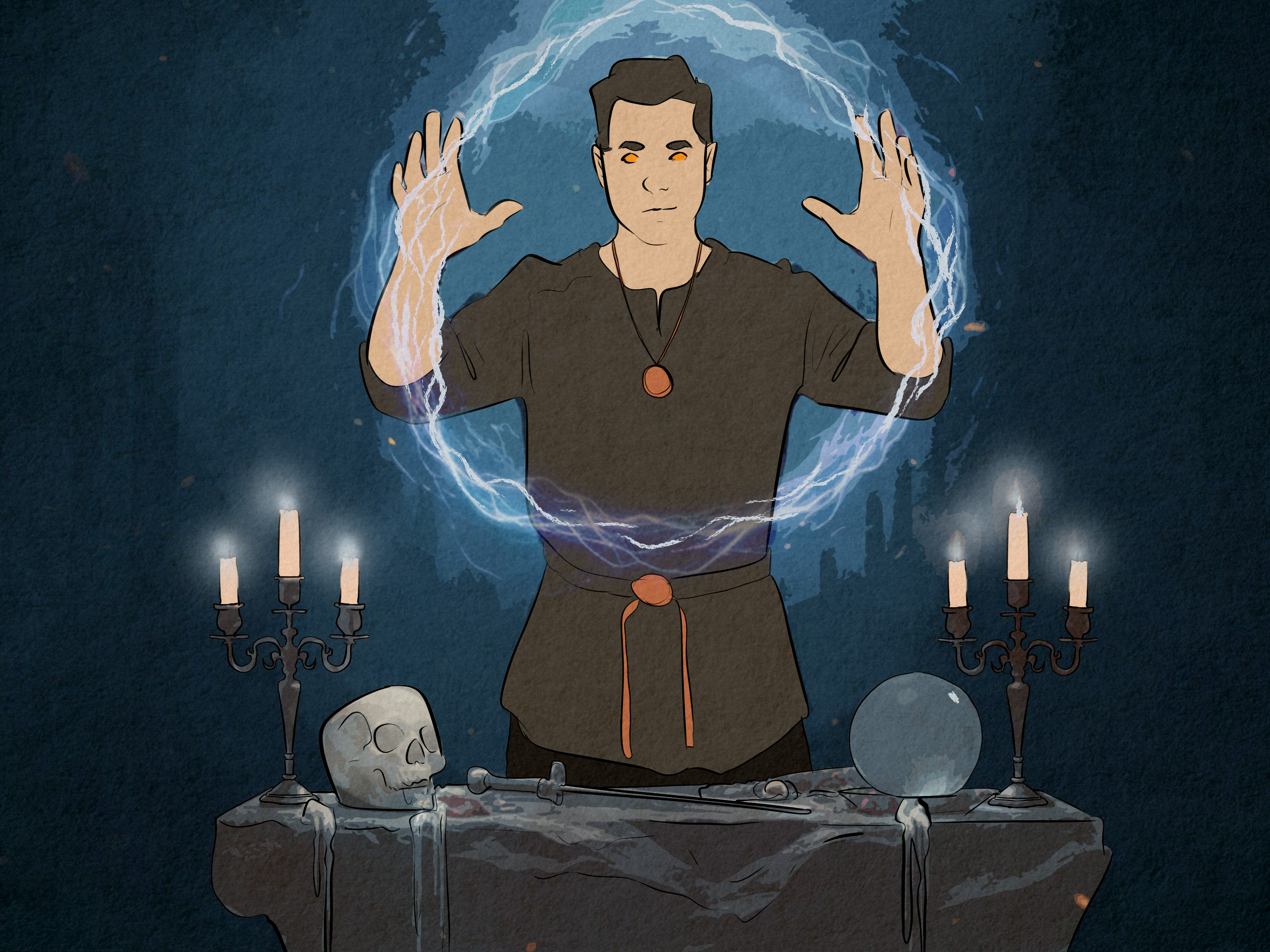
Can men be witches too? Absolutely. A man can be a witch, a Wiccan, a Pagan practitioner, a folk magic enthusiast, a ceremonial magician, or a spiritually curious guy who owns exactly one suspiciously dramatic black candle and insists it is “for ambiance.” The word witch is not locked behind a women-only velvet rope. In modern usage, it can describe a person of any gender who practices witchcraft, studies magic, works with ritual, honors nature-based spirituality, or follows a path such as Wicca.
Still, the question keeps popping up because pop culture has trained many people to imagine witches as women in pointed hats, green face paint, and aggressive opinions about flying broomstick maintenance. Meanwhile, male magical figures get labeled “wizard,” “warlock,” “sorcerer,” “mage,” or “that guy at the Renaissance fair who takes his cloak very seriously.” But history, language, and modern spiritual communities all tell a more interesting story: men have always been part of witchcraft, even when society did not know what to do with them.
So, Can Men Be Witches?
Yes. Men can be witches. In many modern witchcraft and Wiccan communities, witch is a gender-neutral term. A male witch does not need to call himself a warlock unless he personally likes the word. In fact, many practitioners avoid “warlock” because the term has historically carried negative meanings, including associations with betrayal or oath-breaking. Today, the better answer is simple: a male witch is usually just called a witch.
Witchcraft is not one single religion, rulebook, or membership club with a receptionist named Mildred stamping “approved” on your moon journal. It is a broad umbrella of practices that may include ritual, meditation, divination, herbal symbolism, ancestor work, seasonal celebrations, energy work, folklore, and nature-based spirituality. Some witches are religious. Some are spiritual but not religious. Some are atheists who approach witchcraft psychologically or symbolically. Some are Wiccans; many are not.
Witchcraft vs. Wicca: Not the Same Thing
One common mix-up is using witchcraft and Wicca as if they mean the exact same thing. They overlap, but they are not identical. Wicca is a modern Pagan religion that became public in the mid-20th century and often includes ritual, reverence for nature, seasonal festivals, and deity symbolism. Many Wiccans identify as witches, but not every witch is Wiccan.
Think of it like this: Wicca is a specific spiritual path, while witchcraft is a wider set of practices. A person can practice witchcraft without joining Wicca. A person can also be Wiccan and use the word witch proudly. Men are present in both spaces, from solitary practitioners reading at home to members of covens, study groups, and Pagan communities.
Why Do People Think Witches Are Only Women?
The image of the witch has been shaped by centuries of fear, folklore, religion, sexism, literature, and Hollywood’s endless love affair with fog machines. In European and American history, accusations of witchcraft often targeted women, especially women who were poor, elderly, outspoken, socially isolated, or simply inconvenient to someone with a grudge and a talent for dramatic accusations.
Because women were so often associated with witchcraft in historical persecution, the popular image became strongly feminine. Over time, that image split into two extremes: the dangerous old hag and the glamorous modern enchantress. Both are stereotypes. Real witchcraft communities are far more diverse. Men, women, nonbinary people, queer practitioners, elders, beginners, skeptics, scholars, and people from many cultural backgrounds all appear in modern witchcraft spaces.
Men in Witchcraft History
Men were not just standing outside the witchcraft story holding everyone’s cloaks. They were in the story, sometimes as practitioners, sometimes as accusers, sometimes as religious authorities, and sometimes as victims of witch trials.
The Salem witch trials of 1692 are a famous example. Although most accused people were women, men were accused too. George Burroughs, a former minister, was executed after being accused of leading witches. John Proctor, George Jacobs Sr., John Willard, and Samuel Wardwell were also among the men executed. Giles Corey, another accused man, died after refusing to enter a plea. These cases remind us that witchcraft panic was not simply about gender; it was also about fear, power, religion, property, community conflict, and social control.
That does not erase the heavy role misogyny played in witch persecutions. It simply adds accuracy. Witch-hunt history is more complicated than “only women were accused.” Men could be targeted too, especially when they challenged authority, became tied to accused women, or fell into local disputes.
Is “Warlock” the Male Version of Witch?
Not necessarily. In fantasy novels, “warlock” often means a male witch or a darker kind of magic user. In real modern witchcraft communities, however, many male practitioners do not use the term. Some dislike it because of its older negative associations. Others enjoy it as a personal title. Language in magical communities can be flexible, but the safest general rule is this: do not assume a man who practices witchcraft wants to be called a warlock.
Use the term someone uses for himself. If he says he is a witch, call him a witch. If he says he is Wiccan, Pagan, a magician, a druid, a heathen, an occultist, or “just spiritually curious and trying not to kill another basil plant,” respect that label too.
What Does Male Witchcraft Look Like Today?
Modern witchcraft for males does not have one required aesthetic. There is no official uniform. No one is checking whether your robe has enough mysterious sleeves. Male witches may practice in many ways, including:
1. Nature-Based Spirituality
Many male witches connect their practice to the natural world. This may include observing moon phases, honoring seasonal changes, spending time outdoors, gardening, hiking, or using natural symbolism in rituals. The point is not to “control” nature, but to feel connected to it.
2. Meditation and Intention Setting
Some practitioners use witchcraft as a focused method of reflection. Lighting a candle, journaling, creating a small altar, or meditating on a goal can help turn vague thoughts into clear intentions. Even skeptics can understand the value of ritual as a psychological tool: it gives the brain a stage, a script, and occasionally better lighting.
3. Divination and Self-Reflection
Tarot, runes, pendulums, astrology, and oracle cards are often used for reflection rather than fortune-telling in the cartoon sense. A male witch might pull a tarot card not to ask, “Will I become a millionaire by Thursday?” but to ask, “What pattern am I missing?” That is less flashy, but much more useful.
4. Study of Folklore and History
Many men enter witchcraft through books, mythology, anthropology, herbal folklore, occult history, or comparative religion. This is the library goblin path, and honestly, it is respectable. Witchcraft has deep ties to stories, symbols, and inherited traditions, so research can become part of the practice.
5. Community and Coven Work
Some male witches practice alone. Others join covens, circles, temples, online communities, or local Pagan groups. Group practice may include seasonal rituals, shared study, ethical discussion, and community service. A good group should value consent, respect, boundaries, and personal responsibility. A group that pressures people, demands secrecy in unhealthy ways, or acts like a spiritual pyramid scheme with candles should be avoided.
Masculinity and Witchcraft: Do They Clash?
Not at all. The idea that witchcraft is “not masculine” says more about modern stereotypes than about witchcraft itself. Many cultures have recognized male healers, seers, shamans, cunning folk, ritual specialists, monks, mystics, astrologers, alchemists, and magical practitioners. Spiritual practice has never belonged to only one gender.
For some men, witchcraft can even be a refreshing alternative to narrow ideas of masculinity. It allows room for intuition, emotional honesty, patience, creativity, care for the earth, and reverence for mystery. None of those things make someone less masculine. If anything, being secure enough to say, “I honor the moon and also remembered to do my laundry” is a rare form of power.
Common Myths About Male Witches
Myth 1: Male witches must be warlocks.
Nope. Some may choose that title, but many simply use “witch.” The word witch can apply to any gender.
Myth 2: Witchcraft is only for women.
False. Women have played a central role in witchcraft history and modern witch identity, but men have always been involved too.
Myth 3: Male witches are trying to be edgy.
Some are, sure. Some people are edgy when ordering coffee. But many male witches are sincere practitioners interested in spirituality, symbolism, nature, healing, history, or personal growth.
Myth 4: Witchcraft is automatically evil.
This depends heavily on religious perspective and cultural background. In modern Pagan and witchcraft communities, many practitioners see witchcraft as ethical, nature-centered, reflective, and focused on personal responsibility. It is not usually about movie-villain behavior, thunderclaps, or dramatically cursing someone because they took the last parking spot.
Myth 5: You need expensive tools.
No. Modern witchcraft can be practiced simply. Books, reflection, time outdoors, journaling, meditation, and basic symbolic objects are enough for many people. A $90 crystal shaped like a dragon may be fun, but it is not a spiritual requirement. Your wallet deserves protection too.
How Men Can Explore Witchcraft Respectfully
Men interested in witchcraft should begin with respect: respect for history, respect for living traditions, respect for cultural boundaries, and respect for other practitioners. Not every practice is yours to take. Some spiritual traditions are closed or initiatory, meaning they belong to specific communities and require permission, training, or cultural belonging. Ethical witchcraft means learning before borrowing.
Start by reading broadly. Learn the difference between Wicca, folk magic, ceremonial magic, modern Paganism, traditional witchcraft, and New Age spirituality. Study history alongside practice. Pay attention to authors who explain context rather than selling instant enlightenment in seven easy payments.
It also helps to define your purpose. Are you looking for spiritual connection? Personal reflection? A nature-based practice? A way to mark seasons? A symbolic structure for healing and growth? A community? Your answer will shape your path.
Ethics Matter More Than Aesthetic
Witchcraft has become stylish online, and there is nothing wrong with enjoying the look of candles, herbs, journals, rings, old books, and moody shelves. But aesthetics are not ethics. A person can own twelve velvet altar cloths and still be careless, while another person can practice quietly with a notebook and a cup of tea and be deeply thoughtful.
Good practice should include consent, honesty, humility, and responsibility. Do not use spirituality to manipulate people. Do not claim guaranteed results. Do not replace medical, legal, or mental health care with spells or rituals. Do not handle herbs, smoke, fire, or sharp objects carelessly. The most magical phrase in any practice may be: “Let’s be safe and reasonable.” Not glamorous, but extremely effective.
Examples of Male Witch Figures and Archetypes
Male witches and magical men appear in many forms. The scholarly practitioner studies grimoires, folklore, and ritual history. The green witch grows herbs, composts like a champion, and speaks to plants with suspicious sincerity. The kitchen witch cooks with intention and somehow makes soup feel like therapy. The ceremonial magician loves structure, symbolism, and probably owns a notebook with diagrams. The hearth-focused witch builds spiritual meaning around home, ancestors, and daily routines.
These examples are not boxes. They are doors. A male witch can blend several approaches or create a quiet personal practice that does not need a dramatic title. Witchcraft is often less about becoming someone else and more about paying attention to the world with greater depth.
Personal Experiences and Reflections: What Male Witchcraft Can Feel Like
For many men, the first step into witchcraft feels awkward. Not bad awkwardmore like “standing in the journal aisle wondering whether this notebook is too fancy for my moon thoughts” awkward. The culture around men often rewards certainty, toughness, and emotional minimalism. Witchcraft asks for something different. It asks for attention. It asks you to notice the season, your mood, your habits, your dreams, the way your body reacts when you finally sit still for five minutes. That can feel strange at first, especially if you were raised to treat intuition like a suspicious app asking for too many permissions.
A common experience for male beginners is realizing that witchcraft does not have to be loud. It may start with a small ritual before work, a walk under a full moon, a tarot card pulled for reflection, or a journal entry written after a stressful day. The practice can become a private language for checking in with yourself. Instead of ignoring frustration, you name it. Instead of rushing through the year, you notice solstices, equinoxes, rain, heat, harvest, decay, and renewal. Suddenly the calendar has more texture than “Monday again, how dare it.”
Some men find witchcraft helpful because it gives them permission to care about beauty and symbolism without apology. A candle can represent focus. A stone can represent grounding. A cup of tea can become a pause instead of just leaf water with ambition. These small acts may not look impressive from the outside, but they can become meaningful because they interrupt autopilot. They say, “I am here. I am paying attention. I am choosing how to move through this moment.”
Community can be another powerful experience. A man entering a witchcraft group may worry he is intruding into a women-centered space. That concern is not always wrong; some spaces are intentionally created for women or specific communities, and those boundaries should be respected. But many Pagan and witchcraft groups welcome men who show up with humility, curiosity, and good manners. The key is to listen more than you perform. Nobody needs a beginner announcing himself as “Lord Thunderbranch” before learning where the chairs are kept.
Male witchcraft can also challenge old ideas about power. Instead of power meaning control, dominance, or being the loudest person in the room, witchcraft often frames power as relationship: relationship with nature, self, community, ancestors, symbols, and choices. This can be deeply grounding. It teaches that strength can be quiet, protective, patient, and observant. A man does not become less himself by practicing witchcraft. He may become more honest about who he already is.
There may also be social discomfort. Friends might joke. Family members might misunderstand. Online spaces might offer too much information and not enough wisdom. That is why discernment matters. A healthy practice does not require constant public explanation. It does not require buying every tool, joining every trend, or proving anything to skeptics. It grows through consistency, study, ethics, and lived experience.
In the end, the experience of male witchcraft is often less about becoming a fantasy character and more about becoming awake to your life. It is about meaning, attention, responsibility, and wonder. Also, yes, occasionally it is about owning a very cool candle. Balance is important.
Conclusion: The Witch Hat Fits More Than One Head
So, can men be witches too? Yes, without asterisks, secret loopholes, or paperwork from the Council of Pointy Hats. Men have been part of witchcraft history, modern Wicca, Pagan communities, folk practices, and magical traditions for centuries. The word witch can be gender-neutral, and many male practitioners use it proudly.
The more useful question is not whether men are “allowed” to be witches. The better question is what kind of practitioner a person wants to become. Curious? Ethical? Well-read? Respectful? Grounded? Open to mystery without losing common sense? That is the real work. Witchcraft for males is not about copying stereotypes. It is about building a meaningful relationship with practice, nature, symbolism, spirit, history, and the self.
Whether someone identifies as a male witch, Wiccan, Pagan, magical practitioner, or simply a seeker, the path is wide enough for sincerity. Bring curiosity. Bring humility. Bring a notebook. Maybe bring snacks. Spiritual growth is easier when nobody is hungry.