Editorial note: This article is a travel-story style feature based on real information, current safety context, and the broader public conversation around Afghanistan travel. It is not a recommendation to visit and should not replace official travel advice.
When a Country Becomes a Headline Before It Becomes a Place
Some countries arrive in your imagination already wearing a warning label. Afghanistan is one of them. For many readers in the United States, the word instantly brings up war footage, military briefings, embassy alerts, and a mental image painted almost entirely in camouflage beige. It is often described as one of the most dangerous countries in the world, and yes, that label exists for reasons nobody should casually wave away.
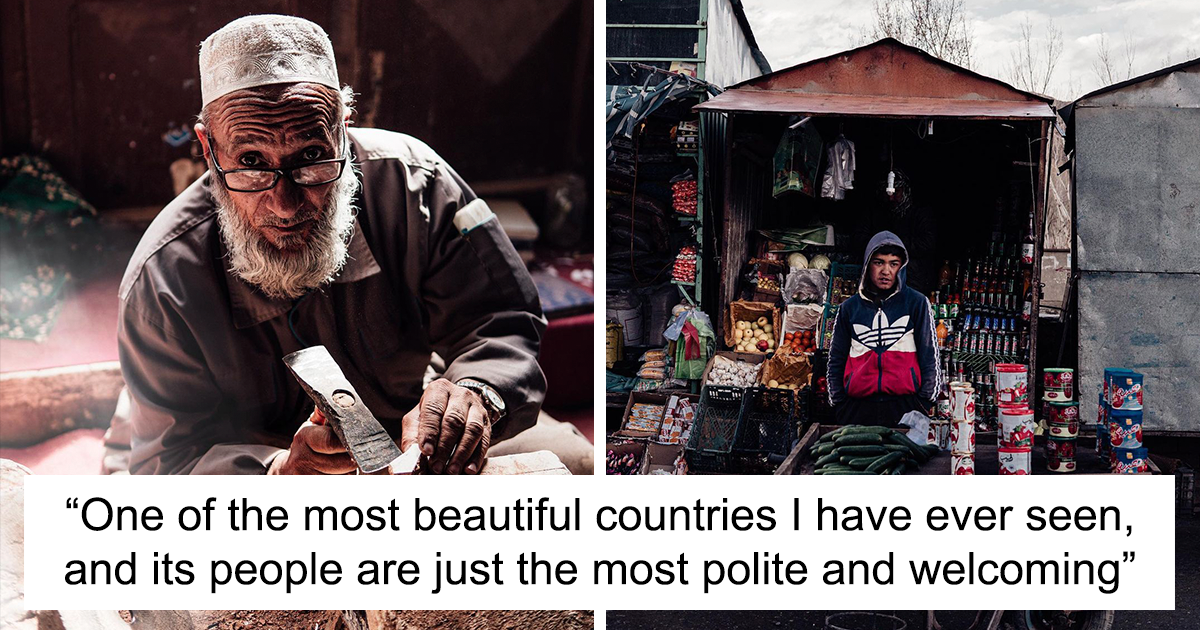
But then a traveler spends 15 days there, camera in hand, and the story gets complicated in the best possible way. Instead of a nonstop montage of fear, the lens finds tea glasses, cotton candy, mountains, boys grinning like they just discovered Wi-Fi, shopkeepers who want their portraits taken, families picnicking, blue lakes, dusty streets, and strangers offering hospitality with the aggressive commitment of someone trying to win an Olympic gold medal in kindness.
That is the tension at the heart of this story: Afghanistan can be unsafe and profoundly welcoming at the same time. A place can be shaped by conflict and still contain ordinary Tuesday afternoons. A country can have serious travel risks and still be full of people who would rather hand you sweet tea than a political lecture. Reality, inconvenient little goblin that it is, refuses to fit into one caption.
The “Most Dangerous Country” Label: Useful, But Not Complete
Let us get the responsible part out of the way before anyone packs a backpack, buys a dramatic scarf, and starts calling themselves an “off-grid storyteller.” Afghanistan remains under severe travel warnings from many governments. Risks can include terrorism, kidnapping, wrongful detention, civil unrest, crime, limited medical care, landmines and unexploded ordnance, road danger, sudden border issues, and political instability. For American travelers especially, official advice has been extremely clear: do not travel there.
So why write about beauty, kindness, and travel photography in Afghanistan at all? Because safety information tells us what could happen to a visitor; it does not tell us everything about the people who live there. A travel advisory is not a national biography. It cannot explain the rhythm of a Kabul street, the silence of Bamiyan cliffs, the electric blue of Band-e-Amir, or the shy pride of someone asking a photographer to show the world that Afghans are not a stereotype.
The phrase “most dangerous country in the world” also depends on what measurement you use. Some indexes focus on peace and conflict. Some evaluate business travel risk. Others track crime, terrorism, political violence, health systems, or humanitarian conditions. Afghanistan often ranks near the bottom in peace and safety measures, but even the harshest ranking cannot capture the gap between macro-risk and micro-humanity. On paper, a country can look like a red zone. In person, one corner of it may look like a child chasing balloons while an uncle tries to fix a bicycle with the seriousness of a NASA engineer.
What 15 Days Can Show That Statistics Cannot
Hospitality That Feels Almost Suspicious
Travelers who have visited Afghanistan often describe hospitality as one of the most memorable parts of the journey. Not “nice hotel lobby” hospitality. More like “please sit down, drink tea, eat something, meet my cousin, admire this baby, and possibly leave with a bag of fruit you did not ask for” hospitality.
In the original 15-day photo-story that inspired this article, the traveler joked that the greatest danger was being constantly attacked by politeness, sugar, tea, and food. It is a funny line because it flips the expected script. Readers arrive prepared for fear and find comedy instead: the danger of too much hospitality, the hazard of too many sweets, the life-threatening possibility of accepting one more cup of tea because saying no feels like kicking a puppy.
That humor matters. It does not erase Afghanistan’s security problems, but it gives Afghans back something the news cycle often steals: ordinariness. People are not symbols. They are bakers, drivers, students, fathers, mothers, artists, mechanics, shepherds, shopkeepers, and kids who want to know whether they look cool in the photo. Spoiler: usually, yes.
Faces That Push Back Against Fear
Photography is powerful in a place that has been flattened by decades of war imagery. A portrait can interrupt a stereotype faster than a 40-page policy report, especially if the person in the frame is smiling like they know a secret. The best travel photography from Afghanistan does not pretend hardship is absent. It simply refuses to make hardship the only character.
That is why images of daily life feel so important: a young boy standing proudly beside a friend, men gathering in the street, women moving through public spaces under restrictions that deserve serious attention, old architecture holding its ground against time, mountains behaving like they were personally designed to humble photographers, and markets where color survives even when politics gets grim.
The most striking part is not that Afghanistan is beautiful. Many places are beautiful. The striking part is how often beauty appears right beside contradiction. You can see resilience without romanticizing suffering. You can admire a landscape while acknowledging the risks. You can enjoy a funny travel story while still remembering that local people do not get to leave the complicated parts behind at the airport.
Afghanistan Beyond the War Frame
A Crossroads, Not a Footnote
Afghanistan is often discussed as though history began there in 2001. That is like describing Rome as “a place with traffic.” Afghanistan has been a crossroads of Central and South Asia for centuries, shaped by Silk Road trade, empires, religions, languages, migrations, poetry, architecture, and mountain geography that laughs in the face of easy invasion.
The Bamiyan Valley, for example, is not merely a war-scarred landmark. It is a cultural landscape with Buddhist monastic remains, cave art, fortified Islamic structures, and traces of Indian, Hellenistic, Roman, Sasanian, and Islamic influences. The destroyed Buddha statues are part of the world’s memory, but so are the cliffs, caves, and remaining heritage that still speak across centuries.
Then there is Band-e-Amir, Afghanistan’s first national park, famous for deep blue lakes separated by natural travertine formations. It looks unreal in photographs, as if someone spilled liquid sapphire into the highlands and forgot to clean it up. The park has long been important for local tourism and family outings, which is exactly the kind of detail that reminds outsiders Afghanistan is not only a battlefield. It is also a place where people want a picnic spot, a boat ride, a view, and maybe a snack that leaves powdered sugar on everyone’s sleeves.
The Landscape Has Main Character Energy
Afghanistan’s terrain does not do subtle. The Hindu Kush mountains cut through the country with cinematic arrogance. The Wakhan Corridor stretches like a strange finger toward China, boxed in by some of the world’s most dramatic high-altitude scenery. Deserts, valleys, snow, dust, orchards, old caravan routes, and mountain villages all compete for attention.
For photographers, this is dangerous in a different sense: memory-card danger. Battery danger. The danger of taking 400 photos of one ridge because the light changed slightly and now the mountain looks philosophical. Afghanistan has that kind of landscapethe type that makes even amateur photographers whisper, “I am basically National Geographic now,” while pointing a phone at a donkey.
But landscape is not neutral. Roads can be difficult. Weather can be severe. Medical care may be limited. A beautiful valley can be remote enough to make simple problems serious. That is why responsible storytelling has to hold two thoughts at once: Afghanistan is visually extraordinary, and travel there can be genuinely hazardous.
The Human Side: Warmth, Pride, and the Need to Be Seen Clearly
One of the most meaningful details from the 15-day trip story is that people reportedly asked the traveler to take and share their pictures so others would know not everyone in Afghanistan is a terrorist. That request lands heavily. Imagine living in a country so publicly defined by violence that you feel the need to prove your humanity to strangers through a photograph.
This is where travel writing can either help or harm. Bad travel content turns hardship into an exotic backdrop and locals into props. Better travel content listens. It notices the person who offers tea, the kid who poses with theatrical seriousness, the shopkeeper who wants the world to know business still opens in the morning, and the family enjoying a picnic in a city outsiders may imagine only as rubble.
There is pride in those moments. Not national propaganda pride, but everyday human pride: “See us properly.” See the food, the jokes, the markets, the landscapes, the old buildings, the children, the color, the dignity. See the country without deleting the pain, but also without making pain the only available headline.
The Hard Truth: Beauty Does Not Cancel Risk
A balanced article about Afghanistan has to say this plainly: warmth from strangers does not make a country safe for travelers. A friendly conversation cannot fix political instability. A beautiful lake cannot guarantee medical evacuation. A welcoming family cannot remove the risk of arbitrary detention, kidnapping, terrorist attacks, unexploded ordnance, or sudden changes in local rules.
This is especially important because travel experiences vary dramatically by gender, nationality, ethnicity, religion, language ability, local contacts, route, timing, and luck. A male traveler with guides may have a very different experience from a woman traveling alone. A foreign photographer may be welcomed in one area and vulnerable in another. A city can feel calm for three days and still carry risks that are invisible until they are not.
The situation for Afghan women and girls also cannot be treated as a footnote. Restrictions on education, work, movement, public life, and expression have reshaped daily life under Taliban rule. Human rights organizations and humanitarian groups continue to warn about the long-term consequences of these policies, including damage to public health, education, economic growth, and social stability. Any travel story that celebrates Afghan hospitality while ignoring Afghan women’s restrictions is only telling half the storyand not the better half.
Why the Photos Matter
They Create a Counter-Archive
The value of “107 pics” is not just quantity, although 107 photos is a lot of visual evidence and possibly a mild threat to your scrolling thumb. The value is repetition. One image can be dismissed as an exception. A hundred images begin to build a counter-archive: street life, food, architecture, smiles, mountains, parks, children, elders, and public spaces that do not match the single-story version of Afghanistan.
Photo essays like this are not foreign policy analysis. They are not safety guarantees. They are not permission slips. But they can widen the reader’s imagination. They can remind us that people continue to live, cook, laugh, flirt, pray, repair, argue, shop, farm, study when allowed, and dream in places outsiders only associate with crisis.
They Make the Reader Uncomfortable in a Useful Way
A good travel photo from Afghanistan may make a reader think, “Wait, that looks normal.” That discomfort is useful. It reveals how much of our understanding has been outsourced to crisis imagery. Of course there are normal moments in Afghanistan. There are normal moments everywhere. The fact that this surprises people says more about the viewer than the country.
At the same time, the photos should not push us into the opposite mistake: “Look, people are smiling, so everything must be fine.” Smiles are real. So are restrictions, poverty, displacement, and security risks. The mature response is not cynicism or fantasy. It is complexity. Afghanistan is not the monster of every headline, and it is not a carefree backpacker playground. It is a country of human beings living inside difficult history.
Travel Lessons From a Place Most People Misunderstand
Lesson 1: A Warning Label Is Not a Whole Identity
Travel safety labels exist for a reason, and ignoring them is not bravery. It is often just poor planning wearing sunglasses. But a warning label tells us about risk, not identity. Afghanistan is high-risk for travelers, yet Afghan identity includes poetry, faith, hospitality, languages, food, music traditions, craftsmanship, family life, mountain culture, and a deep desire among many people to be seen outside the frame of war.
Lesson 2: Hospitality Can Be Political Without Trying
When someone offers tea to a foreign visitor in a country globally associated with danger, the gesture becomes bigger than tea. It becomes a tiny act of reputation repair. It says, “You have heard about us. Now sit down and meet us.” That is not a tourism slogan; it is human instinct.
Lesson 3: Responsible Curiosity Beats Disaster Tourism
There is a thin line between wanting to understand a misunderstood place and treating danger like a theme park ride. Responsible curiosity asks: Who benefits from this story? Who might be harmed? Am I listening, or am I collecting dramatic captions? Am I prepared, or am I outsourcing my safety to luck and local kindness?
The best version of this Afghanistan photo-story is not “I went somewhere dangerous and survived, applause please.” It is “I went somewhere misunderstood and found people who deserve to be seen with more care.” That is a much better storyand frankly, it ages better on the internet.
Extended Experience Notes: What 15 Days in Afghanistan Can Feel Like
The first feeling is not fear. It is alertness. You notice the road, the checkpoint, the tone of your guide’s voice, the way people look at your camera, the small calculations that happen before every movement. Travel in a high-risk country is not casual wandering; it is structured movement with awareness stitched into every hour. Even when nothing dramatic happens, the possibility of drama sits in the corner like an uninvited guest who refuses to take off his shoes.
Then the ordinary begins to sneak in. A man smiles from a doorway. A boy waves with the confidence of a future mayor. Someone asks where you are from, and before you finish answering, tea appears. Not metaphorical tea. Actual tea. Sweet, hot, insistent tea. Refusing it feels illegal, even if no one says so. Food follows. Bread, rice, meat, fruit, sweets. The table becomes a diplomatic summit where the main treaty is “eat more.” Your stomach files a formal complaint, but your heart overrules it.
Walking through a market, you realize how much life refuses to pause for geopolitics. A vendor arranges produce with artistic discipline. A tailor bends over fabric. Children dart through dust like tiny comets. Men debate prices with the intensity of courtroom attorneys. The smell of bread comes from somewhere nearby, and suddenly the world’s big labelsfailed state, conflict zone, danger rankingfeel too clumsy for the scene in front of you.
The camera changes everything. Some people turn away. Others step forward. A few pose solemnly, then burst into laughter when they see the image. The request is often simple: take my picture, show people. Not because the photo will fix anything, but because being visible matters. For a traveler, that moment carries responsibility. You are not just taking a face; you are carrying a fragment of someone’s self-presentation into a world that may already think it knows them.
There are quiet moments too: mountains at dusk, roads that seem to run into another century, the pale geometry of old buildings, the impossible blue of water at Band-e-Amir, the heavy absence at Bamiyan where history was destroyed but not erased. Afghanistan’s beauty is not soft. It is rugged, scarred, stubborn, and sometimes overwhelming. It does not ask to be liked. It stands there and lets you deal with your own assumptions.
By the end of 15 days, the biggest lesson is not that Afghanistan is secretly safe. That would be a reckless conclusion. The lesson is that danger and dignity can coexist. A country can be risky for outsiders and beloved by insiders. A place can carry grief and still offer laughter. People can live under political pressure and still practice generosity with astonishing grace. The spoiler is not that Afghanistan has no danger. The spoiler is that danger was never the whole story.
Conclusion: The Country Behind the Caption
“I Spend 15 Days In The Most Dangerous Country In The World. Spoiler Alert: It’s Not” works because it challenges a reflex. We expect fear, but the story gives us tea. We expect ruins, but the photos show families, lakes, streets, mountains, and faces. We expect a country reduced to danger, but we encounter a country asking to be seen.
That does not mean Afghanistan is safe for casual travel. It does not mean official warnings are exaggerated. It does not mean a foreign visitor’s positive experience outweighs the lived reality of Afghans facing restrictions, poverty, displacement, or instability. It simply means that a country is never only its worst headline.
The best travel writing does not flatten the world into “safe” and “dangerous,” “good” and “bad,” “beautiful” and “broken.” It admits that Afghanistan can be breathtaking and heartbreaking, generous and risky, ancient and wounded, misunderstood and still impossible to summarize neatly. And maybe that is the real reason these 107 pictures matter: they do not solve the contradiction. They let us look at it longer.