America is famous for skyscrapers, Hollywood movies, national parks, and turning nearly any food into something that can be eaten while driving. Yet the most revealing parts of American culture are often much smaller: the ice in a restaurant drink, the tax missing from a price tag, or the cashier cheerfully asking how your day is going without expecting a detailed medical history.
A viral AskReddit discussion invited people to identify everyday habits that Americans may not realize are distinctly American. Thousands of responses revealed a fascinating collection of customs involving food, transportation, patriotism, health care, language, shopping, and customer service. Some observations were affectionate, some critical, and many were funny precisely because they felt completely ordinary to people in the United States.
Of course, the United States is enormous and culturally diverse. A custom that seems routine in Texas may feel unusual in New York City, while something common in Wisconsin might puzzle a Californian. Still, the following “incredibly American” things offer a playful look at the habits Americans frequently stop noticing.
Everyday American Customs That Surprise the Rest of the World
1. Thanking Military Members for Their Service
“Thank you for your service” is so familiar in the United States that many Americans treat it as standard etiquette. Military appreciation appears at airports, sporting events, schools, stores, and public ceremonies. Visitors may be surprised by how frequently service members are publicly recognized, even in situations that have no direct connection to the armed forces.
2. Leaving Sales Tax Off the Displayed Price
A product marked $10 may cost $10.60, $10.80, or something equally inconvenient once the cashier reveals the final total. Because state and local sales-tax rules differ, American stores usually display pretax prices. Forty-five states and the District of Columbia collect statewide retail sales taxes, often with additional local rates layered on top.
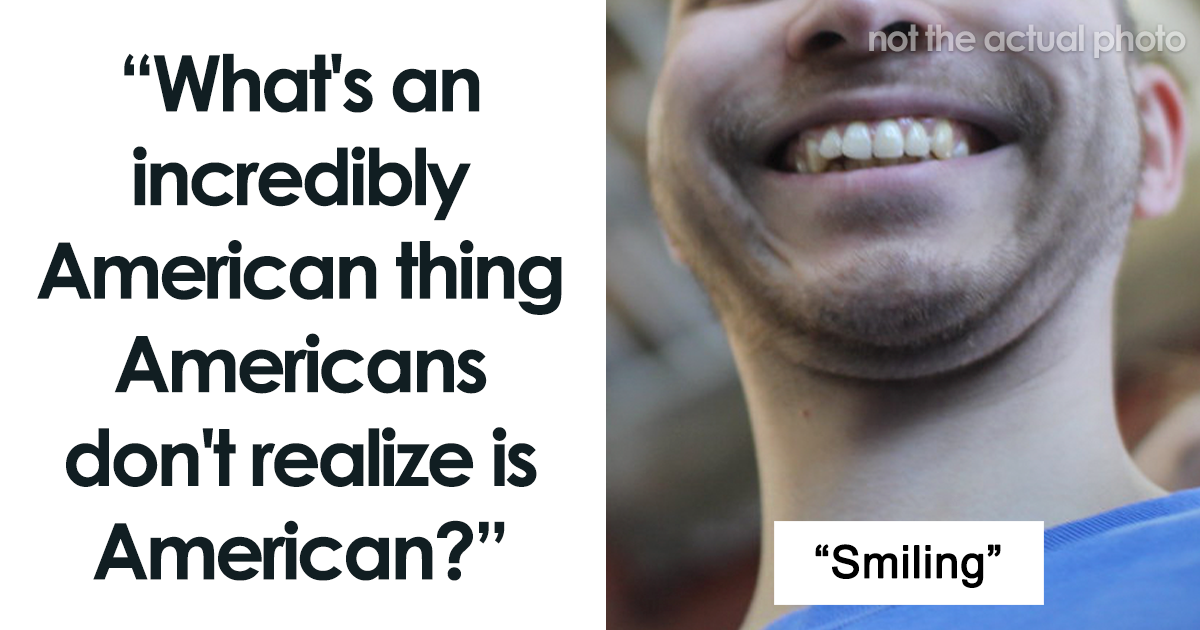
3. Smiling at Complete Strangers
Americans commonly smile at people they pass in hallways, elevators, sidewalks, and grocery aisles. In some countries, unsolicited friendliness may suggest flirting, salesmanship, or suspicious motives. In much of the United States, however, the smile means little more than, “I acknowledge that we are both standing near the frozen pizzas.”
4. Treating “Socialism” and “Communism” as Interchangeable
Political vocabulary carries unusually strong emotional weight in American conversations. Proposals involving public programs are sometimes labeled socialist or communist even when they bear little resemblance to either system in its formal sense. The habit reflects the nation’s Cold War history, highly polarized politics, and enduring suspicion of centralized government.
5. Accepting Extremely Complicated Medical Bills
Many Americans are accustomed to deductibles, provider networks, copays, coinsurance, preauthorization, and mysterious envelopes labeled “This is not a bill” that somehow feel more threatening than actual bills. To visitors from countries with different health-care systems, the financial uncertainty surrounding treatment can be one of America’s most startling features.
6. Speaking Loudly in Public
The loud American tourist is a durable international stereotype. It certainly does not describe everyone, but American conversational style is often expressive, direct, and energetic. A perfectly ordinary discussion about lunch can sound to nearby strangers like a dramatic announcement being delivered to an entire train station.
7. Expecting Free Drink Refills
Order a fountain soda in many American restaurants and the server may refill it repeatedly without adding another charge. The glass is rarely allowed to reach empty, as though dehydration might strike during the twelve seconds between bites of a cheeseburger. In many other countries, each beverage is purchased separately.
8. Handing a Credit Card to a Server Who Walks Away
At traditional U.S. restaurants, customers may place a credit card inside a folder and watch the server carry it to a distant payment terminal. Visitors accustomed to portable card readers often find this alarming. The practice is changing as tableside technology spreads, but the disappearing-card routine remains familiar across the country.
9. Driving Almost Everywhere
American communities were heavily shaped by highways, suburbs, parking lots, and long distances between homes and businesses. In 2024, 69.2% of U.S. workers drove alone to work. That helps explain why driving two minutes for coffee can feel more normal than walking eight minutes to obtain it.
10. Using Pickup Trucks as Everyday Transportation
Pickup trucks were designed for hauling equipment, building materials, livestock supplies, and other heavy loads. In the United States, they also haul laptops, groceries, soccer uniforms, and exactly one iced coffee. Their popularity reflects practical needs in rural areas, but trucks have also become symbols of lifestyle, identity, comfort, and status.
11. Singing the National Anthem Before Domestic Events
The national anthem is performed before professional games, college competitions, high-school events, rodeos, and local ceremonies that involve no international opponent whatsoever. Americans generally consider the ritual natural. Visitors may wonder why a Tuesday baseball game between two nearby towns begins with a musical declaration of national independence.
12. Running Air Conditioning at Full Power
American buildings can be impressively cold in the middle of summer. A person may dress for 95-degree weather only to spend dinner shivering beneath an indoor vent. The U.S. Energy Information Administration notes that air conditioning has become one of the fastest-growing uses of energy in American homes.
13. Receiving the Restaurant Check Without Requesting It
American servers commonly bring the check once the meal appears finished. The gesture is intended to be efficient, not dismissive. Elsewhere, an unsolicited bill may suggest that customers are being hurried out. This tiny difference can make one culture’s helpful service look exactly like another culture’s passive-aggressive eviction notice.
14. Building Drive-Thrus for Almost Everything
Fast food is only the beginning. The United States has drive-thru pharmacies, banks, ATMs, coffee shops, car washes, wedding chapels, convenience stores, and even funeral-viewing services in certain communities. The message is wonderfully consistent: whatever important task you are completing today, there is a reasonable chance you can remain inside the vehicle.
15. Treating High-School and College Sports Like Major Leagues
American school sports can attract enormous crowds, television audiences, marching bands, mascots, elaborate stadiums, and lifelong rivalries. The NCAA supports more than half a million student-athletes, while high-school teams often serve as major community institutions. In regions without nearby professional franchises, school teams may be the biggest game around.
16. Answering “Where Are You From?” With a State
A French traveler might answer “France,” while an American may immediately say “Ohio.” The United States is large enough that state identity communicates climate, accent, food, politics, geography, and local culture. Americans often assume listeners already know the country part, especially during conversations conducted online in English.
17. Pledging Allegiance to the Flag at School
Generations of American students have begun school days by facing a flag and reciting the Pledge of Allegiance. The practice varies by district and participation rules, but its visibility is unusual internationally. Combined with flags in classrooms, government buildings, front yards, and car dealerships, it makes American patriotism highly public.
18. Watching Prescription Drug Commercials
American television viewers can watch cheerful people kayak, garden, or attend a barbecue while a narrator calmly lists frightening side effects. Direct-to-consumer prescription advertising is regulated by the Food and Drug Administration, which requires major risks to be communicated clearly and without creating a misleading overall impression.
19. Recognizing Red Plastic Cups as Party Equipment
Red plastic cups appear so often in American movies and television shows that international viewers sometimes assume they are fictional props. They are real, widely available, and strongly associated with informal gatherings. Nothing says “carefully planned social event” quite like pouring an unidentified beverage from a cooler into disposable red plastic.
20. Calling a Mixture of Canned Foods a Casserole
American casserole culture values convenience, flexibility, and the power of melted cheese. Combine canned soup, vegetables, meat, noodles, crispy onions, and a topping, then bake until bubbling. The result may not impress a French culinary academy, but it can feed a family, survive a potluck, and generate leftovers for days.
21. Asking “How Are You?” Without Expecting the Full Answer
In everyday American speech, “How are you?” frequently functions as a greeting rather than a serious request for information. The expected response is usually “Good, how are you?” Beginning a detailed explanation of your financial problems, knee pain, and complicated relationship with your neighbor may cause the greeter to regret using language.
22. Tipping Across an Expanding Range of Services
Tipping is expected at sit-down restaurants and common for haircuts, deliveries, taxis, hotel services, and other personal services. Pew Research Center found that 92% of Americans who eat at sit-down restaurants say they always or often tip. Digital checkout screens have expanded the custom into increasingly surprising places.
23. Saying “Whatever” With Remarkable Emotional Precision
“Whatever” can express indifference, irritation, surrender, disbelief, or the formal conclusion of a teenage argument. Its meaning depends almost entirely on tone. A lightly spoken “whatever” may be harmless; a stretched-out “what-ever” can close a debate, damage a friendship, and make a parent confiscate a phone.
24. Putting Ranch Dressing on Nearly Everything
Ranch is more than salad dressing in the United States. It is a dip for pizza, wings, vegetables, fries, sandwiches, and anything else that appears insufficiently ranch-like. Regional preferences vary, but its creamy combination of herbs, garlic, onion, and tang has achieved the cultural influence of a minor national institution.
25. Using “Liberal” as a Synonym for the Political Left
American political labels do not always translate neatly overseas. In U.S. politics, “liberal” generally refers to the center-left or left. In parts of Europe, liberalism may emphasize markets, limited state intervention, and individual economic freedompositions Americans might associate more closely with libertarianism or the center-right.
26. Having an Employee Bag the Groceries
Many American supermarkets employ cashiers or courtesy clerks who place purchases into bags for customers. Travelers accustomed to packing their own groceries may feel awkward standing motionless while another person carefully separates eggs, detergent, frozen food, and the single avocado that somehow cost more than expected.
27. Having an Astonishing Number of Fast-Food Choices
International chains are only part of the American fast-food landscape. Regional brands inspire intense loyalty, and highway exits may contain enough restaurants to support a small civilization. Burgers, tacos, chicken, pizza, sandwiches, doughnuts, barbecue, and frozen desserts are available quicklyoften through the drive-thru, naturally.
28. Traveling Domestically Without Owning a Passport
Americans can travel thousands of miles, cross multiple climates, visit tropical beaches, ski in mountain ranges, and explore several major cities without leaving the country. A passport is therefore less essential for routine vacations than it is in smaller nations surrounded by international borders. The State Department tracks passport circulation and issuance each year.
29. Serving Ice Water Automatically
At many American restaurants, water arrives before customers order and often contains enough ice to preserve a small archaeological specimen. Free water, frequent refills, large glasses, and abundant ice feel unremarkable to Americans. Visitors may be surprised to receive all four without askingor to discover that room-temperature water requires a special request.
Why These Habits Feel So Normal to Americans
The customs above did not appear randomly. Many developed from the country’s geography, infrastructure, labor market, political history, climate, and consumer economy. Car culture makes drive-thrus practical. Hot summers and widespread electrification encourage heavy air-conditioning use. State and local taxation creates prices that change between jurisdictions. A large domestic territory reduces the necessity of international travel.
Other habits reflect America’s service-oriented business culture. Free refills, grocery baggers, automatic water, friendly greetings, and quickly delivered restaurant checks are intended to make transactions convenient. That convenience can delight visitors, but it can also create waste, pressure workers, or make ordinary interactions feel rushed.
Even America’s system of measurement demonstrates the country’s talent for combining incompatible traditions. The United States uses both metric and U.S. customary units, producing a hybrid environment where medicine may be measured in milligrams, road trips in miles, soda in liters, and body weight in pounds.
These observations should not be treated as universal rules. Millions of Americans do not own trucks, watch college football, eat ranch, or greet strangers. Urban residents may rarely drive, families may reject patriotic rituals, and restaurant payment practices continue to evolve. Cultural lists are most useful when they begin conversations rather than declare that 340 million people share one personality.
A 500-Word Cross-Cultural Experience: Seeing America With Fresh Eyes
The following is a composite travel scenario based on recurring experiences described by visitors and participants in the online discussion.
Imagine arriving in the United States for the first time after a long international flight. Before leaving the airport, a stranger smiles and asks, “How’s it going?” You begin preparing an honest answer about jet lag, a delayed suitcase, and the sandwich you should not have eaten during the flight. Unfortunately, the stranger is already thirty feet away. Your first cultural lesson has arrived: the question was punctuation with excellent manners.
Outside, your American host suggests driving to a restaurant located across the street. You assume this is a joke until you notice that “across the street” involves six lanes of traffic, two enormous parking lots, no visible crosswalk, and a distance that would require provisions. The vehicle is a pickup truck large enough to have its own weather system. No cargo is in the back, although there is one reusable shopping bag and a tennis racket.
At the restaurant, ice water appears automatically. Then comes a soda roughly the size of a household aquarium. You drink half, and the server replaces it with a full glass. You try again. Another refill arrives. It begins to feel like a contest you did not agree to enter.
The portions are generous, the ranch dressing gets its own container, and the menu price appears surprisingly reasonable. Then the check arrives before anyone requests it. Your American companions remain relaxed, so apparently this is not an eviction. They study the total, calculate sales tax, discuss whether the service deserves 18%, 20%, or 22%, and hand a credit card to the server, who walks away with it.
You watch the card disappear around a corner. Nobody panics. Instead, everyone debates which drive-thru coffee shop to visit next.
The following morning begins at a diner with pancakes, eggs, bacon, hash browns, toast, bottomless coffee, and enough syrup to alter a nearby ecosystem. Your host explains that most people do not eat this breakfast every day. That is reassuring, although the fact that it is considered one meal remains impressive.
Later, you visit a supermarket. The shelf price excludes tax, the cashier asks about your day, and another employee bags the groceries. You attempt to help but place one cold item beside one room-temperature item, apparently violating an advanced national packing code. The bagger quietly repairs your work.
That evening, a college football game appears on television. The stadium holds more people than some cities. There are marching bands, mascots, fireworks, coordinated chants, and a national anthem before two teams from the same country play each other. Your hosts know the coaches, rankings, rivalries, recruiting history, and emotional consequences of a game played twelve years earlier.
By the end of the weekend, the unusual things no longer seem completely unusual. The giant drinks are convenient. The smiling strangers feel welcoming. The drive-thru pharmacy makes sense when everything is far apart. You even understand why the check arrives quickly: the server is trying to help, not remove you.
That is the most interesting part of observing another culture. Habits that initially look strange often become logical once their surrounding systems are visible. America’s everyday customs are not merely quirky decorations. They are small expressions of its geography, history, commerce, optimism, contradictions, and relentless desire to make everything fasterpreferably without leaving the car.
Conclusion: Ordinary Habits Can Reveal an Entire Culture
The funniest “incredibly American” things are not necessarily the loudest or most dramatic. They are the routines Americans perform without thinking: adding tax at checkout, expecting ice, tipping a server, measuring distance in miles, driving to nearby stores, or answering “Where are you from?” with the name of a state.
Seen from the outside, these details become cultural clues. They reveal a country built around mobility, convenience, regional identity, consumer choice, public patriotism, informal friendliness, and occasionally bewildering payment systems. Some traditions are charming, others deserve criticism, and several involve more ranch dressing than any reasonable civilization anticipated.
Editorial note: The online responses discussed here are personal observations and humorous generalizations, not universal descriptions of every American community or individual.