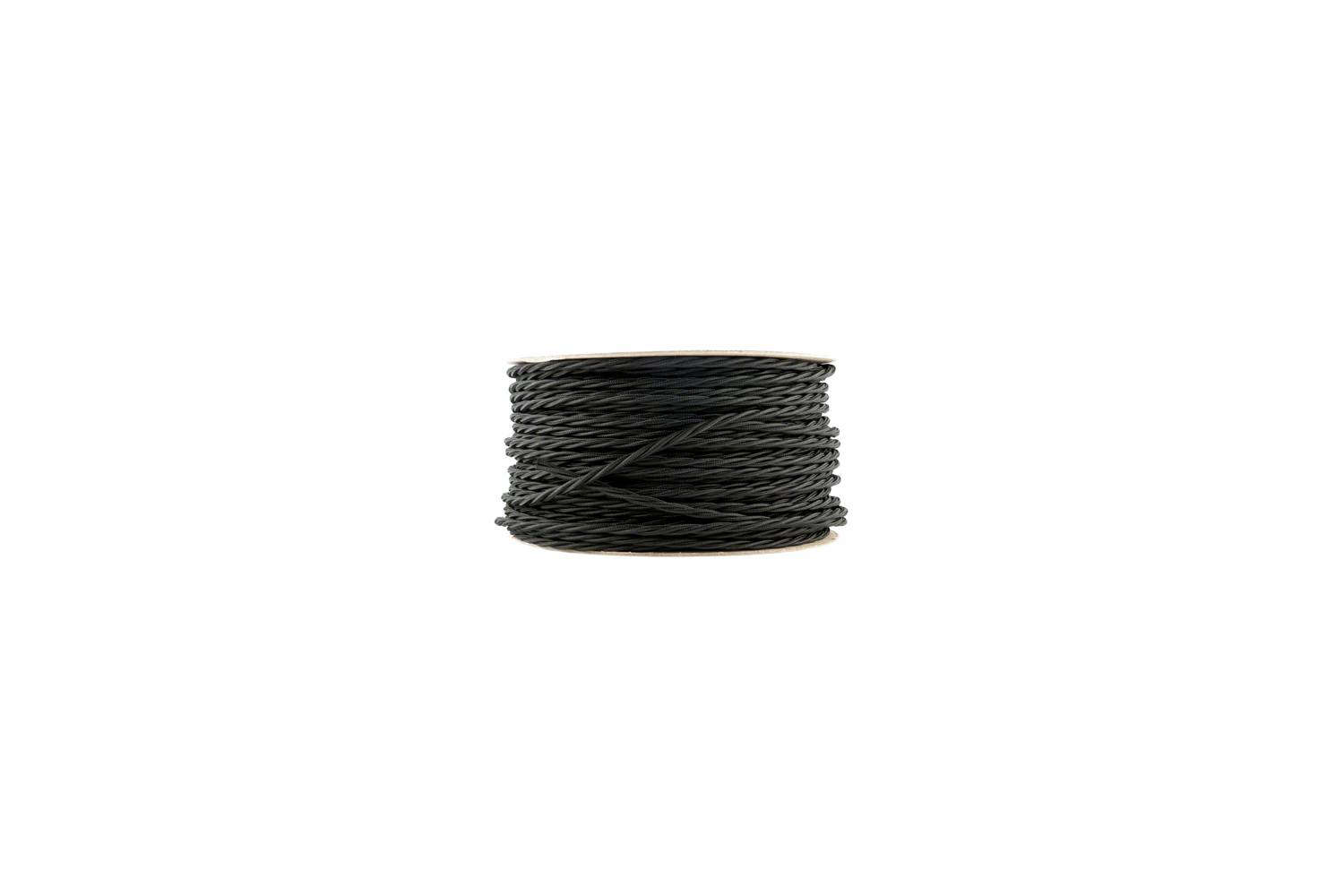
Lighting cable used to be the part everyone tried to hide. Then twisted fabric cable arrived, dressed itself in cotton, linen, rayon, and cheerful colors, and confidently walked into the center of the room. Today, a twisted fabric lighting 3 core cable can become a visible design feature in pendant lights, chandeliers, wall lamps, and custom lighting installations.
Its good looks, however, should never distract from its electrical job. Beneath the decorative textile covering are three insulated conductors that must carry power safely, maintain grounding continuity, and work with the fixture’s fittings. Choosing the right cable therefore requires more than finding the perfect shade of mustard yellow.
What Is Twisted Fabric Lighting 3 Core Cable?
Twisted fabric lighting 3 core cable is a flexible electrical cord containing three insulated conductors arranged in a twisted or braided-looking profile. A woven textile layer covers the electrical insulation, giving the cable a decorative finish suitable for exposed lighting.
In the United States, sellers may describe a similar product as three-conductor cloth-covered wire, braided lamp cord, or fabric-covered SVT cord. “Three core” is more common in European product descriptions. Because terminology varies, the printed specifications and certification marks matter more than the product name.
What Do the Three Cores Do?
In a typical line-voltage lighting circuit, the conductors serve three different functions:
- Hot or line conductor: Carries voltage from the power source to the light.
- Neutral conductor: Provides the normal return path for current.
- Equipment grounding conductor: Creates a low-resistance fault path for exposed conductive parts that require grounding.
Imported cable may use brown for line, blue for neutral, and green with yellow stripes for ground. North American cord commonly uses black for hot, white for neutral, and green for ground. Never identify a conductor by textile color or assumption alone. Follow the cable markings, manufacturer documentation, applicable code, and fixture instructions.
The Fabric Is Not the Primary Insulation
The attractive outer braid is generally decorative and may offer limited abrasion protection, but it is not the cable’s main electrical barrier. The insulated conductors and approved inner jacket perform that critical work. If the product appears to be little more than wire wrapped in yarn, it belongs in a craft drawernot above the dining table.
Why Designers Choose Decorative 3 Core Lighting Cable
Ordinary plastic cord tends to look unfinished when exposed. Twisted textile cable makes exposure intentional. Its texture softens metal fixtures, complements wood and ceramic components, and brings a vintage detail to otherwise simple lighting.
It Turns a Necessity Into a Design Feature
A black twisted cord can sharpen an industrial pendant. Natural linen works beautifully with pale oak and handmade pottery. Burgundy, forest green, or brass-toned fabric can add a small dose of color without demanding that the entire room dress for the occasion.
It Works Across Several Interior Styles
Fabric-covered lamp wire is not limited to vintage interiors. It can support:
- Industrial pendants with metal shades and exposed hardware
- Scandinavian rooms with natural fibers and restrained colors
- Mid-century fixtures with opal glass and warm metal finishes
- Farmhouse lighting with enamel shades and aged brass sockets
- Modern installations using bold cable colors as graphic lines
The Third Conductor Supports Grounded Designs
Many metal luminaires and components require an equipment grounding connection. A suitable three-conductor cable can provide that path when used as part of a properly designed system. Two-conductor cord may be acceptable for certain listed, polarized, or double-insulated products, but it should not be substituted where grounding is required.
How to Choose the Right Twisted Fabric Cable
The prettiest cable is not automatically the right cable. Before ordering, compare the following technical and practical details.
1. Certification and Intended Market
For a U.S. project, look for cable identified for its intended lighting application and carrying appropriate certification from a recognized testing organization. UL, ETL, and CSA marks may appear on compliant products, but the mark must apply to the actual cord and intended use.
European markings such as HAR or IMQ can be meaningful in their markets, yet they do not automatically establish suitability for a U.S. installation. A 3×0.75 mm² European decorative cable and an 18 AWG North American cord are close in conductor size, but they are not interchangeable merely because the numbers look friendly.
2. Conductor Size and Electrical Rating
Check the conductor gauge or cross-sectional area, voltage rating, temperature rating, and permitted ampacity. Decorative lighting often draws modest current, particularly when fitted with LEDs, but the complete assembly must still stay within the ratings of its cable, socket, switch, plug, canopy, and connectors.
Type SVT flexible cord is common in household appliances and portable lighting. Some fabric-covered three-conductor products are rated at 300 volts and use 18 AWG stranded copper conductors, but specifications vary. Treat the product label as evidence and the product photograph as decoration.
3. Indoor, Damp, or Outdoor Suitability
Most decorative textile cords are intended for dry indoor locations. Cotton or rayon covering does not magically become weatherproof because it looks adventurous. For bathrooms, covered porches, commercial spaces, or outdoor installations, select an entire lighting system specifically rated for the environment.
4. Cord Diameter and Fitting Compatibility
Measure the cable’s finished outside diameter and compare it with every cord grip, canopy opening, socket entry, wall guide, and strain-relief fitting. A grip that is too large may not hold the cable. One that is too small may crush the insulation or refuse to assemble at all.
5. Fixture Weight and Mechanical Support
Do not assume decorative electrical cord can support a heavy shade or chandelier. Some pendant systems are designed to hang from their cord; others require a separate steel support cable, chain, threaded stem, or structural suspension system. Follow the fixture manufacturer’s weight and support requirements.
6. Fabric Construction and Color
Cotton creates a soft, traditional surface. Rayon can provide richer color and a slight sheen. Linen-look braids feel relaxed and natural, while tightly woven synthetic coverings may resist fuzzing better in frequently handled installations.
Order a sample when color accuracy matters. Warm LEDs, daylight, wall paint, and metal finishes can change how a cable appears. The “soft beige” seen online can become “surprisingly oatmeal” once it meets your kitchen.
Design Ideas for Exposed Fabric Lighting Cable
Minimal Single-Drop Pendant
Use one straight length between a compact canopy and a simple socket. This approach lets the cable provide texture without making the fixture visually busy. It works especially well with globe bulbs, opal shades, and small metal pendants.
Swagged Lighting
A swag arrangement allows the electrical outlet and light position to be in different places. Purpose-made ceiling hooks or cord stays can guide the cable into a graceful curve. Avoid staples, tight knots, sharp bends, or improvised fasteners that can damage the jacket.
Multi-Pendant Clusters
Several fabric cords suspended at different heights can create a dramatic cluster over a stairwell or large table. Keep the drops visually related through a shared color, socket finish, or bulb shape. Matching every element is optional; preventing the result from resembling a bowl of electrical spaghetti is not.
Wall-Mounted Graphic Lines
Plug-in sconces and exposed-cord pendants can use wall-mounted cable guides to create deliberate vertical or angled lines. This is useful in rentals or rooms without a junction box in the ideal location, provided the system is listed for plug-in use and the cord remains protected from damage.
Installation and Safety Essentials
Work on permanently connected lighting should be performed by a qualified electrician and must comply with local electrical requirements. Turn off the appropriate circuit, verify that it is de-energized with suitable test equipment, and follow the instructions supplied with every component.
Use Effective Strain Relief
A cord grip or strain-relief fitting prevents pulling force from reaching terminal screws and conductor joints. OSHA electrical requirements specifically address strain relief for flexible cords because movement at an unsecured termination can loosen connections, damage insulation, and create heat or shock hazards.
Maintain Grounding and Polarity
If the luminaire requires grounding, the grounding path must remain continuous from the supply to the appropriate conductive parts. Correct polarity is also essential in screw-shell lamp holders. The applicable instructions determine how conductors are identified and terminated; cable color alone is not a substitute for verification.
Avoid Hidden Runs and Improvised Splices
Flexible decorative cord is not a substitute for permanent building wiring. It should not be run through walls, ceilings, floors, doors, or other concealed spaces unless a specifically approved wiring method permits it. Use continuous cord lengths where required, and never hide a casual splice beneath fabric, tape, or hopeful thinking.
Protect the Cable From Damage
Keep the cord away from sharp edges, hot surfaces, moving furniture, and locations where it can be pinched or repeatedly pulled. Do not hang a fixture by yanking on the electrical cord, and do not use ordinary staples to attach it to a wall or ceiling.
Bulb Choice, Heat, and Lighting Quality
An efficient LED bulb is usually a sensible partner for decorative cord lighting. ENERGY STAR notes that LED products can produce light far more efficiently than incandescent bulbs. Lower wattage generally reduces heat and energy use, although LEDs still generate heat and require appropriate ventilation.
Never exceed the fixture’s maximum wattage. Choose brightness by lumens, then select color temperature according to the room. Warm white light around 2700K often suits bedrooms and dining areas, while neutral white light can work well over work surfaces. If the fixture is dimmable, confirm that the bulb and dimmer are compatible.
Care and Maintenance
Inspect exposed fabric cable periodically, especially near the plug, socket, canopy, and cord grips. Warning signs include frayed textile braid, exposed inner insulation, cracked jackets, discoloration, unusual warmth, loose fittings, flickering, or a burning odor.
With the fixture disconnected from power, remove surface dust using a soft, dry cloth or gentle vacuum attachment. Do not soak the braid, coat it with paint, or scrub it with solvents. If damage reaches the electrical jacket, replace the cable or have the fixture professionally repaired.
Project Experiences: What Twisted Fabric Cable Teaches You
The following composite project experiences reflect common lessons from decorative lighting installations. They are useful because the smallest detailscord diameter, drop length, or the location of one ceiling hookoften determine whether a fixture looks custom-made or merely surprised to be there.
Experience One: The Simple Kitchen Pendant
A homeowner plans three black pendants over an eight-foot island. Black twisted fabric cable is selected to coordinate with cabinet hardware and dark window frames. The first instinct is to order three identical pre-cut lengths. A ceiling measurement reveals that the island is not perfectly level and the junction boxes are not equally spaced.
The better approach is to order extra cable, mock up each pendant height, and finish the drops individually. Once installed, the slight texture of the cable prevents the black lines from looking harsh. Warm LED bulbs soften the metal shades, while proper cord grips keep the pendants straight. The lesson is wonderfully unglamorous: careful measuring creates more style than any expensive socket cover.
Experience Two: A Plug-In Bedside Pendant
In a rental bedroom, a plug-in pendant frees the nightstand from a bulky lamp. A muted green cable is routed from a listed plug-in fixture to a wall guide and then over a ceiling hook. Before installation, a temporary string is used to test the location. This reveals that the original plan would place the bulb directly in the user’s line of sight.
Moving the hook several inches toward the wall improves comfort and creates a cleaner curve. A diffused shade reduces glare, and a conveniently located inline switch makes the lamp practical. Purpose-made cord guides hold the cable without crushing it. The key experience is that cable routing affects both appearance and daily use; a beautiful cord still needs to know where the light belongs.
Experience Three: Restoring a Vintage Metal Lamp
A vintage desk lamp arrives with brittle two-conductor cord, a loose socket, and decades of dust possessing remarkable confidence. Replacing only the visible section of cord would leave hidden deterioration inside the base, so the entire lamp must be evaluated.
A suitable three-conductor fabric-covered cord appears visually appropriate and may support grounding when the lamp’s construction requires it. Yet adding a third conductor does not automatically make an old fixture safe. The socket, switch, strain relief, bushings, internal wire paths, and conductive body all need inspection. Sharp metal openings may require approved protective fittings, and damaged components should be replaced with compatible parts.
After professional rewiring and electrical testing, the lamp keeps its vintage character without keeping its vintage electrical risks. The new twisted cord looks historically sympathetic, but its real value is hidden beneath the braid: flexible insulated conductors, secure terminations, and a mechanically protected entry point.
Experience Four: The Color Sample That Saved the Room
A designer chooses a cream cable from a bright computer screen for a room with warm plaster walls. The physical sample looks gray under the room’s evening lighting and clashes with the brass canopy. A warmer sand-colored braid solves the problem immediately.
This experience makes a strong case for sampling. Fabric has texture, shadows, and reflective fibers that flat digital images cannot reproduce accurately. View samples during daylight and after dark, next to the actual shade and hardware. Ten minutes of comparison can prevent several meters of decorative regret.
Conclusion
Twisted fabric lighting 3 core cable combines electrical function with a level of personality ordinary plastic cord rarely attempts. When correctly specified, it can complement grounded metal fixtures, support exposed-cord layouts, and become an intentional part of the room’s design.
Choose cable according to certification, conductor size, voltage and temperature ratings, location, finished diameter, and fitting compatibility. Pair it with proper strain relief, mechanical support, and an efficient bulb. Most importantly, remember that the braid is the outfit; safe insulation, sound connections, and code-compliant installation are the actual job.